Home » Timepieces » The Clocks That Ticked Through American History
The Clocks That Ticked Through American History
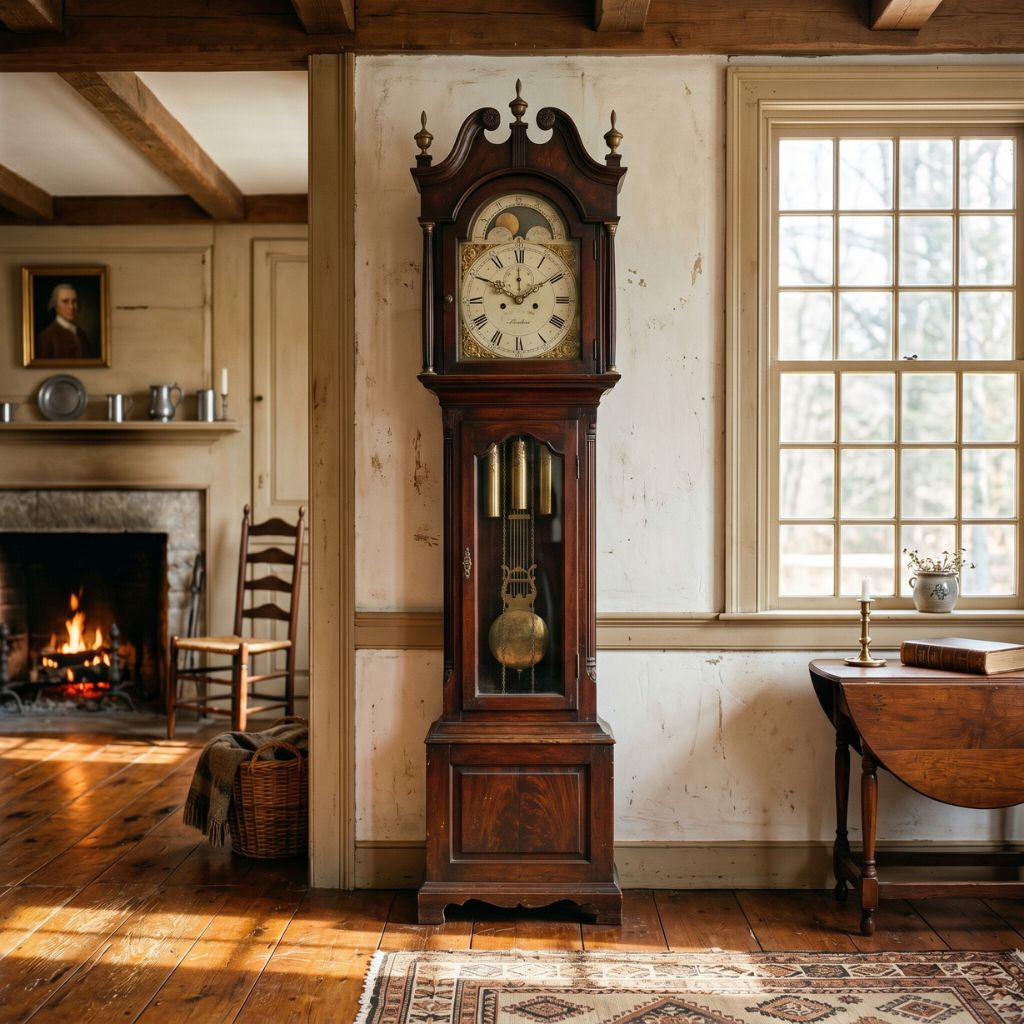
Clocks in American history have done far more than tell time. They have witnessed revolutions, guided railroads, marked family milestones, and helped shape the daily routines of millions of Americans. Today, while most people glance at a phone to check the hour, antique clocks continue to remind us of a time when craftsmanship, patience, and precision mattered.
Also, these amazing clocks were often the beating heart of a home. They chimed through celebrations, quietly marked difficult times, and became treasured family heirlooms passed down from one generation to the next.
Now, let’s turn back the hands of time and explore how these fascinating clocks helped build the America we know today.
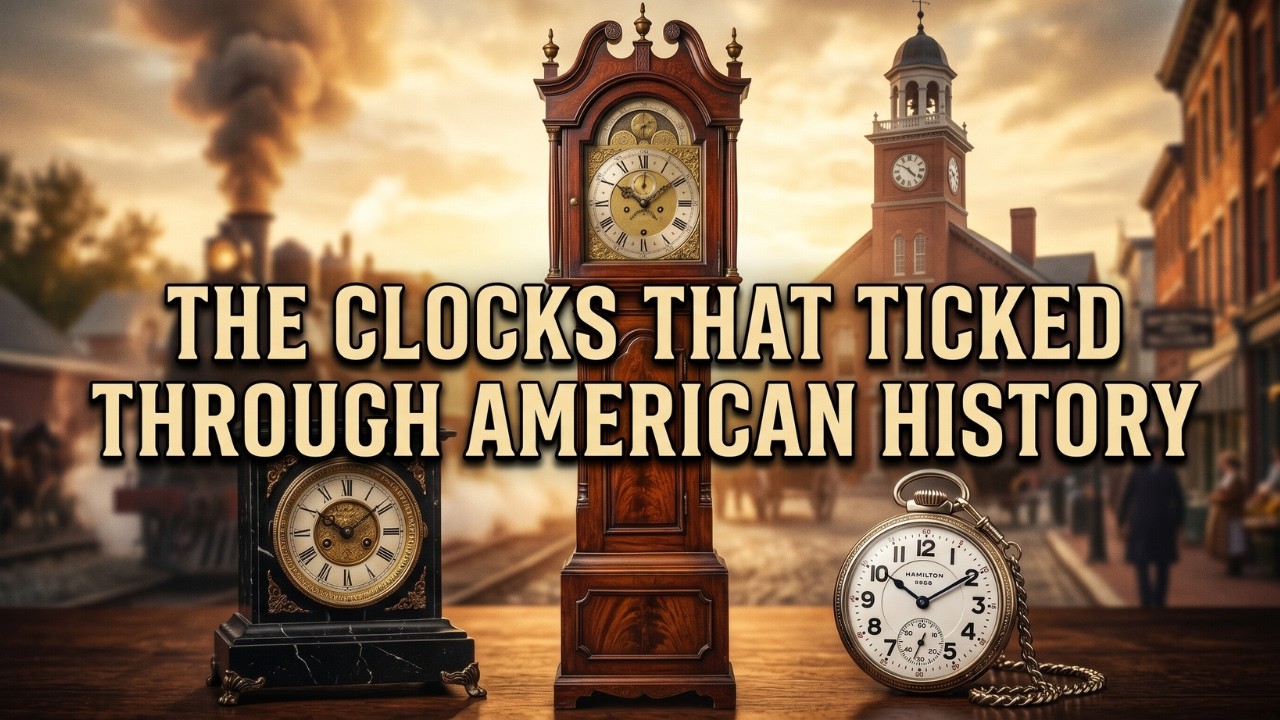
Clocks In American History Began With Handmade Craftsmanship
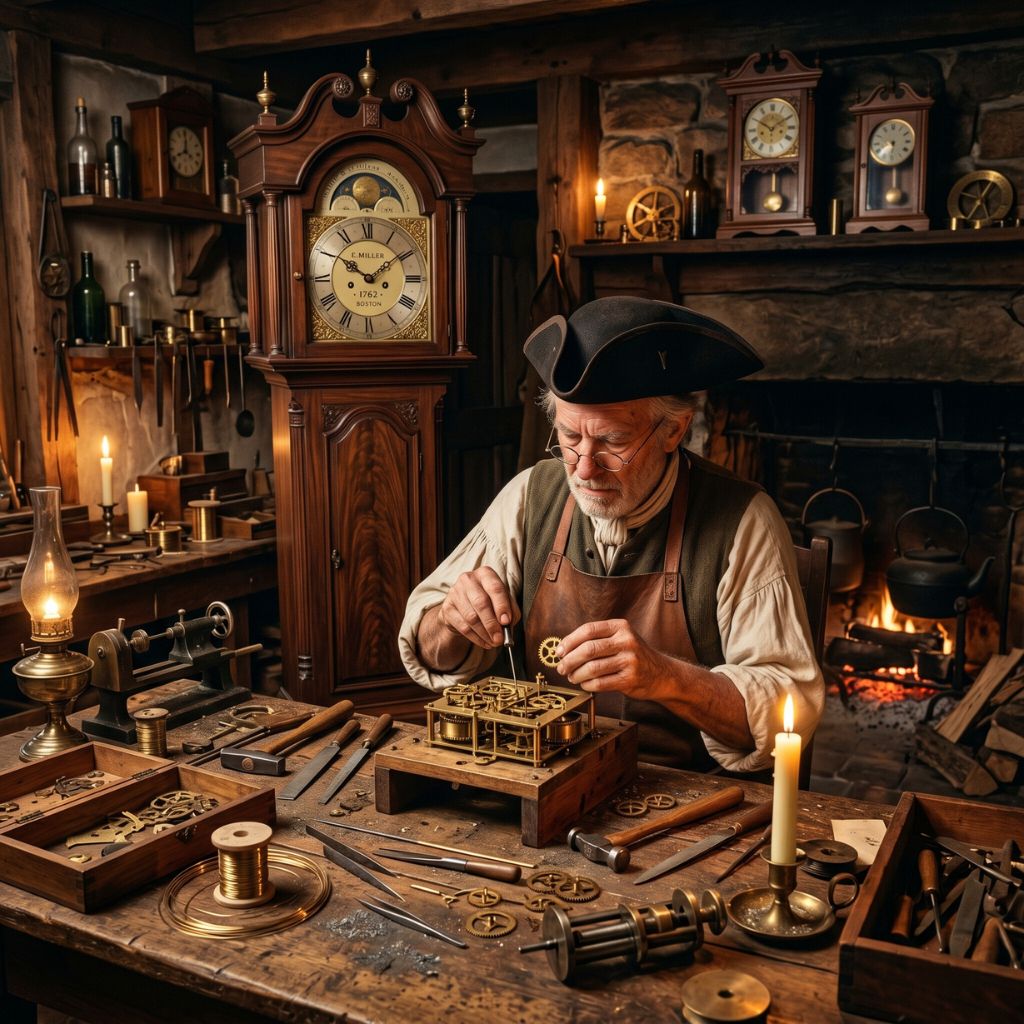
Long before factories filled stores with inexpensive clocks, every timepiece required patience, skill, and plenty of hard work. Early American clockmakers carefully crafted gears, springs, dials, and wooden cases by hand. So, constructing a nice clock was not a weekend endeavor.
Back then, owning a fine clock meant something. If your neighbor had a beautiful grandfather clock in the front room, people noticed. It was basically the colonial version of pulling into the driveway with a brand-new luxury car.
At the same time, many American craftsmen borrowed ideas from European clockmakers while adding their own style. This helped create a uniquely American tradition of clockmaking that would continue for generations.
Here’s the funny part. Many of those early clocks were built so well that they’re still ticking today. Meanwhile, most of us are replacing batteries in devices we bought last year.
Not surprisingly, these handcrafted clocks became symbols of success, reliability, and craftsmanship. Better yet, they laid the foundation for America’s growing fascination with quality timepieces.
Timeless Favorites for Collectors
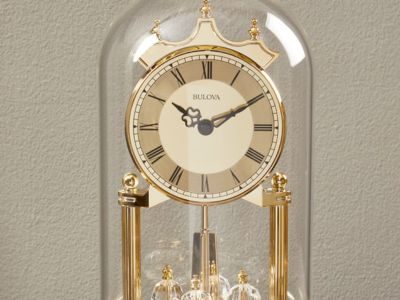
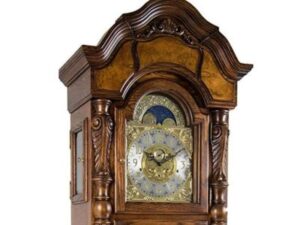
The clocks that shaped American history were more than instruments for keeping time—they were symbols of craftsmanship, tradition, and everyday life. While original antiques can be difficult to find and expensive to restore, today’s vintage-inspired timepieces capture much of that same timeless character.
We’ve selected a few of our favorite pieces that combine classic styling, dependable quality, and heirloom appeal. Whether you’re decorating a farmhouse, library, office, or cozy living room, these favorites offer a beautiful way to celebrate the art of timekeeping.
How Clocks In American History Changed Everyday Life
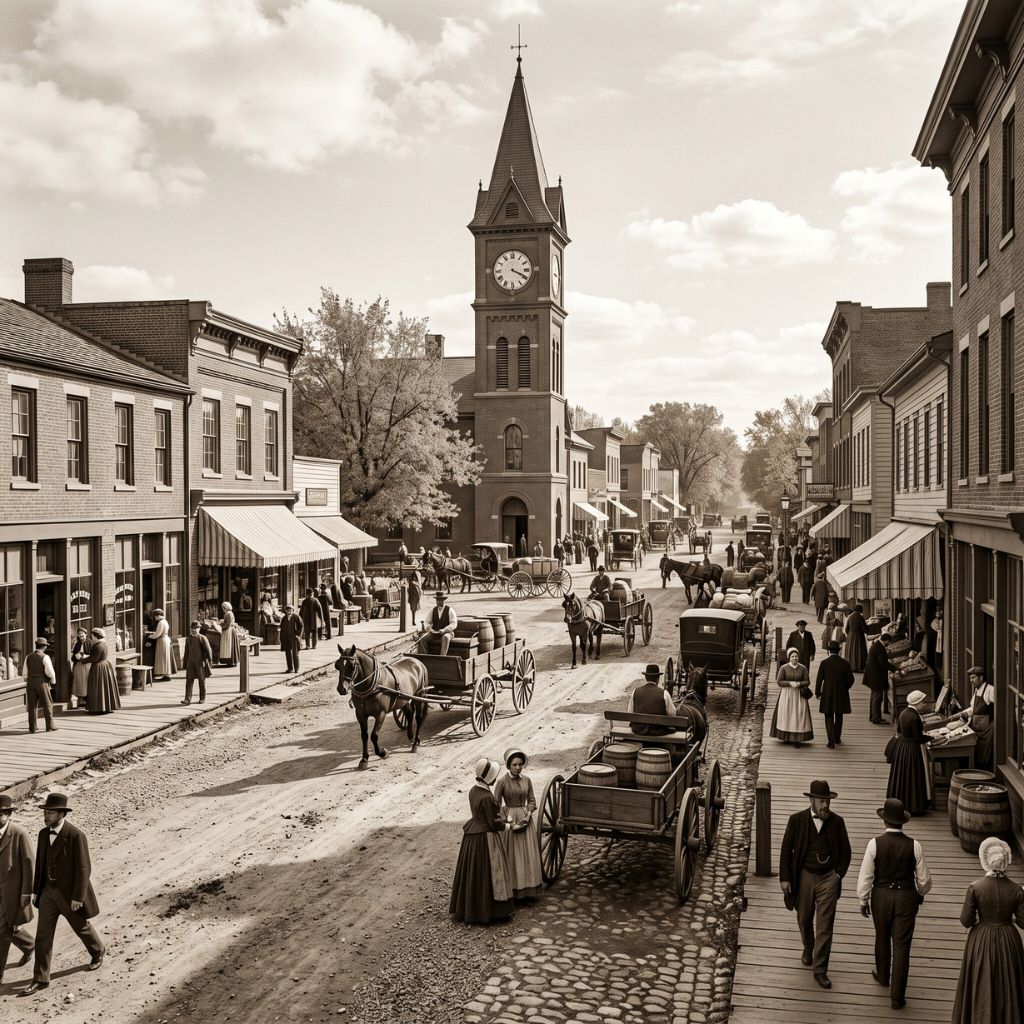
Once clocks became more common, everyday life started to change in ways most people never imagined.
Before reliable clocks, many Americans lived by the sun. Farmers woke at dawn, businesses opened when people arrived, and dinner happened whenever Mom decided everyone looked hungry enough.
Then things began to change.
As towns grew larger, people needed a better way to organize their day. Store owners wanted regular business hours. Schools needed schedules. Factory owners wanted workers arriving at roughly the same time instead of “whenever they got around to it.”
Believe it or not, clocks helped bring order to the growing nation. For the first time, communities could coordinate activities with greater precision. Meetings started on time. Businesses operated more efficiently. Daily routines became easier to manage.
Of course, human nature remained exactly the same.
Even with clocks hanging on walls across America, there was always somebody who showed up late and blamed the horse, the weather, or “losing track of time.” Some traditions never disappear.
Meanwhile, clocks became trusted household companions. Families checked them throughout the day, children learned to tell time from them, and homeowners proudly displayed them in parlors and kitchens.
By the mid-1800s, clocks weren’t simply measuring time anymore. They were helping shape the rhythm of American life itself.
How Clocks In American History Changed Railroad Travel Forever
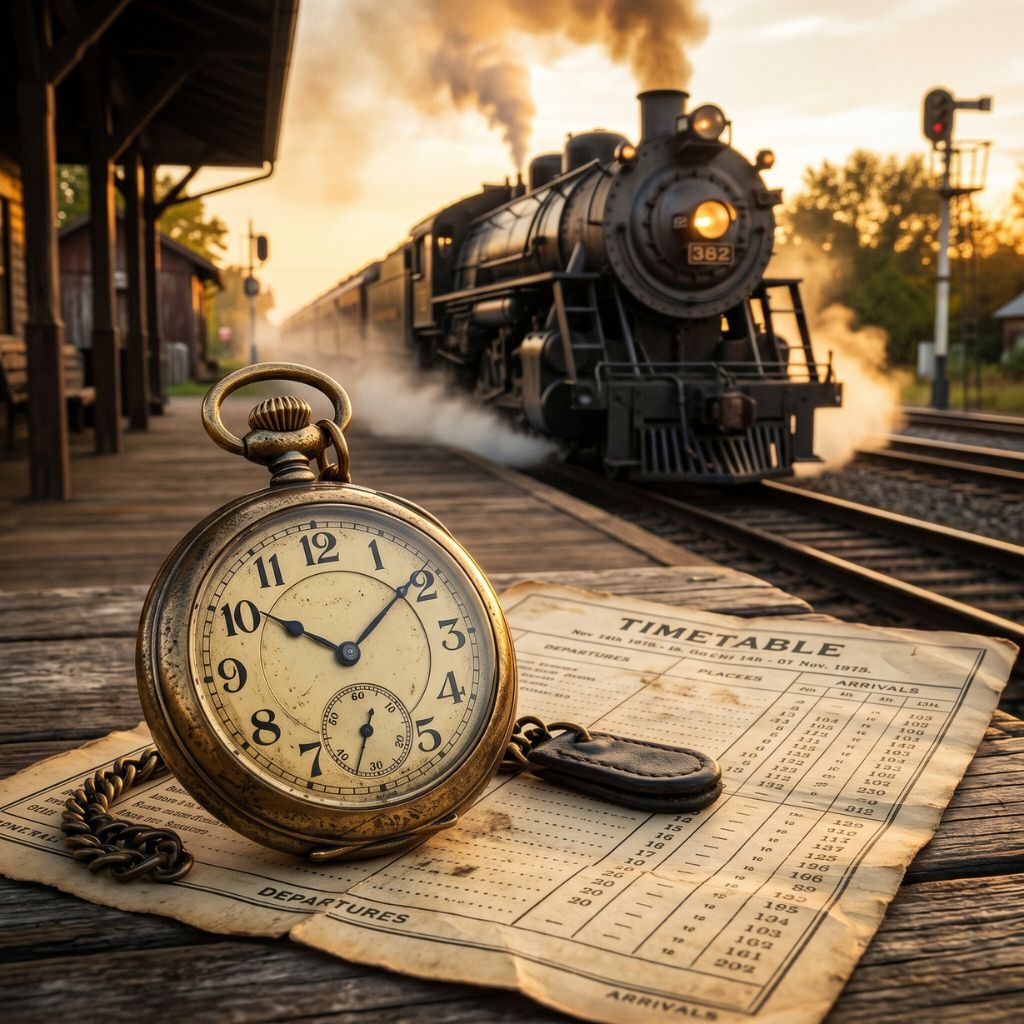
If there was ever a moment when clocks became truly essential, this was it. In fact, few clocks in American history had a greater impact on daily life than the precise railroad watches that helped standardize time across the nation.
Before railroads connected the nation, towns often set their clocks using the position of the sun. That worked well enough when people rarely traveled very far. But, once trains began crossing state lines, things got messy in a hurry.
Imagine boarding a train in one town at 10:00 a.m. and arriving in another town where the clocks claimed it was 9:47 a.m. Sounds confusing because it was.
Then the railroad companies stepped in.
Rather than allowing every town to keep its own version of time, the railroads introduced standardized schedules. Suddenly, conductors, station masters, and passengers all needed clocks that agreed with one another.
So, by the late 1800s, America embraced regular time zones. What started as a railroad solution quickly became a national necessity.
Meanwhile, railroad pocket watches became legendary. These weren’t ordinary watches. They had to be accurate, dependable, and easy to read. A few minutes off could create delays, confusion, or something far worse.
Talk about pressure. Most of us panic when we’re late for dinner. Railroad workers had entire trains depending on them.
Even today, every time you check the clock and catch a flight, attend a meeting, or watch a football game at the scheduled kickoff, you’re benefiting from a system that railroads helped create more than a century ago.
Mantel Clocks In American History And The Victorian Home
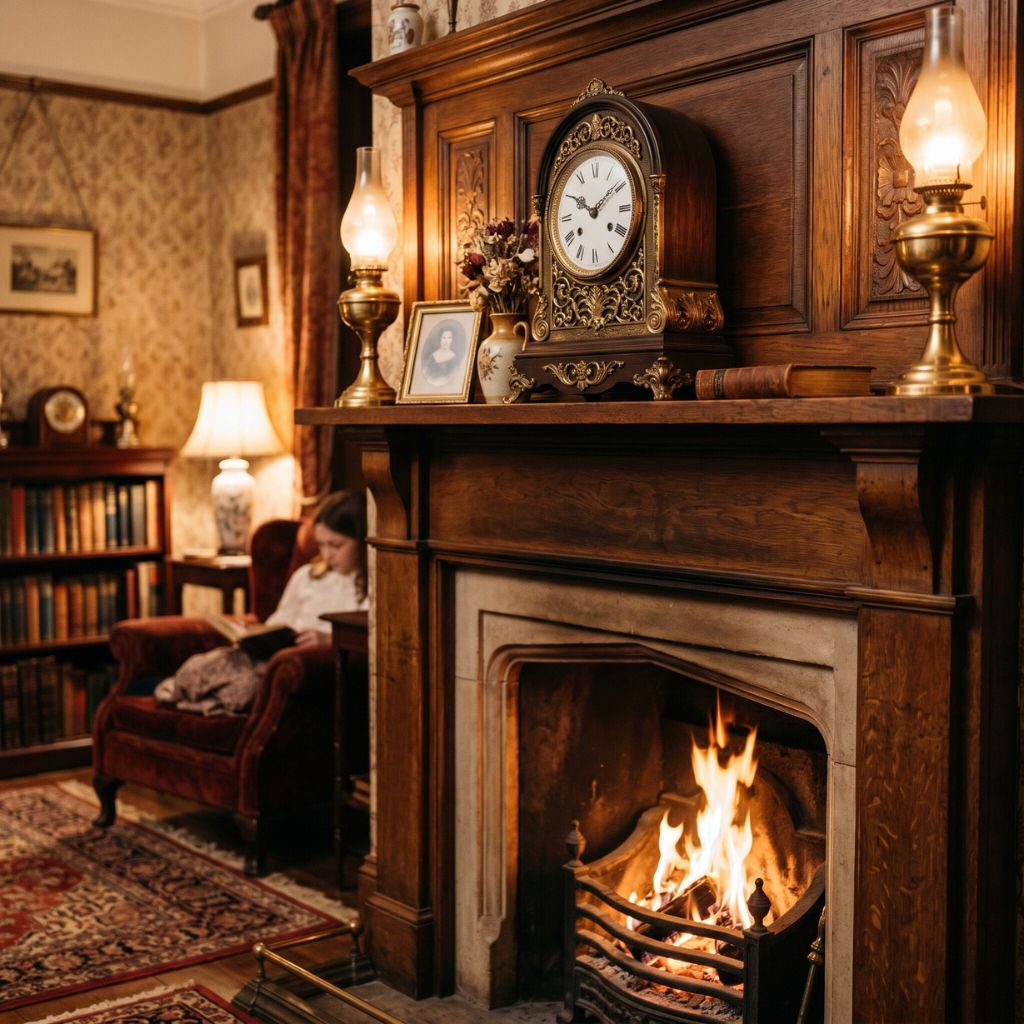
As America grew more prosperous, clocks moved from workshops and train stations into homes across the country.
That’s where mantel clocks found their moment to shine.
Perched proudly above fireplaces, these elegant timepieces quickly became the centerpiece of many living rooms. Families gathered around them during holidays, celebrated special occasions beneath them, and listened to their familiar ticking day after day.
Unlike towering grandfather clocks, mantel clocks fit comfortably into ordinary homes. As a result, they became one of the most popular clock styles in America during the Victorian era and beyond.
At the same time, manufacturers competed to create increasingly beautiful designs. Some featured polished wood cases, while others displayed decorative carvings, brass accents, and ornate details that turned simple clocks into works of art.
Of course, mantel clocks had one personality trait that owners either loved or tolerated.
They chimed.
Every hour.
All day.
All night.
Apparently, clockmakers believed nobody should ever wonder what time it was—even at three o’clock in the morning.
Even so, those familiar chimes became part of family life. Long before televisions filled homes with noise, the gentle ticking and hourly bells of a mantel clock helped create a comforting rhythm that many people still remember today.
Grandfather Clocks In American History And Family Tradition
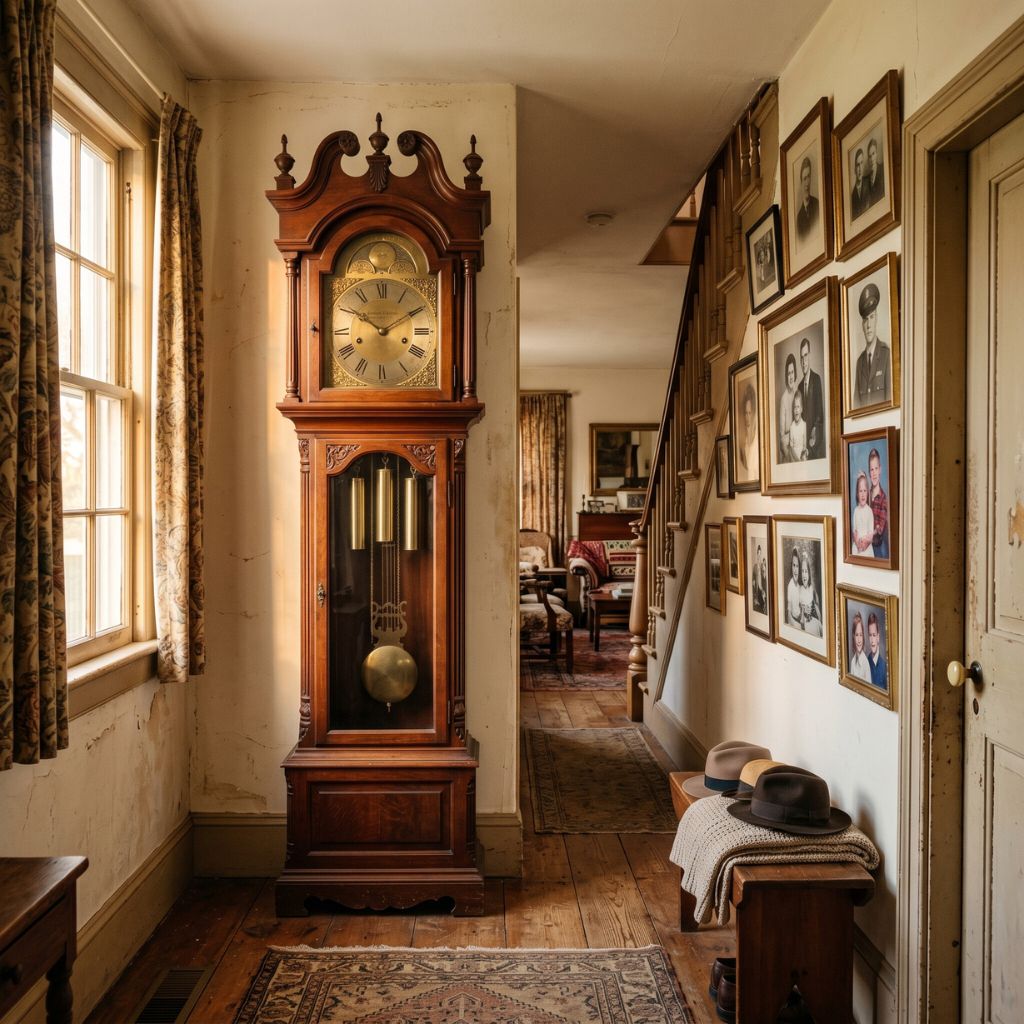
If mantel clocks ruled the living room, grandfather clocks ruled the entire house. Among all the Clocks In American History, grandfather clocks may be the most closely tied to family memories and traditions.
These towering timepieces stood proudly in entryways, parlors, and hallways, quietly watching generations come and go. Before long, they became more than furniture. They became part of the family story.
Many grandfather clocks were purchased to celebrate major milestones. Some marked weddings. Others commemorated a new home or a successful family business. As the years passed, those same clocks witnessed birthdays, anniversaries, holiday gatherings, and countless everyday moments.
That’s where things get interesting.
Unlike most household items, grandfather clocks were built to last for decades. In many cases, they survived long enough to be passed from grandparents to children and eventually to grandchildren. Along the way, each scratch, repair, and worn finish became part of the clock’s history.
Of course, every family seems to have a story about one.
Nobody knows exactly how old it is.
Nobody remembers who last set it correctly.
And nobody wants to be the person responsible for moving it.
Even today, grandfather clocks remain some of the most cherished antique timepieces in America. Their craftsmanship is impressive. Their history is fascinating. However, their greatest value often comes from the memories attached to them.
In many homes, a grandfather clock wasn’t simply keeping time. It was preserving family history one tick at a time.
Why Clocks In American History Still Inspire Collectors Today
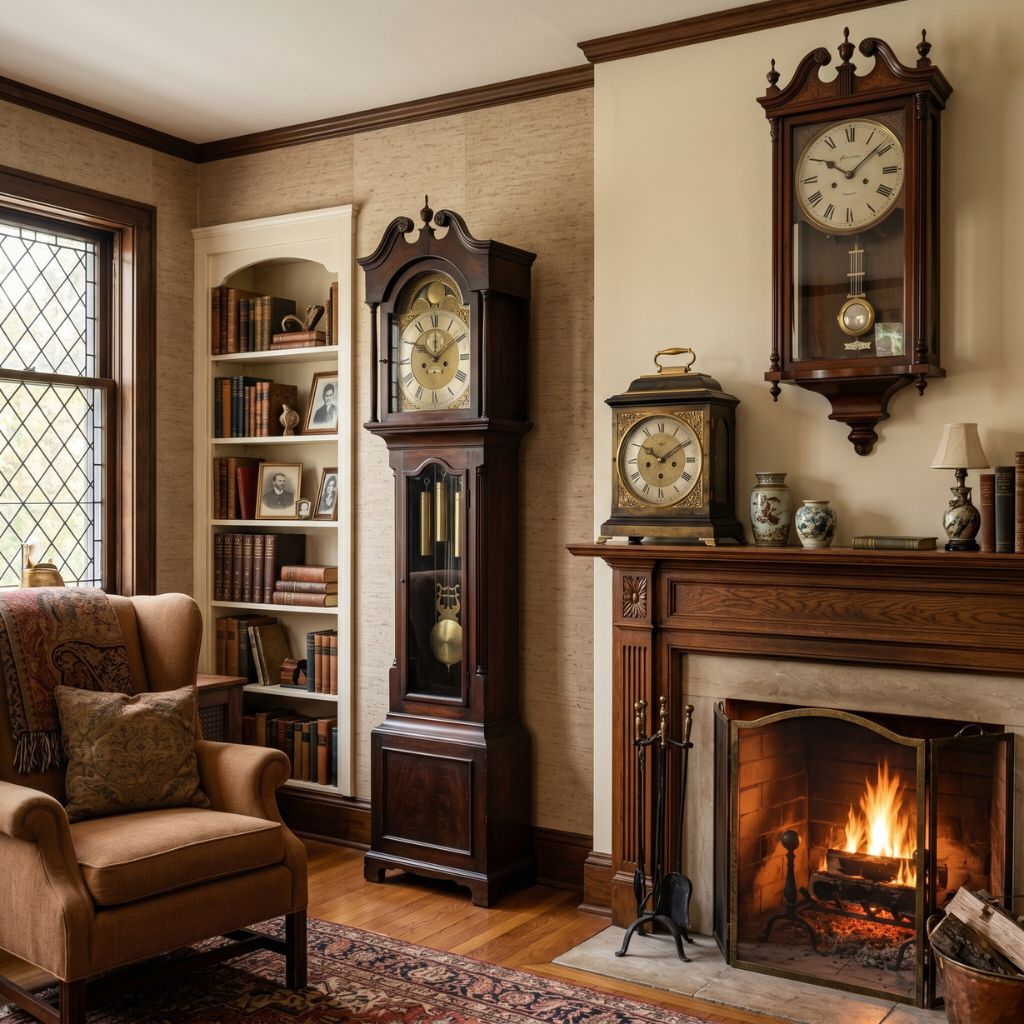
You might think antique clocks would have disappeared once smartphones arrived. After all, most people carry a clock in their pocket every day.
As it turns out, antique clocks aren’t competing with smartphones at all.
They’re competing with boredom.
Modern homes are filled with screens, gadgets, and disposable products. Meanwhile, antique clocks bring something completely different to a room. They bring character, craftsmanship, and a story worth telling.
Walk into a room with a beautiful antique clock, and people notice it. They ask questions. They share memories. Before long, conversations start flowing.
That’s something a digital alarm clock rarely accomplishes.
At the same time, collectors appreciate the remarkable engineering behind these historic timepieces. Many antique clocks were built to be repaired rather than replaced. It also means that clocks made 100 years ago are still working today.
Not surprisingly, antique clocks have also become popular decorating pieces. Whether displayed in a farmhouse, a Victorian-inspired home, or a modern living room, they add warmth and personality that mass-produced décor often lacks. Today, many collectors seek out Clocks In American History because they combine craftsmanship, nostalgia, and a tangible connection to the past.
Here’s the funny part.
Most antique clocks spend their retirement doing exactly what they did when they were new.
Standing proudly in the corner and reminding everyone that time keeps moving.
Some jobs never change.
Tips For Collecting Historic Timepieces
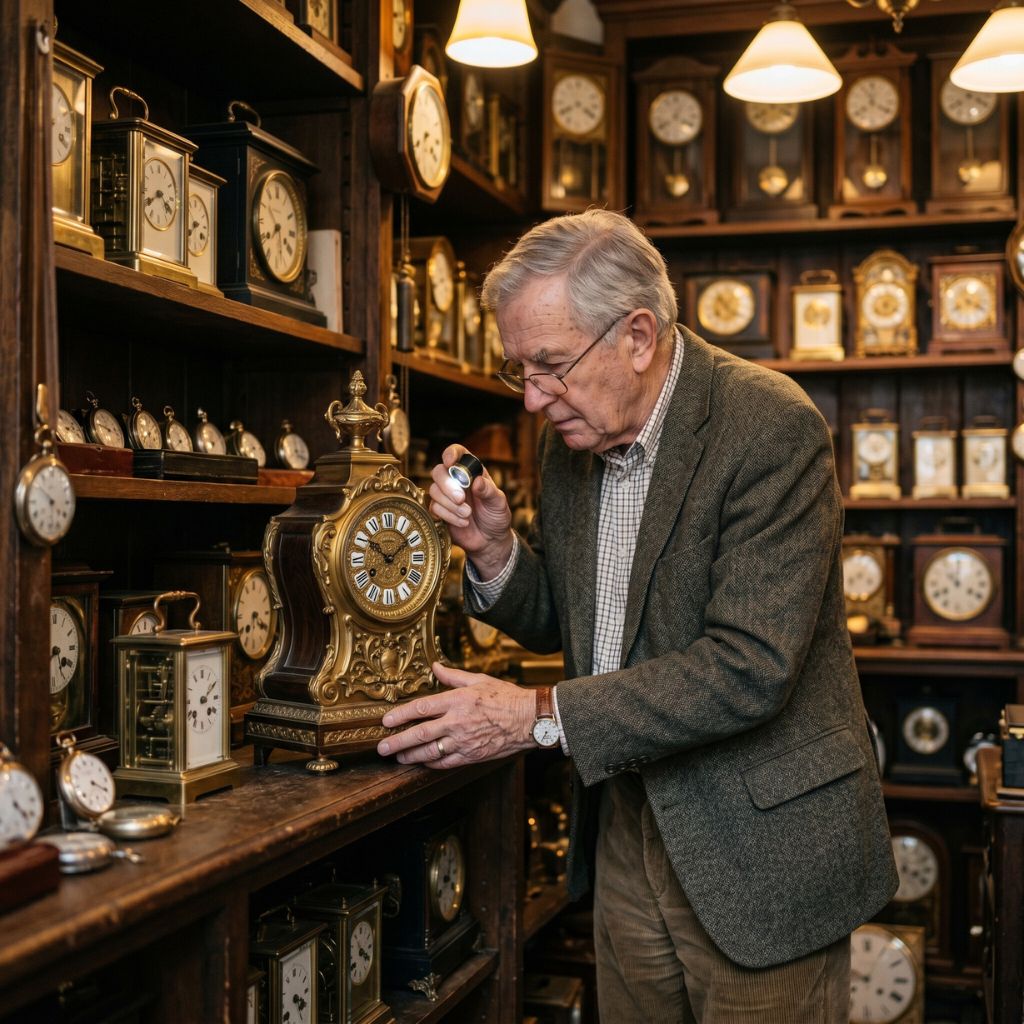
If antique clocks have caught your attention, welcome to the club. Just be warned—it can become an addictive hobby.
One day you’re admiring an old mantel clock at an antique mall. The next thing you know, you’re researching pendulums, maker’s marks, and clock movements at midnight.
First, buy what you love.
That may sound simple, but it’s the best advice any collector can receive. While rarity and value matter, you’ll enjoy your collection far more if the pieces genuinely speak to you.
Next, take a close look at the condition. Small scratches and signs of age often add character. However, missing parts, severe damage, or poor repairs can create expensive headaches later.
At the same time, learn a little about the maker. Many antique clocks have fascinating histories, and some manufacturers are highly sought after by collectors.
Better yet, don’t be afraid to ask questions. Most antique dealers and collectors enjoy talking about clocks almost as much as they enjoy buying them.
And that’s saying something.
Remember, every great collection starts with a single piece. Nobody wakes up one morning with a house full of antique clocks. That usually takes years of hunting, learning, and occasionally explaining to family members why another clock just followed you home.
Frequently Asked Questions About Vintage Books
As we’ve explored throughout this article, clocks have played a remarkable role in shaping daily life, transportation, business, and family traditions. Even today, many people remain fascinated by the stories behind these historic timepieces. With that in mind, here are answers to some of the most common questions about Clocks in American History and famous clocks around the world.
What is the great historical clock of America?
There is no single official "great historical clock of America," but many historians point to famous public clocks, railroad clocks, and historic tower clocks as symbols of American timekeeping. In particular, railroad clocks played a major role in helping establish standardized time across the nation. As a result, they became some of the most influential clocks in American history because they helped keep trains, businesses, and communities running on schedule.
Who is called the father of clockmaking?
Many historians refer to Peter Henlein as the father of clockmaking. During the early 1500s, he developed some of the first portable spring-driven clocks in Europe. Although clockmaking existed before his time, his innovations helped pave the way for watches and smaller clocks that would eventually influence timekeeping around the world.
What is the world's most famous clock?
The world's most famous clock is often considered the clock tower of Elizabeth Tower, commonly known as Big Ben. Interestingly, Big Ben is actually the name of the massive bell inside the tower rather than the clock itself. Nevertheless, its iconic appearance and worldwide recognition have made it one of the most celebrated timepieces in history.
What is the oldest known clock?
The oldest known mechanical clocks appeared in Europe during the late 1200s and early 1300s. However, humans measured time long before that using sundials, water clocks, and other devices dating back thousands of years. Therefore, the answer depends on how the word "clock" is defined. Even so, early mechanical clocks laid the foundation for many of the clocks in American history that would appear centuries later.
Where is the biggest clock in the USA?
One of the largest clocks in the United States can be found at Allen-Bradley Clock Tower. Located in Milwaukee, Wisconsin, this enormous four-faced clock has long been one of the city's most recognizable landmarks. Because of its impressive size and visibility, it is often compared to some of the world's most famous tower clocks.
These questions only scratch the surface. However, they demonstrate just how fascinating the history of clocks can be. Whether you're interested in collecting antique timepieces or simply learning about clocks in American history, there is always another story waiting to be discovered.
Final Thoughts On The Clocks That Ticked Through American History
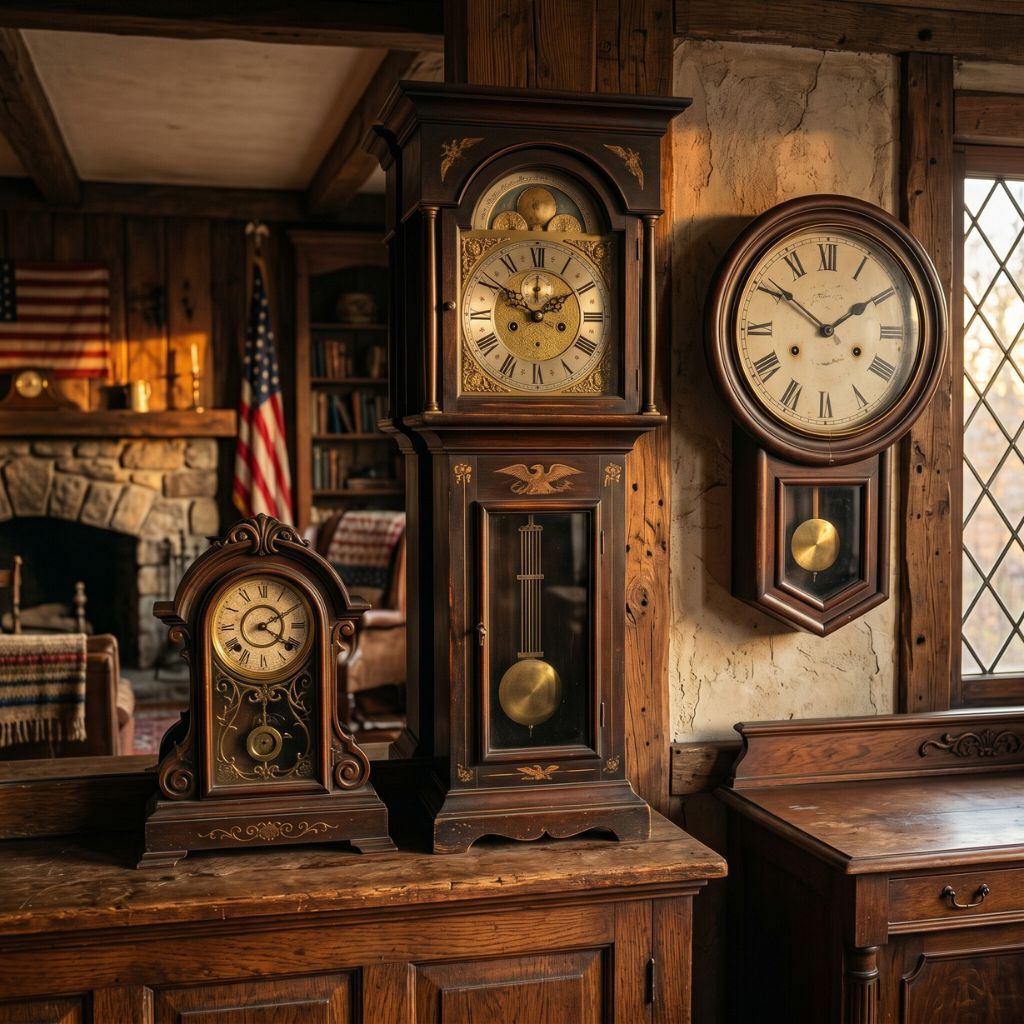
When most people look at an antique clock, they see a beautiful old timepiece.
However, there is much more to the story.
These clocks stood in homes during celebrations and hardships. They marked the hours during family dinners, holiday gatherings, and quiet evenings by the fire. They watched children grow up, witnessed historic events, and kept ticking through generations of change.
As America celebrates 250 years of history, antique clocks offer a fascinating reminder that history isn’t only found in museums and textbooks. Sometimes it’s sitting quietly in a hallway, standing proudly on a mantel, or tucked away in a family collection.
That’s what makes these timepieces so special.
They didn’t simply measure time.
They lived through it.
Even today, antique clocks continue connecting us to the people who came before us. Their craftsmanship tells one story. Their survival tells another. Yet the memories they carry may be the most valuable part of all.
So the next time you hear the steady tick of an old clock, take a moment to appreciate it.
After all, that clock may have been keeping time long before any of us arrived—and with a little care, it may still be ticking long after we’re gone.
Collector's Corner: Bring History Home
Want to bring a little history into your home without spending months hunting through antique shops and estate sales?
We’ve gathered some of our favorite vintage-inspired clocks, classic timepieces, and collectible treasures so you can decorate with confidence and enjoy the timeless charm these remarkable pieces bring to any room.
👉 Browse Our Timepieces Shop For Vintage-Inspired Clocks & Collectible Treasures
After all, some of the best conversations start with a clock on the wall and a story waiting to be told.
Bonus Content: Because We Want You To Know

Our goal in writing this essay was to provide you with useful information and ideas. See more material that we think you’ll like down below.
🕰️ Bonus: Keep The Story Ticking
If you enjoyed learning about clocks in American History, there’s plenty more history waiting to be discovered. From treasured heirlooms and fascinating collectibles to stories that shaped American homes and families, these timeless pieces help preserve the past while adding character to the present.
Along the way, you’ll uncover more stories about craftsmanship, nostalgia, collecting, and the everyday objects that quietly witnessed history unfold. Better yet, each piece offers a unique glimpse into the people, traditions, and moments that helped shape America.
Take a look at the articles below and continue your journey through the remarkable world of antiques, collectibles, and American heritage.
America Turns 250– Take a deeper look at the inventions, traditions, and everyday objects that helped shape American life over the last two and a half centuries.
Do Rotary Phones Work in 2026? A Modern Guide – Discover whether these iconic telephones still function today, how they connect to modern technology, and why collectors continue to love them decades after their heyday.
Vintage Books: The Allure of a Collector’s Dream – Step into the fascinating world of vintage books and discover why these timeless treasures continue to captivate collectors, preserve history, and bring character to any collection.
Antique Collection on a Budget– Learn how to build a meaningful antique collection without overspending by finding hidden treasures, avoiding costly mistakes, and focusing on pieces that offer both history and value.

Tradition, Treasures & Timeless Stories—Delivered Weekly
Every antique tells a story, and every tradition carries a memory. Our newsletter brings you closer to both, with inspiration, guides, and finds that make nostalgia part of your everyday life. Subscribe today and let the past brighten your future.