Home » 1920s Menswear » 1950s to 1980s Men’s Fashion
7 Must-Have Styles from 1950s to 1980s Men’s Fashion
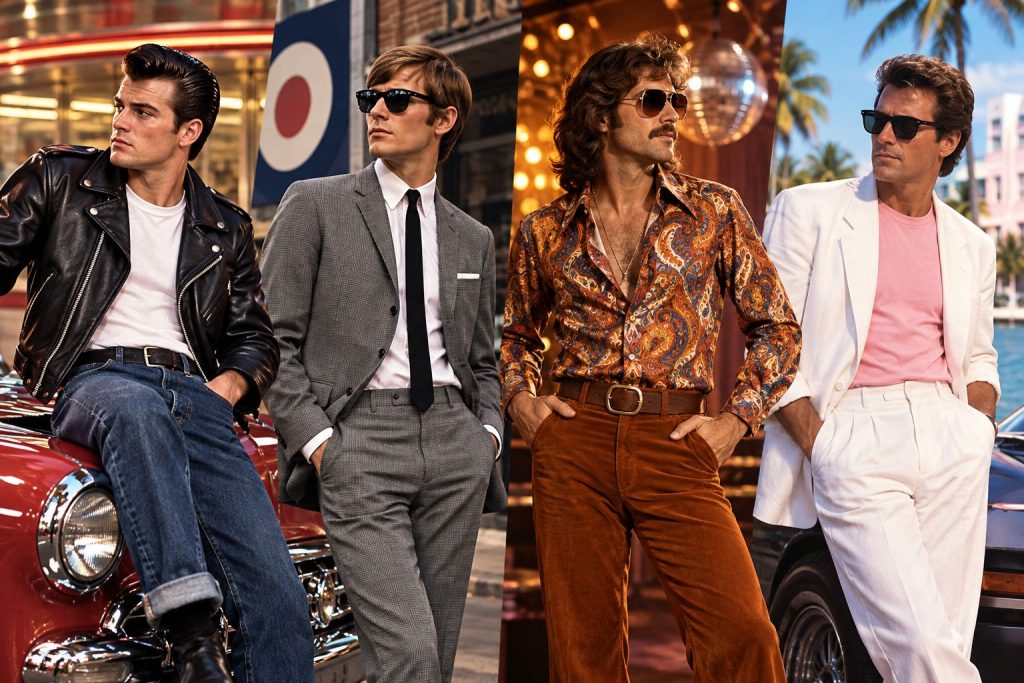
From the 1950s to the 1980s, men’s fashion changed dramatically. The slick leather jackets of the ’50s gave way to sharp Mod tailoring, flashy disco shirts, laid-back ’70s looks, and the unapologetic excess of the 1980s. Frankly, compared with some of those decades, modern menswear can seem downright sleepy.
Along the way, clothes became more than something a man simply wore. They could announce rebellion, sophistication, athletic confidence, or rock-and-roll attitude before he said a word. So grab the pomade, polish the loafers, and take a dapper stroll through 7 unforgettable styles from 1950s to 1980s men’s fashion.
Watch: Men’s Fashion Through the Decades
Prefer to see the styles in action? Our original video takes a quick trip through men’s fashion from the 1950s to the 1980s, from leather-jacket rebellion and sharp Mod tailoring to disco, denim, tracksuits, and pastel ’80s swagger.
It’s just over 3 minutes, so press play and see how four unforgettable decades changed the way men dressed—and occasionally proved that subtlety was highly overrated.

The Greaser Jacket: 1950s Men's Fashion and Rebel Style

Back in the ’50s, if you didn’t have a leather jacket, were you even cool? Movie icons such as James Dean and Marlon Brando helped turn the greaser look into more than a fashion statement. With wide lapels, zippered sleeves, dark jeans, and plenty of attitude, the leather jacket became a symbol of teenage rebellion.
Even today, the look works with dark jeans and boots for an unmistakable 1950s edge. Nearly 70 years later, a good leather jacket can still make an ordinary pair of jeans look ready for a night on the town.
Shop a retro-style men’s leather jacket on Amazon. →
Nostalgia Nook Antiques Fun Fact: The black leather jacket wasn’t invented by 1950s rebels. Motorcycle jackets were around decades earlier, but Hollywood helped turn them into symbols of youthful rebellion. Marlon Brando’s leather-clad appearance in The Wild One (1953) helped cement the look in popular culture.
2. Oxford Shoes & Slim Trousers: 1960s Mod Style

As the ’60s rolled in, the Mod movement brought a sleeker, sharper look to men’s fashion. Out went the grease, and in came clean lines, slim trousers, narrow ties, tailored jackets, and polished Oxford shoes. Meanwhile, British bands such as The Beatles helped carry that crisp style far beyond London. Suddenly, every young man could dress as though he had a Vespa parked outside. The Victoria and Albert Museum traces this sharp new menswear style to London’s emerging youth culture, where Italian-inspired tailoring and slim silhouettes helped define the Mod look.
Better yet, much of the look still works today. Pair slim trousers with polished Oxfords and a narrow tie, and the result feels sharp without looking like a costume. Few vintage styles made dressing up look quite this effortless. Complete the Mod look with classic men’s Oxford shoes. →
Nostalgia Nook Antiques Fun Fact: The original Mod scene grew around London in the late 1950s and early 1960s. Italian scooters such as Vespas and Lambrettas became part of the culture right alongside sharp suits, music, and painstakingly polished shoes.
The Bold Patterned Shirt: 1970s Men's Fashion and Disco Style
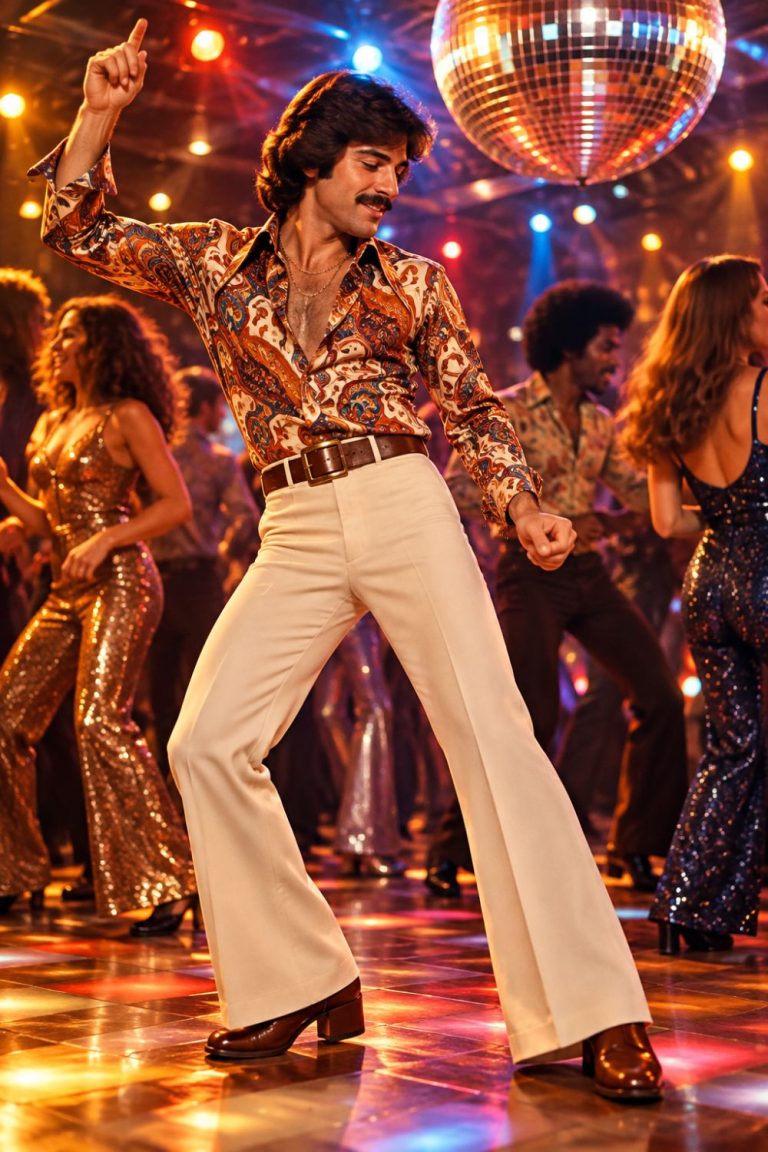
Suddenly, the lights went low and the shirts got loud. By the 1970s, men’s fashion had embraced bold patterns, shiny fabrics, oversized collars, and colors that were impossible to ignore. On the dance floor, subtlety was not exactly the goal.
Meanwhile, disco pushed the look even further. Patterned shirts were often worn open at the collar and paired with flared trousers, platform shoes, or a sharply cut suit. Saturday Night Fever later helped carry that unmistakable style from the nightclub into popular culture. The Museum at FIT’s fashion collection preserves examples of the brightly colored, body-conscious clothing that became part of the 1970s disco scene.
Even better, you don’t need a disco ball hanging over the dining room table to borrow the look today. A bold patterned shirt with dark trousers or jeans can add just enough 1970s swagger without making it look like you’re headed to Studio 54. Bring back the groove with a retro 1970s patterned shirt. →
FUN FACT: Men’s disco shirts weren’t shy about their collars. Extra-wide pointed collars, shiny fabrics, and colorful patterns became hallmarks of the dance-floor look, often worn with several buttons undone.
4. Corduroy & Earth Tones: 1970s Casual Style
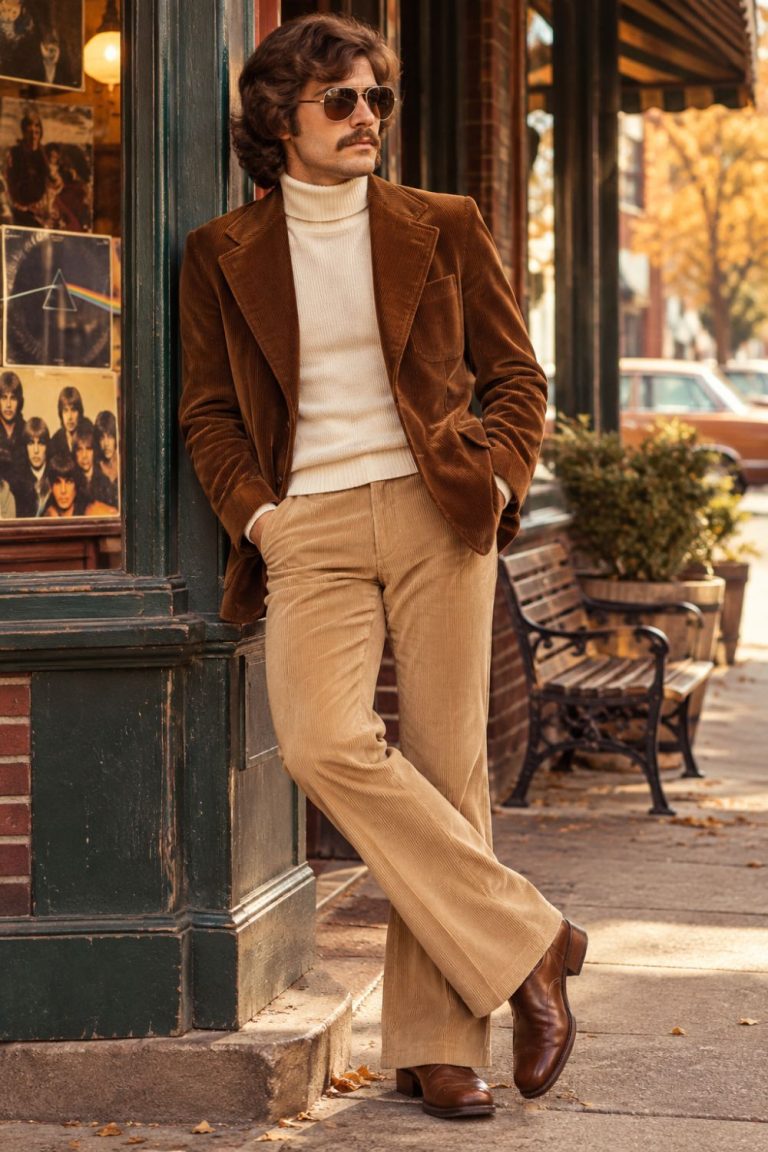
Not every man in the ’70s dressed like he was headed for the dance floor. Away from the disco lights, men embraced a more relaxed mix of corduroy jackets, knit sweaters, casual trousers, denim, and warm earth tones.
At the same time, texture became part of the look. Corduroy brought warmth and character to jackets and trousers, while shades of brown, rust, tan, olive, and cream gave casual menswear an unmistakably 1970s personality. The Fashion Institute of Technology’s 1970s fashion history documents corduroy alongside denim and tweed as part of the decade’s evolving menswear.
Better yet, this is one vintage look that doesn’t require much updating. A corduroy jacket over a simple shirt with jeans or chinos still works beautifully today. Add a pair of aviator sunglasses, and you’ve got just enough ’70s swagger without looking like you’re auditioning for a television detective show.
FUN FACT: Corduroy wasn’t limited to casual pants in the 1970s. Men wore the fabric in jackets and even complete suits, sometimes in colors such as burnt orange, brown, and other earthy shades. We have museum evidence for that too: the Maine Historical Society preserves a burnt-sienna men’s corduroy suit from around 1970, while the London Museum has striped black corduroy trousers dating from 1974–79.
5. The Tracksuit: 1980s Street Style

By the 1980s, men’s fashion was getting brighter, bolder, and considerably more comfortable. Tracksuits moved beyond gyms and athletic fields as colorful nylon jackets, matching pants, and sneakers became part of everyday street style.
At the same time, hip-hop gave sportswear a whole new attitude. Run-DMC became closely associated with tracksuits, sneakers, and gold chains, helping turn athletic clothing into a recognizable part of 1980s popular culture. The Smithsonian even preserves photographs of Run-DMC wearing neon tracksuits in its National Museum of African American History and Culture collection. Smithsonian’s collection of 1980s hip-hop music and fashion
Decades later, the basic idea hasn’t disappeared. Comfortable sportswear has become an everyday wardrobe staple. Apparently the ’80s were onto something—we just stopped requiring every tracksuit to be visible from across the parking lot.
FUN FACT: Run-DMC helped make athletic clothing part of hip-hop style in the 1980s. Tracksuits and sneakers became so closely associated with the group that examples and photographs of the look are now preserved in major museum collections.
6. Band Tees & Denim Jackets: 1980s Rock Style
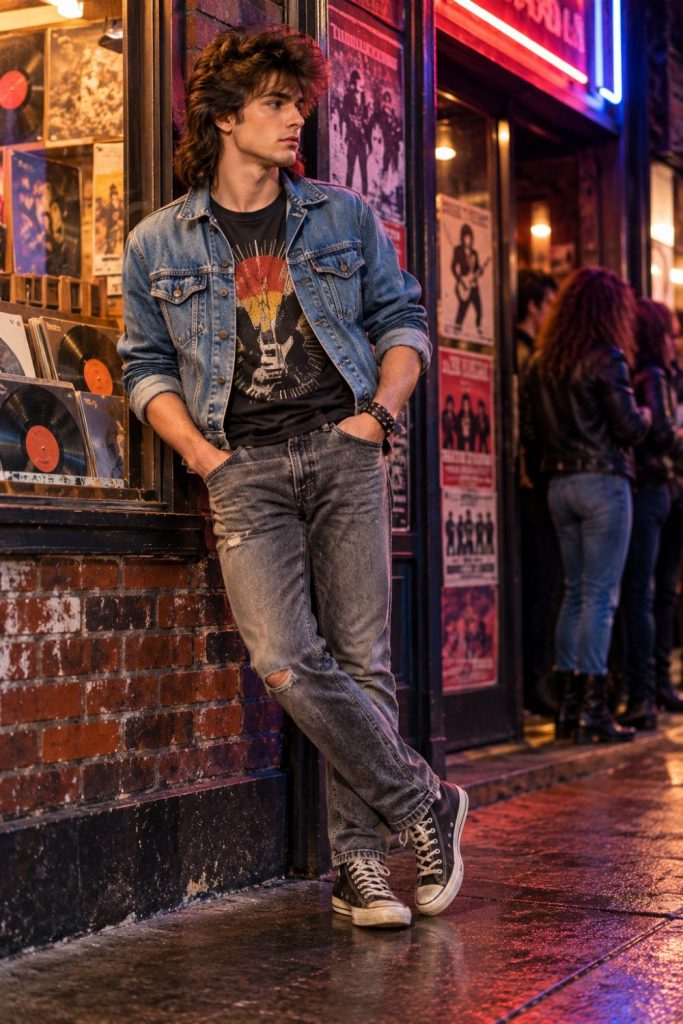
While tracksuits ruled one side of the ’80s, rock music gave men’s fashion another direction entirely. Band T-shirts, faded denim, leather, ripped jeans, and well-worn sneakers brought concert style onto the street.
Meanwhile, denim became increasingly expressive. Jackets could be faded, distressed, patched, or simply worn until they looked as though they’d survived a few hundred concerts. Paired with a favorite band tee, the result was casual, rebellious, and unmistakably 1980s.
Best of all, this is one look that never really disappeared. A classic denim jacket over a vintage-style T-shirt still works without requiring big hair, a backstage pass, or an amplifier turned up to 11.
FUN FACT: Denim jackets weren’t new in the 1980s—they had already spent decades as workwear and casual clothing. What changed was the attitude: fading, patches, pins, band imagery, and plenty of wear turned an ordinary jacket into something personal.
1950s to 1980s Men's Fashion: The Miami Vice Suit
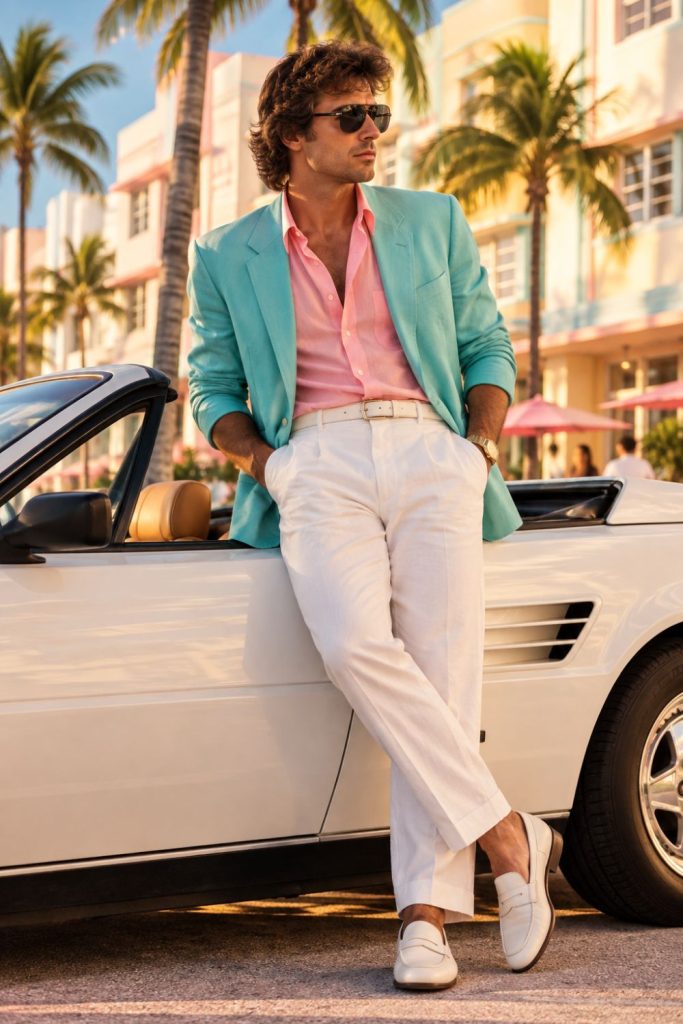
By the mid-1980s, men’s fashion had discovered pastels—and television made sure nobody missed them. Miami Vice turned unstructured jackets, colorful shirts, light trousers, loafers, and rolled sleeves into one of the decade’s most recognizable looks. A University of Connecticut exhibition on 1980s fashion notes that Miami Vice helped popularize unstructured suits, pastel colors, rolled sleeves, T-shirts under jackets, and loafers worn without socks.
At the same time, the show loosened the rules of traditional menswear. Jackets appeared over T-shirts instead of dress shirts and ties. Trousers became lighter and more relaxed. Meanwhile, loafers frequently showed up without socks, proving that even an undercover detective apparently had limits.
More than 40 years later, the look still screams 1980s. You don’t need to reproduce it from head to toe, either. A lightweight pastel blazer, white trousers, or a pair of loafers can bring a little South Beach swagger to a modern outfit—Ferrari not included.
FUN FACT: Miami Vice became such a fashion phenomenon that men reportedly walked into clothing stores asking for outfits like the detectives wore. The pastel craze became big enough that manufacturers began producing their own versions of the look.
Men’s Fashion From the 1950s to the 1980s Never Really Left
From greasers and Mods to disco shirts, denim jackets, tracksuits, and pastel blazers, men’s fashion from the 1950s to the 1980s gave every decade its own personality.
Yet the funny thing is, much of it never really disappeared. Leather jackets still look rebellious. Oxford shoes still dress up a pair of trousers. Denim jackets remain everywhere, while vintage-inspired sneakers, patterned shirts, and even pastel blazers continue finding their way back into modern wardrobes.
Perhaps that’s the real appeal of vintage style. You don’t have to dress as though you’ve stepped out of 1957, 1974, or 1986. Borrow one great idea, mix it with what you already wear, and make it your own.
After all, four decades gave us an awful lot of fashion. Some of it became classic. Some of it came back around. And some of it probably deserves to remain safely inside the family photo album.
Keep the Memories Going
If these vintage styles brought back a few memories, there are plenty more stories waiting in the closet. Keep exploring the clothes, culture, and everyday style that made each decade unmistakably its own.
Essential Wardrobe Staples: Suits, Hats, and Watches
Take another look at the classic pieces that helped define a well-dressed man’s wardrobe across generations.
1920s Menswear: Classic Style Before the Modern Era
Step back another generation to the suits, hats, shoes, and polished details that shaped men’s style before the postwar decades.
1920s Womenswear: From Flapper to Fabulous
Cross over to the other side of the closet and revisit the daring fashions that helped redefine women’s style during the Roaring Twenties.
What Vintage Technology Still Works Today?
Fashion wasn’t the only thing built to last. Discover which old-school gadgets and household technology can still earn their keep today.
Vintage Lights: Antique Glow – A Nostalgic Lighting Collection
From table lamps to farmhouse fixtures, see how vintage lighting styles can bring another piece of the past into the present.
The styles may change, but there’s always another memory waiting at Nostalgia Nook Antiques.
The past has a way of finding us again. Sometimes it’s an old song, a familiar photograph, a forgotten gadget, or something we haven’t thought about in 40 years.
That’s what Nostalgia Nook Antiques is all about—rediscovering the stories, objects, and everyday memories that connect one generation to another.
Keep exploring. There’s always another story waiting around the corner.