The Allure of Vintage Books: A Collector's Dream
Why Vintage Books Still Captivate Collectors
Vintage books are finding new readers all over again, from old novels and histories to cookbooks and forgotten classics.
Perhaps that’s because a vintage book offers something a screen never quite can. You can feel the cloth or worn leather beneath your fingers, notice the faded lettering on the spine, and sometimes discover a handwritten name or note left by someone who owned it decades ago.
Of course, collectors appreciate beautiful bindings and scarce editions. Yet the real attraction often goes deeper. Every old book has lived a life before it reached your shelf. It may have survived moves, changing fashions, family libraries, dusty attics, and generations of readers.
That’s part of why vintage books still captivate collectors. We’re not simply collecting stories printed on old paper. We’re preserving small pieces of the past.
So, why are people falling in love with them again?
Let’s open one up and find out.
Step Inside the World of Vintage Books
Press play and discover why vintage books are more than décor—they’re stories, history, and timeless charm brought into your home.
Why Vintage Books Still Captivate Us
First of all, vintage books have a presence that’s difficult to reproduce.
Pick one up and you may notice the weight of the binding, the texture of the cover, the thickness of the paper, or even that unmistakable old-book scent.
Also, a lot of older books were written with features that fans still like today. Cloth and leather bindings, decorative lettering, illustrated endpapers, embossed covers, and carefully designed type can make the book itself nearly as interesting as the story inside.
Yet craftsmanship is only part of the attraction. An inscription on the first page, a penciled note in the margin, or an old bookstore label can reveal that someone else treasured the same book decades before you found it.
That’s what makes vintage books different. You aren’t simply holding something old. You’re holding something that has already had a life.
And sometimes, that life is the best story in the book.
Amusing Fact: That familiar “old book smell” actually comes from chemical compounds released as paper, ink, and binding materials slowly break down. Some of those compounds produce scents reminiscent of vanilla, almonds, and grass. So when someone says an old library smells wonderful, chemistry is partly responsible.
The Stories Beyond the Pages
Sometimes the most interesting part of a vintage book wasn’t printed by the publisher at all.
Open an old volume and you might discover a name written inside the cover, a birthday inscription from 1947, a forgotten bookmark, or even a pressed flower tucked between the pages.
Suddenly, the book has two stories. There’s the one the author wrote—and the one left behind by the people who owned it.
That’s one of the pleasures of collecting vintage books. Small clues can make you wonder where a book has been, who once sat reading it, and why someone decided it was important enough to keep.
Occasionally, those discoveries can even provide clues about a family’s history or connect a book to a particular place and time.
The words tell one story. The book itself may tell another.
Amusing Fact: People have been leaving unexpected things inside books for centuries. Librarians and booksellers have discovered everything from old photographs and theater tickets to grocery lists, love letters, and pressed flowers hiding between the pages.
What Makes Vintage Books Valuable?
Eventually, almost every collector asks the same question:
“Are vintage books actually worth anything?”
The answer is yes—but age alone doesn’t make a book valuable.
Several things can influence what collectors are willing to pay. Condition matters, especially when the original dust jacket survives. Edition can matter too, since first editions and early printings may be more desirable. Scarcity, historical importance, provenance, and author signatures can also increase interest.
But an old book doesn’t need to be worth a lot of money to be interesting to collect. Sometimes the best find is simply a book that means something to you.
A valuable collection doesn’t always begin with an expensive book. It begins with a book you don’t want to put back on the shelf.
What collectors often look for:
- Condition
- First or notable editions
- Scarcity
- Original dust jackets
- Author signatures or inscriptions
- Interesting provenance
What Should a Beginner Collect?
So, where should a new collector begin?
Start with what interests you—not necessarily what costs the most.
Classic literature is an obvious choice, although old cookbooks can be surprisingly fascinating. Children’s books, family Bibles, local histories, old reference books, travel guides, and illustrated volumes can all lead a collection in completely different directions.
Better yet, give yourself permission to specialize. Maybe you love books about baseball, American history, old Hollywood, railroads, gardening, or recipes your grandmother might have made.
Over time, you’ll begin recognizing particular publishers, illustrators, bindings, and editions almost without realizing it.
That’s when collecting vintage books stops being a shopping trip and starts becoming a treasure hunt.
Collector’s Curiosity: An old book and a rare book aren’t necessarily the same thing. Millions of books printed generations ago still survive, while a much newer book can become highly collectible if very few copies were produced or survived.
How to Start Your Collection Today
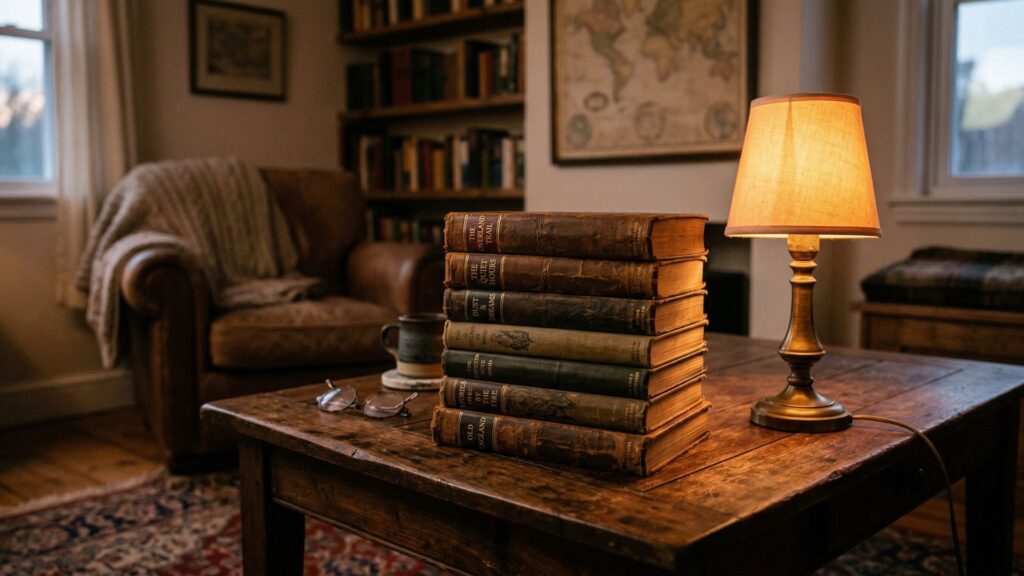
The easiest way to start collecting vintage books is to begin with something you already love.
Maybe that’s American history, classic novels, old cookbooks, baseball, children’s stories, or books connected to your hometown. Starting with a subject gives your collection a personality instead of simply filling a shelf with old books.
From there, keep things simple:
1. Start with what you love
A collection is much more enjoyable when the subject means something to you.
2. Set a comfortable budget
You don’t need expensive first editions to build an interesting collection. Flea markets, estate sales, library sales, antique shops, and used bookstores can produce wonderful surprises.
3. Check the condition
Look for missing pages, loose bindings, water damage, mold, and heavy writing. A little wear can add character; serious damage is another matter.
4. Learn as you collect
Publishers, editions, dust jackets, illustrators, and printing dates will start making more sense the longer you look.
5. Buy from sources you trust
When a book is expensive or advertised as rare, take the time to understand exactly what you’re buying.
Above all, don’t rush. Building a vintage book collection isn’t about filling a bookcase by next weekend.
Half the fun is wondering what you’ll discover next.
Decorating with Vintage Books (And Looking Like a Genius)
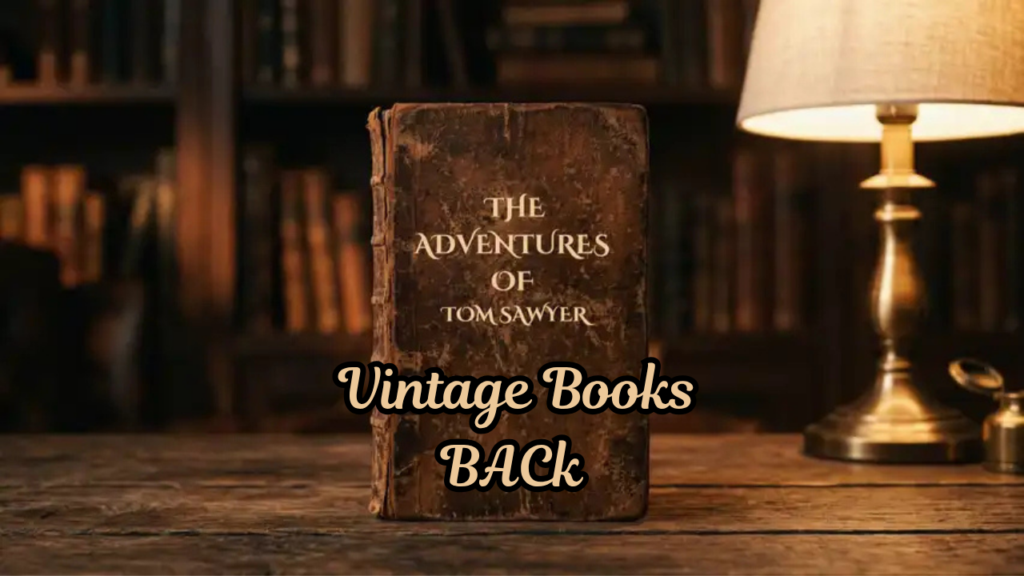
Vintage books don’t have to spend their lives hidden behind glass. They can become part of the room around you.
A small stack on an end table can add warmth to a reading corner. A few carefully chosen volumes beside an antique clock, old radio, or family photograph can turn an ordinary shelf into something that feels personal.
Better yet, you don’t need fifty matching books or a professionally designed library.
A few simple ideas can go a long way:
• Stack several books on a coffee or side table
• Use larger volumes beneath a favorite collectible
• Mix books with framed photographs or family keepsakes
• Place a few beside an antique lamp or clock
• Create a small reading corner rather than filling every shelf
However, there’s one rule I’d keep: don’t sacrifice a good book for the sake of decorating.
Avoid cutting books apart, gluing them together, painting valuable bindings, or placing older volumes where sunlight and moisture can damage them. After all, we’re decorating with history—not destroying it.
The best vintage-book displays don’t look staged. They look as though somebody actually lives there—and occasionally sits down and reads.
Amusing Fact: Interior decorators sometimes sell bundles of old books chosen mainly by the color of their spines. A book collector, meanwhile, is probably standing nearby wondering why nobody bothered to check what the books actually are.
Where to Find Vintage Books Without the Headache
So, where do you actually find vintage books worth bringing home?
Fortunately, the hunt is part of the fun. Antique shops and used bookstores are obvious places to begin because you can examine a book before buying it. Estate sales can be even more interesting, especially when you’re looking through books that belonged to one family for decades.
Thrift stores and library sales are worth checking too. You may have to dig through plenty of ordinary titles, but that’s precisely why finding something unusual feels so satisfying.
Online sellers and specialty book dealers open up an even larger selection, particularly when you’re searching for a specific author, edition, subject, or title.
Good places to look include:
• Antique shops
• Estate and garage sales
• Used bookstores
• Library book sales
• Thrift stores
• Reputable online booksellers
• Specialty and antiquarian book dealers
When you buy something online, you need to be a little more careful. Read the description carefully, examine every available photograph, and don’t be afraid to ask about the binding, missing pages, writing, odors, or water damage.
“Vintage” describes age and character. It doesn’t automatically mean good condition—or a good deal.
Looking for books with a little history behind them? We’ve gathered some of our favorite history, nostalgia, collecting, and classic-interest titles in the Nostalgia Nook Books & Stories collection.
Old Books vs. New Books: Let's Be Real
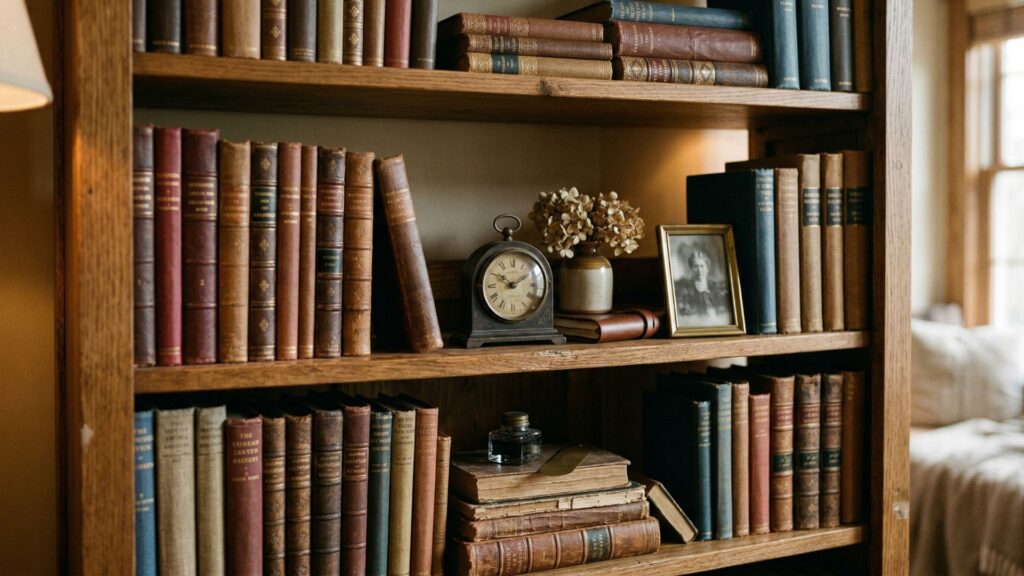
There’s no need to declare war on new books. They have plenty going for them.
They’re easy to find, usually affordable, and you don’t have to feel guilty about bending the cover while reading one on vacation.
Vintage books offer something different.
They may have cloth bindings, illustrated endpapers, unusual typography, old publisher marks, handwritten inscriptions, or simply the wear that comes from surviving decades of readers.
Meanwhile, a new book gives you the pleasure of being among its first readers. An old book leaves you wondering about everyone who came before you.
So, which is better?
Fortunately, nobody said your bookshelf has to choose sides.
A great home library can have a brand-new novel sitting right beside a century-old classic—and somehow they get along just fine.
Bookshelf Diplomacy: New books and vintage books have peacefully shared shelves for generations. So far, there have been no confirmed reports of either side demanding separate bookcases.
Frequently Asked Questions About Vintage Books
Still have questions about vintage books? You’re not alone. Whether you’re wondering how old a book needs to be, what makes one valuable, or how to spot something special, these are some of the questions new collectors ask most often.
What Makes a Book Considered Vintage?
There isn't one official age that automatically makes a book vintage.
Generally, collectors use the term "vintage book" for an older book that reflects the publishing style, design, or culture of an earlier period. Books that are more than 100 years old are more commonly described as antique books.
However, age is only part of the story. Binding style, illustrations, typography, dust jackets, printing methods, and historical context can all contribute to a book's vintage character.
That's why a book doesn't suddenly become interesting on a particular birthday. Its era, craftsmanship, condition, and story all matter.
How Do I Value My Vintage Books?
This is the question almost every collector eventually asks: “What are my vintage books actually worth?”
Unfortunately, there's no single formula. Several factors work together:
• Condition—Complete books with sound bindings and minimal damage generally attract more interest. An original dust jacket can sometimes make a substantial difference.
• Edition—First editions and certain early printings may be more desirable, although a first edition isn't automatically valuable.
• Scarcity — A book becomes more interesting when relatively few comparable copies are available.
• Author and significance—Famous authors, important works, unusual associations, and historical importance can affect demand.
• Provenance — A documented connection to a notable person, place, or event can sometimes add considerable interest.
• Market demand—Ultimately, a book is worth what collectors are willing to pay for it.
When researching a book, don't rely solely on online asking prices. Look for records of comparable copies that actually sold, paying close attention to edition and condition. Not sure where to begin? The Smithsonian Libraries offers a helpful guide to identifying old books and researching what may affect their value.
For something that appears especially rare or valuable, a reputable bookseller or professional appraiser may be worth consulting.
And remember: old doesn't automatically mean valuable. Sometimes the battered cookbook Grandma used every Sunday isn't worth much on the collectors' market—and yet nobody in the family would sell it for anything.
What Are the Most Valuable Vintage Books?
Let’s talk heavy hitters.
Some vintage books can be remarkably valuable, but the title alone rarely tells the whole story.
Collectors often pay premiums for:
• Important first editions and early printings
• Signed or inscribed copies with authenticated signatures
• Books produced in unusually small numbers
• Copies with their original dust jackets
• Books with documented historical provenance
• Important works by highly collected authors
For example, a desirable first edition by an author such as Ernest Hemingway, F. Scott Fitzgerald, or J.R.R. Tolkien may command a substantial price. However, another edition of the very same title might be worth considerably less.
That's why identifying the exact edition and printing matters before assuming you've discovered a treasure.
And perhaps that's part of the fun: the valuable book doesn't always announce itself from the bookshelf. Sometimes you have to do a little detective work.
How Can I Tell If a Vintage Book Is Authentic?
Identifying a vintage book usually begins with the title page and copyright page.
Look for the publisher, publication date, edition statement, printing history, and number line if one is present. Then compare those details with reliable bibliographic information for the title.
Other clues can help:
• Binding—Does it match known copies from that edition?
• Dust jacket—Is it original to the book, a later jacket, or a reproduction?
• Paper and printing—Do they appear consistent with the period?
• Illustrations and typography—Do they match documented copies?
• Signatures and inscriptions—Don't assume a signature is genuine simply because it appears in an old book.
Also, remember that a reprint isn't necessarily a fake. Many perfectly authentic old books are later editions or later printings. They're simply different from what the first edition collectors may be searching for.
If a book appears unusually rare, signed, or valuable, compare it with trusted bibliographic references or consult an experienced antiquarian bookseller before making any big claims about it.
Sometimes identifying an old book is less like reading a book and more like solving a mystery. Fortunately, all the clues are usually hiding in plain sight.
HOW SHOULD I STORE AND PROTECT VINTAGE BOOKS?
Once you've found vintage books you love, the next job is helping them survive another generation.
Fortunately, you don't need a museum vault. A few sensible precautions can make a considerable difference.
• Keep books away from direct sunlight—UV light can fade covers, spines, and dust jackets.
• Avoid damp or humid areas—basements and garages can encourage mold and mildew.
• Store books upright when possible—support them without packing the shelf so tightly that removing one causes damage.
• Handle them with clean, dry hands—for most ordinary books, careful clean hands are preferable to unnecessary handling with gloves.
• Don't force a fragile binding open—older bindings can crack or separate when flattened.
• Keep food and drinks at a respectful distance—coffee and a good book belong together emotionally. Physically, perhaps not quite so close.
For particularly valuable or fragile books, archival boxes and acid-free materials can provide additional protection.
Above all, remember that preservation doesn't mean you can never enjoy your collection. Vintage books were made to be read. The goal is simply to make sure someone else can enjoy them after us.
Why Vintage Books Are Here to Stay
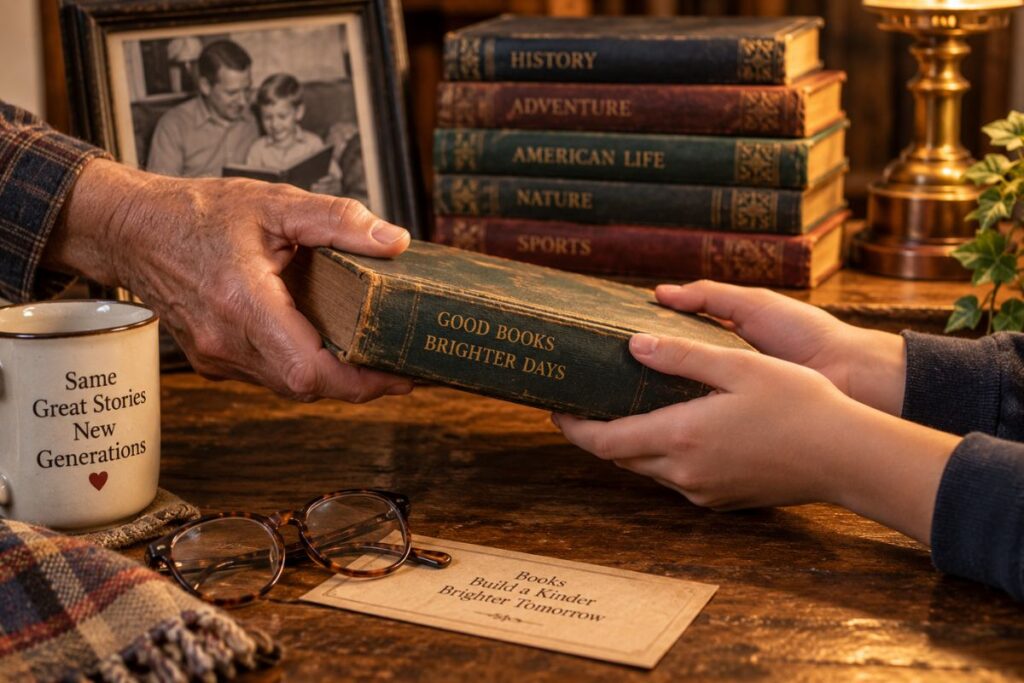
Vintage books remind us that a book can be more than the words printed on its pages.
It can carry the craftsmanship of another era, the handwriting of someone we’ve never met, or the marks left behind by generations of readers.
Some people collect them for their beauty. Others hunt for first editions, favorite authors, forgotten cookbooks, local histories, or books they remember from childhood. And sometimes we bring one home simply because it feels as though it belongs with us.
That might be why old books keep getting new fans even in this digital world. Technology may change how we read, but it hasn’t eliminated our desire to hold a story in our hands.
The best vintage books don’t merely preserve old stories. Eventually, they become part of our own.
Continue Exploring Books & Stories
Looking for your next nostalgic read? Visit our Books & Stories collection, where we’ve gathered books celebrating history, entertainment, sports, collecting, American life, and the stories worth remembering.
More Stories from Nostalgia Nook
Why America Loved Drive-In Theaters The Summer Nights We Never Forgot—
Remember when the drive-in was more than a movie? Revisit the speakers, concession stands, family nights, and summer memories that made it special.
Childhood Halloween Memories – Return to the Halloween nights of homemade costumes, pillowcases full of candy, porch lights, and neighborhoods packed with kids.
Nostalgia Radio Theater—Step back into the days when families gathered around the radio and a voice coming through the speaker could transport an entire room.
The Music That Kept America Dancing—From familiar songs to shared dances, rediscover the music that became the soundtrack to generations of American memories.
Tradition, Treasures & Timeless Stories—Delivered Weekly
Every antique tells a story, and every tradition carries a memory. Our newsletter brings you closer to both, with inspiration, guides, and finds that make nostalgia part of your everyday life. Subscribe today and let the past brighten your future.