Women’s Vintage Winter Style: The Right Scarf Wasn’t Just an Accessory

Women’s vintage winter style wasn’t simply about staying warm. A scarf, hat, pair of gloves, or structured handbag could transform an ordinary winter coat into a polished outfit. From wool scarves and felt hats to leather gloves and carefully chosen accessories, the details mattered.
After all, women weren’t dressing only for comfort. They were dressing for the office, shopping downtown, holiday gatherings, church, train stations, and evenings out. Even when snow covered the sidewalks, style didn’t get the winter off.
More importantly, the right accessories could change an entire look without requiring a new wardrobe. A colorful scarf added personality. A smart hat brought sophistication. Meanwhile, gloves and handbags supplied the finishing touches that made an outfit feel complete.
Today, many of those ideas are finding their way back into modern wardrobes. Vintage-inspired scarves, classic hats, elegant gloves, and structured handbags prove that practical winter clothing doesn’t have to be boring.
So button the coat, straighten the hat, and grab the good gloves. We’re taking a nostalgic look at the winter accessories that helped generations of women face cold weather with considerably more style than most of us manage while scraping ice off the windshield.
Take a look at our short film concerning vintage winter fashion for women

Scarves: Warmth Meets Personality
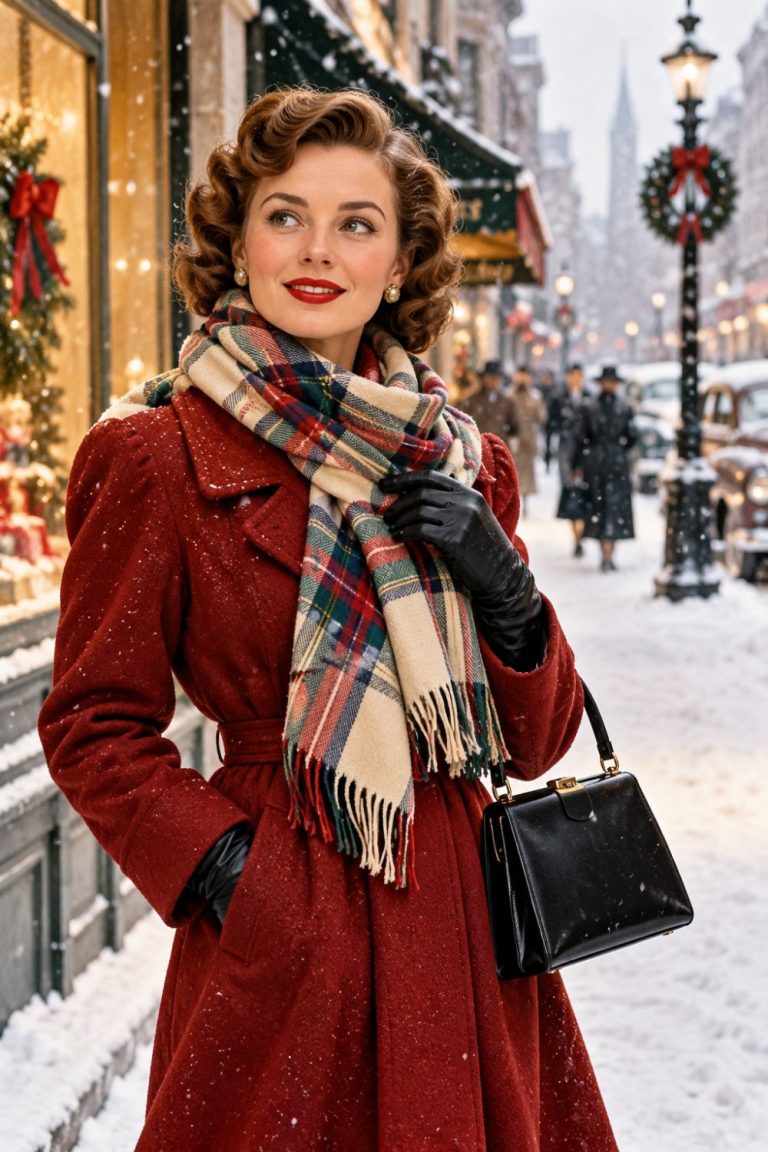
A scarf wasn’t simply about staying warm—it was one of the easiest ways to add color and personality to a winter outfit. Wool offered practical warmth, while silk and other lighter fabrics could bring a more polished touch. Plaids, checks, stripes, and bold prints also gave women plenty of ways to change the look of an otherwise simple coat.
By the 1950s, scarves had become wonderfully versatile fashion accessories. They could be wrapped around the neck, tucked neatly inside a coat collar, draped over the shoulders, or tied over the hair. Hollywood stars and fashion magazines helped popularize different ways of wearing them, while everyday women adapted those looks for work, shopping, travel, and evenings out.
Best of all, a scarf didn’t require buying an entirely new winter wardrobe. Change the scarf, add a pair of gloves, and the same coat could suddenly look different. That combination of practicality and personality is one reason vintage scarves remain so appealing today.
FUN FACT
Scarves weren’t limited to the neck. During the mid-20th century, women also wore them over their hair, around their shoulders, and tucked into coat collars—making one small accessory surprisingly versatile.
Hats: Classic Crowns of Women’s Vintage Winter Style
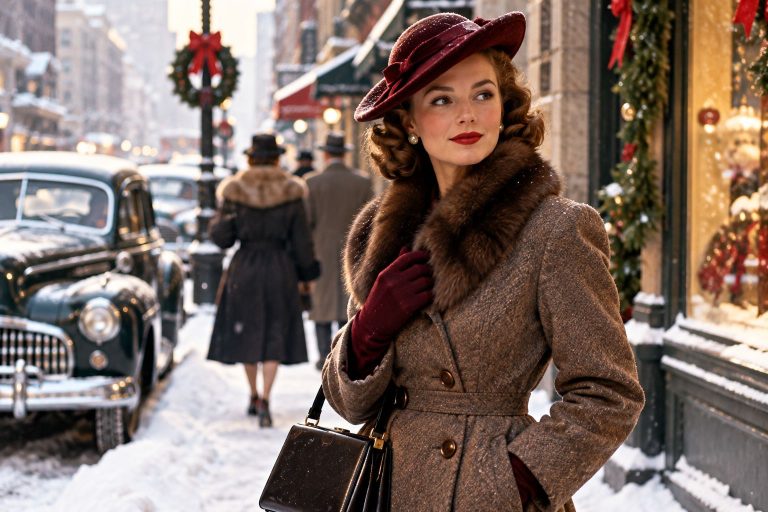
Few accessories could change a woman’s appearance as quickly as a hat. From the close-fitting cloche of the 1920s to the structured felt hats and smaller silhouettes that appeared in later decades, hats could frame the face, complement a coat, and give a winter outfit its finishing touch.
During much of the early and mid-20th century, hats were also far more common in everyday public life than they are today. Women wore them while shopping, traveling, attending church, going to work, and heading out for an evening. Winter offered especially practical reasons for choosing felt, wool, and other substantial materials.
Of course, fashions changed. Brims grew and shrank, crowns changed shape, and styles moved from decorative to comparatively simple. Yet the basic idea remained: the right hat could turn an ordinary coat into a complete outfit.
Look through old family photographs or classic winter movies and you’ll see the effect. Sometimes it’s the hat—not the coat—that gives away the decade.
FUN FACT
The cloche became one of the defining hat shapes of the 1920s. Its close-fitting design worked especially well with the shorter hairstyles that became fashionable during the decade.
Gloves: The Lost Language of Elegance
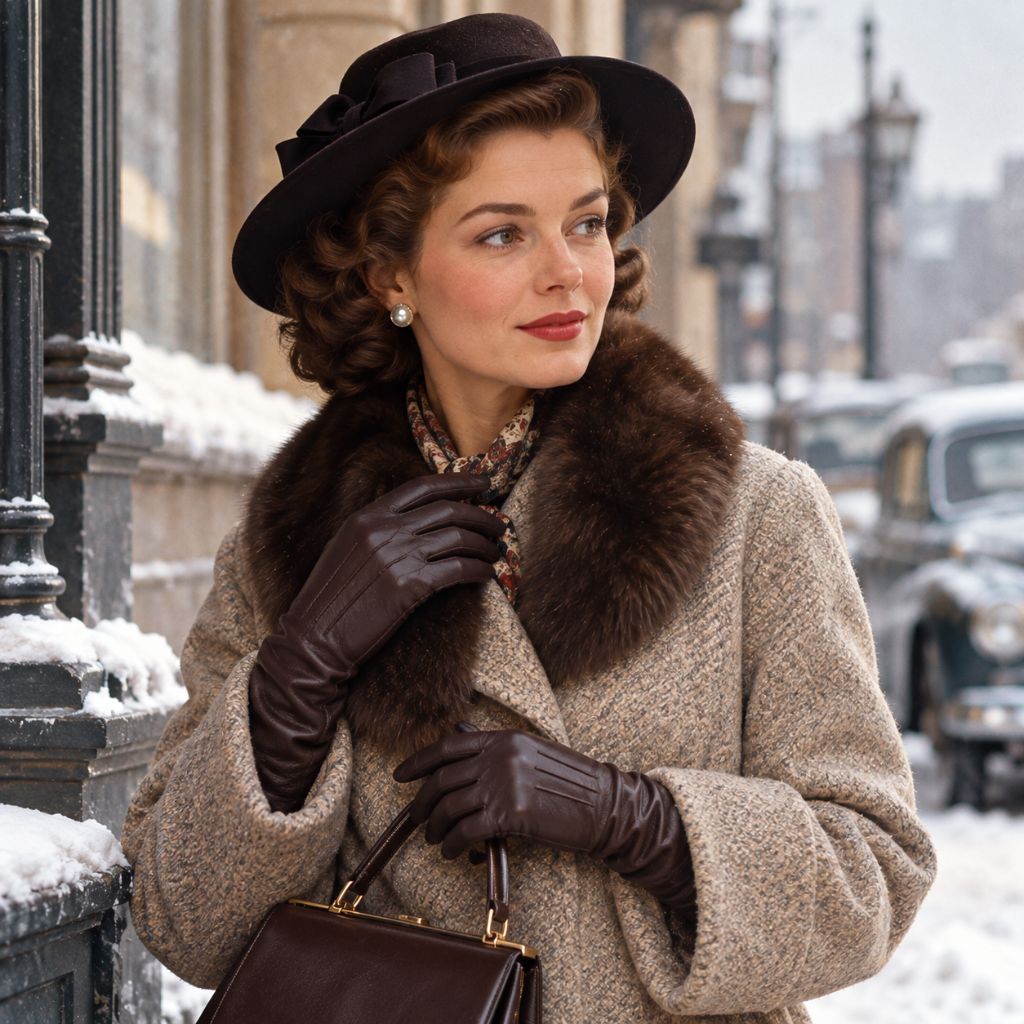
There was a time when gloves did considerably more than keep fingers warm. Leather, suede, wool, and knitted gloves could add color, texture, and polish to a winter outfit, while dressier pairs were worn for occasions that had nothing to do with cold weather.
For many women, gloves were another piece of the coordinated wardrobe. A pair might complement a coat, hat, shoes, or handbag rather than match everything exactly. As a result, even practical winter gloves could contribute to the overall look instead of disappearing beneath a coat sleeve.
Gloves also reflected the more formal dress customs of earlier generations. They appeared at church, social occasions, travel, shopping trips, and other public outings. Over time, however, everyday dress became increasingly casual, and gloves gradually lost much of that role.
We still wear them when the Michigan wind starts biting, of course. We just don’t usually coordinate them with the handbag anymore.
FUN FACT
Vintage glove sizing was often based on the measurement around the widest part of the hand. That’s why an old pair marked with a number such as 6½ or 7 may look surprisingly small by today’s standards.
Handbags: Where Vintage Style Meets Craftsmanship
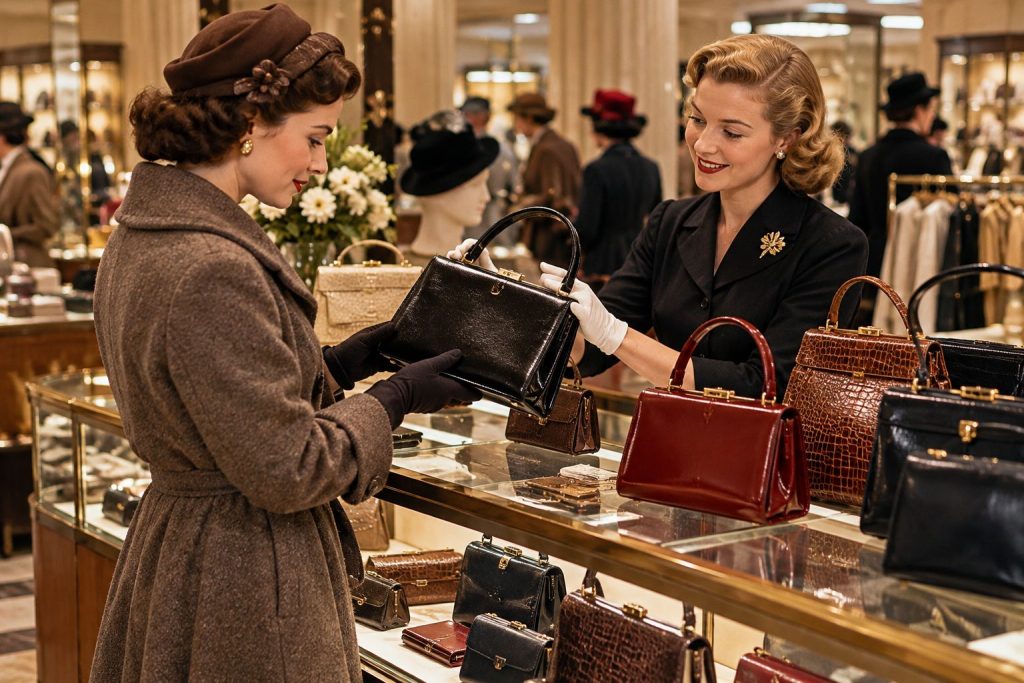
A handbag may not keep out the cold, but it could complete a winter outfit just as effectively as a scarf, hat, or pair of gloves. Structured leather handbags were especially well suited to tailored coats, giving women a practical place for everyday necessities while adding another polished detail to the overall look.
By the mid-20th century, handbags appeared in an enormous range of shapes and materials. Leather remained a classic choice, while designers also experimented with textiles, plastics, metal details, unusual clasps, and decorative finishes. The Victoria and Albert Museum’s collection of 1960s accessories shows just how adventurous handbag design could become, including a striking 1966 bag made from silver PVC and Perspex.
Meanwhile, changing lifestyles influenced what women carried. Work, shopping, travel, and social occasions all called for different sizes and styles. A compact handbag might accompany a dressier outfit, while larger bags offered considerably more room for everyday life.
That’s part of the fun of looking at vintage handbags today. Beyond the style, the compartments, clasps, handles, and little signs of wear can tell you something about how the bag was actually used.
Collector’s tip: When examining a vintage handbag, look beyond the label. Check the stitching, lining, frame, clasp, handle attachments, and hardware. Those details can reveal a great deal about both its construction and condition.
Wool Coats: The Foundation of Women’s Vintage Winter Style
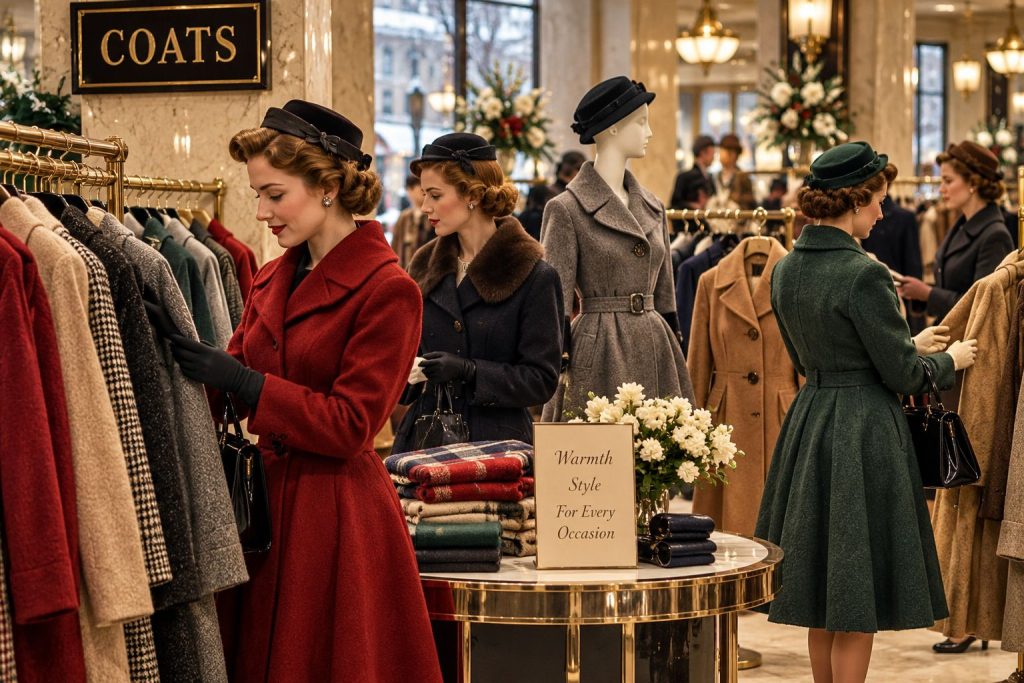
Accessories may have supplied the finishing touches, but the coat was the centerpiece of a woman’s winter wardrobe. For much of the 20th century, a well-chosen wool coat had to do two jobs at once: provide genuine protection from cold weather and look polished enough for everything from work and shopping to church or an evening out.
As fashions changed, so did the silhouette. Museum collections preserve some wonderful examples of those changing shapes. The Museum at FIT, for instance, holds a Christian Dior olive wool bouclé coat from 1952, a surviving example of the carefully designed outerwear that helped define mid-century fashion. Some coats followed the figure closely with fitted waists and belts, while others used fuller skirts, generous collars, or looser shapes that allowed room for dresses and suits underneath. Details such as oversized buttons, contrasting collars, cuffs, pockets, and decorative stitching could turn practical outerwear into fashion in its own right.
Wool remained especially valuable because of its warmth, durability, and ability to hold a tailored shape. Better coats were purchases meant to survive more than a single winter, which made choosing the color and cut particularly important.
That’s also why old family photographs taken outdoors can be so revealing. You may not see the dress underneath, but the coat, hat, gloves, and handbag can tell you plenty about the era.
FUN FACT
Winter coats were often designed with enough room to accommodate the dresses, suits, and layers worn underneath. Fashion had to leave a little breathing room for February.
Winter Boots & Overshoes: From Slush to Style
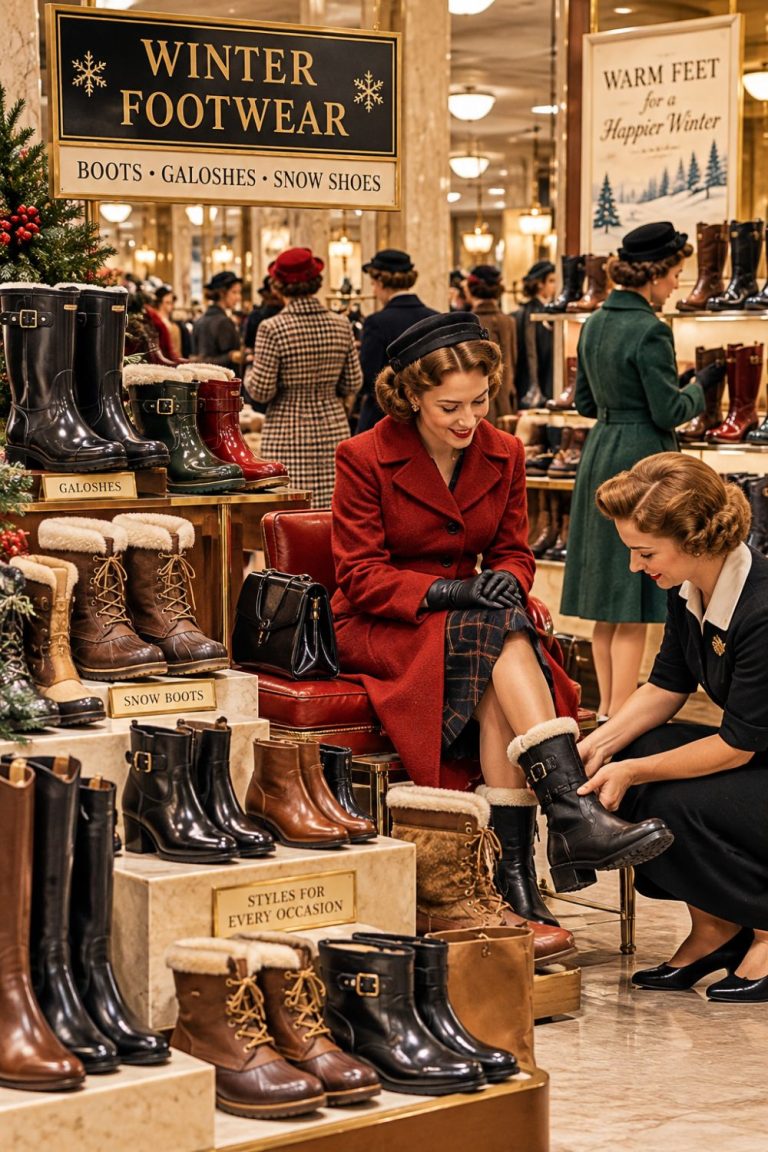
Winter footwear had an especially difficult job. It had to deal with snow, slush, salt, and cold while somehow allowing a woman to arrive at work, church, or the department store with her regular shoes still presentable.
For generations, one practical answer was the galosh or overshoe. Rather than replacing a fashionable shoe, rubber overshoes were worn over it for protection. The Metropolitan Museum of Art notes that the familiar rubber gaiter-style galosh, fastened with several metal clasps, had developed by the 1890s and changed surprisingly little over the following 60 years. The Museum at FIT has even devoted an exhibition to the evolution of fashionable boots, tracing their journey from practical walking footwear to a staple of the modern woman’s wardrobe.
By the 1950s, however, winter footwear was becoming easier to wear. Pull-on and step-in snow boots offered an alternative to older lace-up styles, while lined boots and fold-down cuffs provided additional warmth. Women could choose practical winter protection without abandoning style altogether.
Then boots began escaping their strictly practical role. Designer Beth Levine helped revive the fashion boot in the early 1960s, experimenting with new materials and silhouettes. The Met preserves her dressy evening boots from about 1962, while later designs demonstrate how rapidly boots grew taller and bolder as skirts shortened during the decade. The Metropolitan Museum of Art
By then, the humble winter boot had company. There were ankle boots, lined snow boots, pull-on boots, dress boots, and increasingly dramatic fashion boots. Some were meant to conquer a snowbank. Others were considerably better suited to conquering a cocktail party.
FUN FACT
Galoshes weren’t a mid-century invention. Rubber overshoes became increasingly practical after vulcanized rubber arrived in the 19th century, and the familiar multi-buckle style survived for decades.
Why It Still Matters
Women’s vintage winter style wasn’t created by one spectacular piece. It came together in layers: the wool coat, the carefully chosen scarf, the hat, the gloves, the handbag, and even the boots that had to survive the slush on the way there.
Perhaps that’s what makes these fashions so appealing today. They remind us of a time when getting dressed often involved more coordination and a little more ceremony. Practicality mattered, especially in winter, but practicality didn’t automatically mean giving up personality.
At the same time, we don’t have to dress as though we’re headed downtown in 1955 to borrow something from the past. A patterned scarf, structured handbag, classic wool coat, or beautiful pair of leather gloves can bring vintage character into an otherwise modern wardrobe.
And maybe that’s the real lesson hiding beneath all those hats, handbags, and galoshes. Fashion changes constantly, but the pleasure of putting something on and thinking, “Now that looks good,” hasn’t changed very much at all.
Keep the Memories Going
If these winter fashions brought back a few memories, there are plenty more stories waiting in the closet. Keep exploring the clothes, shops, and everyday styles that made each generation unmistakably its own.
1920s Women’s Wear: From Flapper to Fabulous
Cross over to the Roaring Twenties and revisit the daring fashions that helped redefine women’s style.
Women’s Vintage Fashion: Retro Glam Returns
See how classic silhouettes, polished accessories, and retro glamour are finding their way back into modern women’s fashion.
Why Women Loved Department Stores
Step back into the grand department stores where generations of women shopped for coats, hats, handbags, shoes, and the latest fashions.
Women’s Patriotic Fashion: Vintage Americana Style
Explore the colors, silhouettes, and nostalgic details that gave women’s Americana fashion its unmistakable character.
Something Old, Something Bold: Vintage Wedding Guest Style
Discover how vintage-inspired dresses, accessories, and timeless details can bring old-fashioned elegance to a modern celebration.
The styles may change, but there’s always another memory waiting at Nostalgia Nook Antiques.

The past has a way of finding us again. Sometimes it’s an old song, a familiar photograph, a forgotten gadget, or something we haven’t thought about in 40 years.
That’s what Nostalgia Nook Antiques is all about—rediscovering the stories, objects, and everyday memories that connect one generation to another.
Keep exploring. There’s always another story waiting around the corner.