Home » Heritage & Home » The Music That Kept America Dancing | America’s Soundtrack
The Music That Kept America Dancing
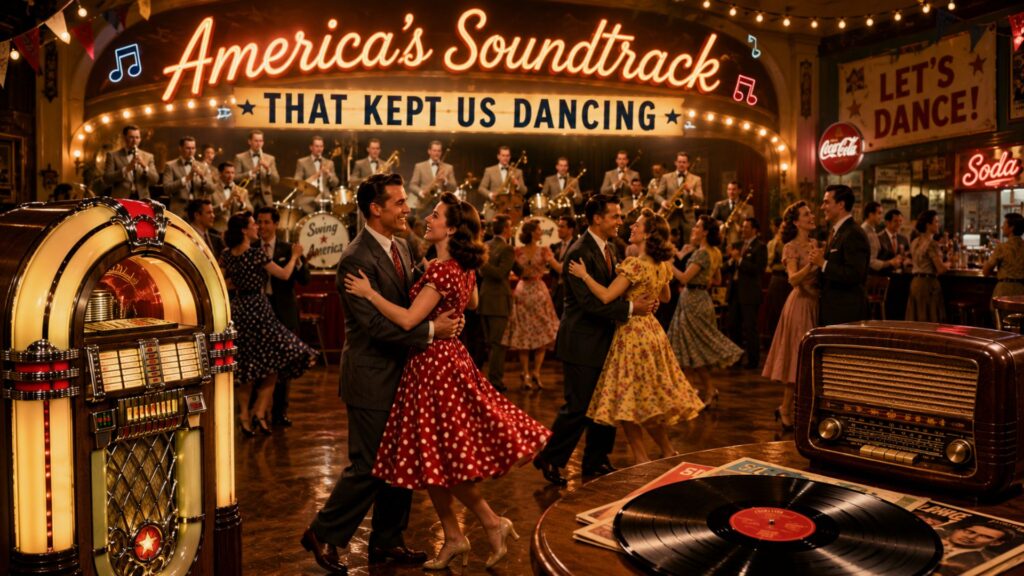
How Radio, Jukeboxes, and Vinyl Records Became the Soundtrack of American Life
The Music That Kept America Dancing began long before playlists, streaming services, or smartphones fit in our pockets. It began in living rooms, neighborhood diners, crowded dance halls, and around glowing radio consoles where a single song could lift spirits, bring strangers together, and become the soundtrack of an entire generation.
It spilled from polished wooden radios, drifted through open windows on warm summer evenings, poured from colorful jukeboxes, and spun beneath the needle of a cherished record player. Before long, those unforgettable melodies became part of everyday American life.
This wasn’t simply the history of popular songs. It was the story of how music helped America celebrate victories, endure hardships, welcome soldiers home, fill dance halls, and create memories that families still treasure decades later.
Even today, a familiar melody has the power to stop us in our tracks. Suddenly we’re back at a first dance, a family picnic, a Friday night at the local diner, or gathered around the radio, waiting to hear the next big hit.
So pull up a chair, turn the dial, and join us as we revisit the music that kept America dancing—and discover why those unforgettable songs still echo across generations.
Experience the Documentary
Whether you watched the documentary or you’re reading along, the journey continues below as we explore the people, places, broadcasts, and memories behind America’s unforgettable soundtrack.
The Music That Kept America Dancing Began on the Radio
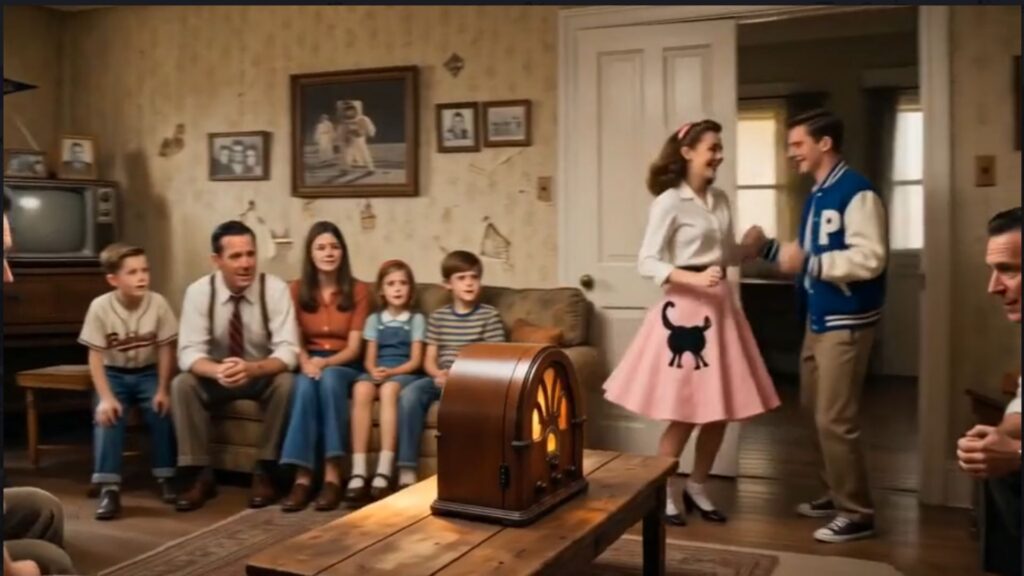
Before television became the center of American homes, radio ruled the evening. Families finished supper, settled into their favorite chairs, and waited for familiar voices and unforgettable melodies to fill the room. It wasn’t background noise. It was an event.
For the first time in history, millions of Americans could hear the very same song at nearly the very same moment. A lively swing tune played in New York could have toes tapping in Nebraska only moments later. Before long, local favorites became national sensations, and musicians found audiences far beyond their hometowns.
That shared experience did more than entertain. It created common memories. Neighbors talked about last night’s broadcasts over backyard fences. Teenagers eagerly awaited the latest hits, while parents rediscovered songs that reminded them of earlier days. Without realizing it, Americans were building a soundtrack they would carry for the rest of their lives.
The music that kept America dancing didn’t begin in a recording studio. It began when families gathered around a glowing radio and discovered that one song could make an entire nation feel just a little closer.
Nostalgia Note
How did Glenn Miller become one of America’s biggest stars without social media or television?
Commercial radio connected millions of listeners at the same time, allowing bandleaders like Glenn Miller and Benny Goodman to become household names almost overnight. Radio didn’t just play the hits—it helped create them.
From the Nostalgia Radio Theater Archives
Featured Broadcast
Giants of Jazz: Glen Miller
Experience the music that brought America together. Listen to Giants of Jazz: Glenn Miller and hear the timeless big band sound that first echoed from glowing radio consoles before spilling onto dance floors across the country.
How The Music That Kept America Dancing Filled America's Dance Halls
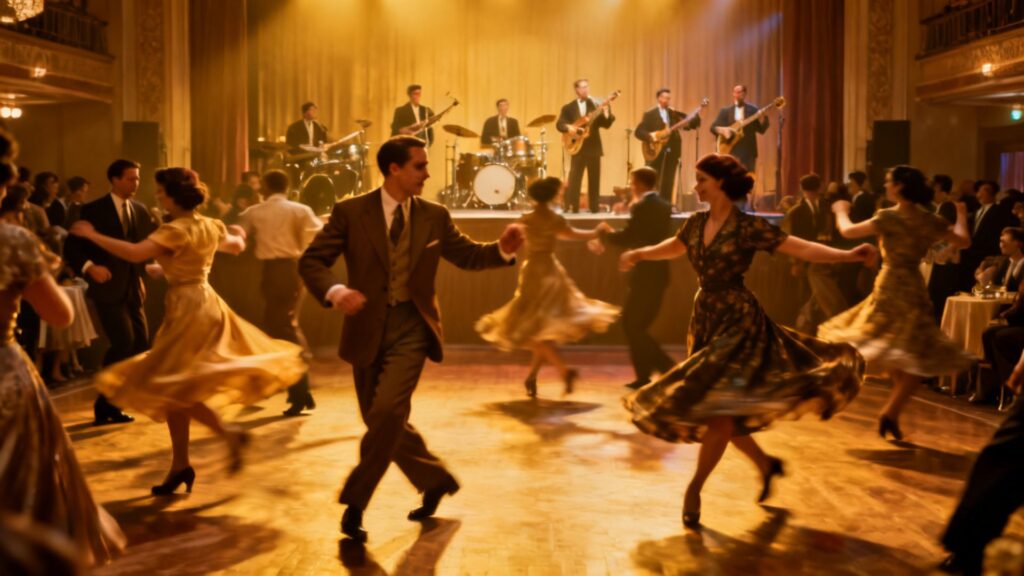
There was something almost magical about stepping through the doors of an American dance hall. The lights dimmed, the band counted off the first song, and within seconds the polished wooden floor came alive. Couples who had never met before shared a dance, while lifelong sweethearts found their favorite corner of the floor. For a few hours, the worries of everyday life seemed to disappear.
Big bands led by legends like Glenn Miller, Benny Goodman, Tommy Dorsey, and Duke Ellington didn’t simply perform music. They created an atmosphere that lifted spirits across the country. Whether the ballroom was in New York, Chicago, or a small Midwestern town, people came looking for the same thing—a chance to laugh, dance, and enjoy one unforgettable evening.
During the war years, those evenings meant even more. Many young couples danced before a deployment, while others celebrated joyful homecomings after months apart. Long after the orchestra packed up for the night, the memories remained.
The music that kept America dancing wasn’t measured by record sales alone. It was measured by crowded dance floors, worn-out shoes, and countless stories that families still tell today.
Nostalgia Note
Why did America’s dance halls mean so much to an entire generation?
During the 1930s and 1940s, dance halls offered more than music. They became places where first dates began, friendships grew, soldiers enjoyed precious evenings before deployment, and families celebrated joyful homecomings. For many Americans, the memories lasted long after the final song ended.
From the Nostalgia Radio Theater Archives
Every great dance hall had its own signature sound. Listen to The One and Only Tommy Dorsey Orchestra and hear the smooth brass, timeless swing, and unforgettable melodies that brought America’s grand ballrooms to life.
How The Music That Kept America Dancing Found a Home in America's Jukeboxes
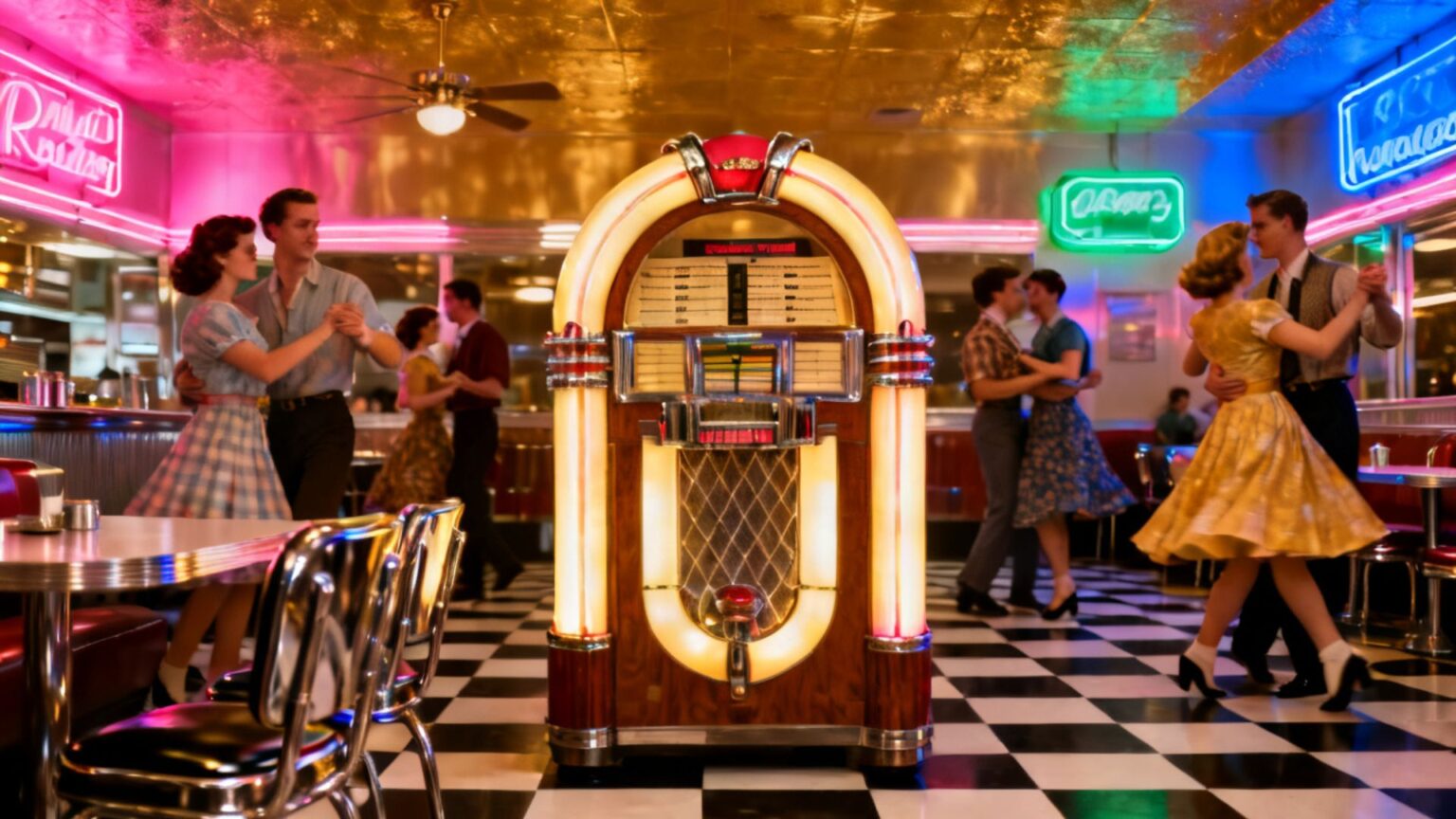
A jukebox did more than play music—it gave people the chance to choose the soundtrack of the moment. With a coin, a few button presses, and a little anticipation, anyone could fill a diner, soda fountain, or roadside café with the latest hit. Suddenly, music wasn’t limited to concert halls or radio broadcasts. It became part of everyday life.
Teenagers quickly claimed the jukebox as their own. Friends gathered after school, couples selected songs for slow dances, and favorite tunes became part of birthdays, celebrations, and first dates. Before long, jukeboxes helped shape American youth culture while introducing millions of listeners to artists they might never have discovered otherwise.
Restaurant owners loved them for another reason. Good music encouraged customers to stay a little longer, order another slice of pie, or drop one more nickel into the machine. Everybody benefited. Musicians reached new audiences, businesses welcomed loyal customers, and communities found another place to gather.
The music that kept America dancing didn’t stay on the ballroom floor. It found a permanent place beside hamburgers, milkshakes, laughter, and memories that still make people smile decades later.
Nostalgia Note
Unlike the family radio, a jukebox gave ordinary people the power to choose the next song. For just a few cents, anyone could become the evening’s DJ, making every visit feel personal and every favorite tune part of a shared memory.
From the Nostalgia Radio Theater Archives
Featured Broadcast
Listen to The Andrews Sisters Mix Songs (1944)
Drop a nickel into America’s favorite jukebox. Listen to THE ANDREWS SISTERS Mix Songs (1944) and rediscover the cheerful harmonies and timeless melodies that turned ordinary afternoons into unforgettable memories.
The Music That Kept America Dancing Became the Soundtrack of American Homes
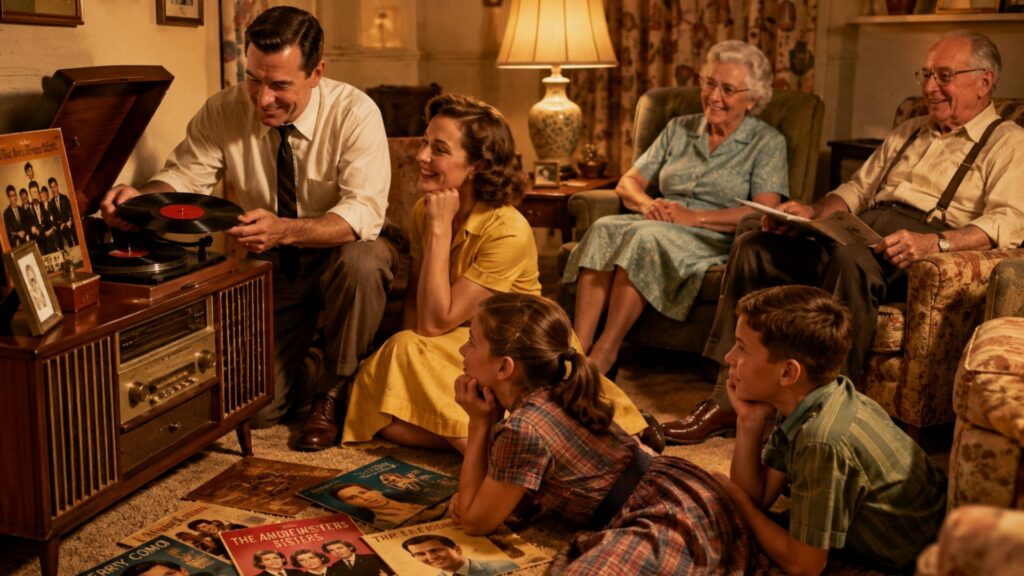
Music didn’t end when the dance hall closed or the diner lights went out. It followed families home. Living rooms became gathering places where favorite records spun on turntables, radios played familiar melodies, and every generation discovered songs that would become lifelong companions.
Parents introduced children to the artists they loved, while younger listeners eagerly shared the latest hits with friends and siblings. Before long, music became part of birthday parties, holiday celebrations, Sunday afternoons, and quiet evenings spent together. A favorite record wasn’t simply played—it became woven into the family’s own story.
Unlike today, listening to music required intention. Someone selected the record, carefully placed the needle, and everyone in the room shared the same experience from the opening note to the final chorus. There was no skipping ahead, no endless scrolling, and no playlists competing for attention.
The music that kept America dancing also kept families connected, proving that some of life’s most meaningful moments happened not on a stage, but in the comfort of home.
Nostalgia Note
Why do so many people remember exactly where they first heard a favorite song?
Music has a remarkable way of connecting itself to life’s biggest moments. Whether it was a birthday, a family reunion, or an ordinary evening around the record player, those memories often stay with us for decades because the songs became part of the experience itself.
From The Nostalgia Radio Theater Archives
Featured Broadcast
The Chesterfield Supper Club
Featuring Perry Como & The King Cole Trio
October 9, 1945
Some evenings were meant to be shared. Listen to The Chesterfield Supper Club featuring Perry Como & The King Cole Trio and enjoy the warm voices, timeless melodies, and relaxed atmosphere that made families gather around the radio night after night. It’s easy to imagine parents settling into their favorite chairs while children listened nearby, creating memories that lasted long after the broadcast ended.
Why Vinyl Records Never Really Went Out of Style
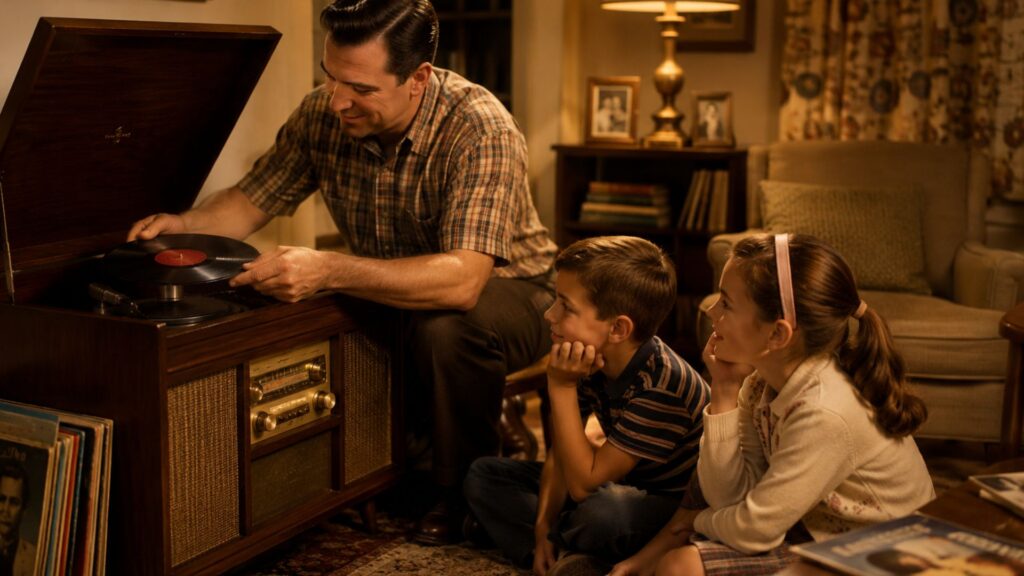
Music changed once again when vinyl records found a permanent place in American homes. Instead of waiting for a favorite song to appear on the radio, families could choose exactly what they wanted to hear whenever the mood struck. A cherished record collection became a reflection of birthdays, holidays, first dances, and unforgettable moments shared across generations.
Playing a record wasn’t simply about hearing music. It was a ritual. Someone carefully removed the album from its sleeve, admired the cover art, gently placed the record on the turntable, and lowered the needle. Then came that familiar crackle—a sound that told everyone something special was about to begin.
Albums were meant to be enjoyed from beginning to end. Families gathered together, conversations slowed, and favorite songs filled the room without interruption. Every scratch, every worn groove, and every well-loved album became part of a family’s own story.
The music that kept America dancing didn’t fade when the ballroom lights dimmed. It lived on in living rooms across the country, where vinyl records preserved the songs, the memories, and the moments that still bring smiles decades later.
Nostalgia Note
Why do vinyl records still sound magical to so many listeners?
Part of the answer isn’t the sound at all. It’s the experience. Choosing an album, studying the cover art, gently lowering the needle, and listening from beginning to end turned music into an event instead of background noise. That’s one reason vinyl continues to find new fans generation after generation.
From the Nostalgia Radio Theater Archives
Featured Broadcast
Lucky Strike Hit Parade
Episode 170 – July 29, 1939
America’s favorite songs didn’t become classics by accident. Listen to Lucky Strike Hit Parade and hear the unforgettable hits that filled radio waves, inspired record collections, and became the soundtrack of everyday American life. Programs like this introduced millions of listeners to the songs they would soon be spinning on their own record players.
Why The Music That Kept America Dancing Still Brings Back Memories
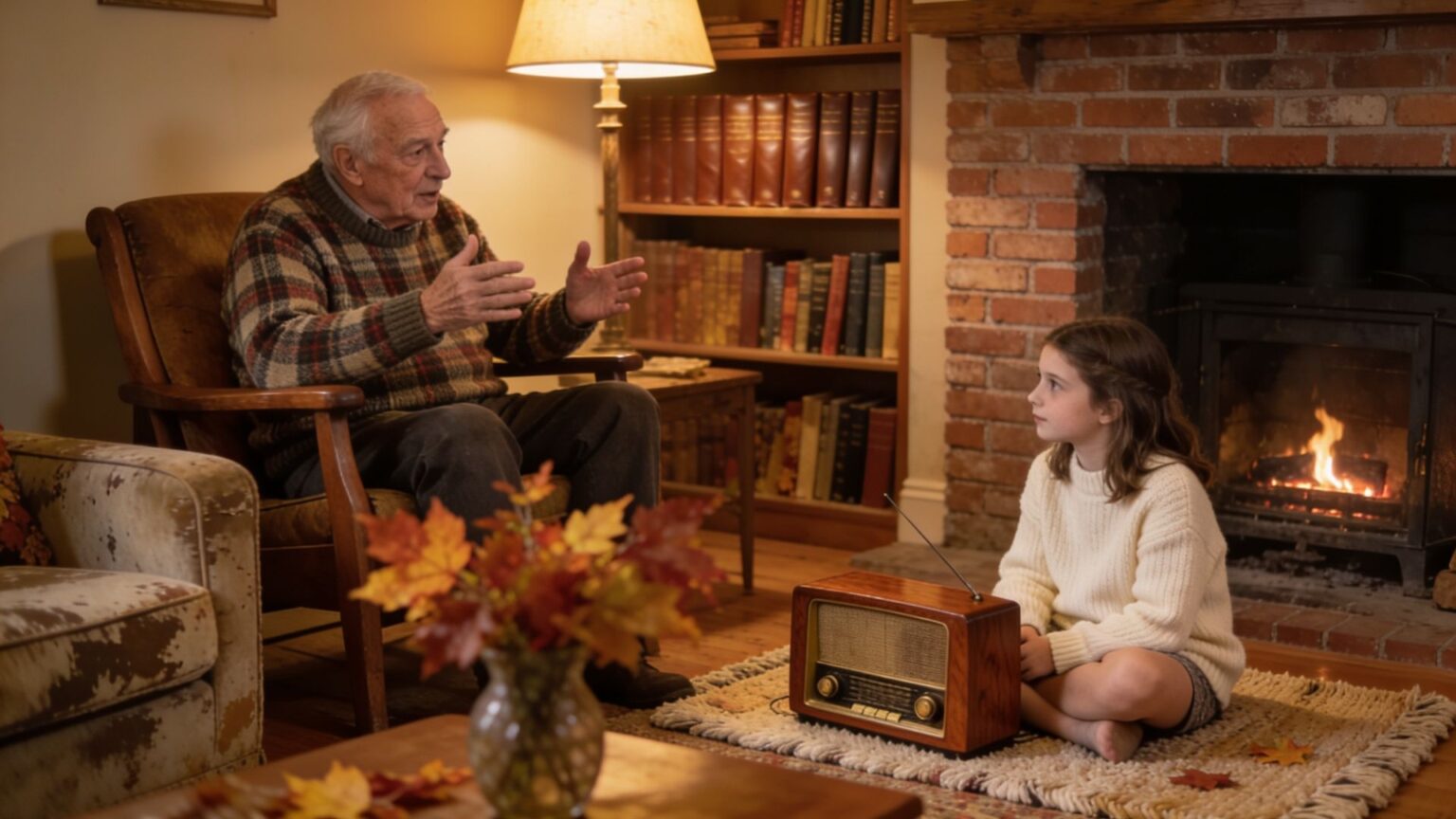
Some songs never really leave us. Years later, a familiar melody can instantly transport us to a first dance, a family picnic, a summer road trip, or a quiet evening spent with loved ones. Long after the records stop spinning, the memories continue to play.
Scientists have discovered that music has an extraordinary ability to unlock memories. A song heard decades ago can bring back forgotten faces, cherished traditions, and emotions that seemed tucked safely away. That’s why a single chorus often means far more than the notes themselves.
Those songs became part of America’s story because they also became part of our own. They celebrated victories, offered comfort during difficult times, and reminded us that life’s happiest moments are often accompanied by music.
The music that kept America dancing continues to do exactly that today. Every time an old favorite begins to play, another memory finds its way home.
Nostalgia Note
Why can one old song bring back memories from decades ago?
Music is closely connected to the parts of the brain that process emotion and long-term memory. That’s why hearing a favorite song can instantly transport us back to a particular place, person, or moment in life—even after many years.
From The Nostalgia Radio Theater Archives
Featured Broadcast
Command Performance
Featuring Frank Sinatra, Doris Day & Jim Backus—October 21, 1947
Some broadcasts became treasured family memories.
and enjoy the warm voices, timeless songs, and easygoing charm that brought comfort, laughter, and unforgettable music into American homes. Decades later, those familiar melodies still have the power to transport listeners back to moments they thought they’d nearly forgotten.
Why The Music That Kept America Dancing Still Matters Today

The music that kept America dancing was never just about records, radios, jukeboxes, or dance halls. It was about the people who gathered around them. Every favorite song became part of a birthday celebration, a first dance, a family road trip, a holiday gathering, or an ordinary evening that quietly became unforgettable.
Although the world has changed, the power of music has not. A familiar melody can still bring a smile, spark a conversation, or remind us of someone we dearly miss. That’s why these songs continue to find new listeners while remaining treasured by the generations who heard them first.
At Nostalgia Nook Antiques, we believe preserving America’s musical heritage means preserving the stories that came with it. Every broadcast, every record, and every melody helps us remember not only where we’ve been, but also the moments that shaped who we are.
Thank you for joining us on this journey through America’s soundtrack. We hope you’ll continue exploring the voices, broadcasts, and unforgettable music waiting for you inside Nostalgia Radio Theater—because some songs may end, but the memories they create never do.
Final Nostalgia Note
Some melodies never really leave us.
Long after the dance halls have grown quiet and the record players have stopped spinning, the music lives on in the stories we tell, the memories we cherish, and the generations who continue to discover these timeless songs for the very first time.
Continue Your Journey in Nostalgia Radio Theater
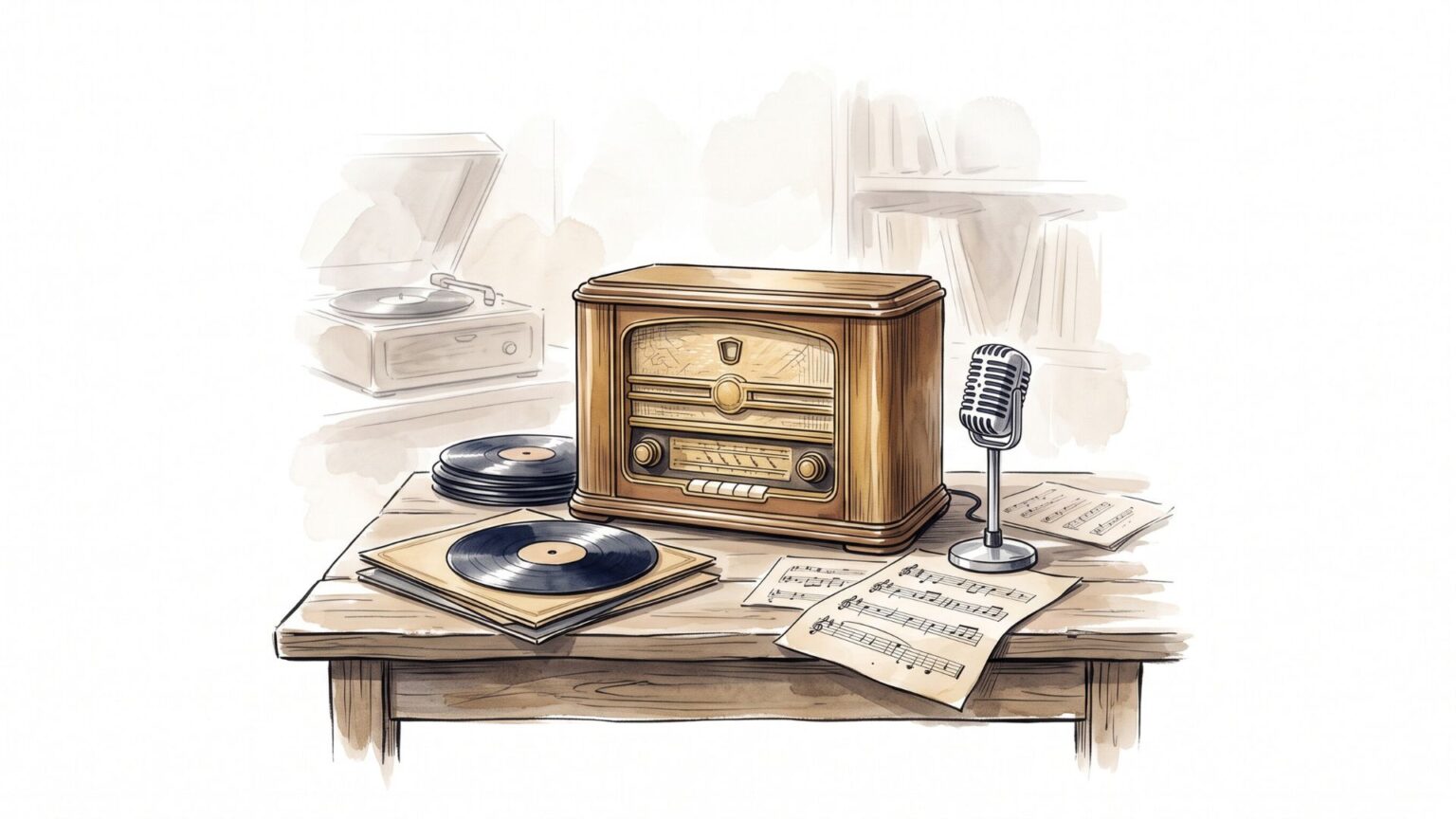
The broadcasts you’ve discovered throughout this article are only a small part of America’s remarkable musical heritage. Explore Nostalgia Radio Theater to hear hundreds of classic music programs, unforgettable performances, and historic broadcasts that continue to preserve America’s soundtrack—one memory at a time.
Continue Your Nostalgia Journey
We hope you enjoyed this journey through America’s musical heritage. If you’d like to continue exploring the stories, broadcasts, and timeless traditions that shaped generations, we’ve gathered a few more articles we think you’ll enjoy.
You May Also Enjoy
Nostalgia Radio Theater: Explore hundreds of classic radio programs, music broadcasts, and unforgettable voices from America’s golden age.
The Comeback of Vinyl: Why Records Are Dominating Again:
Discover why vinyl records continue to win over collectors and a whole new generation of music lovers.
Vintage Jukebox History: America’s Original Social Playlist:
Step inside the fascinating story of the machines that brought music to every neighborhood in America.
Radio Days: Vintage Tabletop Radios That Rocked the Airwaves:
Rediscover the beautiful radios that once gathered families around the voices and music that shaped a nation.
Tradition, Treasures & Timeless Stories—Delivered Weekly
Every antique tells a story, and every tradition carries a memory. Our newsletter brings you closer to both, with inspiration, guides, and finds that make nostalgia part of your everyday life. Subscribe today and let the past brighten your future.