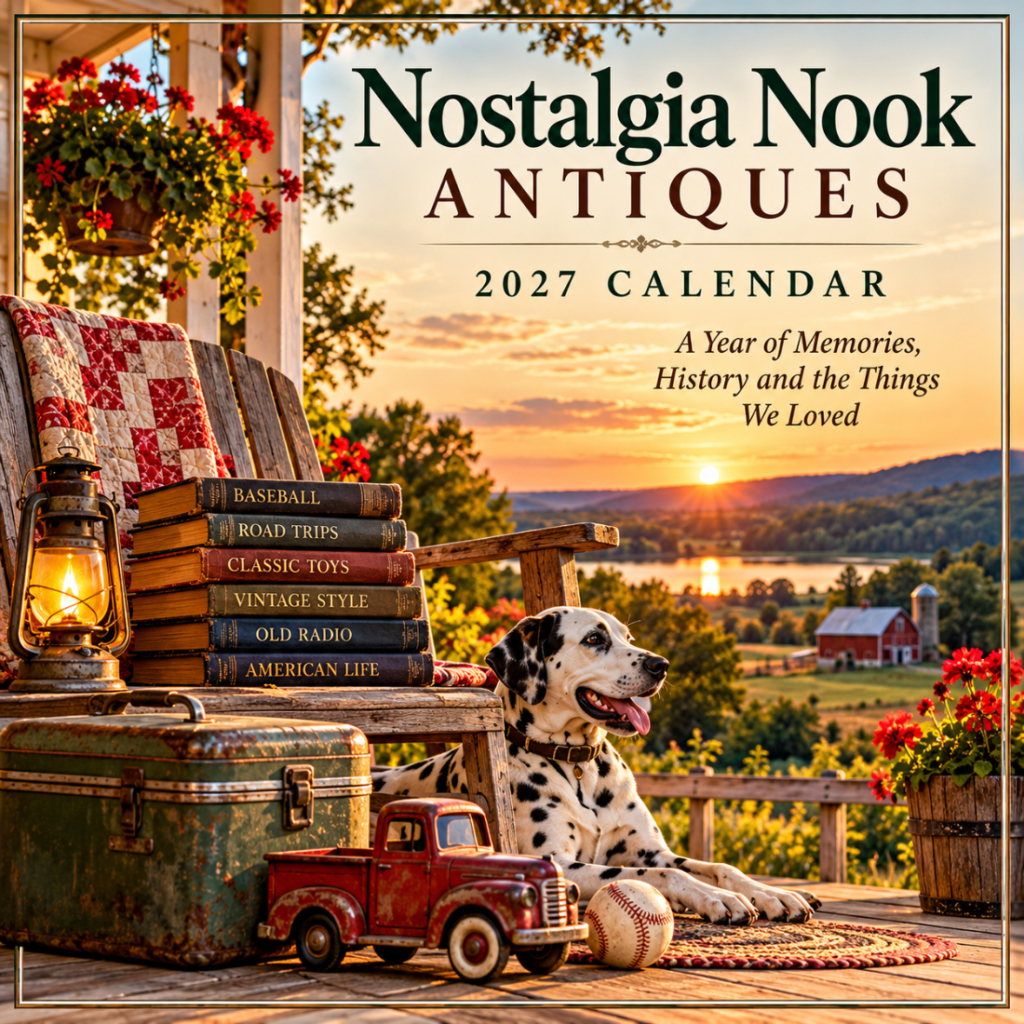

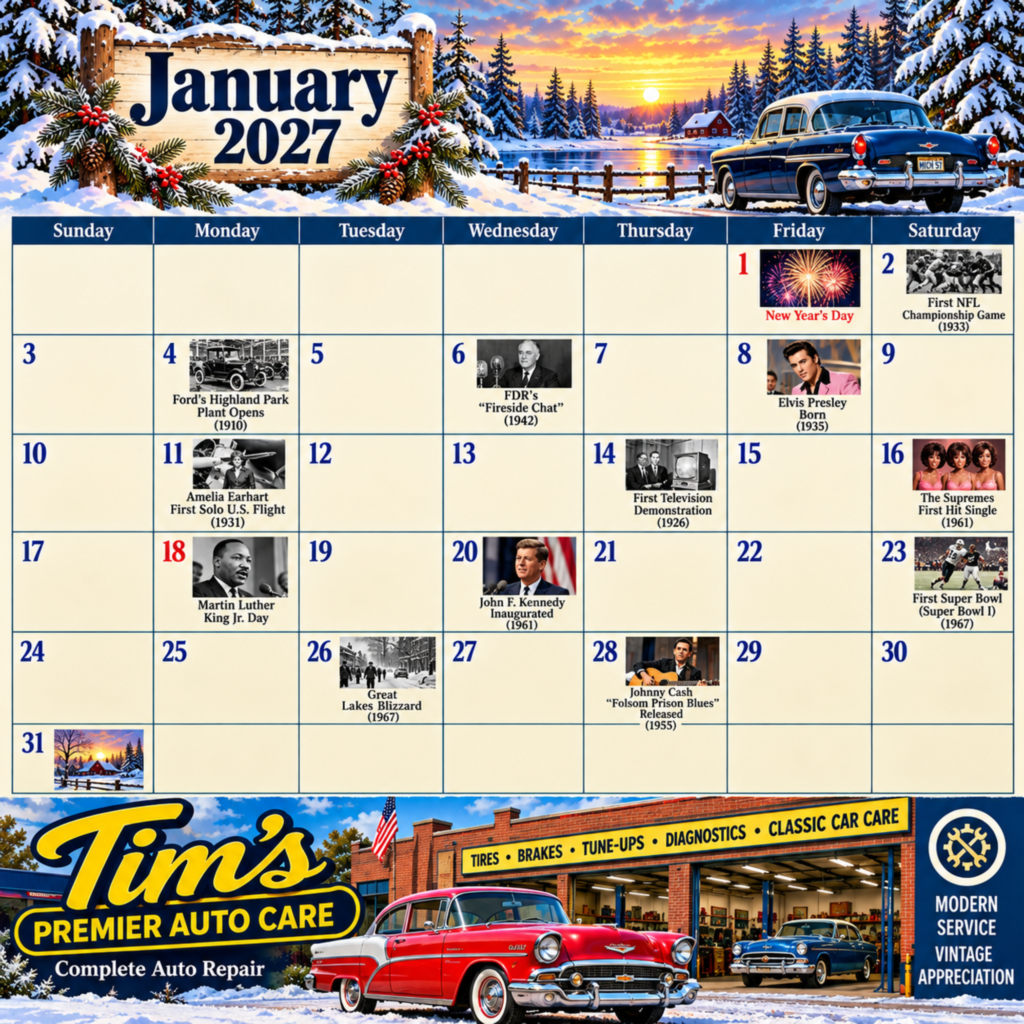








2027 Nostalgia Nook Antiques Calendar: A Year of American Memories
Twelve months. Twelve stories. One year of memories.
Remember when a calendar wasn’t just something on your phone?
It hung in the kitchen, beside the telephone, over Dad’s workbench, or somewhere everyone in the family could see it. Birthdays were circled. Appointments were scribbled in pencil. Vacations were counted down one square at a time.
The 2027 Nostalgia Nook Antiques Calendar brings a little of that back.
Each month features an original nostalgic American scene filled with the people, places, humor, and everyday moments we remember. Along the way, you’ll discover stories and bits of history that make every month worth a second look.
A Peek Inside the 2027 Nostalgia Calendar
Every month tells a different story. From snowy winter evenings and family road trips to drive-in movies, county fairs, Halloween nights, and Christmas mornings, the 2027 Nostalgia Calendar celebrates the everyday moments that became some of our favorite memories.
January: Snow Days & Winter Evenings
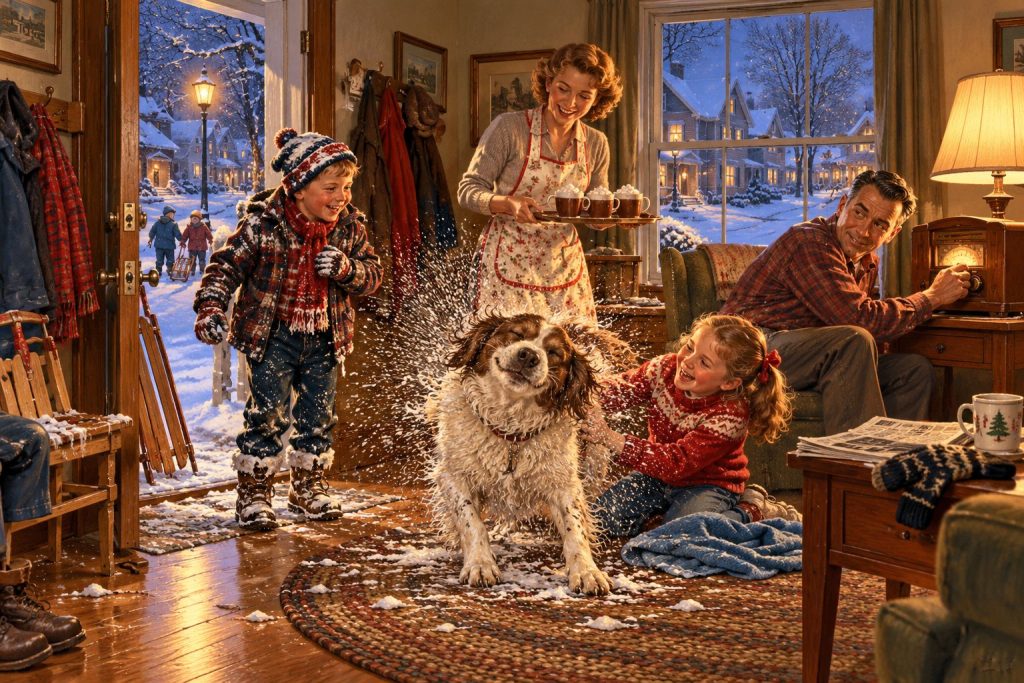
Remember waiting to hear whether school had been canceled? On a snowy winter morning, those few words on the radio could turn an ordinary school day into a holiday. Out came the sleds, boots, mittens, and anything else that might make it down a hill.
Eventually, everybody came home wet, cold, and hungry. The mittens went over the radiator, hot cocoa appeared, and somebody’s dog usually made sure the floor got as wet as everyone else.
Some winter days weren’t important enough for the history books. Funny how those can be the ones we remember best.
This Month in Nostalgia
January 31, 1919 — Jackie Robinson Is Born
Baseball legend Jackie Robinson was born in Cairo, Georgia. In 1947, he would make history with the Brooklyn Dodgers, changing baseball—and America—forever.
January 25, 1937 — Guiding Light Debuts on Radio
Long before it became a television institution, Guiding Light began as a 15-minute radio program. It would eventually span radio and television and become one of America’s longest-running broadcast dramas.
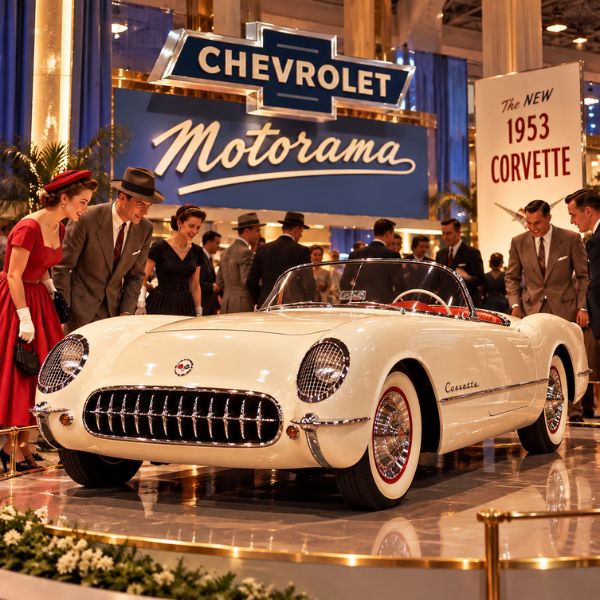
January 17, 1953—The Corvette Makes Its Debut
America got its first look at the Chevrolet Corvette when the prototype appeared at GM’s Motorama in New York City. The sleek little sports car would soon become an American automotive icon.
January 14, 1952—Today Makes Its Television Debut
Morning television changed forever when NBC introduced Today. Hosted by Dave Garroway, the new program mixed news, interviews, conversation, and entertainment, helping turn the television set into part of America’s morning routine.
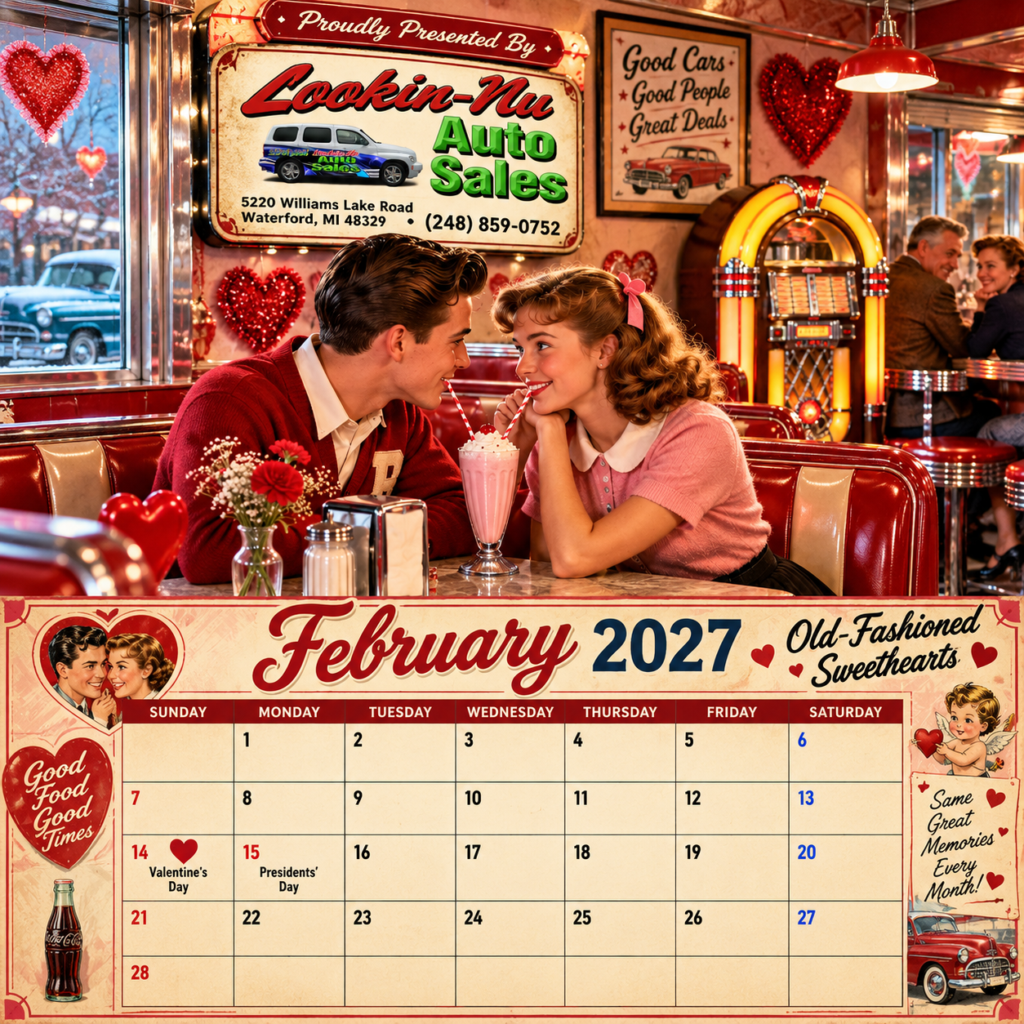
February: Old-Fashioned Sweethearts
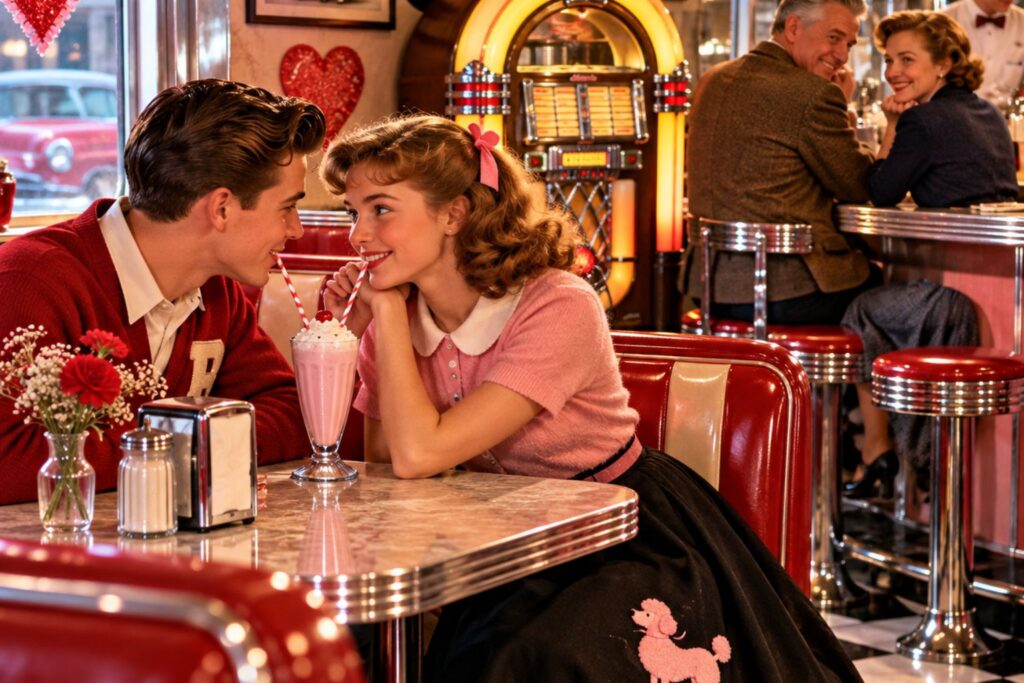
Remember when a date didn’t require an app, a password, or a reservation made three weeks ahead?
Sometimes it was a booth at the local soda fountain, a couple of coins for the jukebox, and one milkshake with two straws. If things were going especially well, nobody complained about sharing the whipped cream.
Teenagers met at diners, school dances, roller rinks, and movie theaters. A boy might spend half the evening working up the nerve to ask a girl to dance. She might spend the other half pretending she hadn’t noticed.
Of course, not every teenage romance lasted.
But some did.
The young couple sharing a milkshake eventually became the older couple sitting at the counter, smiling at two kids who reminded them of themselves.
Maybe that’s the nicest thing about old-fashioned sweethearts.
The years changed. The hairstyles changed. The price of the milkshake certainly changed. But some sweethearts simply grew older together.
This Month in Nostalgia
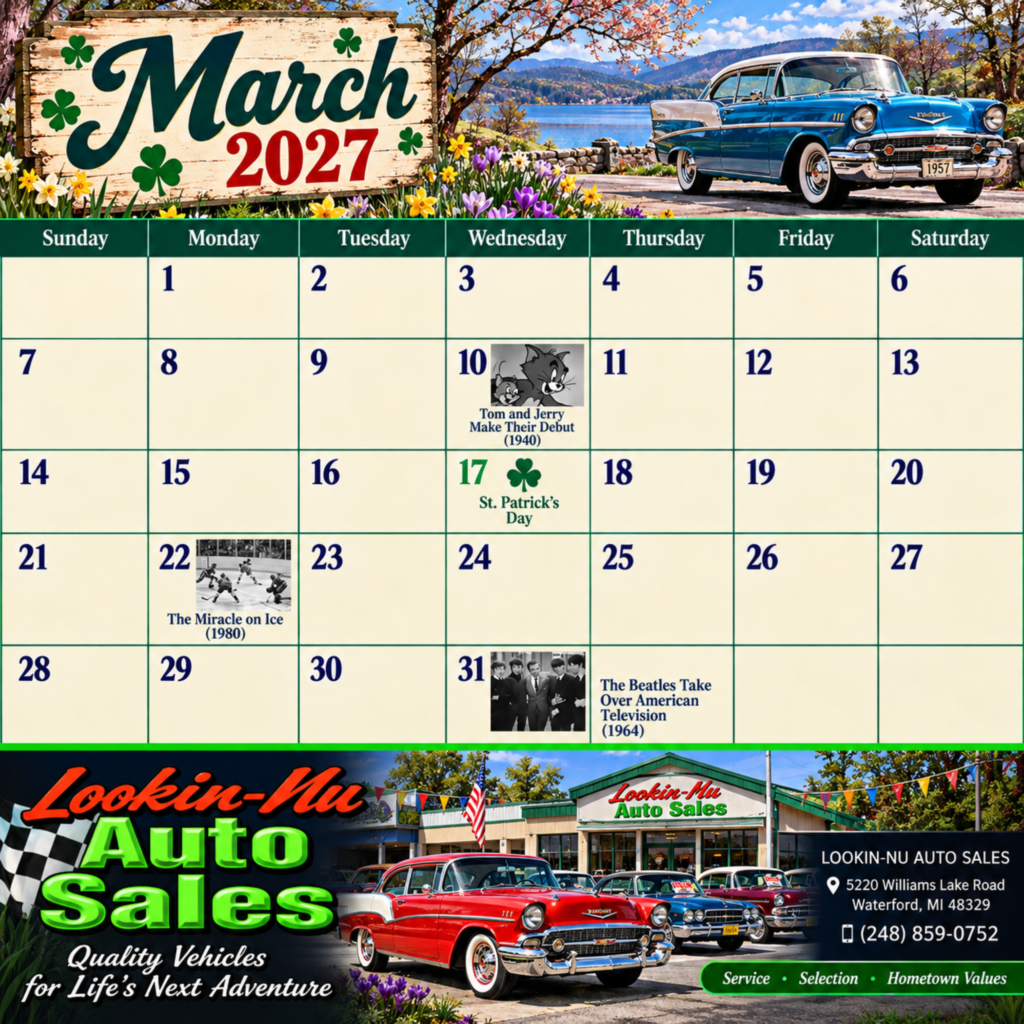
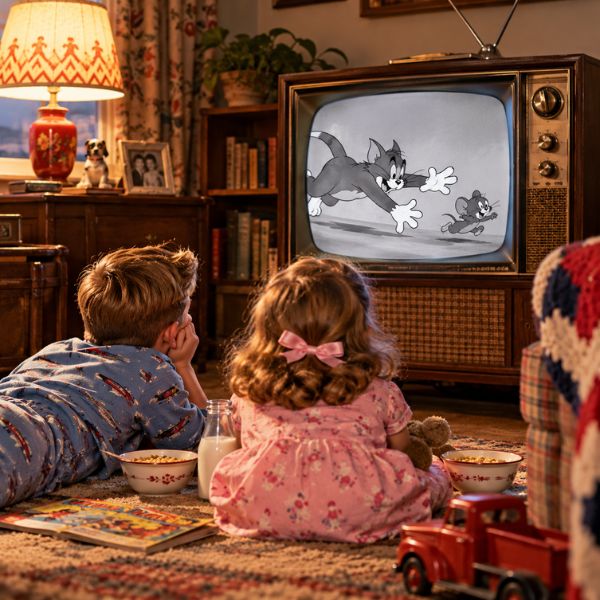
February 10, 1940—Tom and Jerry Make Their Debut
Movie audiences met a feuding cat and mouse in the MGM cartoon Puss Gets the Boot. They weren’t yet officially known as Tom and Jerry, but their famous game of cat-and-mouse had begun. Generations of cartoon fans would never be quite the same.
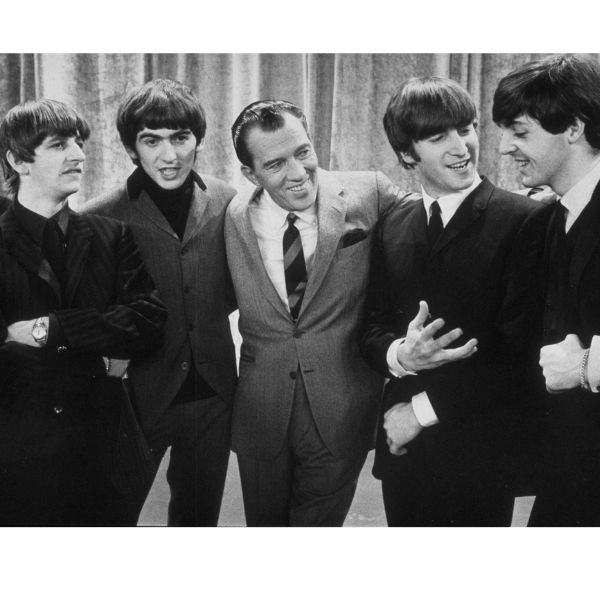
February 9, 1964—The Beatles Take Over American Television
More than 70 million Americans tuned in to The Ed Sullivan Show to see four young musicians from Liverpool make their first live U.S. television appearance. The screams were nearly as memorable as the music, and Beatlemania had officially arrived in American living rooms.
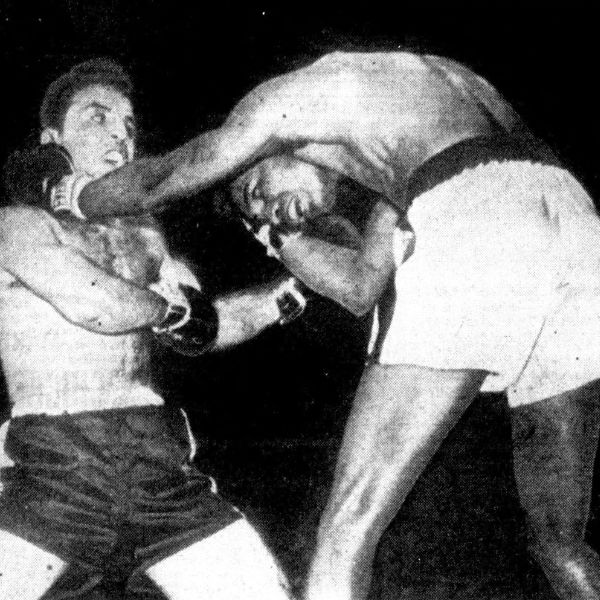
February 14, 1951—Sugar Ray Robinson Wins the Middleweight Crown
On Valentine’s Day 1951, Sugar Ray Robinson stepped into the ring against Jake LaMotta in Chicago and captured the world middleweight championship. Their legendary rivalry reached its brutal climax that night in a fight remembered as the “St. Valentine’s Day Massacre.”
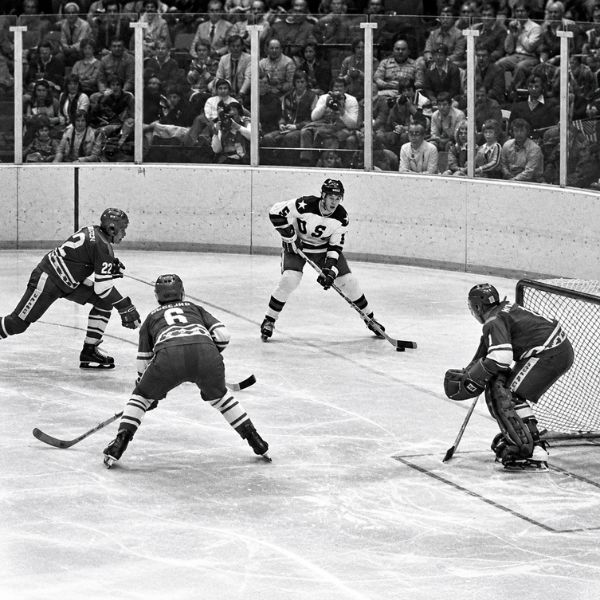
February 22, 1980—The Miracle on Ice
A young U.S. Olympic hockey team stunned the powerhouse Soviet Union 4–3 at Lake Placid. Captain Mike Eruzione scored the go-ahead goal, and as the final seconds disappeared, the game became one of the most unforgettable moments in American sports history.
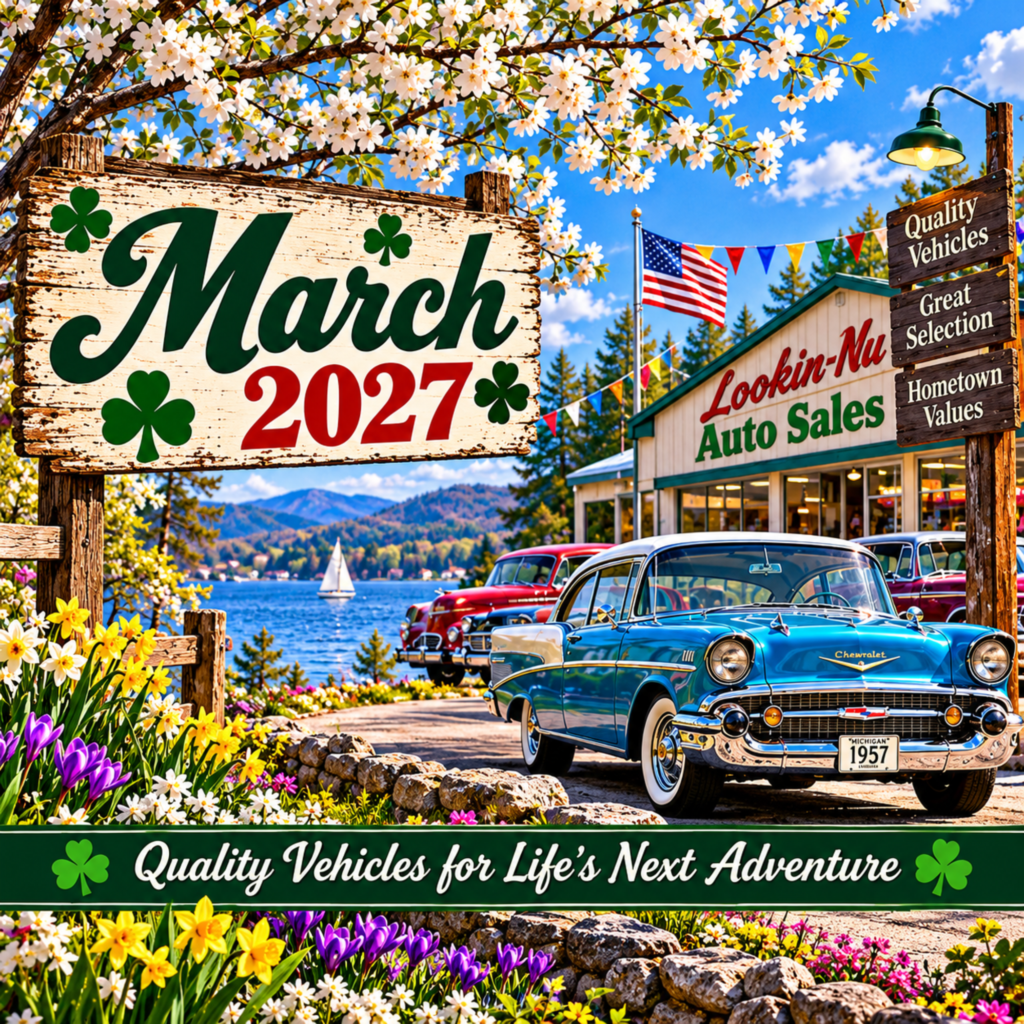
March: The Family Radio
March Story
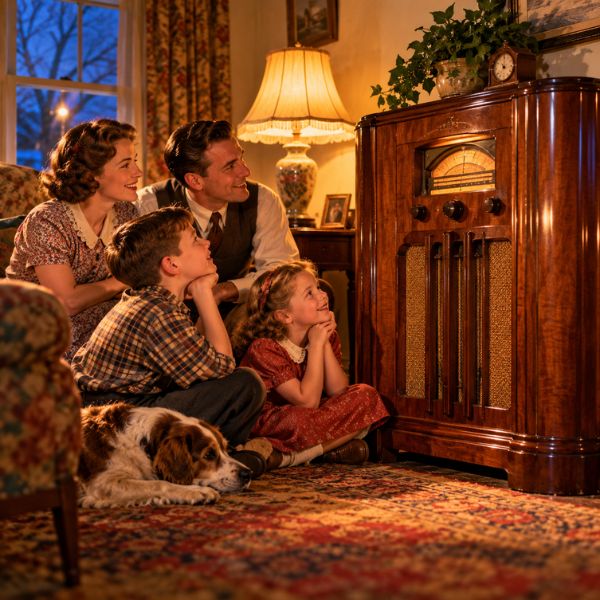
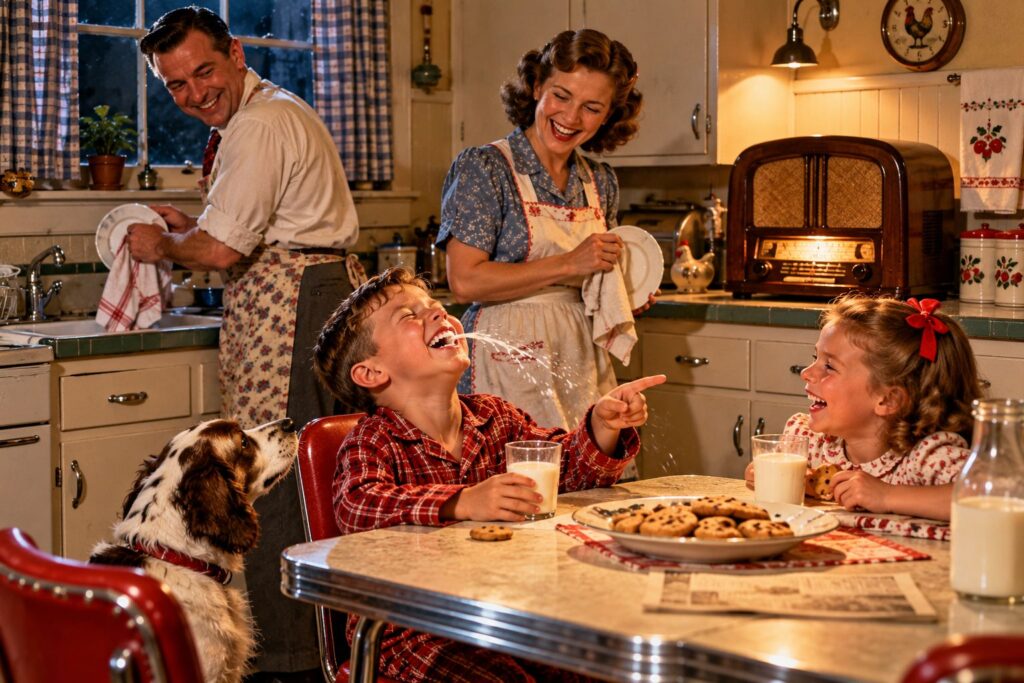
Before television became the center of the living room, there was the radio.
Families gathered around it for comedy shows, mysteries, music, baseball games, news, and adventures that required something television didn’t: a little imagination.
You didn’t see the detective creeping down the hallway or the comedian making that ridiculous face. Instead, the voices and sound effects supplied the clues, and your imagination took care of everything else.
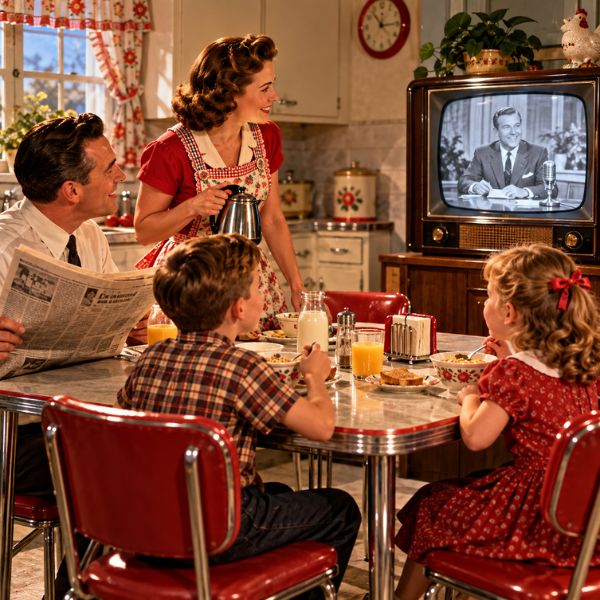
Sometimes the radio followed the family into the kitchen. Supper dishes still had to be washed, after all. But when a favorite comedian delivered the perfect punch line, even the dishes could wait a minute.
And judging by our young fellow here, drinking milk while laughing was apparently a hazardous activity.
This Month in Nostalgia
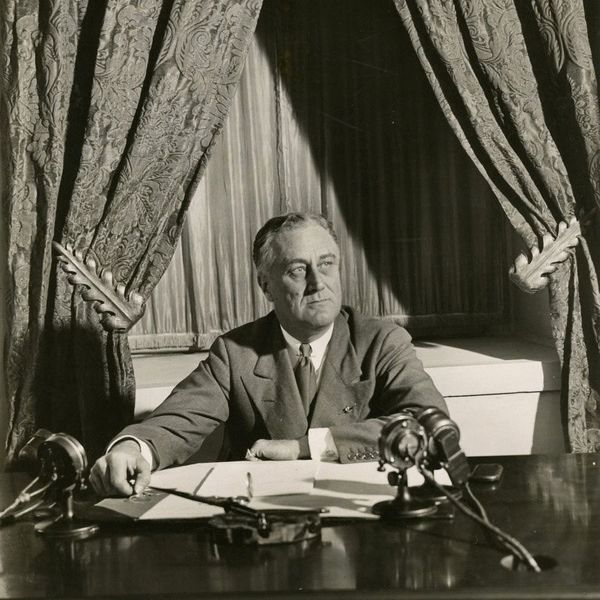
March 12, 1933—FDR Gives His First Fireside Chat
Only eight days after taking office, President Franklin D. Roosevelt spoke directly to Americans by radio about the nation’s banking crisis. His calm, conversational broadcast began what became known as the “fireside chats,” bringing the president’s voice into millions of American homes.
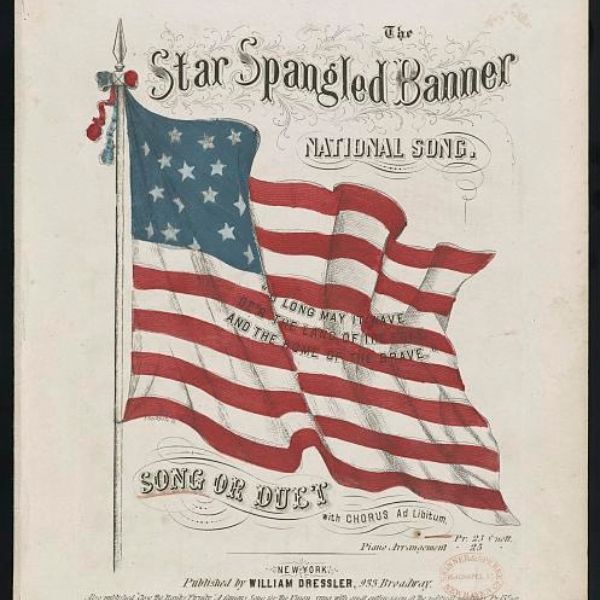
March 3, 1931: “The Star-Spangled Banner” Becomes the National Anthem
After more than a century as a popular patriotic song, “The Star-Spangled Banner” officially became the national anthem of the United States when President Herbert Hoover signed the legislation on March 3, 1931. The song’s words had been written by Francis Scott Key after witnessing the bombardment of Fort McHenry in 1814.
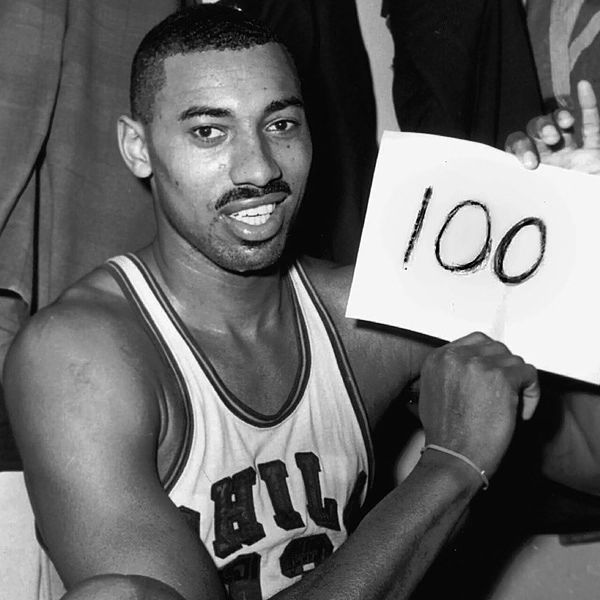
March 2, 1962: Wilt Chamberlain Scores 100 Points
Playing for the Philadelphia Warriors, Wilt Chamberlain scored 100 points in a single NBA game against the New York Knicks in Hershey, Pennsylvania. No NBA player has matched the feat, and the famous photograph of Chamberlain holding a handwritten “100” sign became one of the most recognizable images in basketball history.
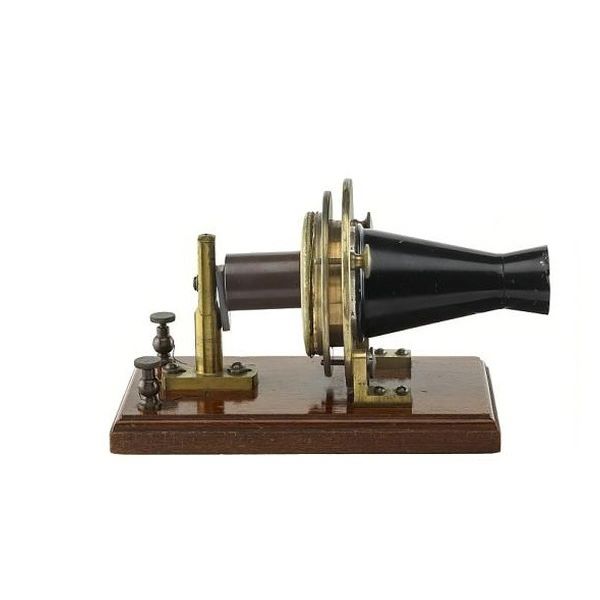
March 10, 1876: The First Successful Telephone Call
Just three days after receiving his telephone patent, Alexander Graham Bell successfully transmitted a spoken message to his assistant, Thomas Watson. Bell called for Watson to come to him, and Watson heard the words through the experimental telephone. A new age of communication had begun.
April: Springtime at Home
There was something about the first warm Saturday of spring that made the whole neighborhood come alive.
Windows opened. Curtains fluttered in the breeze. Sheets went out on the clothesline, flower beds needed attention, and somewhere a lawn mower was already making its way across the grass.
Of course, some of us didn’t have a gasoline engine doing the work. We had one of those old-fashioned reel mowers. You pushed, the blades turned, and if the grass was a little too tall, you learned exactly how much exercise a small backyard could provide.
Meanwhile, the kids found their own jobs. Somebody dug in the garden. Somebody chased the dog. And the dog usually discovered something much more interesting than yard work.
By supper, there was dirt on your shoes, grass on your clothes, and probably a few aches you hadn’t started the morning with.
But after a long winter, nobody complained much.
Spring was back.
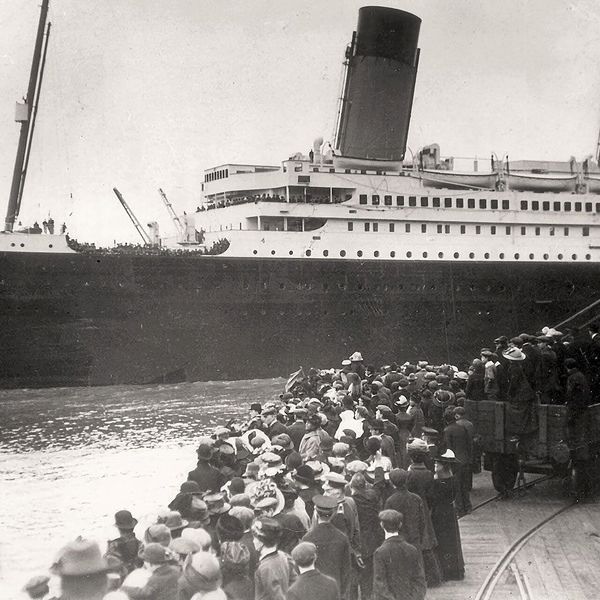
April 15, 1912: The Titanic Sinks
Shortly before midnight on April 14, the RMS Titanic struck an iceberg in the North Atlantic. In the early hours of April 15, the great ocean liner sank on her maiden voyage. More than 1,500 people died in a disaster that became one of the most remembered maritime tragedies in history.
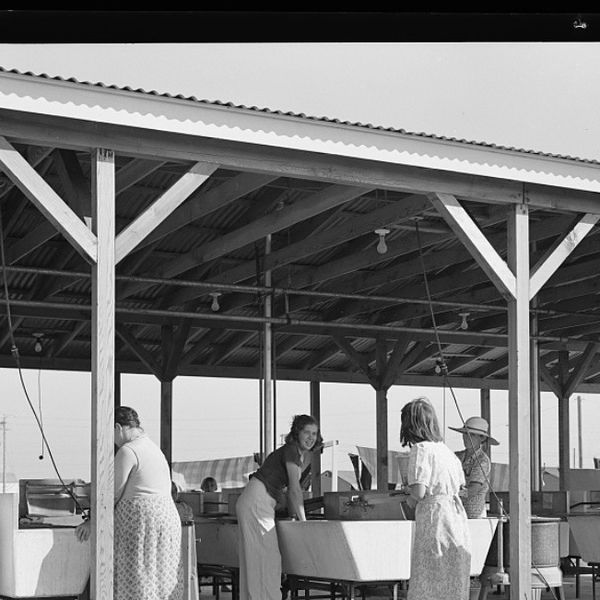
April 18, 1934: The First Laundromat Opens
The first self-service laundry opened in Fort Worth, Texas, giving customers access to coin-operated washing machines instead of doing the week’s laundry entirely at home. The idea caught on, and the neighborhood laundromat eventually became a familiar part of American life.
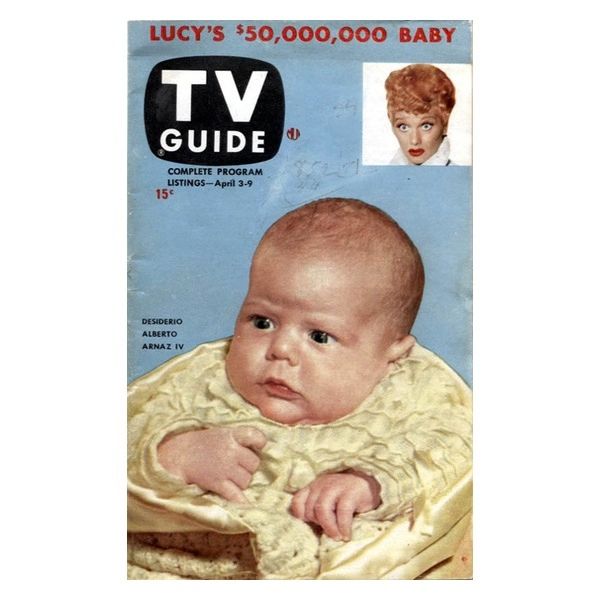
April 3, 1953: TV Guide Publishes Its First National Issue
The first national issue of TV Guide arrived with newborn Desi Arnaz Jr. on the cover and a small image of his famous mother, Lucille Ball. Before long, the little digest-sized magazine became a familiar companion to America’s rapidly growing television habit.
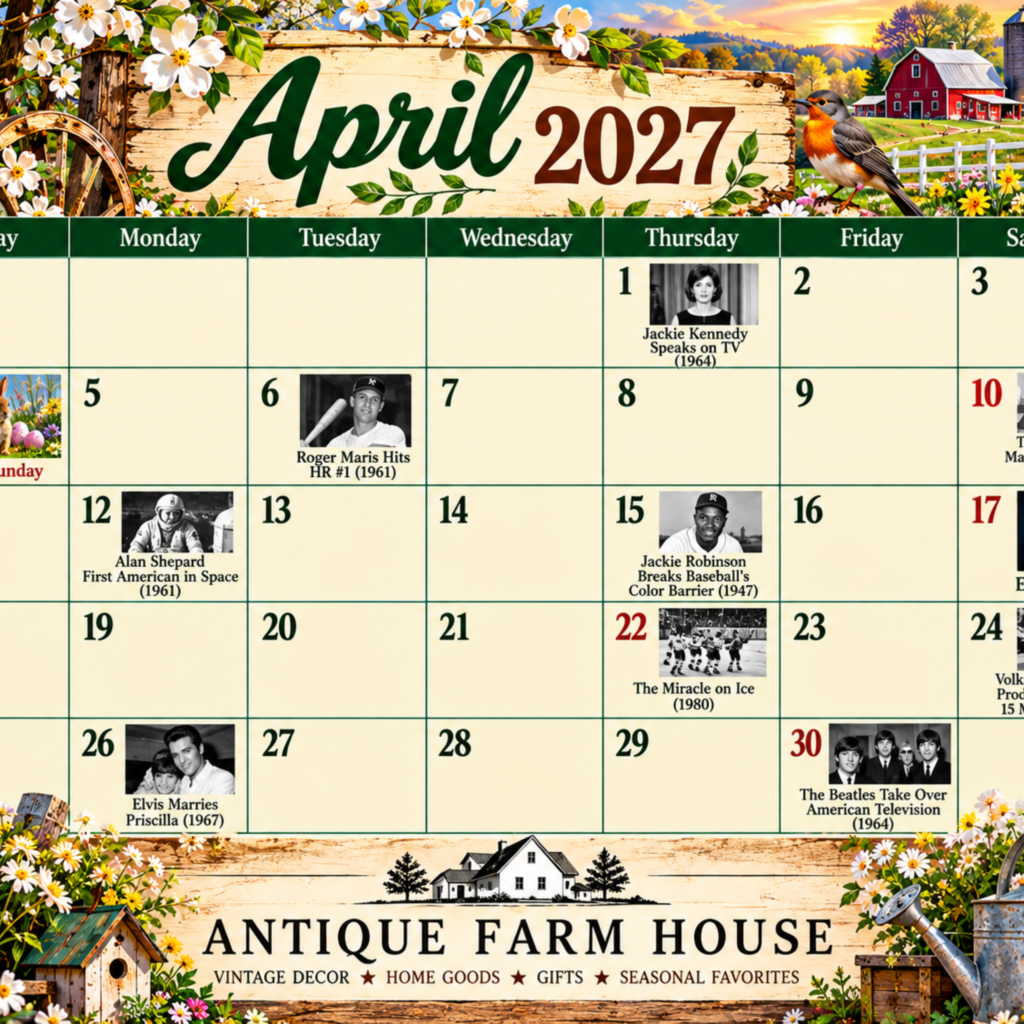
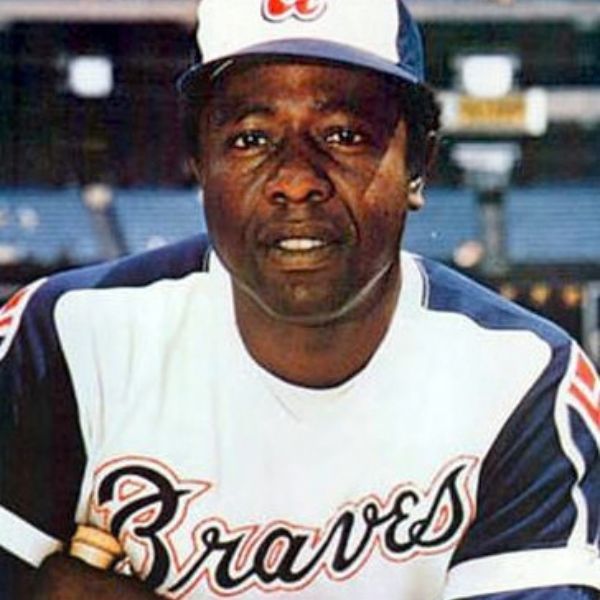
April 8, 1974: Hank Aaron Hits Home Run No. 715
Before a packed crowd in Atlanta, Hank Aaron hit the 715th home run of his career, passing Babe Ruth’s long-standing major-league career record. The ball sailed over the left-field wall, and Aaron rounded the bases as the stadium erupted. It became one of baseball’s defining moments.
May: America Hits the Road
May Story
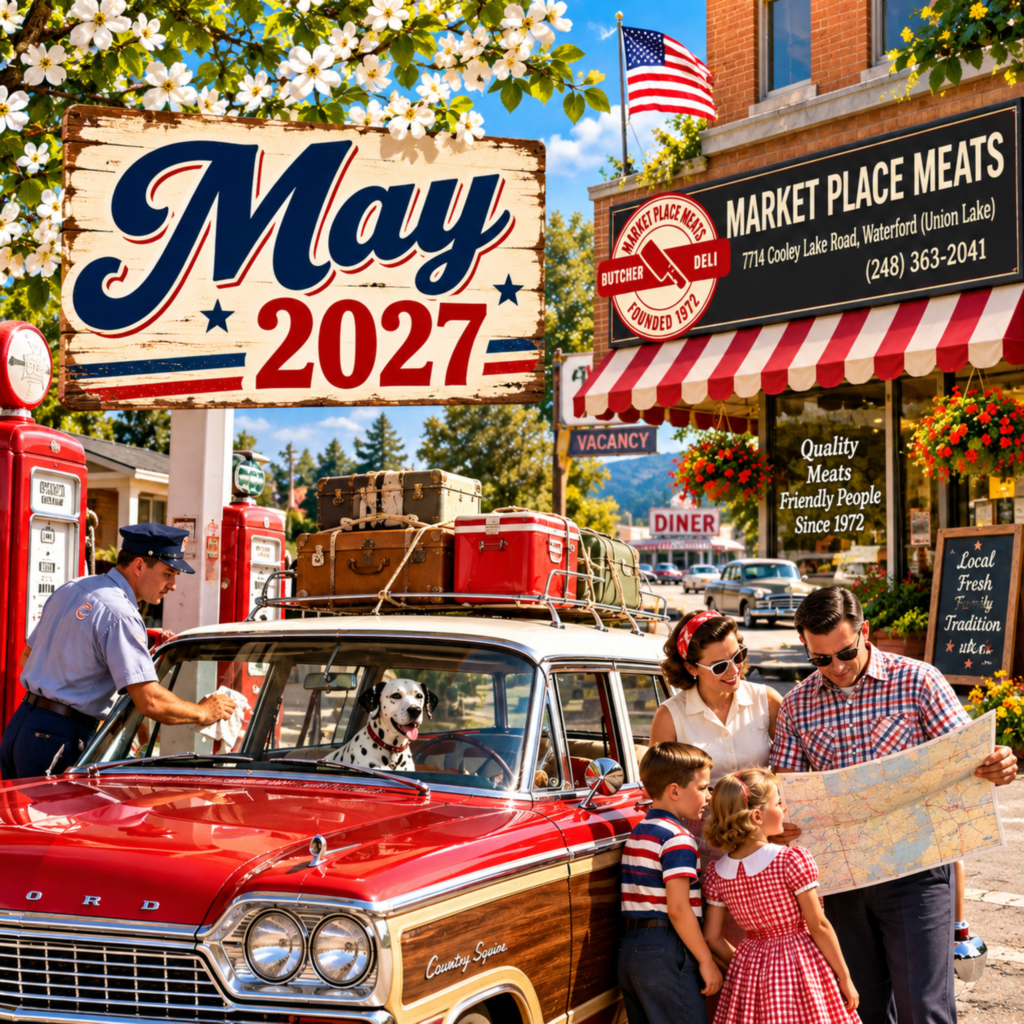
There was a time when the family vacation began long before you reached the destination.
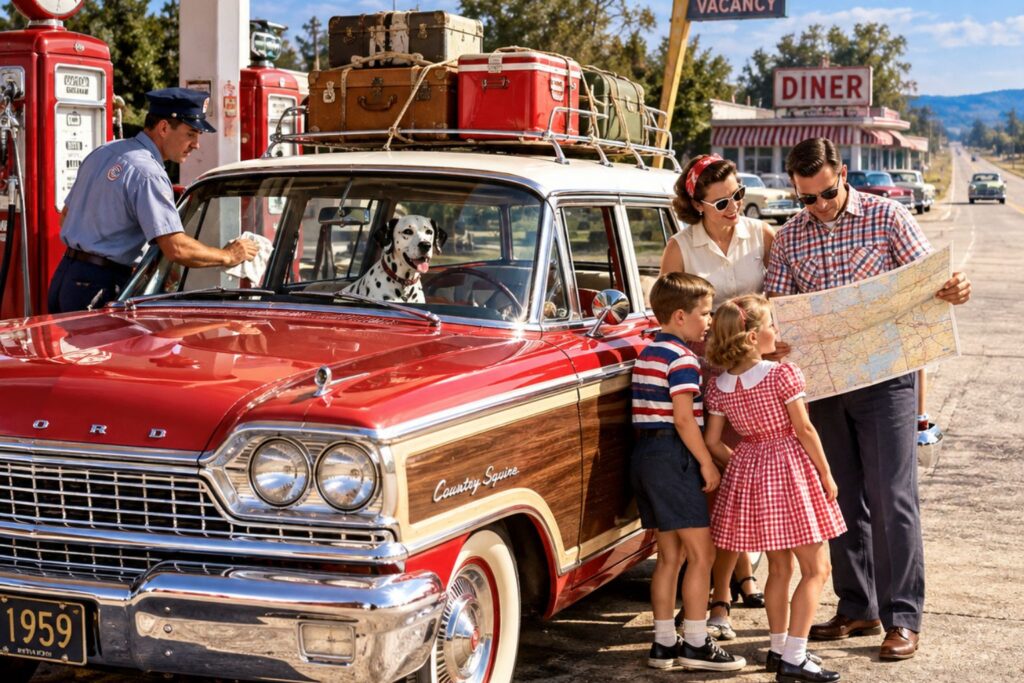
The station wagon was packed the night before. Suitcases went on the roof, a cooler went somewhere in the back, and Dad unfolded a road map large enough to cover half the hood. Somehow, that map never folded quite the same way twice.
Then everybody piled in.
There were no GPS directions and no screens to keep the kids occupied. Instead, we watched for Burma-Shave signs, counted license plates, argued about who was sitting where, and asked, “Are we there yet?” approximately six minutes after leaving home.
Gas stations were part of the adventure, too. An attendant filled the tank, checked the oil, and cleaned the windshield while everyone stretched their legs.
And if you traveled with a dog, there was one more rule nobody bothered writing down.
Get out of your seat, and you might not get it back.
Then Dad folded the map, Mom passed around the snacks, and that big old station wagon headed back onto the highway.
Sometimes the best memories weren’t waiting at the destination.
They happened somewhere along the road.
This Month in Nostalgia
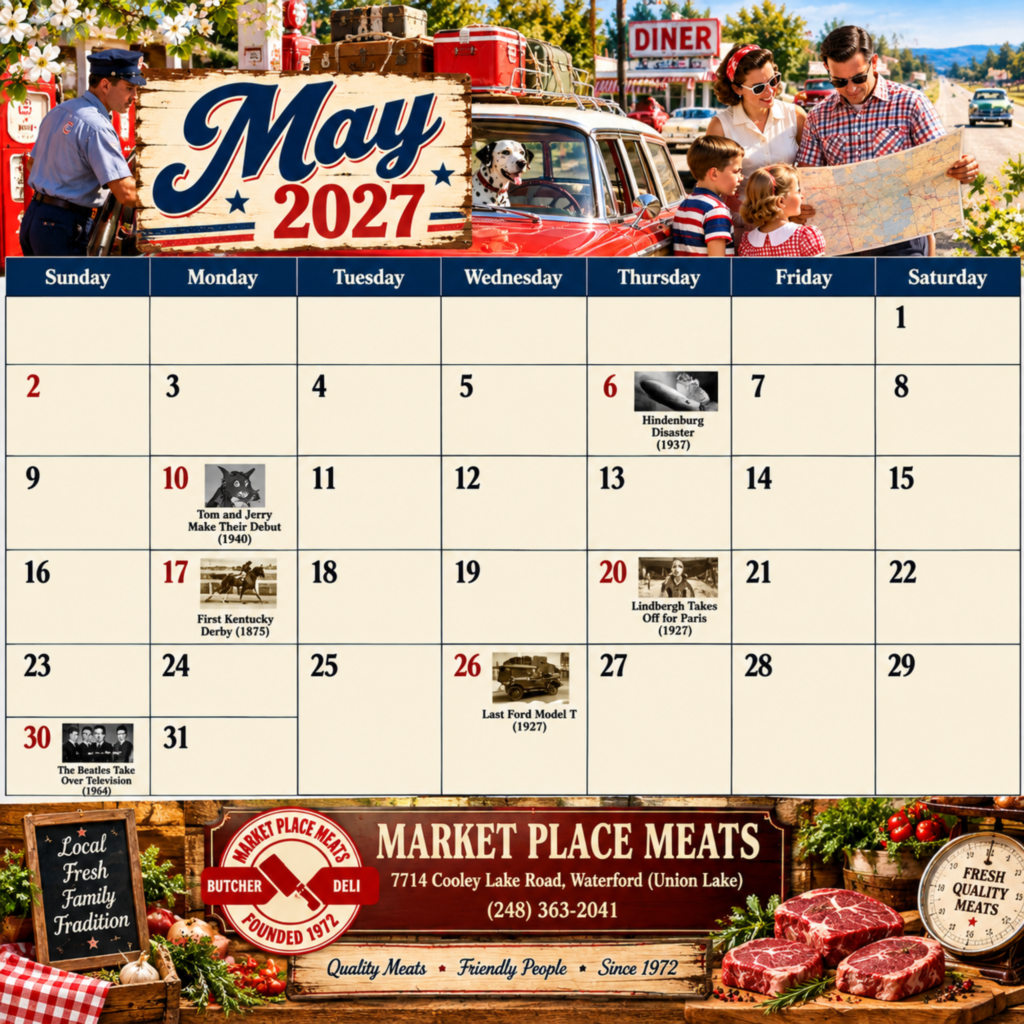
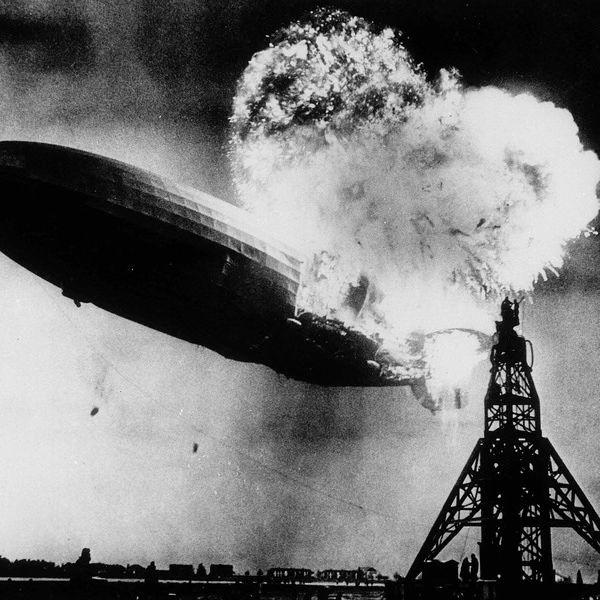
May 6, 1937: The Hindenburg Disaster
The German airship Hindenburg was preparing to land at Lakehurst, New Jersey, when it suddenly caught fire. In less than a minute, the enormous zeppelin was engulfed in flames. Thirty-five people aboard and one person on the ground died. The dramatic photographs, newsreel footage, and Herbert Morrison’s emotional radio report made the disaster one of the most remembered events of the early broadcast era.
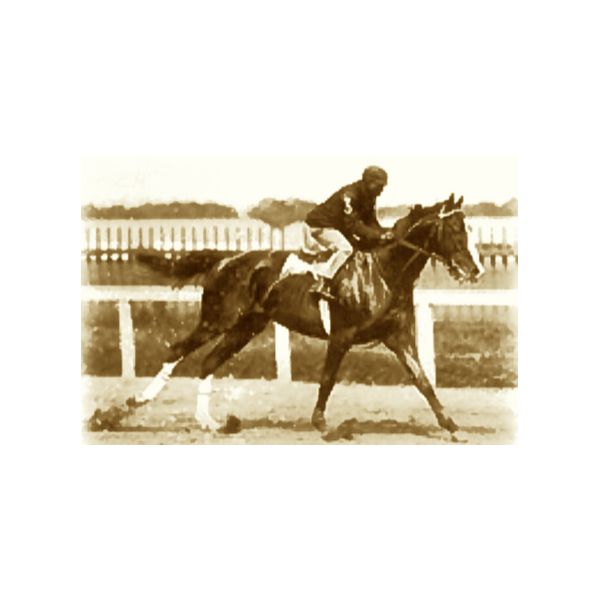
May 17, 1875: The First Kentucky Derby Is Run
Thousands of spectators gathered at Churchill Downs in Louisville for the first Kentucky Derby. Fifteen horses competed, and Aristides, ridden by jockey Oliver Lewis, won the race. What began that afternoon would grow into one of America’s longest-running sporting traditions.
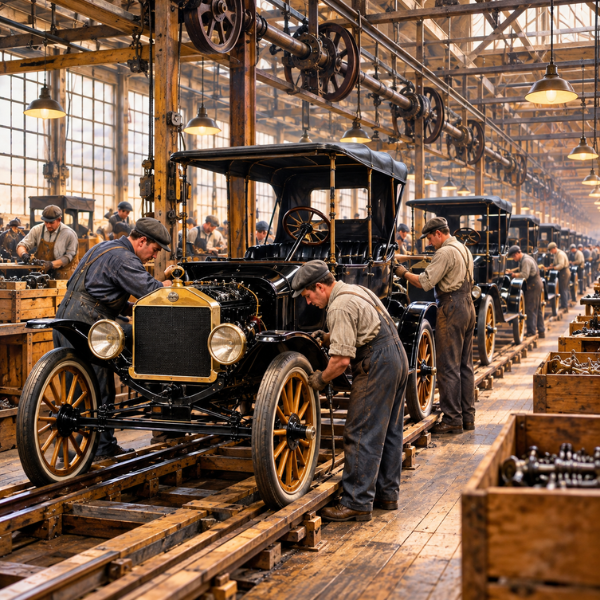
May 26, 1927: The Last Ford Model T Rolls Off the Line
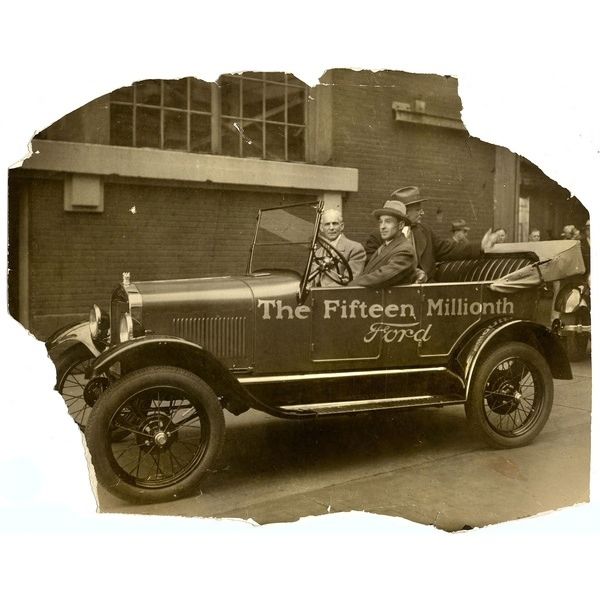
After nearly 19 years of production, Ford built its final Model T. More than 15 million had been produced, helping transform the automobile from a luxury into something ordinary American families could own. The Model T didn’t just change how people traveled. It helped change where Americans lived, worked, shopped, and spent their weekends.
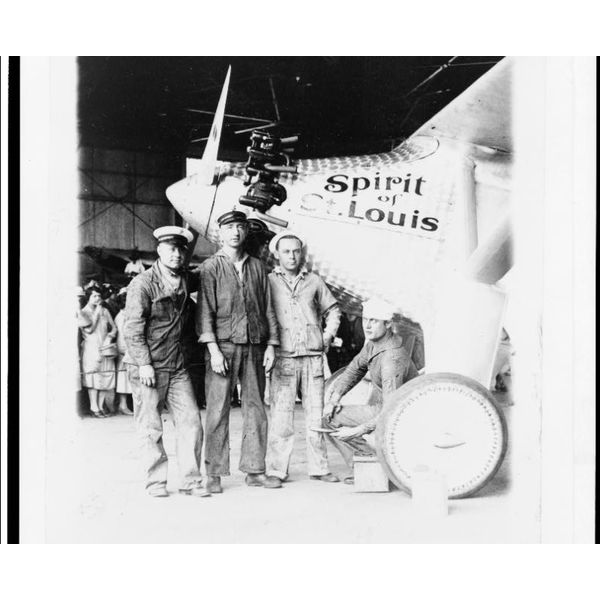
May 20, 1927: Charles Lindbergh Takes Off for Paris
Charles Lindbergh took off from Roosevelt Field on Long Island aboard the Spirit of St. Louis, beginning his attempt to fly nonstop across the Atlantic alone. Thirty-three and a half hours later, he landed outside Paris, completing the first solo nonstop transatlantic flight.
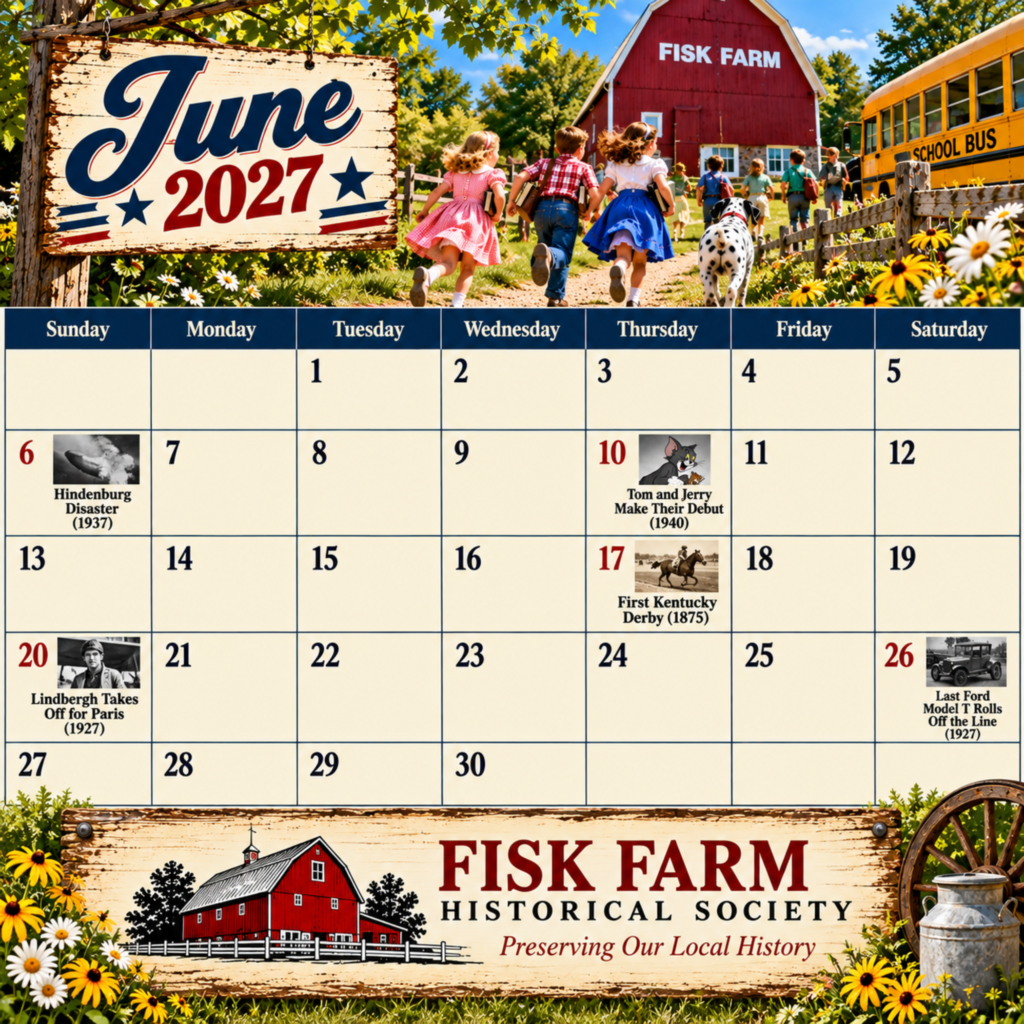
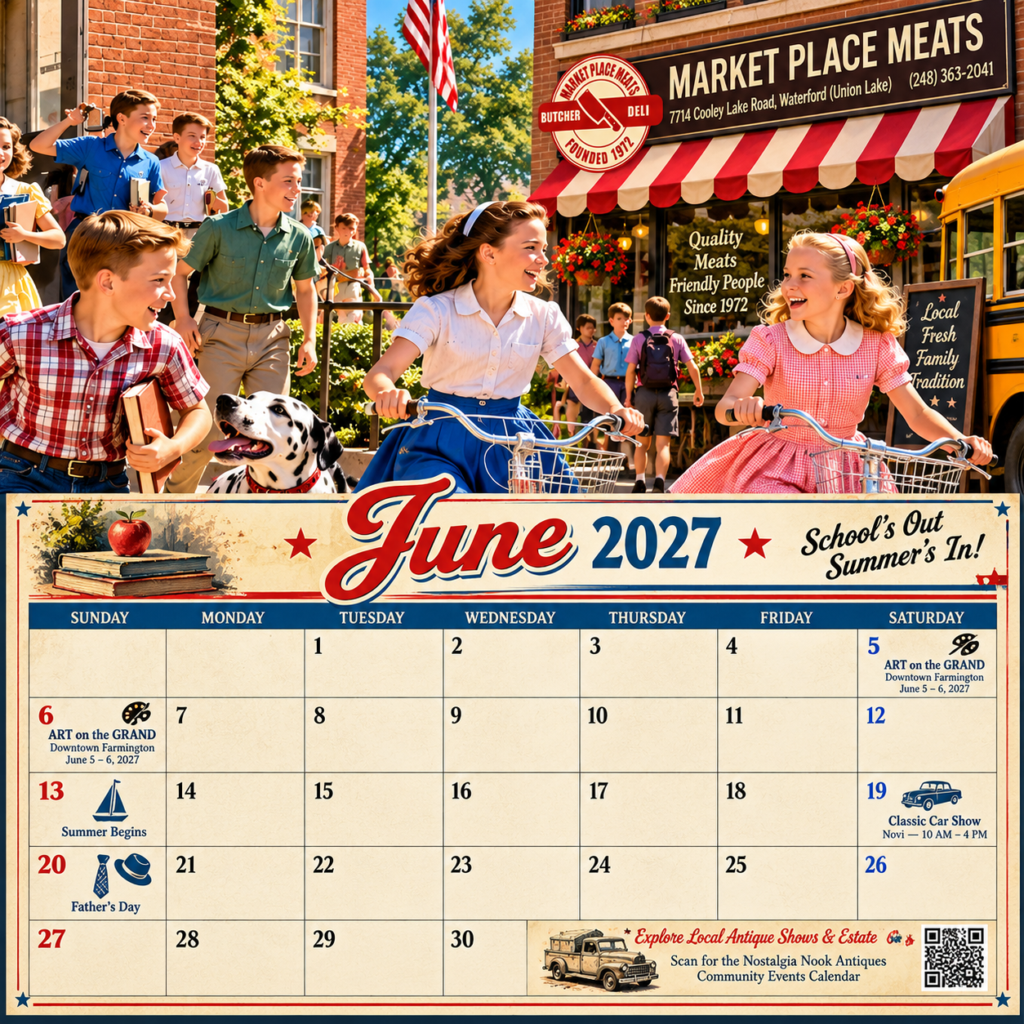
June: School’s Out!
June Story
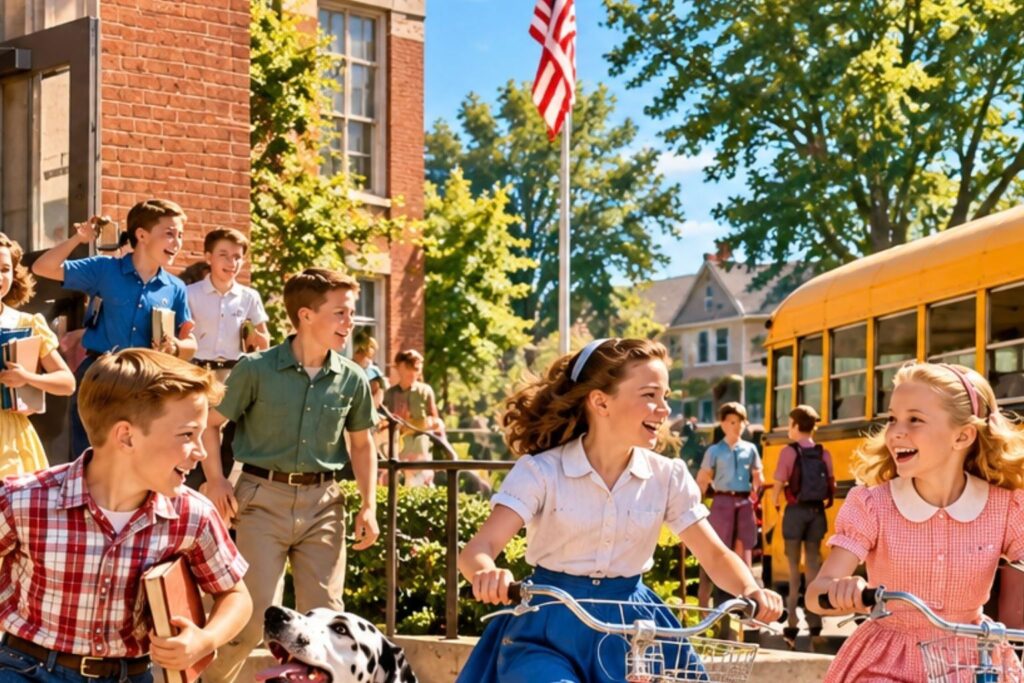
There was no sweeter sound than the final school bell of the year.
For months, we’d watched the calendar and counted the days. Then suddenly the classroom doors opened, and an entire summer stretched out in front of us.
Books came home for the last time. Lunchboxes were carried a little more carelessly. Bicycles waited outside, baseball gloves were already broken in, and nobody was thinking about homework.
Summer vacation didn’t require much of a plan, either.
There were ball games in empty lots, bikes left in front yards, trips to the swimming pool, and evenings when somebody’s mother finally appeared on the porch and called you home.
Of course, September seemed impossibly far away.
For one glorious afternoon, summer felt like it might last forever.
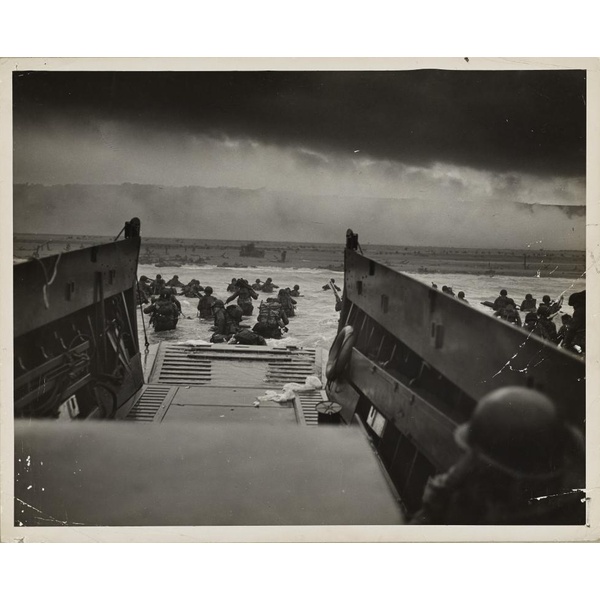
June 6, 1944: D-Day
Allied forces landed on the beaches of Normandy, France, beginning the massive effort to liberate Western Europe during World War II. More than 150,000 Allied troops took part in the invasion by sea and air. The courage and sacrifice of those who landed that morning made June 6, 1944, one of the defining days of the war.
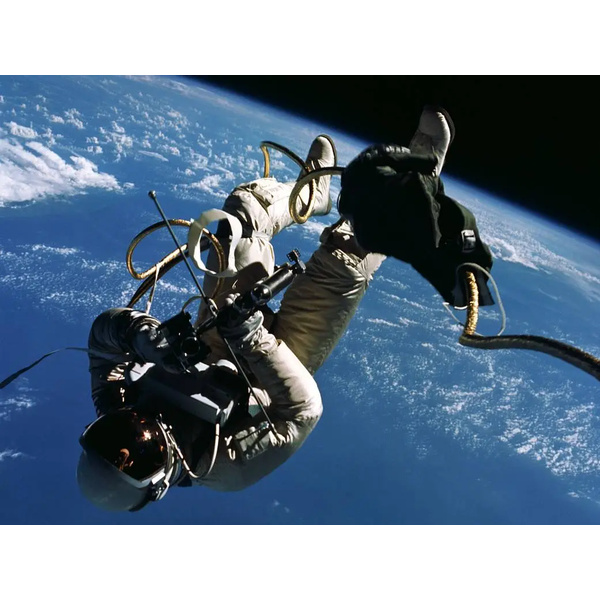
June 3, 1965: America’s First Spacewalk
Astronaut Ed White floated outside the Gemini IV spacecraft and became the first American to walk in space. Tethered to the capsule high above Earth, White maneuvered with a small handheld device while fellow astronaut James McDivitt photographed the historic moment. White spent about 23 minutes outside the spacecraft before reluctantly returning to the capsule.
For Americans following the growing space race back home, the photographs offered an extraordinary new sight: an American astronaut floating freely above the Earth.
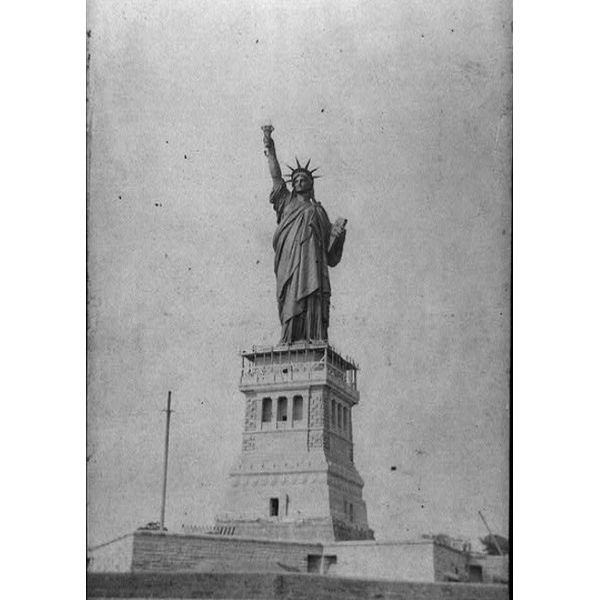
June 17, 1885: The Statue of Liberty Arrives in New York
After crossing the Atlantic aboard the French ship Isère, the Statue of Liberty arrived in New York Harbor packed in more than 200 wooden cases. The enormous copper statue had been dismantled in France so it could make the voyage.
New Yorkers welcomed the ship with great excitement, although Lady Liberty still had some waiting to do. Her pedestal was not yet ready, and workers would spend months carefully reassembling the statue on Bedloe’s Island.
The following year, the completed Statue of Liberty was dedicated, beginning her long watch over New York Harbor and becoming one of America’s most recognizable symbols.
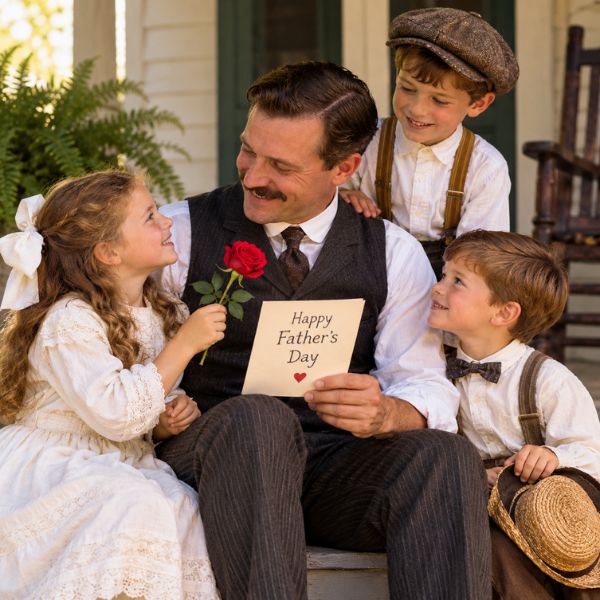
June 19, 1910: The First Father’s Day Is Celebrated
In Spokane, Washington, Sonora Smart Dodd helped organize one of America’s first widespread Father’s Day celebrations. Inspired by her own father, a widower who had raised six children, Dodd believed fathers deserved a special day of recognition too.
Churches around Spokane joined the celebration, children gave their fathers small gifts, and people wore roses to honor their dads. From that modest beginning, the idea gradually spread across the country and became the June tradition generations of families know today.
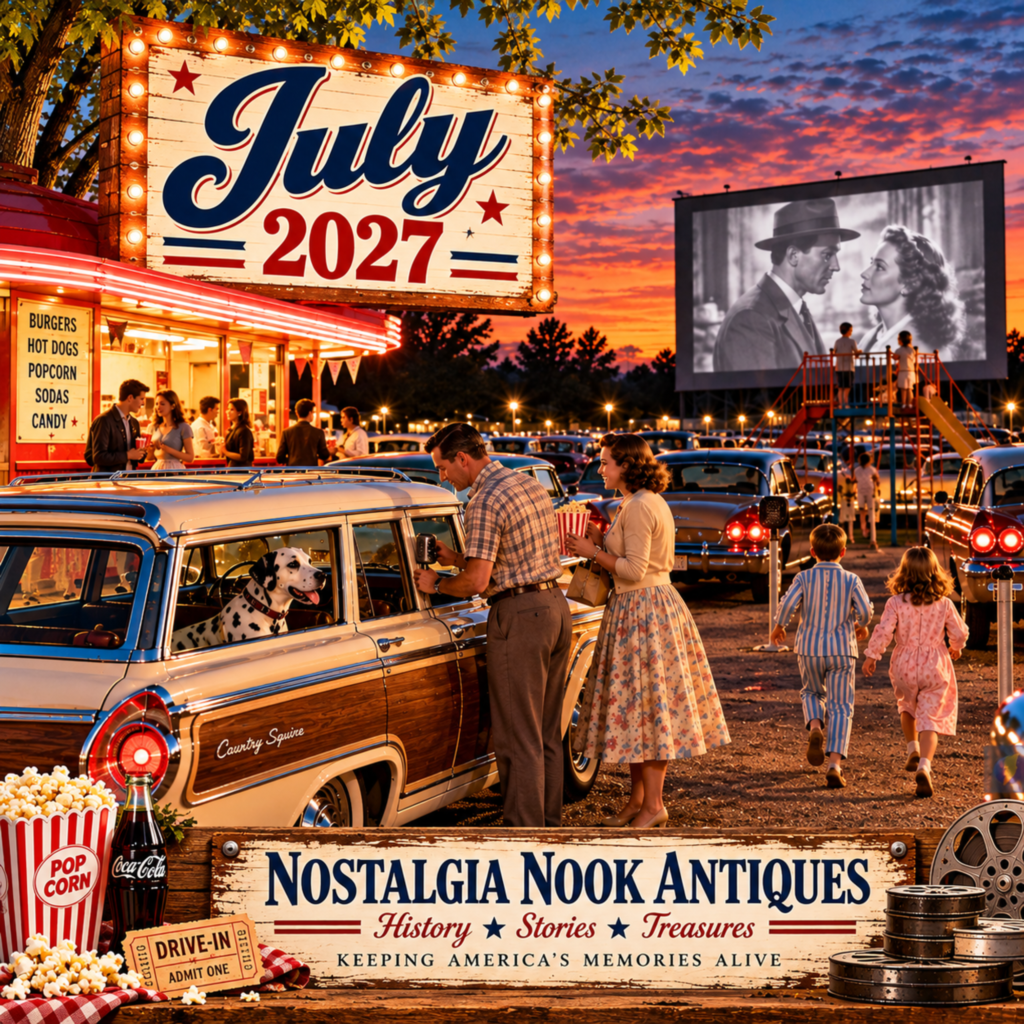
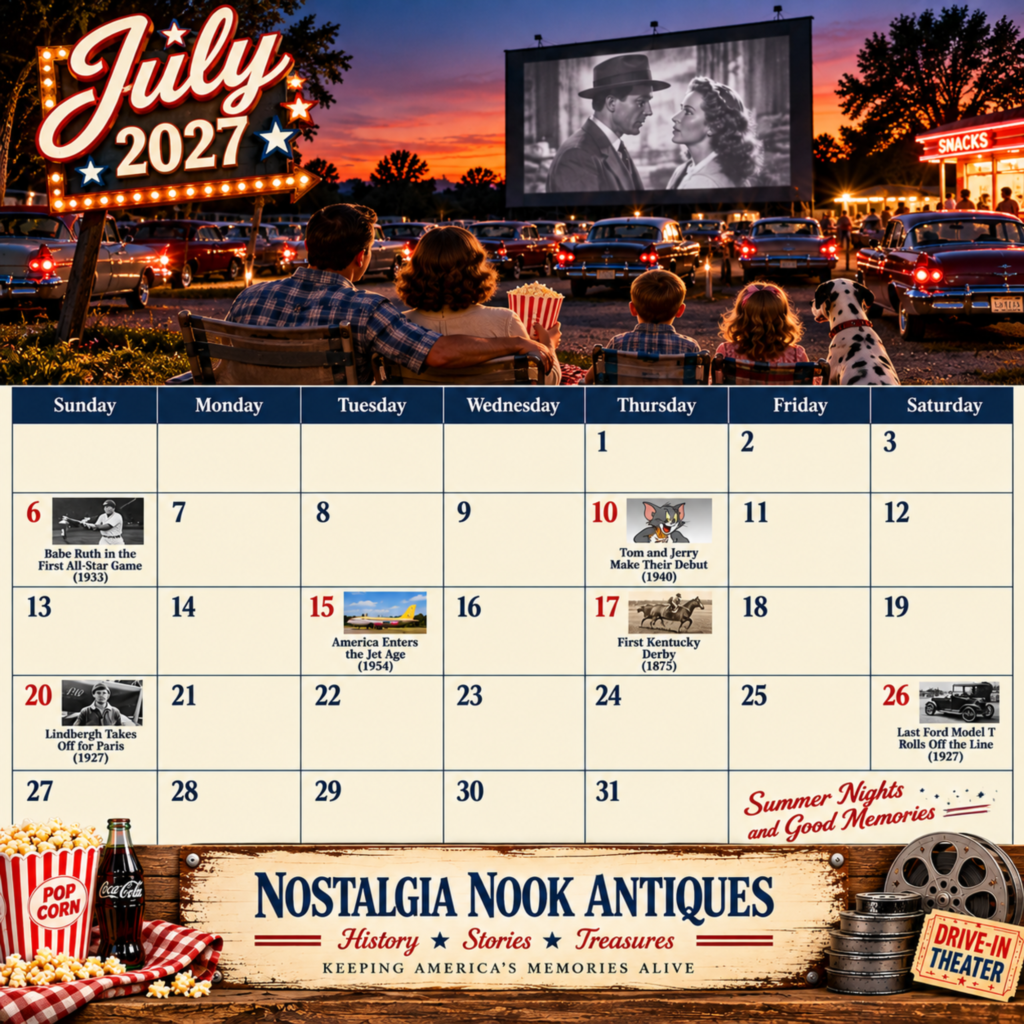
July: A Night at the Drive-In
July Story
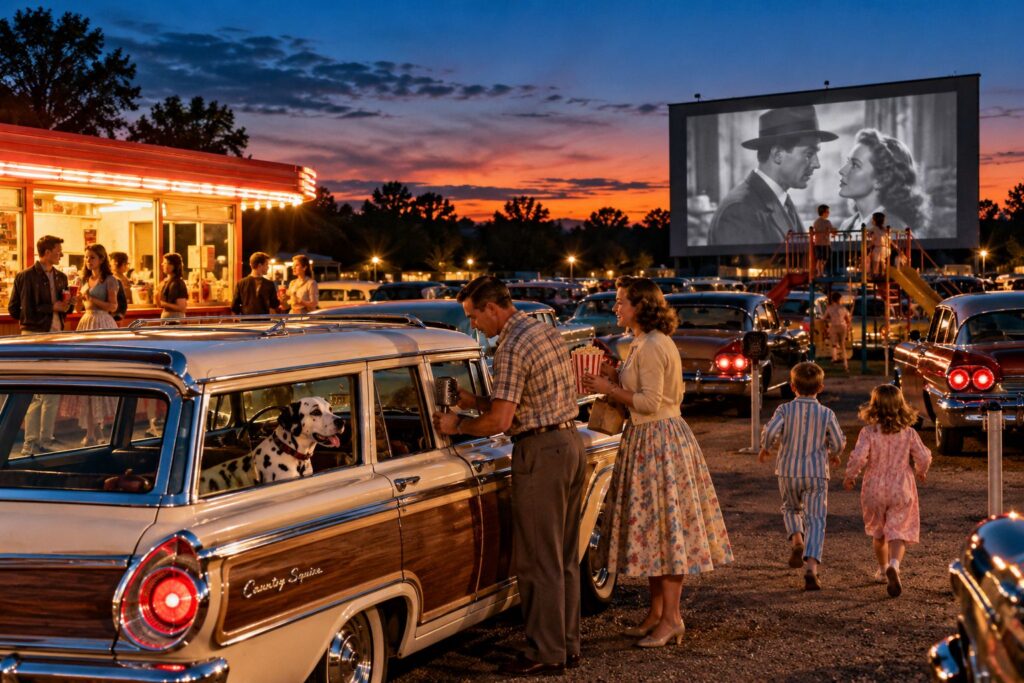
On a warm summer evening, the drive-in wasn’t just a place to watch a movie. It was an event.
Dad backed the station wagon into just the right spot, rolled down the window, and hung that heavy little speaker on the glass. Mom brought the snacks, although sooner or later somebody made a trip to the concession stand for popcorn, soda, or something we probably didn’t need.
The kids had other priorities.
Before the movie started, the playground beneath the giant screen was packed. Pajamas were perfectly acceptable drive-in clothing because there was a good chance somebody would be asleep in the back seat before the second feature ended.
Then the sun disappeared, headlights went dark, and that enormous screen flickered to life.
Of course, not everyone watched every minute of the movie. Teenagers had their own reasons for going to the drive-in.
And if you brought the family dog, you’d better keep an eye on the popcorn.
Somehow, sitting in a car to watch a movie made an ordinary summer night feel like an adventure.
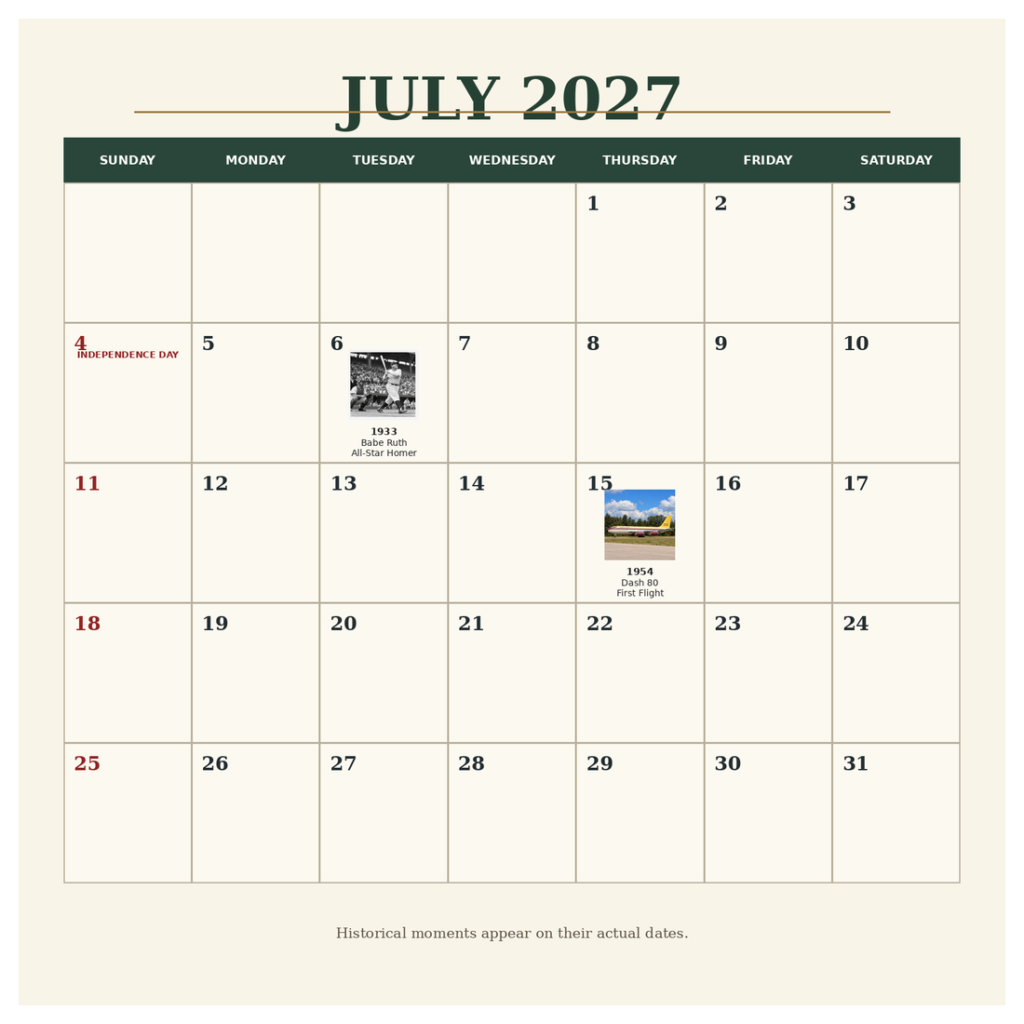
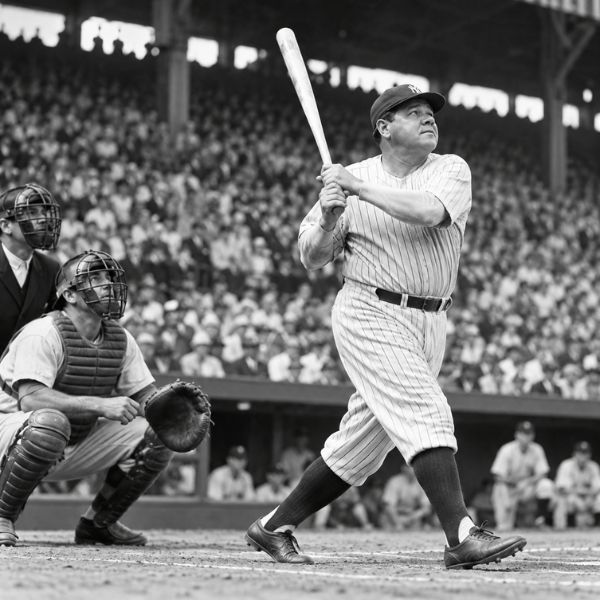
July 6, 1933: Babe Ruth Homers in the First All-Star Game
Baseball’s greatest stars gathered at Chicago’s Comiskey Park for the first Major League All-Star Game. In the third inning, Babe Ruth gave the crowd exactly what it hoped to see, crushing a two-run home run off Cardinals pitcher Bill Hallahan. It was the first home run in All-Star Game history. MLB.com
The American League went on to win 4–2, and an exhibition originally planned as part of Chicago’s Century of Progress celebration proved so popular that the All-Star Game became an annual summer tradition.

1933: Babe Ruth Homers in the First All-Star Game
First home run in All-Star Game history.
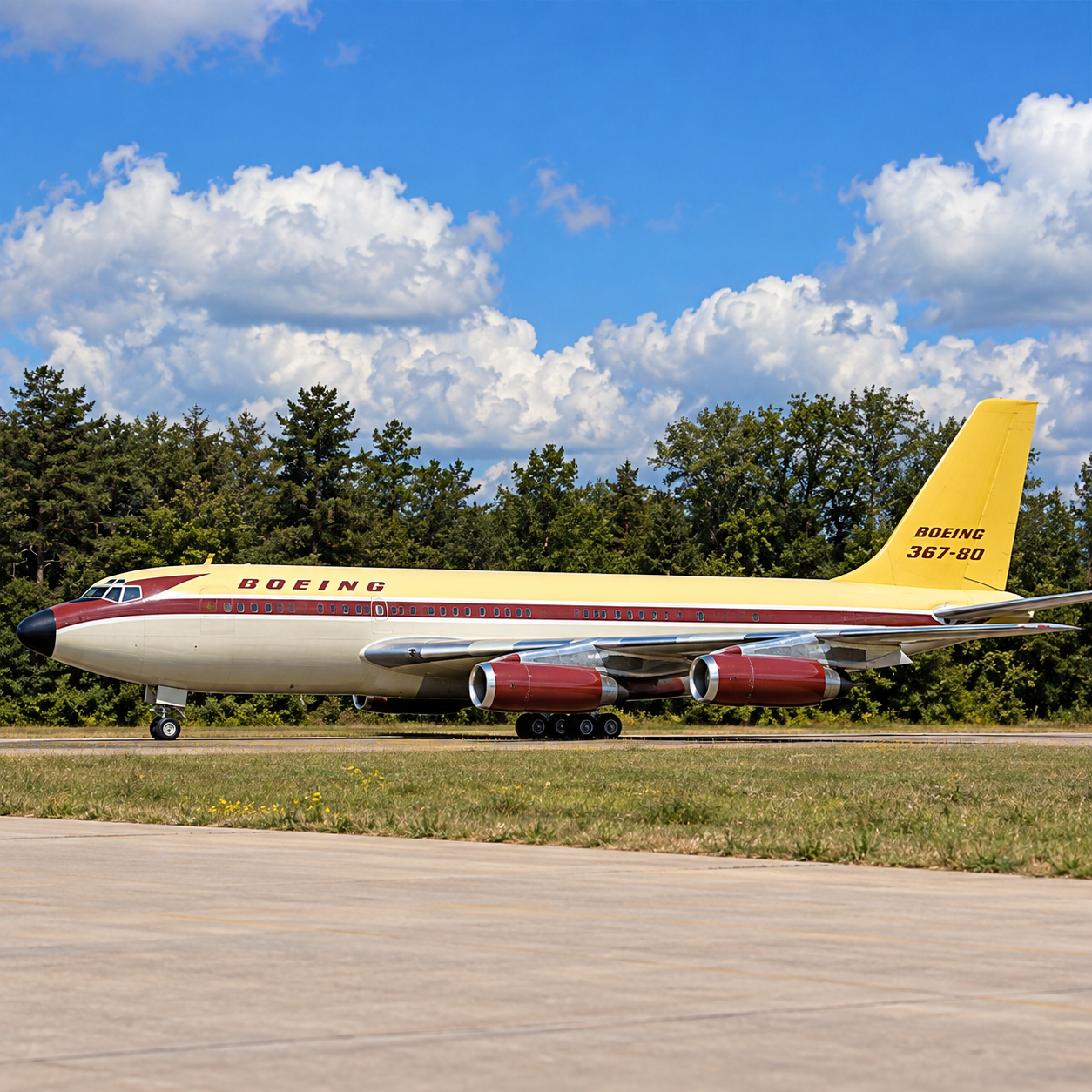
July 15, 1954: America Enters the Jet Age
On a warm July morning near Seattle, Boeing’s experimental 367-80 lifted off for its first flight. Known as the Dash 80, the sleek four-engine aircraft was a prototype for the Boeing 707 and helped usher commercial aviation into the jet age.
For travelers, the change would be enormous. Air travel that once meant noisy piston engines and long journeys was about to become faster, smoother, and increasingly accessible to ordinary Americans.
The Dash 80 itself never entered airline service. Instead, it proved what was possible. Its first flight marked the beginning of an era when jetliners would shrink distances and make crossing the country feel almost routine.
For a generation that had grown up watching propeller planes, the future had just taken off.

1954: America Enters the Jet Age
Boeing's Dash 80 made its first flight.