5 Must-Know Facts About Vintage Film Posters
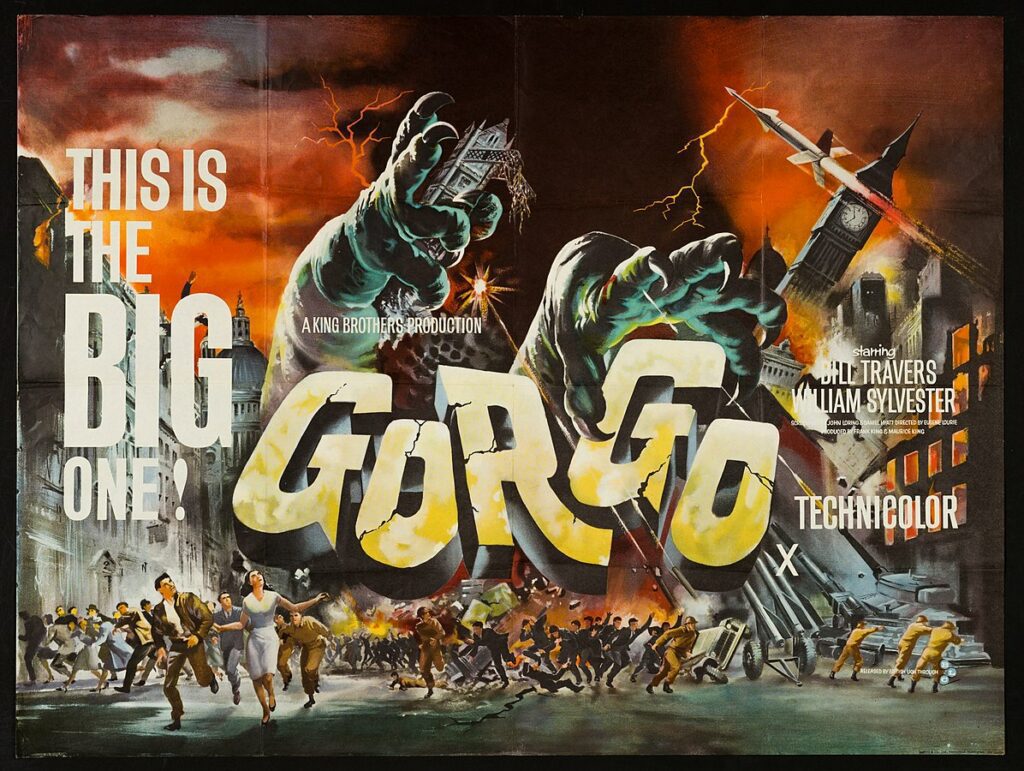
Vintage film posters fascinated me long before I knew anyone collected them. I remember looking at movie ads when I was young and wondering how an artist could capture an entire film in a single picture. Somehow, the heroes, villains, romance, danger, and excitement all seemed to fit on one sheet of paper.
Of course, that was exactly the point. Before movie trailers followed us around on television and the internet, a striking poster outside the theater could help convince you that a film was worth seeing. Sometimes the artwork became almost as memorable as the movie itself.
Yet those colorful advertisements weren’t created with future collectors in mind. Many were simply working pieces of theater promotion. The result is that the ones left behind are able to teach us quite a deal about Hollywood, advertising, popular art, and the audiences they were intended to entice.
So, what makes an old movie poster more than an attractive piece of nostalgia? These 5 must-know facts about vintage film posters reveal how they were created, why some became surprisingly rare, and why collectors are still hunting for them today.
Watch: The Story Behind Vintage Film Posters
Fact #1: Vintage Film Posters Were Works of Art
Long before movie posters were assembled with digital photographs and graphics, many vintage film posters began with the work of illustrators and commercial artists. Their job wasn’t simply to show who starred in the movie. They had to sell excitement, romance, danger, or mystery with a single image.
That helps explain why some old posters remain so striking. Artists exaggerated expressions, created dramatic scenes, and used bold lettering and color to catch the eye of someone walking past a theater. A great poster could suggest the feeling of a movie before the audience bought a ticket.
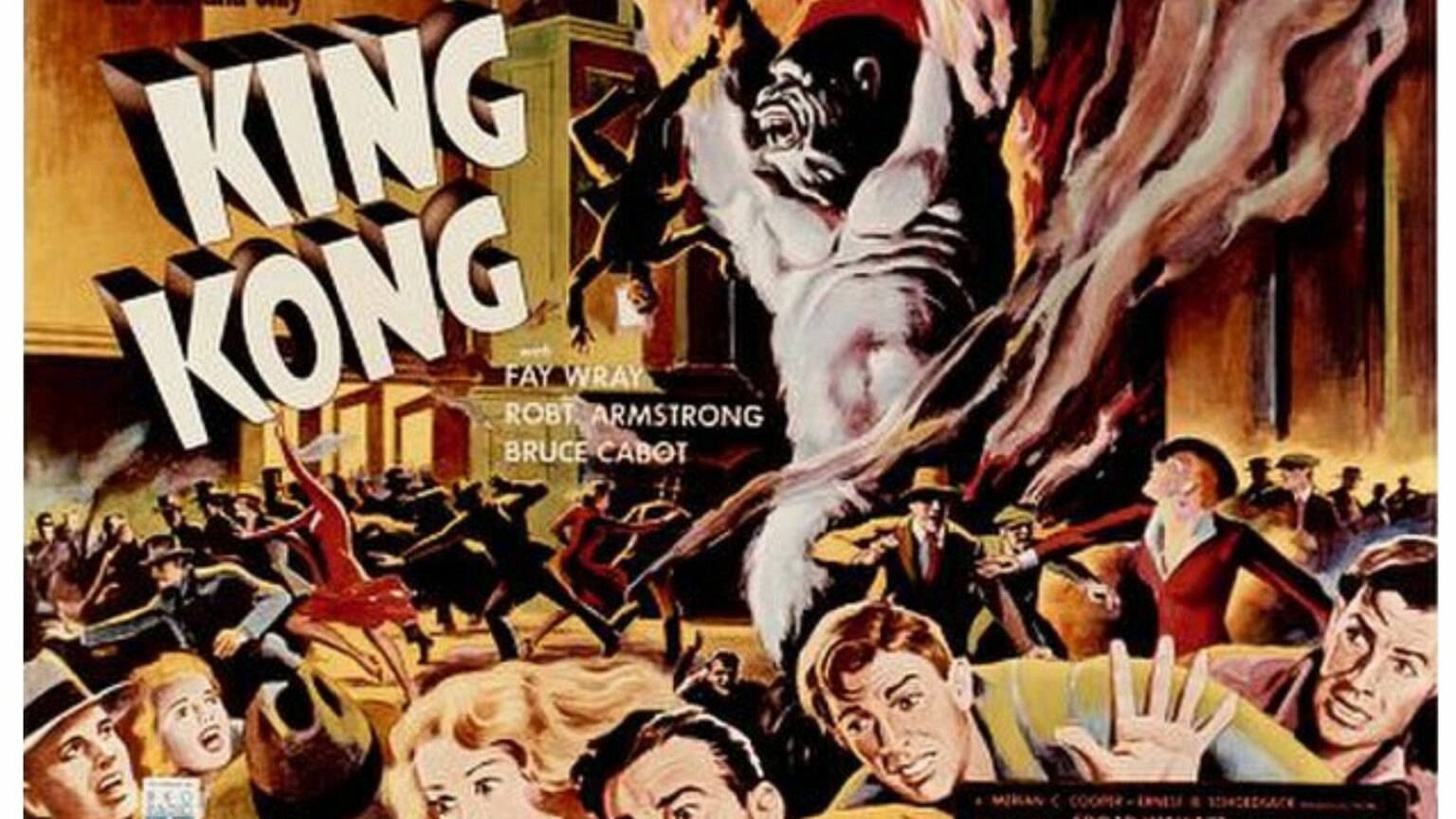
The 1933 King Kong campaign is a wonderful example. Its artwork didn’t quietly advertise a giant ape movie. Kong towered over terrified crowds while airplanes, buildings, and frightened faces turned the poster into a miniature action spectacle.
Other artists became closely associated with Hollywood advertising. Howard Terpning, for example, later became famous for his Western art after producing movie-poster illustrations earlier in his career. Meanwhile, many poster artists received far less recognition, even though millions of moviegoers saw their work.
That’s part of the appeal today. A surviving poster isn’t merely an advertisement for an old movie. It’s also a surviving piece of commercial art from the era that produced it.
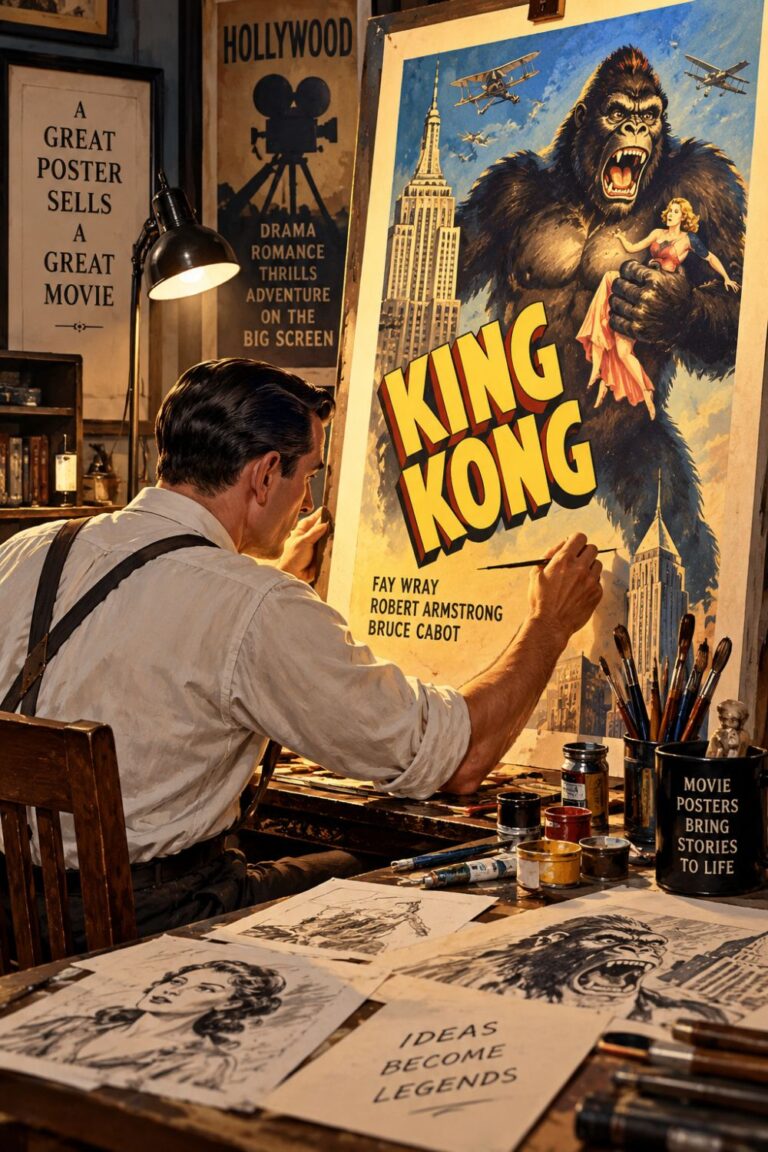
From the Poster Room: A movie poster had only seconds to stop someone walking past the theater. Apparently, a giant ape climbing a skyscraper was one way to get the job done.
Fact #2: Some Vintage Film Posters Became Extremely Rare
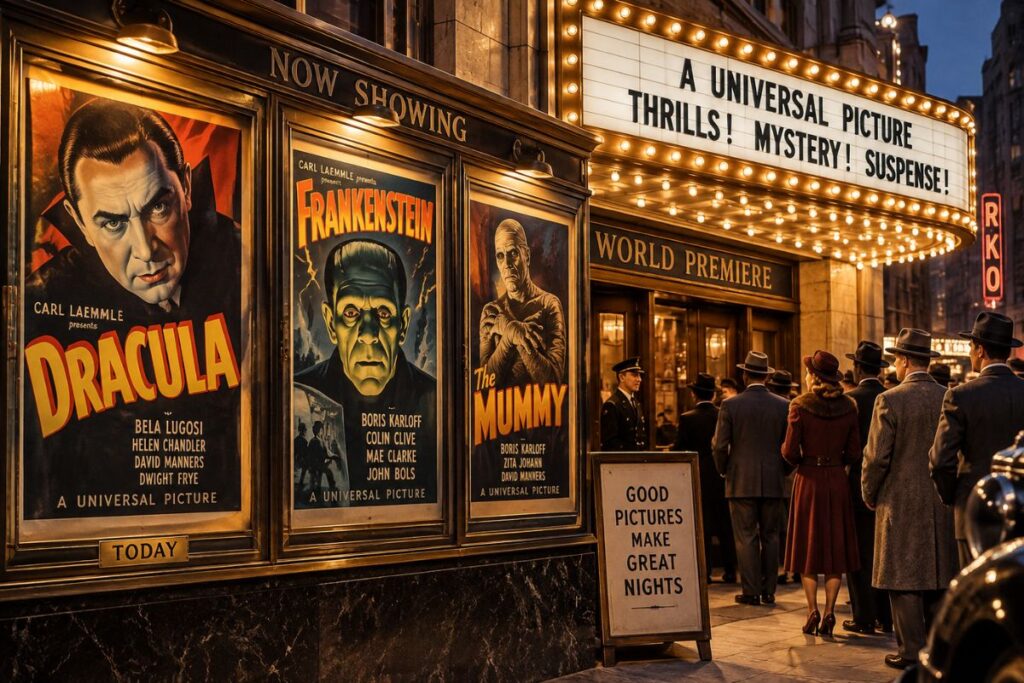
Most movie posters were never expected to become collectibles. They were working on advertising materials, sent to theaters to promote a film, and then returned, reused, stored, or discarded when their job was finished.
In fact, the Library of Congress explains that theaters were generally instructed to return promotional materials to movie distributors or destroy them after use. Consequently, many original posters and lobby cards simply didn’t survive.
That means age alone doesn’t determine rarity. Print quantity, condition, demand, and the number of surviving examples all matter. Sometimes a poster became valuable simply because remarkably few copies escaped decades of handling, storage, and disposal.
Horror films provide some fascinating examples. Original promotional material connected with Dracula, Frankenstein, and The Mummy has become especially desirable among collectors. Sotheby’s describes 1930s Universal horror as one of the most prized areas of collecting.
However, rarity can also create confusion. Reproductions and later reissues may look convincing, so serious collectors examine printing details, dimensions, provenance, and condition rather than assuming that anything old-looking must be an original.
In other words, the movie everybody remembers isn’t necessarily represented by the poster that’s hardest to find. Sometimes the real treasure is simply the piece of paper that somehow survived when thousands of others didn’t.
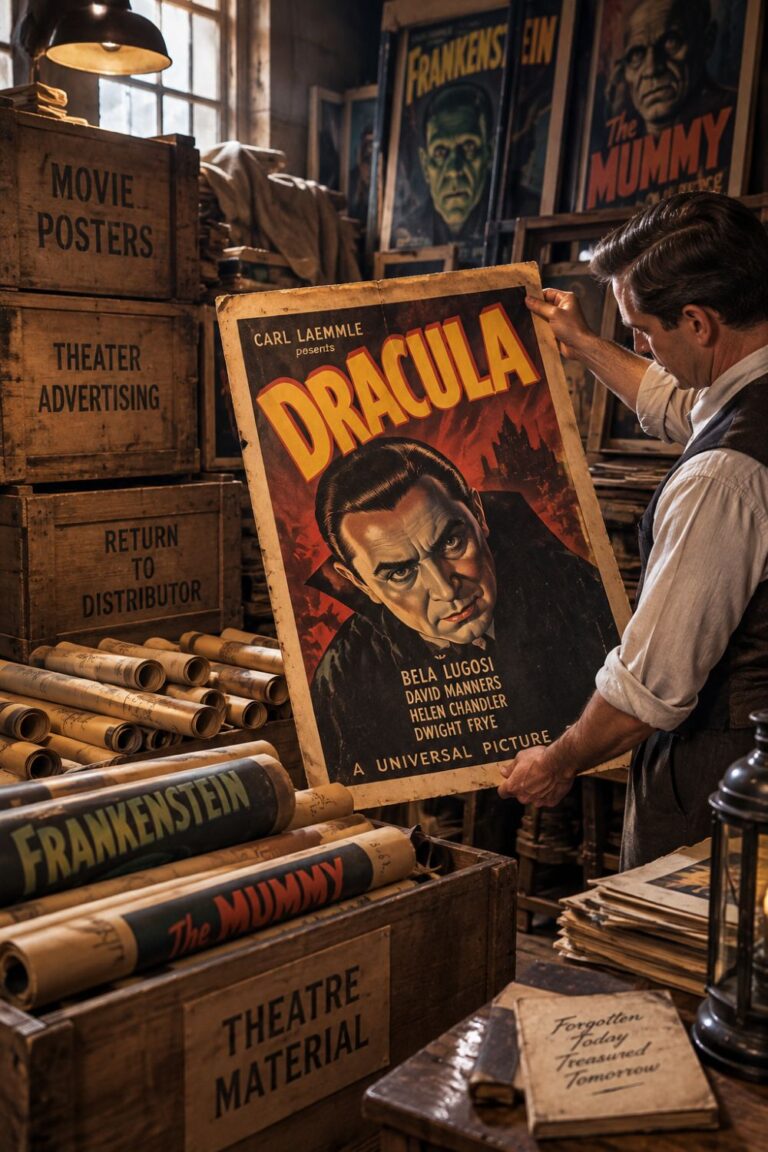
From the Poster Room: Somewhere along the way, yesterday’s theater advertising became today’s treasure. Which proves Grandma was occasionally right when she said, “Don’t throw that away. It might be worth something someday.”
Fact #3: Collectors Buy Memories as Much as Movie Posters

For many collectors, vintage film posters aren’t simply decorations. They’re reminders of movies, actors, theaters, and moments that meant something to them. One poster on a wall can bring back an entire Saturday afternoon or a first trip to the movies.
That’s often how a collection begins. Someone searches for a poster from a childhood favorite, a film they saw on a first date, or a movie they watched repeatedly with their family. Then one poster becomes two. Two become five. Before long, somebody is explaining why there is absolutely enough wall space for just one more.
Yet nostalgia isn’t the only attraction. Posters preserve changing styles in illustration, typography, advertising, and popular culture. In fact, the Library of Congress preserves a collection of thousands of motion-picture posters spanning more than a century. Put examples from the 1930s, 1950s, and 1970s beside one another and you can practically watch Hollywood change.
International posters add another dimension. The same movie could be advertised with completely different artwork in another country, giving collectors an opportunity to rediscover a familiar film through another artist’s imagination.
Ultimately, collectors aren’t just accumulating old pieces of paper. They’re choosing which little pieces of movie history they want to keep around them.
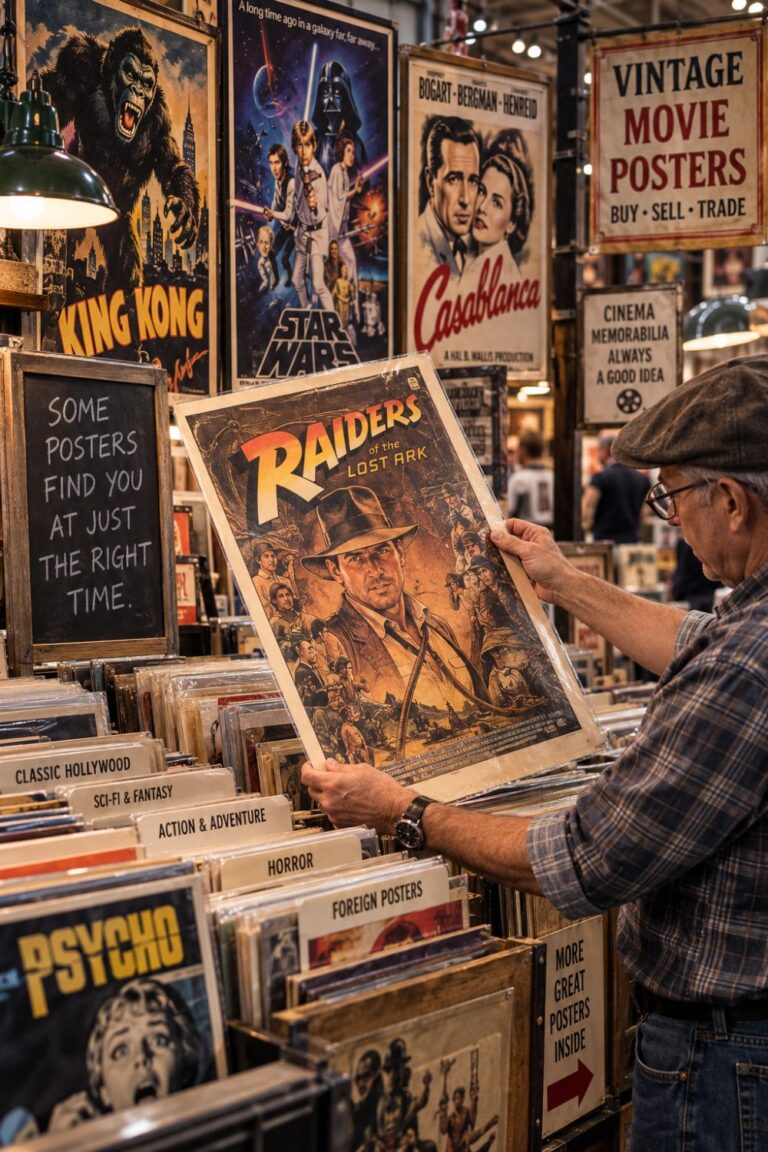
From the Poster Room: Every collection starts with one poster. The dangerous part is believing it will end there.
Fact #4: Vintage Film Posters Need Proper Preservation
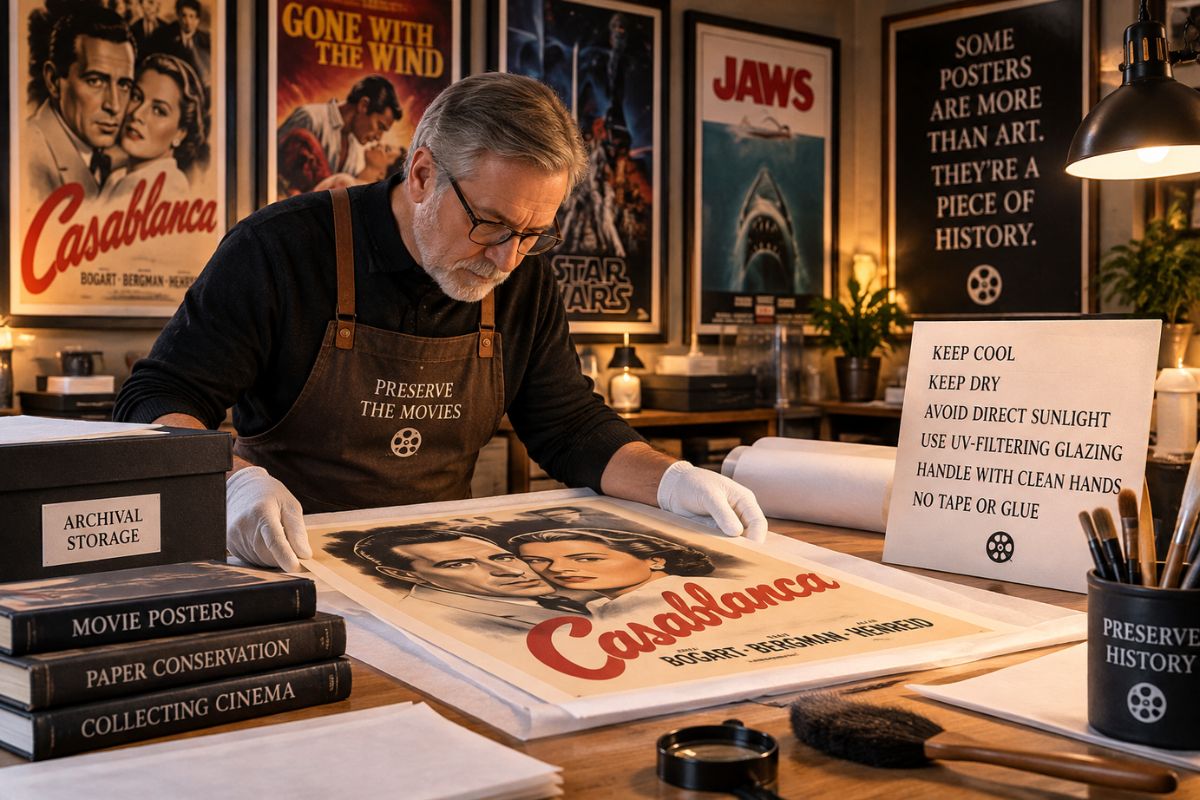
Once a vintage movie poster has survived 50, 75, or even 100 years, keeping it around for another generation becomes part of the collector’s job.
Light is one of the biggest concerns. Prolonged exposure can fade inks and weaken paper, so valuable posters shouldn’t spend their days baking in direct sunlight. When a poster is displayed, conservation-minded framing materials and UV-filtering glazing can provide additional protection.
Storage matters just as much. Heat, moisture, poor-quality backing materials, and careless handling can gradually damage paper. The Library of Congress recommends cool, relatively dry, and stable conditions for preserving works on paper, including posters. Collectors should think of an old poster less like ordinary wall decoration and more like a historical paper artifact.
Restoration is another matter entirely. Linen backing, repairing tears, removing stains, and other conservation work can improve a damaged poster’s appearance and stability. However, major work is best handled by someone experienced with historic paper and movie posters. An enthusiastic roll of household tape can turn a small problem into a permanent one.
Of course, not every poster needs museum treatment. Still, thoughtful preservation helps ensure that the artwork and memories that survived all those years can be enjoyed by somebody else decades from now.

From the Poster Room: Scotch tape may have saved plenty of birthday presents. A 90-year-old movie poster is not the place to test its conservation skills.
Fact #5: Not Every Old Movie Poster Is an Original
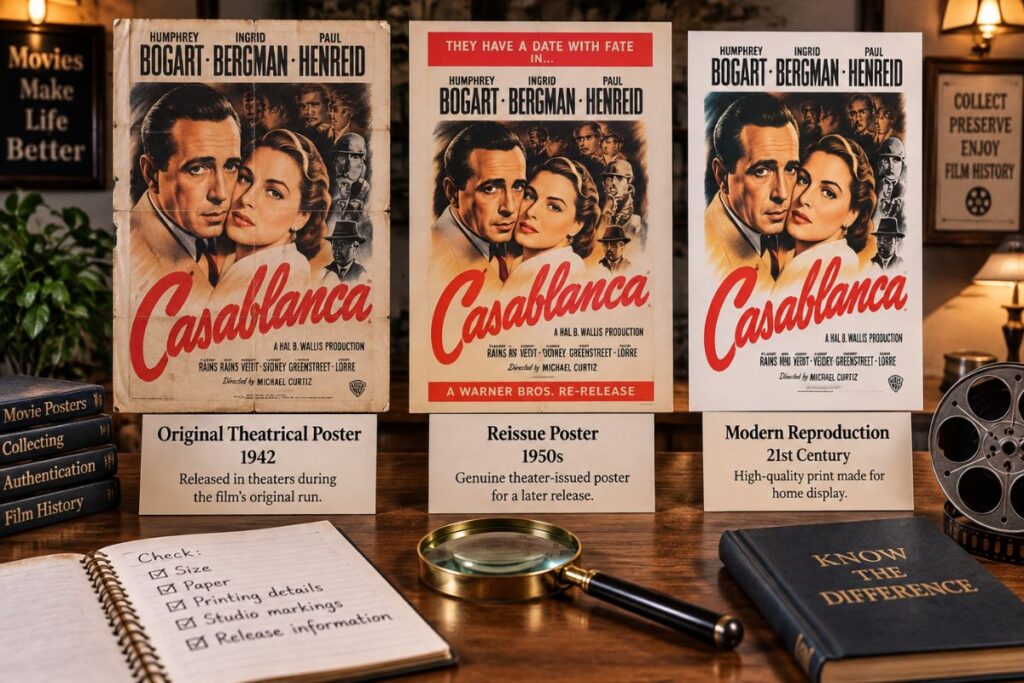
Finding an old-looking movie poster doesn’t necessarily mean you’ve found an original. Popular films have been advertised again through reissues, anniversary releases, international editions, and reproductions, sometimes decades after their first theatrical runs.
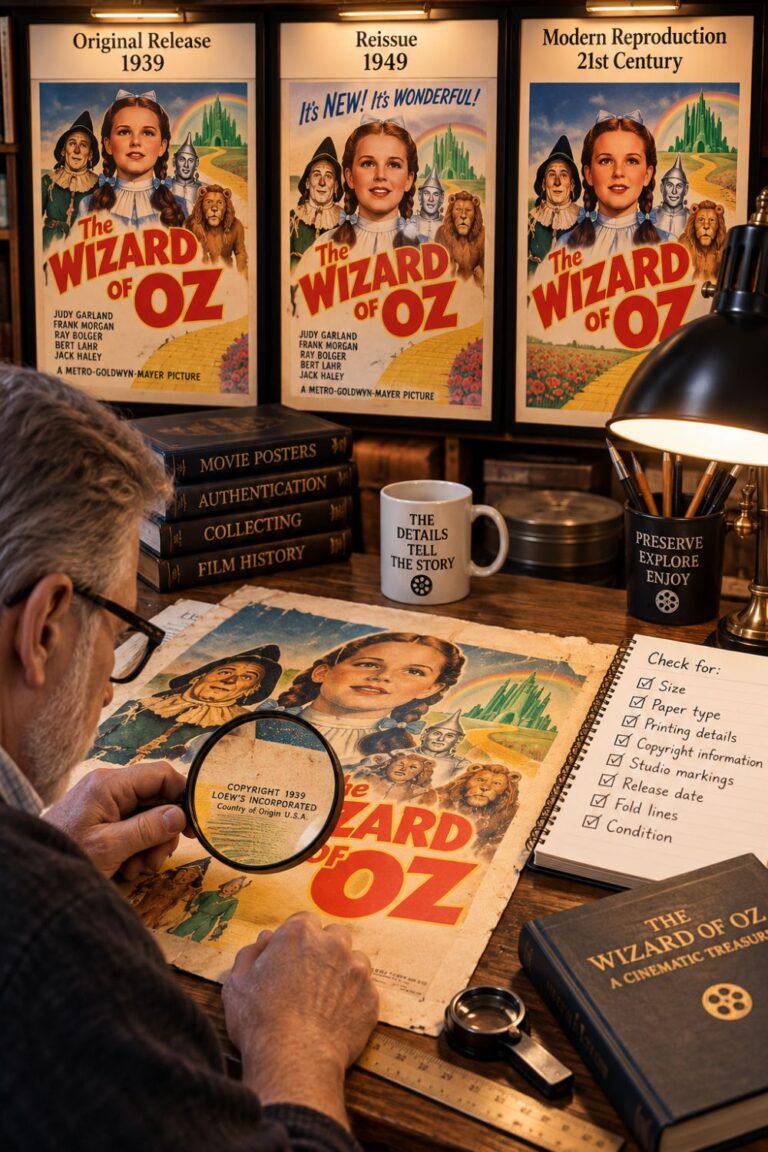
That’s why collectors look beyond the artwork itself. Size, paper, printing information, studio markings, and distribution codes can provide clues about when and why a poster was produced. Heritage Auctions recommends checking details such as size, paper texture, copyright information, and release markings when authenticating movie posters.
Reissues add another wrinkle. A poster produced for a later theatrical release can still be a genuine theater-issued movie poster, but it isn’t the same as a poster from the film’s first release. Modern reproductions are something different again.
Reproductions aren’t automatically bad, of course. If you simply want a beautiful poster from a favorite movie hanging in your home, a reproduction may be exactly what you need—and considerably easier on the wallet.
However, the distinction becomes important when someone is selling a poster as an original collectible. A poster printed to advertise a film during its original theatrical release is a very different object from one produced years later for decoration.
Collectors should do their homework before they spend a lot of money. With vintage film posters, sometimes the smallest printing detail can separate a genuine piece of movie history from something that merely looks like one.
From the Poster Room: If somebody says, “It’s old, so it must be original,” that’s a good time to keep one hand on your wallet.
Why Vintage Film Posters Still Matter
I started paying attention to movie posters long before I knew anyone collected them. As a kid, I remember looking at that artwork and wondering how somebody could fit an entire movie into one picture.
I understand it a little better now.
Those artists weren’t trying to tell us everything. They were trying to make us curious enough to walk through the theater doors.
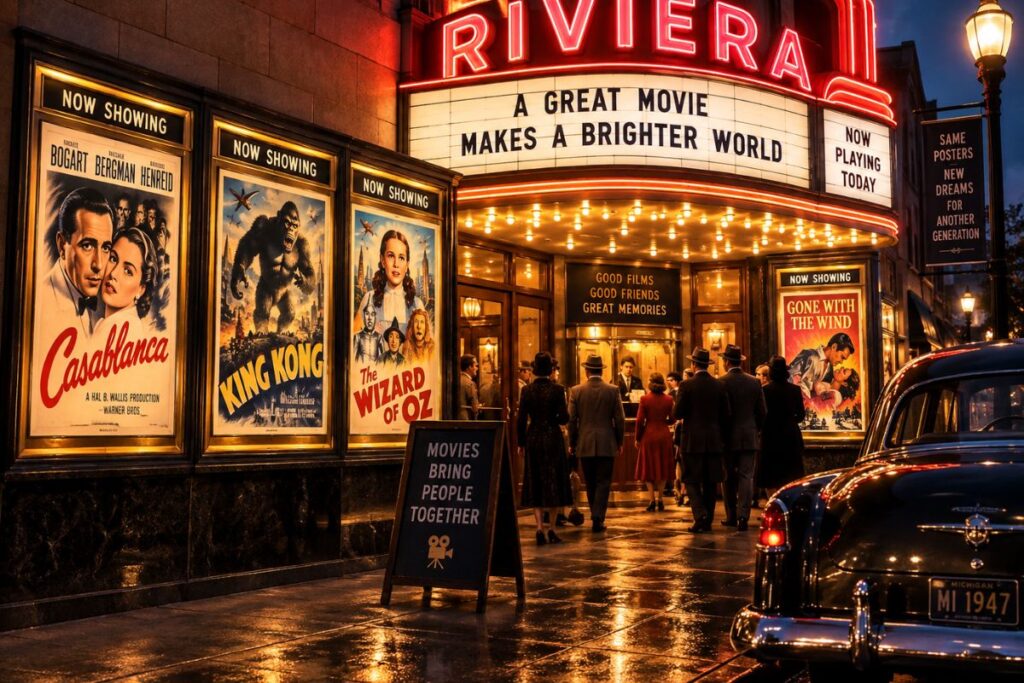
Decades later, the best vintage film posters can still do that. We see King Kong towering over New York, Dorothy heading toward Oz, or Bogart and Bergman together, and suddenly we’re thinking about the movies, the theaters, and perhaps even the people who were sitting beside us when we first saw them.
That’s what makes these posters worth preserving. Yes, some are rare. Some are valuable. Some are remarkable works of commercial art. Yet sometimes the poster that matters most isn’t the one an auction house would value highest.
It’s the one that takes you somewhere.
What movie poster would take you back? I’d love to hear about it in the comments.
For more interesting content, you may find the following posts interesting:
More Nostalgia From the Nook
If vintage film posters brought back a few memories, there’s plenty more to rediscover. Explore these stories from Nostalgia Nook Antiques and keep the trip through America’s past going.
Why America Loved Drive-In Theaters: The Summer Nights We Never Forgot—
Remember when the drive-in was more than a movie? Revisit the speakers, concession stands, family nights, and summer memories that made it special.
The Clocks That Ticked Through American History—Discover how familiar timepieces became witnesses to American history, preserving stories that reach far beyond the objects themselves.
Vintage Books: The Allure of a Collector’s Dream—Movie posters aren’t the only pieces of the past collectors love to hunt down. Vintage books offer another fascinating combination of art, history, rarity, and nostalgia.
Why Women Loved Department Stores — Step back into the days when colorful advertising, window displays, and downtown shopping could turn an ordinary outing into an experience worth remembering.
Explore Nostalgia Nook
Keep the Memories Coming
Get nostalgic stories, American history, collecting ideas, and new discoveries delivered right to your inbox.