Women’s Vintage Fashion: Why Retro Glam Keeps Coming Back
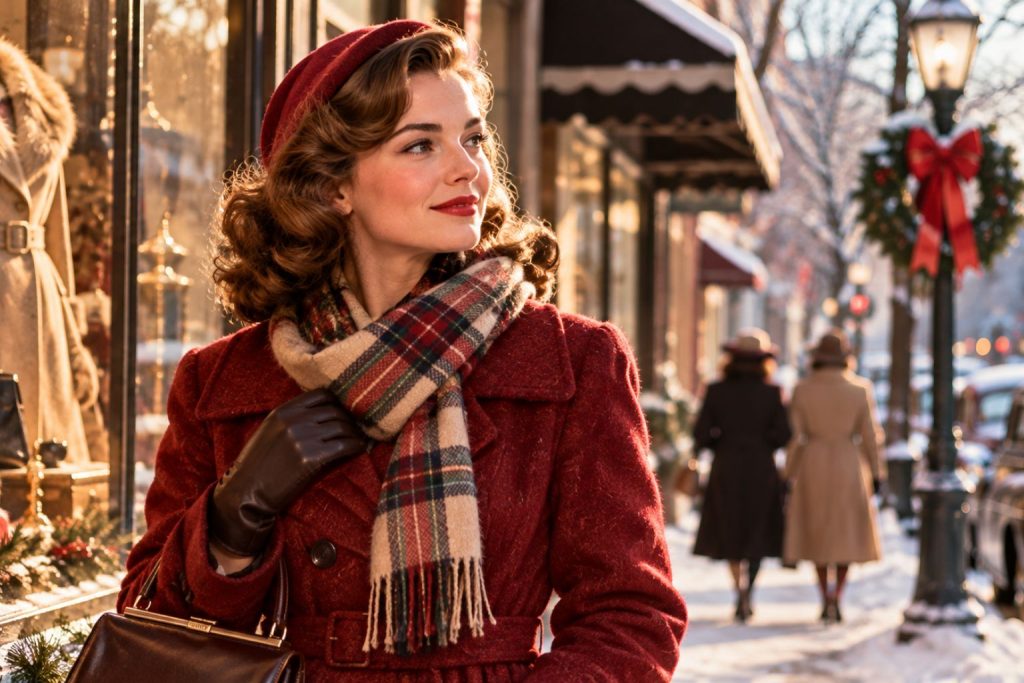
Women’s vintage fashion has a habit of disappearing for a while, only to walk back through the door wearing better shoes.
A fitted 1940s jacket. A full 1950s skirt. A structured handbag. Cat-eye sunglasses. A simple 1960s shift dress. These styles came from different decades, yet they continue to inspire wardrobes long after the women who first wore them moved on to the next fashion.
Part of the appeal is easy to understand. Vintage clothing often had recognizable shapes, thoughtful details, and accessories that felt like part of the outfit rather than an afterthought. A scarf could add color. A handbag could provide structure. Even an ordinary coat could look completely different with the right gloves and hat.
Still, retro glamour isn’t about dressing like you’re headed to a costume party. The most interesting vintage-inspired outfits borrow pieces of the past while leaving plenty of room for modern life.
And there is much more to the story than circle skirts and pearls.
From the practical tailoring of the 1940s to the dramatic silhouettes of the 1950s and the changing rules of the 1960s, women’s fashion tells a story about work, culture, technology, independence, and everyday life.
So open the closet. We’re going back for another look—and this time, we’re not stopping in 1955.
When Vintage Glamour Ruled American Fashion
Why the Elegance of Yesterday Keeps Coming Back
Watch Our Nostalgic Journey Below
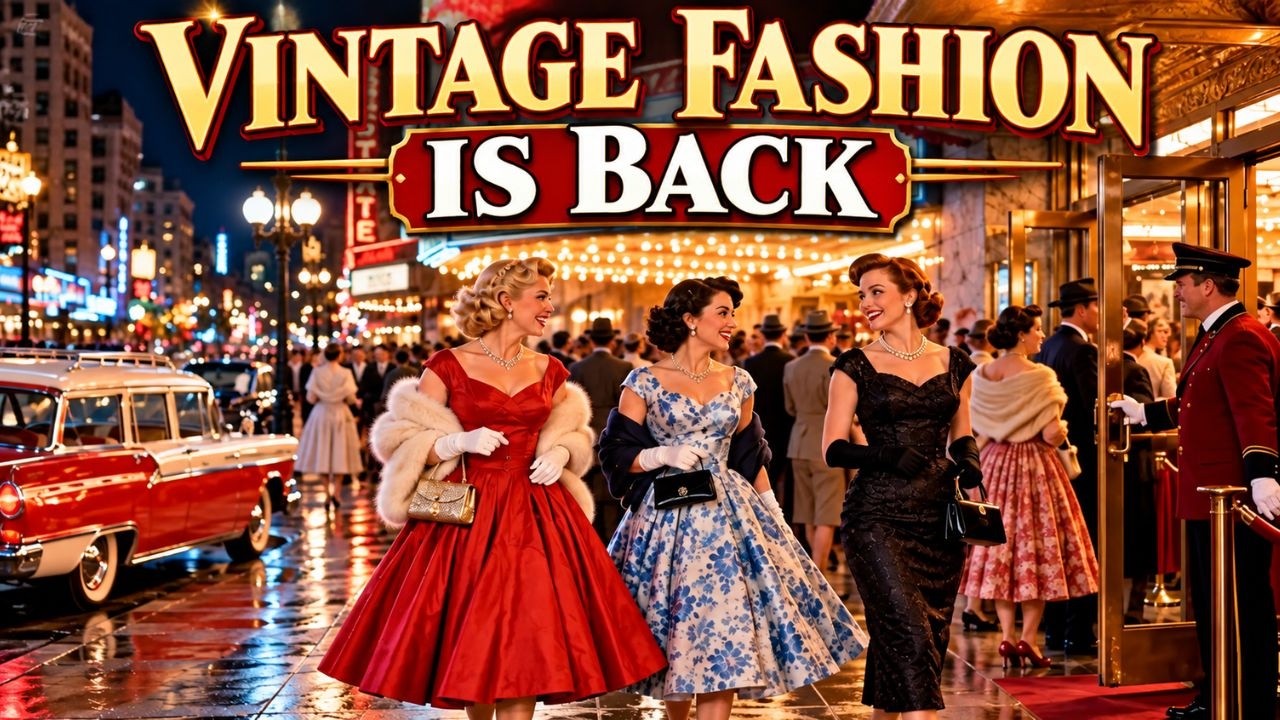
What Is Retro Glam?
Retro glam isn’t a single fashion style frozen in one decade. It’s a modern way of borrowing some of the most memorable ideas from the past and giving them another life.
A tailored 1940s jacket, a full 1950s skirt, or a sleek 1960s shift dress can all fit beneath the retro-glam umbrella. Although the silhouettes changed dramatically from decade to decade, they shared something important: clothing was often designed to create a deliberate overall look.
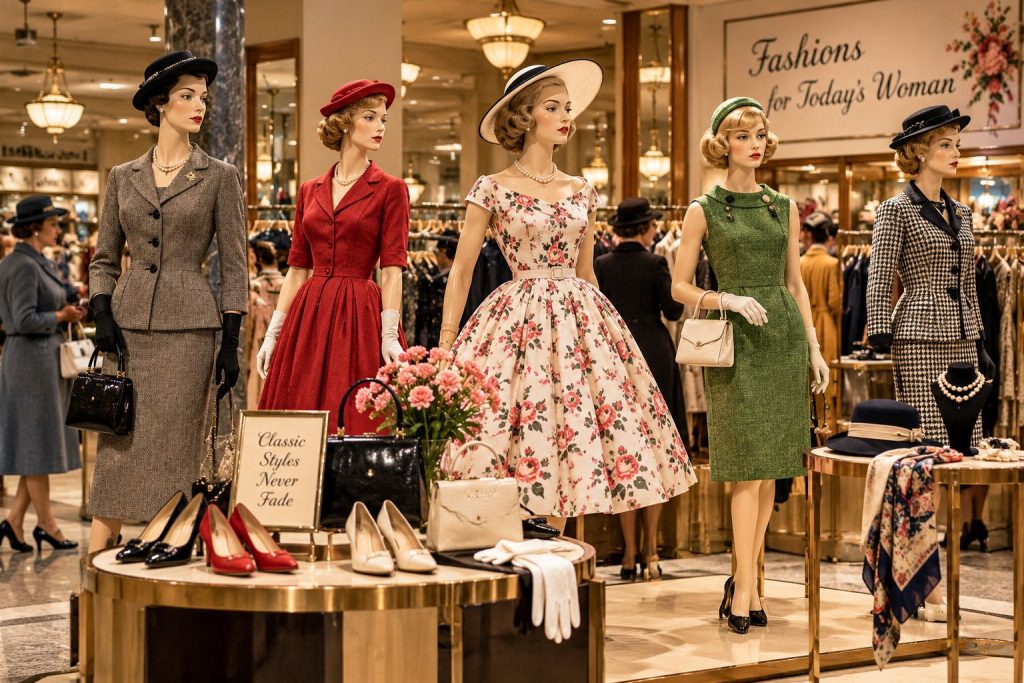
Accessories mattered, too. Handbags, shoes, jewelry, scarves, hats, and gloves weren’t necessarily afterthoughts. Instead, they could help pull an outfit together, add color, or change its personality completely.
That doesn’t mean women walked around looking glamorous every minute of the day. They didn’t. Everyday clothing had to survive work, errands, weather, children, housework, commuting, and everything else life could throw at it.
Even so, fashion from these decades left behind distinctive shapes and details that are instantly recognizable today. That’s where modern retro style gets interesting. Fashion has always looked backward for inspiration. The Museum at FIT’s “RetroSpective” exhibition explored how designers have repeatedly borrowed ideas from earlier periods and reimagined them for a new generation.
You don’t need an entire vintage wardrobe to borrow from the past. Sometimes one beautifully cut jacket, structured handbag, bold pair of sunglasses, or great dress is enough.
FUN FACT
“Vintage” and “retro” aren’t quite the same thing. Vintage generally refers to clothing actually made in an earlier period, while retro clothing is newer but deliberately inspired by styles of the past.
1940s Style: Tailoring Meets Practicality
Women’s fashion entered the 1940s during extraordinary circumstances. World War II affected manufacturing, available materials, employment, and everyday life. Inevitably, clothing changed along with it.
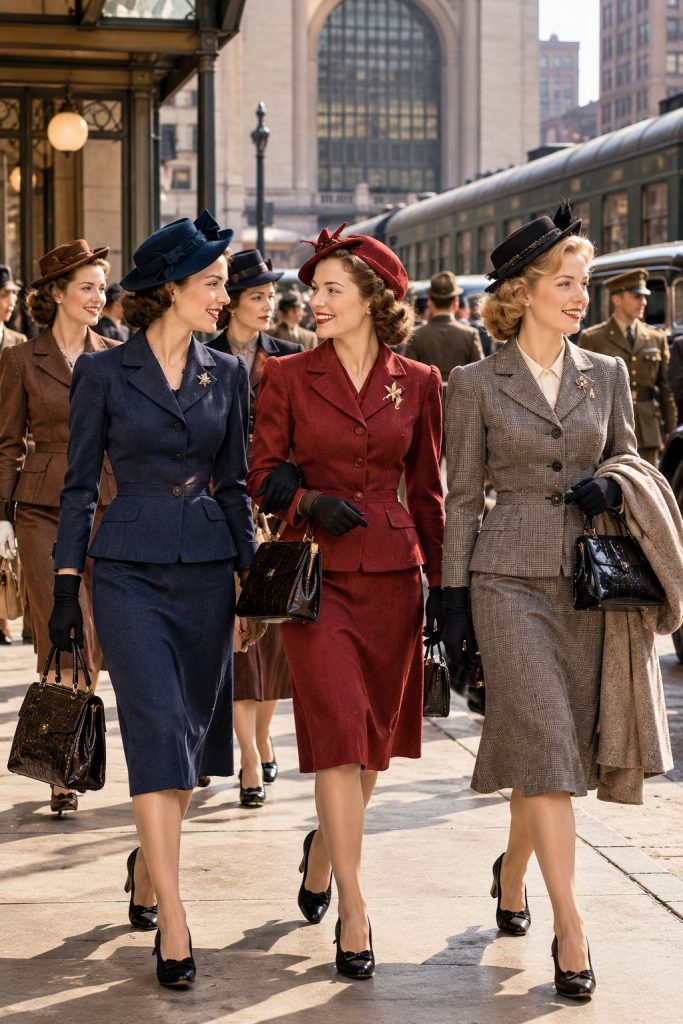
In response, many silhouettes during the war became more streamlined. Jackets often emphasized the shoulders, skirts followed cleaner lines, and practical suits became an important part of women’s wardrobes. Yet practicality didn’t mean women stopped caring about appearance. A surviving 1945 wool suit by American designer Vera Maxwell shows how practical tailoring could still produce a distinctive, polished look.
Instead, style often came through the details. Buttons, collars, pockets, hats, scarves, and carefully chosen accessories could give personality to an otherwise restrained outfit. Tailoring also mattered. A well-cut jacket and skirt could look polished without requiring extravagant amounts of fabric.
Meanwhile, women were entering workplaces and taking on jobs in unprecedented numbers during the war years. Clothing had to accommodate a life that increasingly included factories, offices, transportation, volunteer work, and other responsibilities outside the home.
After the war, however, fashion began changing again. Designers experimented with fuller skirts, narrower waists, and more deliberately shaped silhouettes. By the end of the decade, women’s fashion was already moving toward the dramatic proportions that would become closely associated with the 1950s.
That’s what makes 1940s style so interesting. It wasn’t one frozen look. The decade began with practicality and restriction, then ended on the doorstep of a very different fashion era.
FUN FACT
Wartime restrictions didn’t eliminate fashion—they challenged designers to become inventive. Limited materials encouraged careful cutting and construction, helping create some of the streamlined silhouettes now associated with 1940s style.
1950s Fashion: The Silhouette Takes Center Stage
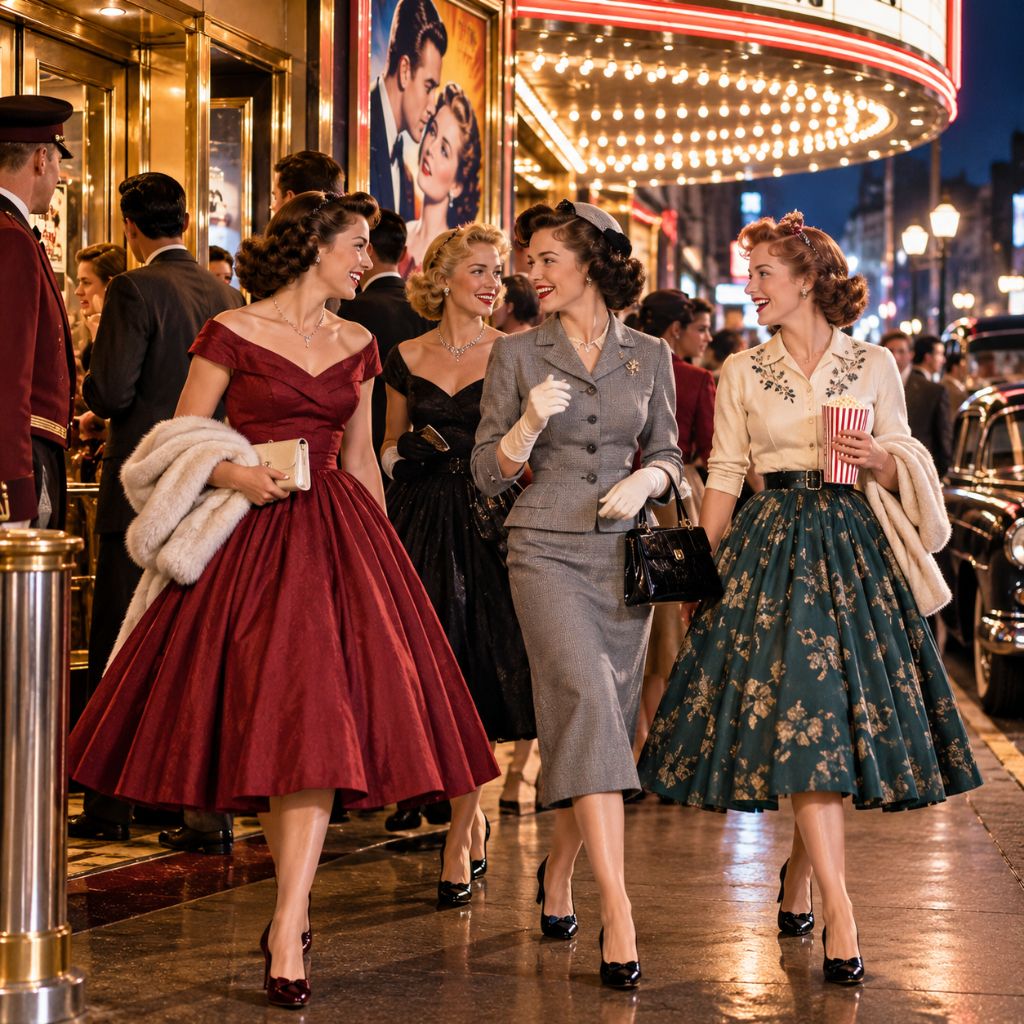
If the 1940s were shaped by wartime practicality, the 1950s opened the door to a very different fashion mood. Fuller skirts, defined waists, fitted bodices, and carefully coordinated accessories created some of the decade’s most recognizable silhouettes.
The change had actually begun in 1947. Christian Dior’s first collection introduced the silhouette that became known as the “New Look.” The Metropolitan Museum of Art notes that Dior continued emphasizing narrow waists and fuller hip lines into the early 1950s. The Metropolitan Museum of Art
Yet 1950s women’s fashion was much more varied than the familiar circle skirt.
For everyday wear, women could choose shirtwaist dresses, pencil skirts, cardigans, tailored suits, and simpler day dresses. Meanwhile, cocktail dresses and evening wear allowed considerably more drama. Fabrics, prints, buttons, belts, jewelry, and other details gave women plenty of ways to make those silhouettes their own.
The decade wasn’t static, either. By the later 1950s, designers were already experimenting with looser shapes. A 1959 Dior day dress designed by Yves Saint Laurent, for example, used a boxier bodice and dropped shoulders—a noticeable departure from the precise tailoring associated with earlier Dior designs and a hint of the geometry that would become prominent during the 1960s. The Metropolitan Museum of Art
That’s worth remembering when we look back at the decade. There was no single uniform called “1950s fashion.” Women dressed differently according to age, income, occupation, occasion, geography, and personal taste.
Still, when a fitted waist meets a sweeping skirt, it’s difficult not to recognize a little bit of the 1950s.
FUN FACT
Even Dior’s famous silhouette didn’t stand still. By 1957, his collections were already moving toward softer shapes and less rigidly defined waists. Fashion was preparing for its next change before the decade had even ended.
1960s Fashion: When the Rules Began to Change
By the 1960s, women’s fashion was ready for a shake-up. The polished styles of the previous decade didn’t disappear, but younger shoppers increasingly wanted something different.
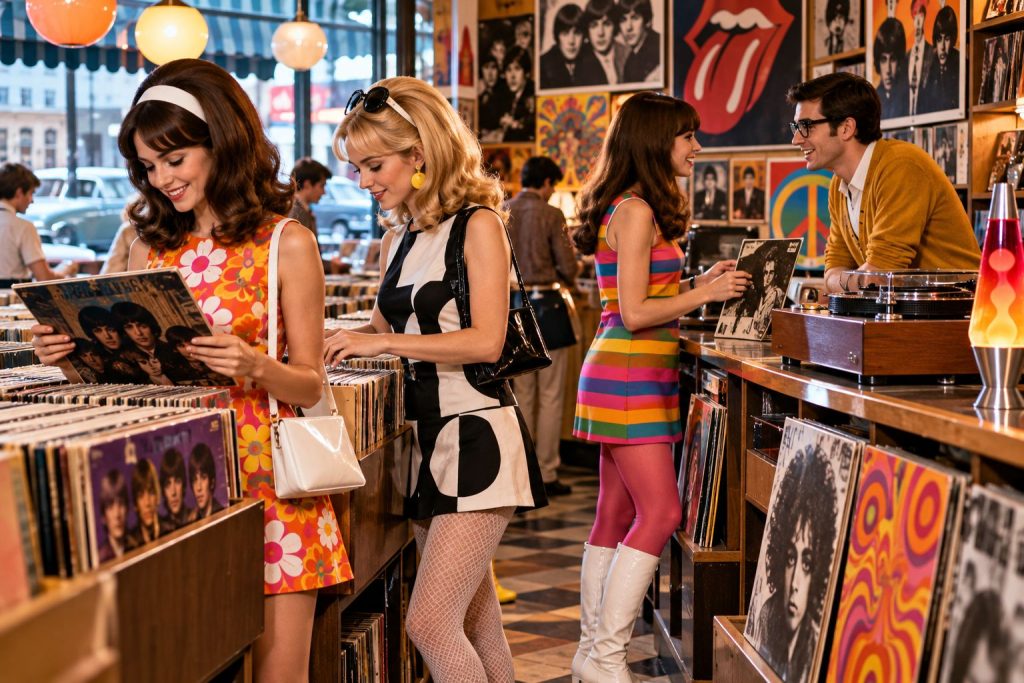
The young folks’ culture grew influential. Shift and A-line dresses loosened the silhouette, hemlines climbed, and bold colors and geometric patterns appeared everywhere. New materials and styles brought bright tights, ankle boots, synthetic fabrics, and even disposable paper dresses into the fashion conversation.
Designers such as Mary Quant helped popularize a youthful approach that was playful, comfortable, and easier to move in.
Of course, not every woman dressed like she had just stepped off London’s King’s Road. Traditional dresses, skirts, suits, and coats remained common. Nevertheless, the boundaries had moved.
In barely a decade, women’s fashion had gone from carefully structured silhouettes to a world where experimentation itself could be stylish.
FUN FACT
The miniskirt had an accomplice: tights. Shorter skirts helped make colorful, opaque, and patterned tights a fashionable alternative to traditional stockings.
Women’s Vintage Fashion: The Details That Made the Look
A beautiful dress might get the attention, but vintage style rarely stopped with the dress.
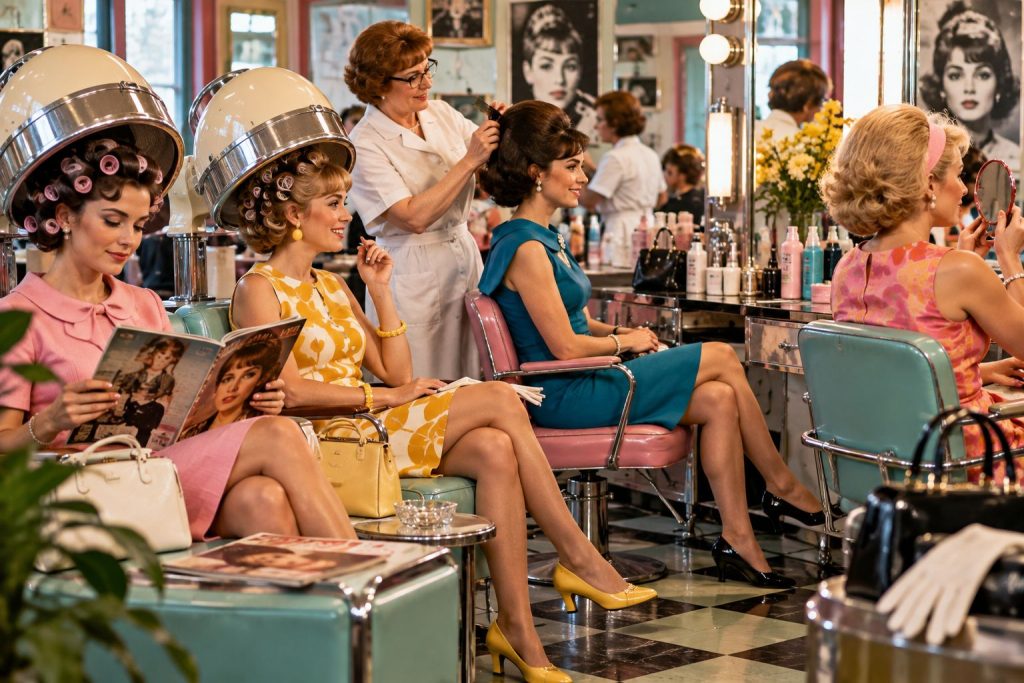
Instead, accessories helped turn clothing into an outfit. Handbags provided structure and color. Scarves could brighten a simple coat or blouse. The V&A’s fashion collection preserves thousands of examples of clothing and accessories that show how those finishing touches changed along with fashion itself.
Shoes mattered, too. Pumps, flats, saddle shoes, and ankle boots changed along with the fashions around them. Even eyeglasses became part of the look, especially when cat-eye frames brought a little personality to something practical.
Of course, women didn’t wear every accessory at once. Fashion depended on the occasion, the decade, and the woman wearing it.
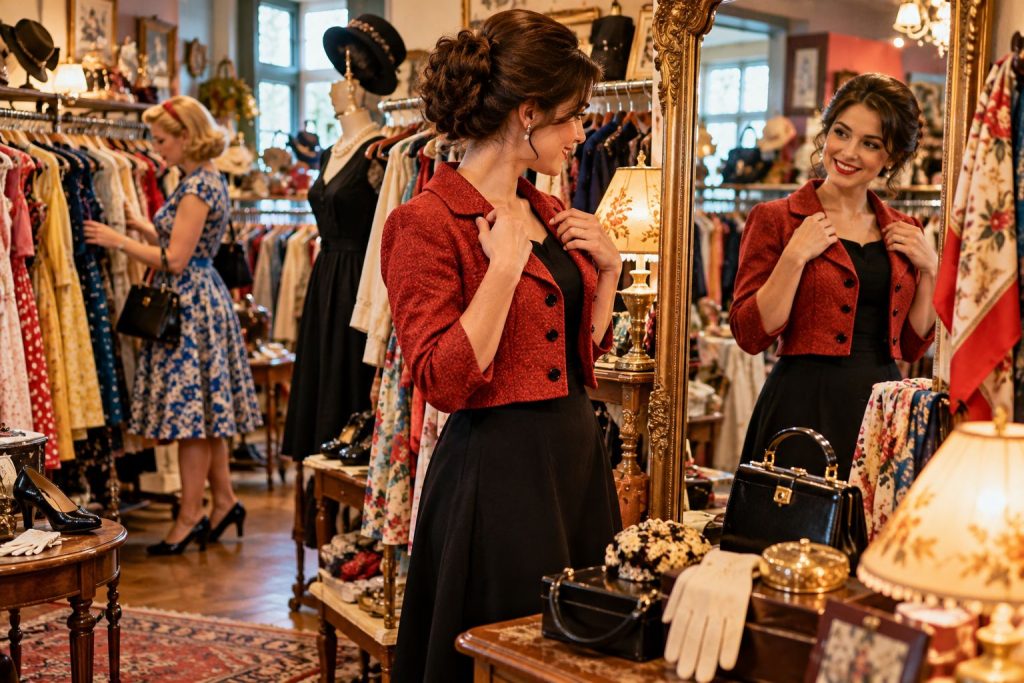
That’s part of the fun of retro glam today. You don’t need a closet full of vintage clothing. Sometimes a scarf, structured handbag, brooch, pair of gloves, or great sunglasses can do most of the time traveling for you. Women’s vintage fashion keeps returning because the best ideas don’t belong to only one decade.
FUN FACT
Costume jewelry wasn’t necessarily trying to fool anyone. Bold brooches, colorful beads, rhinestones, and oversized earrings were often meant to be noticed. Sometimes a little sparkle was the whole point.
Why Vintage Glam Still Works Today
Vintage glamour keeps returning because the best ideas don’t belong to only one decade.
A structured handbag can work with jeans. Cat-eye sunglasses don’t require a 1950s dress. A 1940s-inspired jacket can look perfectly at home beside modern trousers, while a colorful scarf can rescue an outfit that was otherwise headed toward a very dull afternoon.
That’s where retro style works best today. It doesn’t require recreating an entire period from head to toe.
Instead, people can borrow what they love.
Maybe it’s the tailoring of the 1940s, the dramatic silhouettes of the 1950s, or the color and freedom of the 1960s. Mixing those influences with modern clothing keeps vintage fashion from becoming a costume.
Maybe that’s the actual reason vintage glam never quite goes away. The Museum at FIT’s “RetroSpective” exhibition explored that recurring conversation between fashion’s past and present. Fashion changes constantly, but a great shape, a beautiful accessory, or a little unexpected glamour can always find its way back into the closet.
FUN FACT
Fashion recycling is nothing new. Designers have borrowed from earlier eras for generations. Yesterday’s outdated look has an amusing habit of becoming tomorrow’s inspiration.
Keep the Memories Going
If these vintage styles brought back a few memories, there are plenty more stories waiting in the closet. Keep exploring the clothes, culture, and everyday style that made each decade unmistakably its own.
Shop Women’s Vintage Fashion & Retro Accessories
Love the look? Browse vintage-inspired clothing, handbags, scarves, jewelry, and accessories selected to bring a little retro glamour into a modern wardrobe.
Women’s Vintage Winter Style The Right Scarf Wasn’t Just an Accessory
From scarves and gloves to handbags and wool coats, revisit the accessories that made cold-weather style part of the outfit.
1920s Women’s Wear: From Flapper to Fabulous
Step back another generation and revisit the daring fashions that helped redefine women’s style during the Roaring Twenties.
1950s to 1980s Men’s Fashion
Revisit four decades of men’s fashion, from polished 1950s tailoring to the unmistakable styles of the 1980s.
The styles may change, but there’s always another memory waiting at Nostalgia Nook Antiques.
The past has a way of finding us again. Sometimes it’s an old song, a familiar photograph, a forgotten gadget, or something we haven’t thought about in 40 years.
That’s what Nostalgia Nook Antiques is all about—rediscovering the stories, objects, and everyday memories that connect one generation to another.
Keep exploring. There’s always another story waiting around the corner.