Home » Heritage & Home » Halloween When We Were Kids: Childhood Memories We Never Forgot
Halloween When We Were Kids: Childhood Memories We Never Forgot
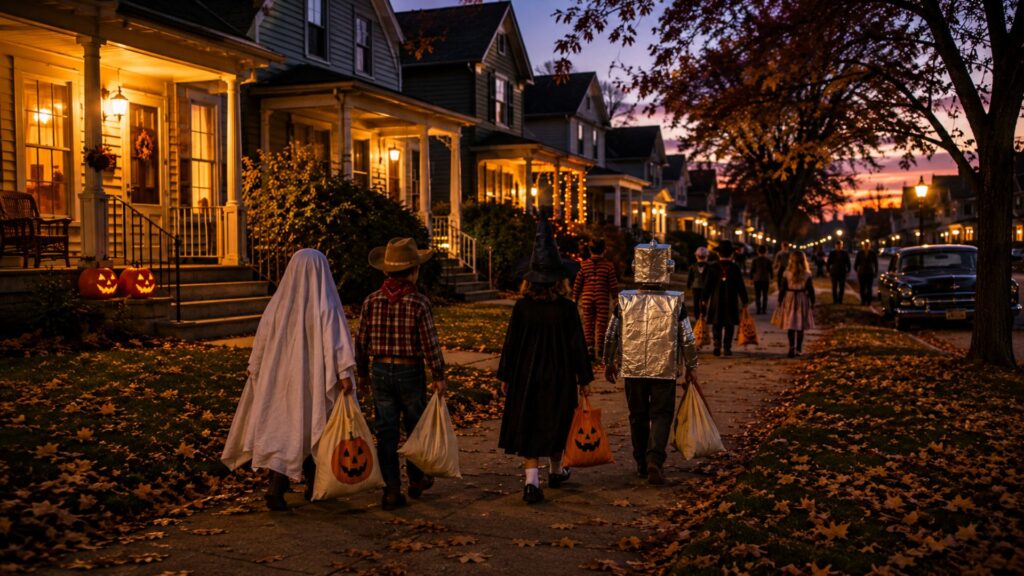
Some childhood Halloween memories never really leave us. The homemade costume Mom somehow made work. The pillowcase waiting to be filled. The porch lights glowing as darkness settled over the neighborhood. And, of course, the hope that the next house might be one of those legendary places handing out a full-size candy bar.
Halloween felt different then. Our neighborhood was packed with kids we knew—the same kids we rode bikes with, played baseball with, and saw at school. On Halloween night, however, the streets belonged to us.
We rang doorbells, compared our growing hauls, avoided the houses giving away pennies or fruit, and sometimes ventured into better neighborhoods where the candy prospects improved considerably.
Yet the best part may have come afterward.
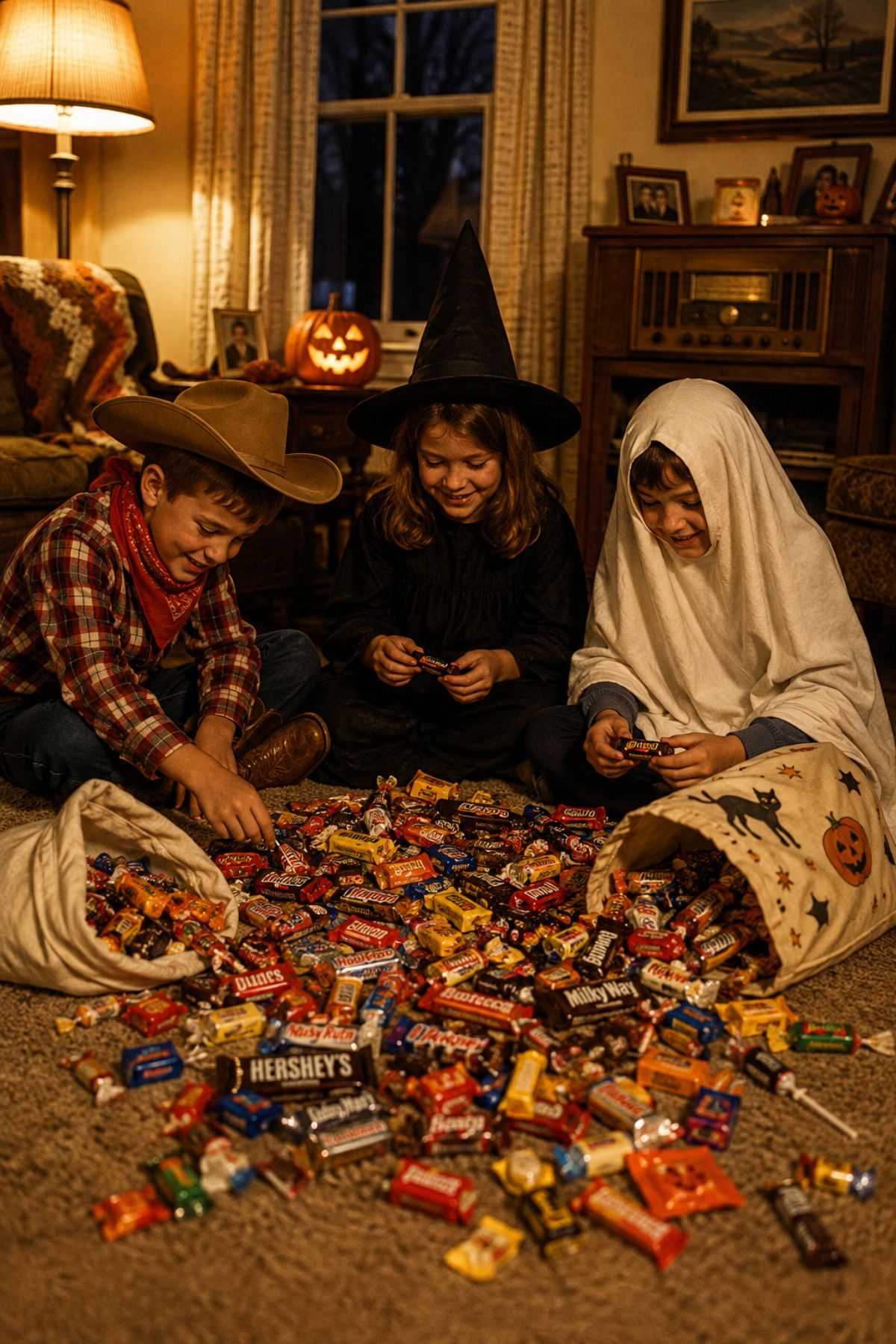
We’d finally return home, dump those heavy pillowcases onto the floor, and inspect the night’s treasure. With my sisters beside me, every candy bar suddenly became something worth trading, protecting—or eating before somebody else noticed it.
So grab an imaginary pillowcase and come along.
We’re going trick-or-treating one more time.
Watch: Childhood Halloween Memories
Step back with us into the porch lights, pillowcase candy hauls, Devil’s Night mischief, and neighborhood adventures of the Halloween nights we never forgot.
Before anyone rang a doorbell, Halloween began at home.
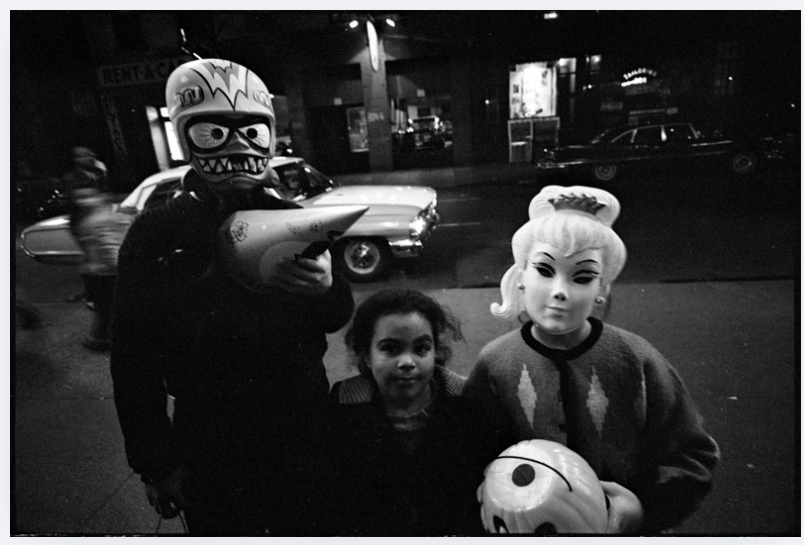
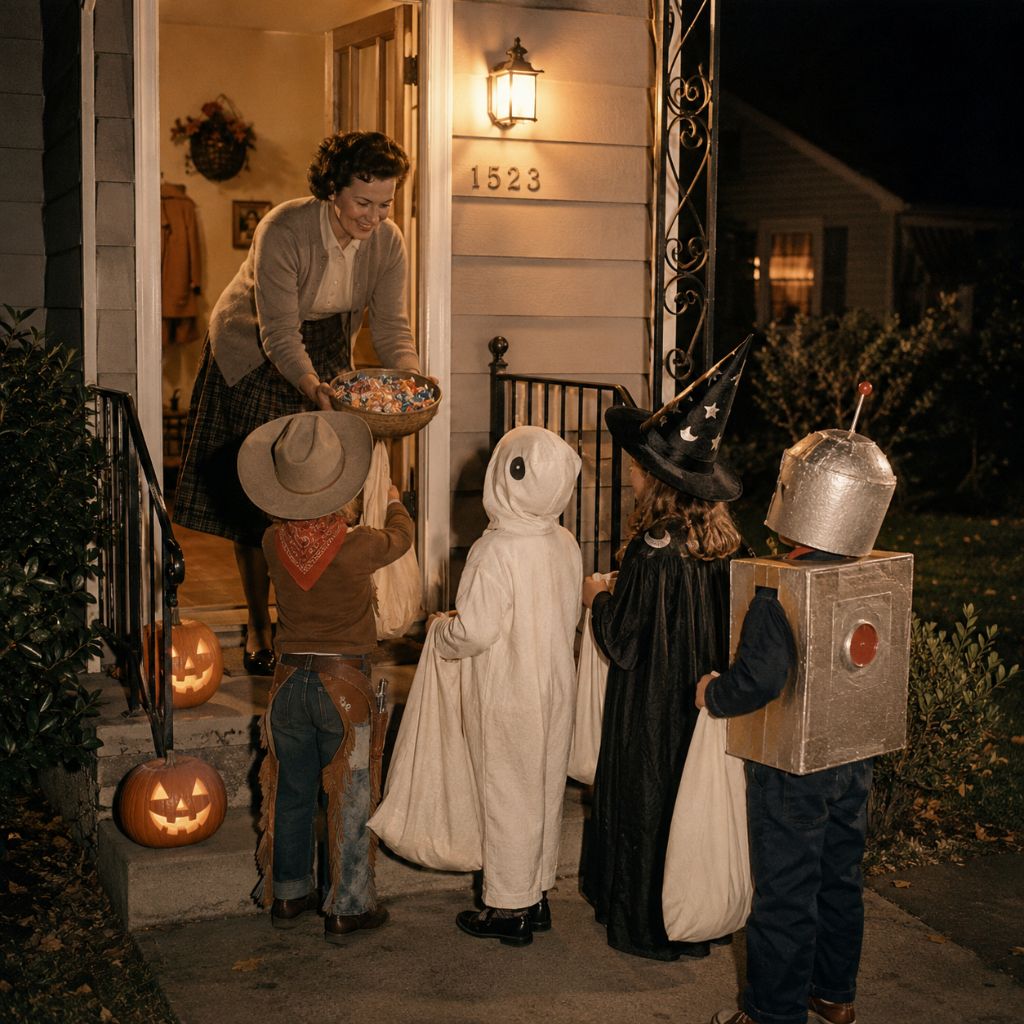
In our house, that usually meant Mom getting the costumes ready. Store-bought costumes existed, of course, but homemade costumes were still part of the fun. Mom could take ordinary clothes, a little imagination, and whatever she had around the house and somehow turn us into somebody else for the night.
Sometimes the costume needed a last-minute adjustment. More importantly, Mom made sure we were dressed warmly enough. Looking scary was one thing; freezing halfway around the neighborhood was another.
Meanwhile, the excitement kept building. Outside, porch lights were beginning to glow, and before long the neighborhood would fill with children.
Those homemade costumes belonged to a changing America. By the mid-20th century, inexpensive commercially made masks and character costumes were becoming common. Still, plenty of families continued creating costumes at home—a tradition that made every Halloween a little more personal.
Looking back, perhaps that was part of the magic.
Halloween didn’t begin when we reached the first house. It began while Mom was getting us ready to leave.
Looking back, perhaps that was part of the magic.
Halloween didn’t begin when we reached the first house. It began while Mom was getting us ready to leave.
When the Porch Lights Came On
Once the costumes were ready and Mom was satisfied that we wouldn’t freeze, the real adventure could begin.
As evening settled in, porch lights flickered on one by one. To us, that glowing light meant something very simple: this house was open for business.
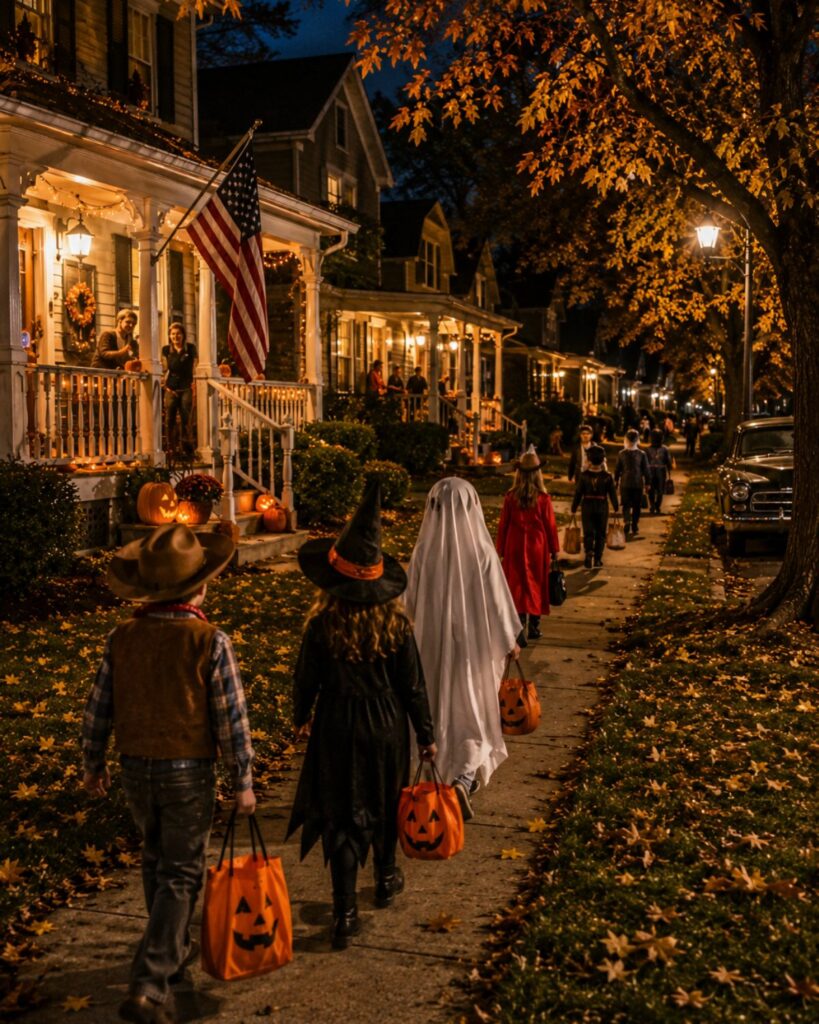
Soon the sidewalks filled with kids. These weren’t strangers. They were the same children we rode bikes with, played baseball with, went to school with, and probably argued with earlier that week. On Halloween night, though, everybody had the same mission.
Get the candy.
We moved from house to house, ringing doorbells and calling out “Trick or treat!” while pillowcases slowly grew heavier in our hands. Meanwhile, parents watched from porches, windows, or somewhere farther down the sidewalk.
Sometimes Mom came along. Other times, she drove us to neighborhoods where relatives lived—or to more affluent neighborhoods where we suspected the pickings might be considerably better.
And we weren’t imagining it.
There were houses that handed out full-size candy bars.
Those were the addresses a kid remembered.
Yet there was another unwritten rule of Halloween night:
If the porch light was off, you kept walking.
Childhood Halloween Memories: The Pillowcase Was Our Trick-or-Treat Bag
We didn’t need fancy Halloween buckets. At our house, a pillowcase did the job just fine.
It wasn’t particularly stylish, but that hardly mattered. A pillowcase was strong, easy to carry, and—most importantly—held an impressive amount of candy.
At the beginning of the night, it felt almost weightless. Before long, however, every new house added another handful to the growing treasure inside. You could actually feel your success as the pillowcase became heavier.
Of course, not every stop produced the same excitement.
A full-size candy bar could make a house legendary. Pennies were disappointing. Fruit wasn’t much better. And candy corn? Well, somebody must have liked it.
Meanwhile, kids compared notes. Word traveled surprisingly fast when a house was giving away something especially good. Consequently, the night’s route could change without anything resembling a map, a phone, or an app.
We simply followed the intelligence gathered on the street.
By the time that pillowcase became difficult to carry, there was only one sensible conclusion:
It had been a very successful Halloween.
Everybody Knew Where the Good Houses Were
Not every neighborhood was created equal on Halloween night.
We certainly worked our own streets first. After all, those were our neighbors, and we knew which porch lights would be on. But sometimes Mom would load us into the car and take us farther afield—to an aunt or uncle’s neighborhood or, if we were lucky, somewhere a little more affluent.
We knew what we were doing.
Some houses had developed reputations. These were the places where a kid might receive something better than a handful of little candies. Every once in a while, somebody dropped a full-size candy bar into the pillowcase.
That was the Halloween jackpot.
Interestingly, the memory fits the period. Candy historian Samira Kawash told Smithsonian that during the 1950s and 1960s, when children received candy, full-size portions were common, rather than today’s tiny treat-size packages.
Meanwhile, news traveled from kid to kid.
“Go down there. They’re giving out the good stuff.”
No group text. No neighborhood app. No GPS.
Just the fastest candy intelligence network in America.
The Night Before Halloween Belonged to Devil's Night
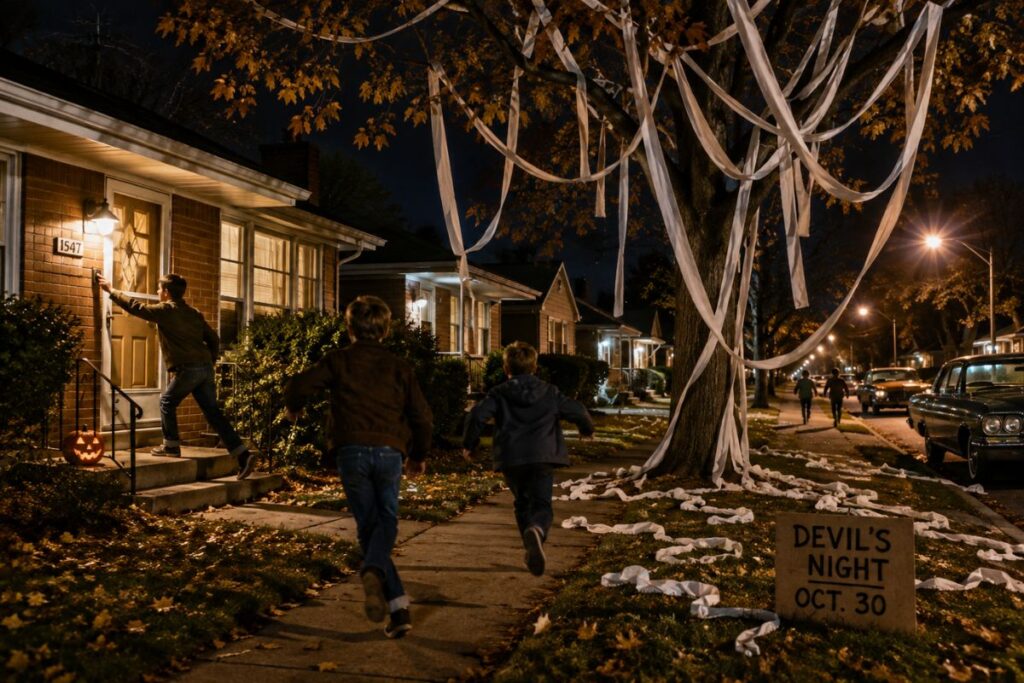
In Detroit and the surrounding neighborhoods, October 30 meant Devil’s Night. For kids, it was an excuse to cause a little mischief before the serious business of collecting candy began the next evening.
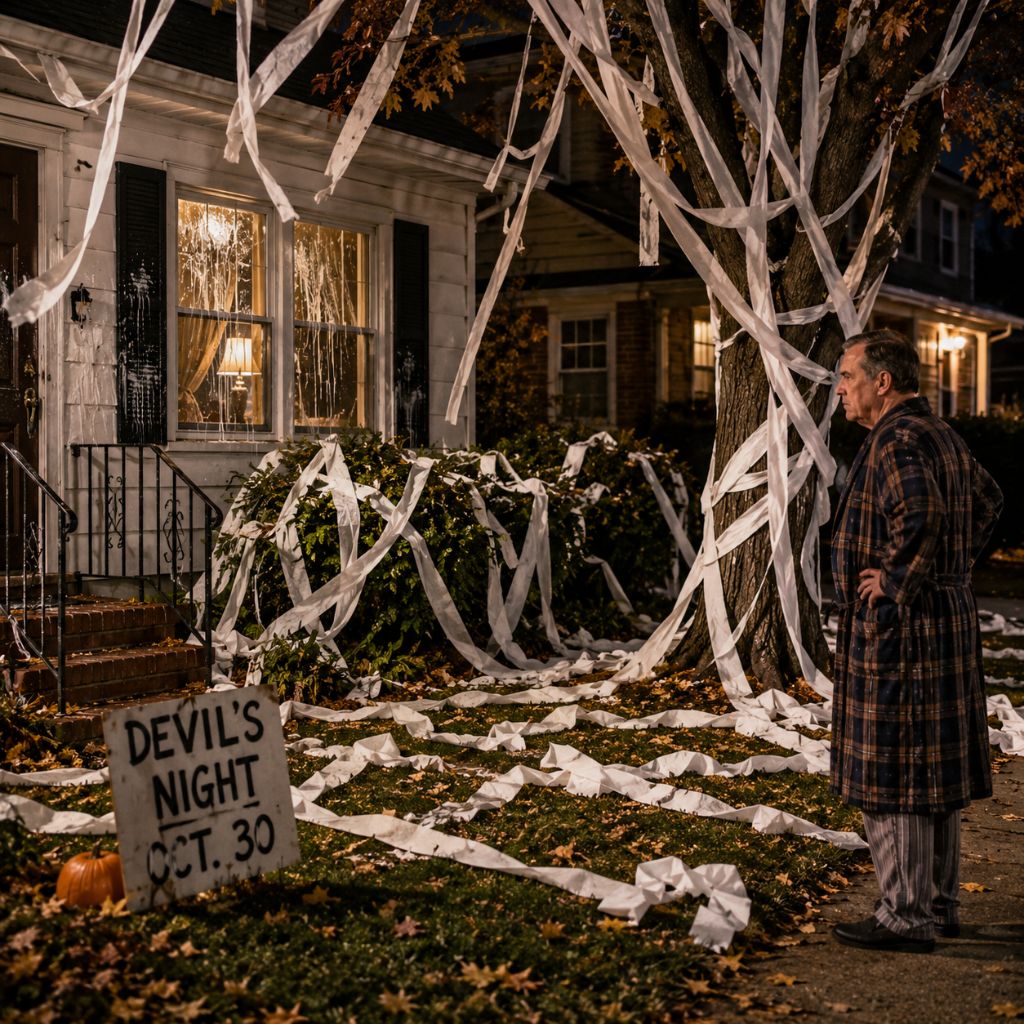
We rang doorbells and ran. Trees occasionally ended up decorated with toilet paper. And certain houses seemed to attract more attention than others—especially the homes of adults known for yelling things like, “Get off my lawn!”
At the time, much of it seemed like harmless kid stuff, although some of our ideas undoubtedly wandered closer to the line than our parents would have appreciated.
Remarkably, a University of Detroit Mercy folklore record collected in Detroit on October 30, 1968, describes kids on Devil’s Night soaping or waxing windows, throwing eggs, and ringing doorbells. Other records in the collection mention streaming toilet paper through trees and decorating houses with it.
The Houses We Remembered
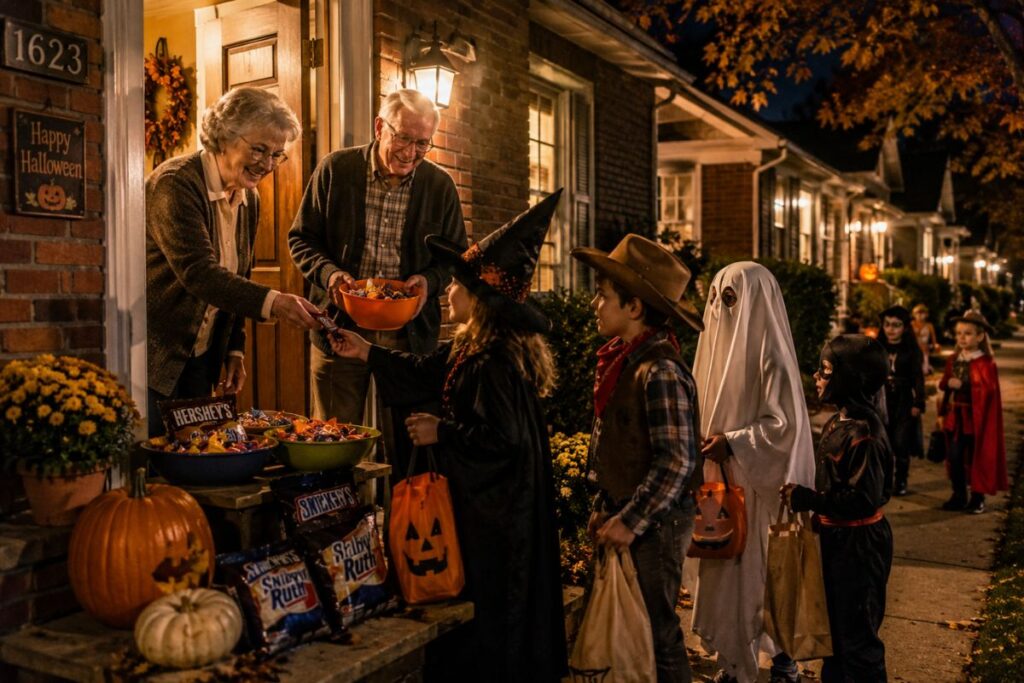
Every neighborhood had its Halloween reputation.
There were houses we hurried toward because we knew something good was waiting. Then there were houses we visited because, well, you couldn’t simply skip your neighbors.
The best ones hardly needed advertising. Sometimes word had already traveled down the sidewalk that somebody was handing out full-size candy bars. Suddenly, every kid within three blocks seemed to be heading in the same direction.
Other houses offered pennies or fruit. Those didn’t inspire quite the same enthusiasm.
And then there was candy corn.
Apparently, adults kept buying it, so somebody must have been eating it.
Still, what I remember most isn’t any particular candy bar. It’s the people behind those doors. Some neighbors seemed genuinely delighted to see the parade of homemade ghosts, witches, cowboys, monsters, and whatever else we had managed to become that year.
Some parents even kept extra bags of candy near the door, just in case the neighborhood turnout was bigger than expected. Running out while porch lights were still glowing was practically a Halloween emergency.
Looking back, those little exchanges mattered.
For one evening, nearly every illuminated porch became part of the celebration. The neighborhood wasn’t merely where Halloween happened.
The neighborhood made Halloween happen.
The Great Candy Inspection
Getting home didn’t mean Halloween was over.
In some ways, another part of the night was just beginning.
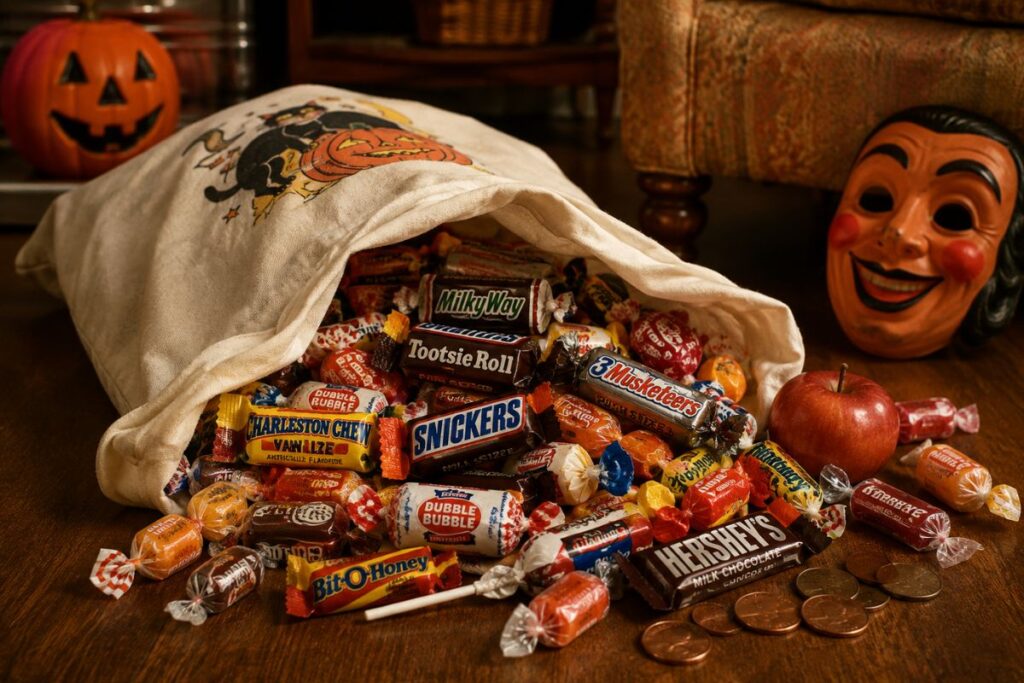
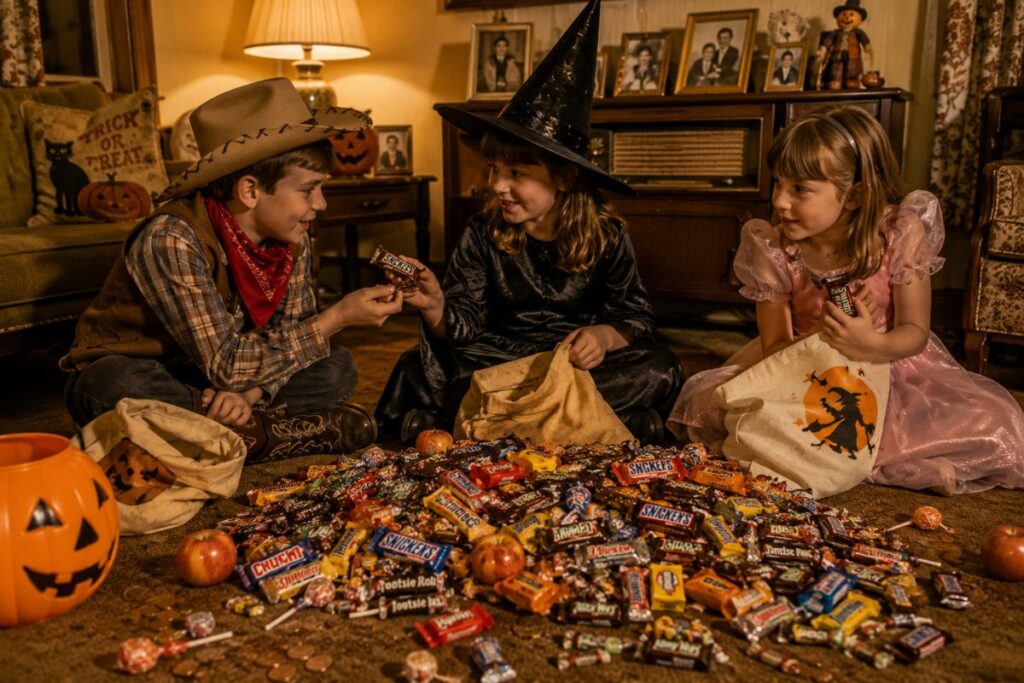
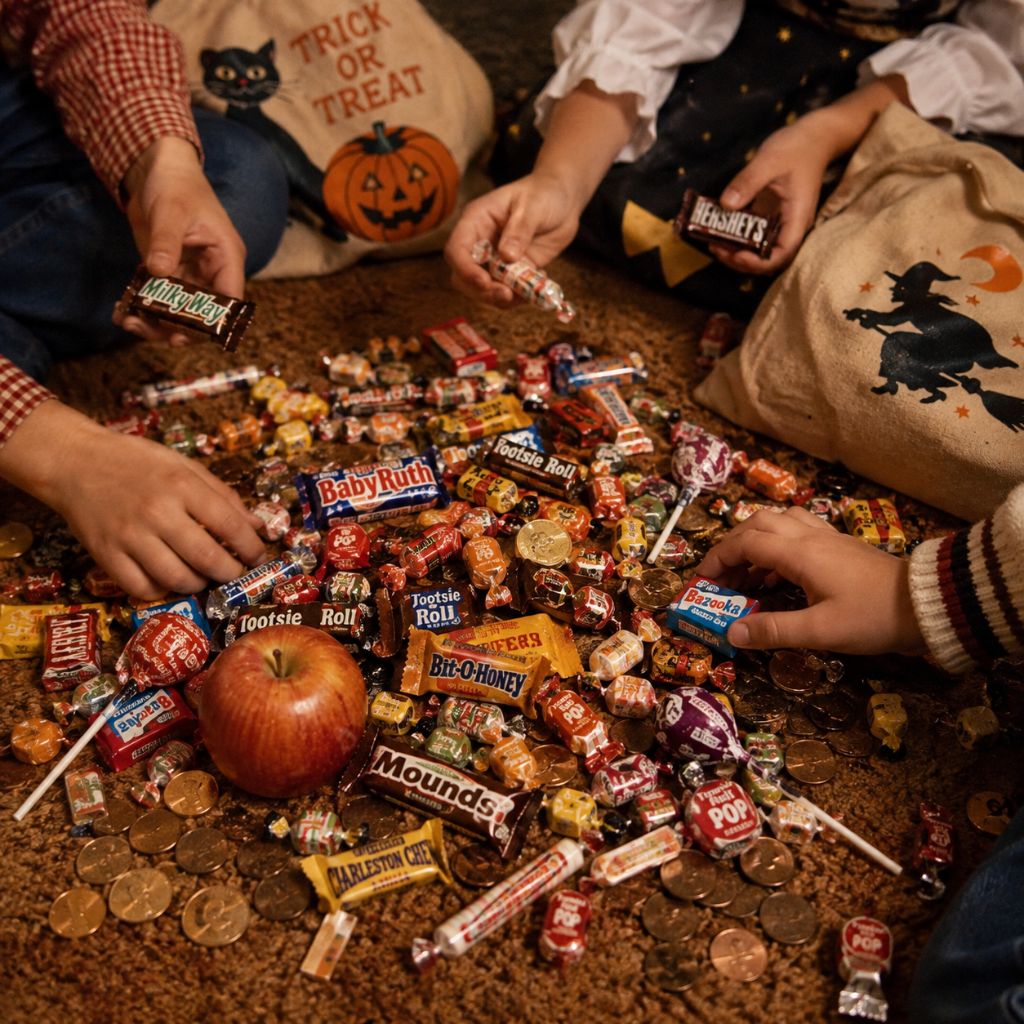
My sisters and I would empty those heavy pillowcases onto the floor. Out came everything we’d collected—candy bars, little wrapped treats, pennies, fruit, candy corn, and whatever other surprises the neighborhood had provided.
Then came the inspection.
We sorted through the pile, compared what we’d gotten, and immediately decided which pieces were worth protecting. Some candy was available for trade. Other pieces weren’t leaving your possession under any circumstances.
Naturally, siblings complicated matters.
Leave something especially good unattended for too long, and there was always the possibility that it might mysteriously disappear. So the finest sweets needed a little monitoring.
There was trading, bargaining, bragging, and probably a little arguing.
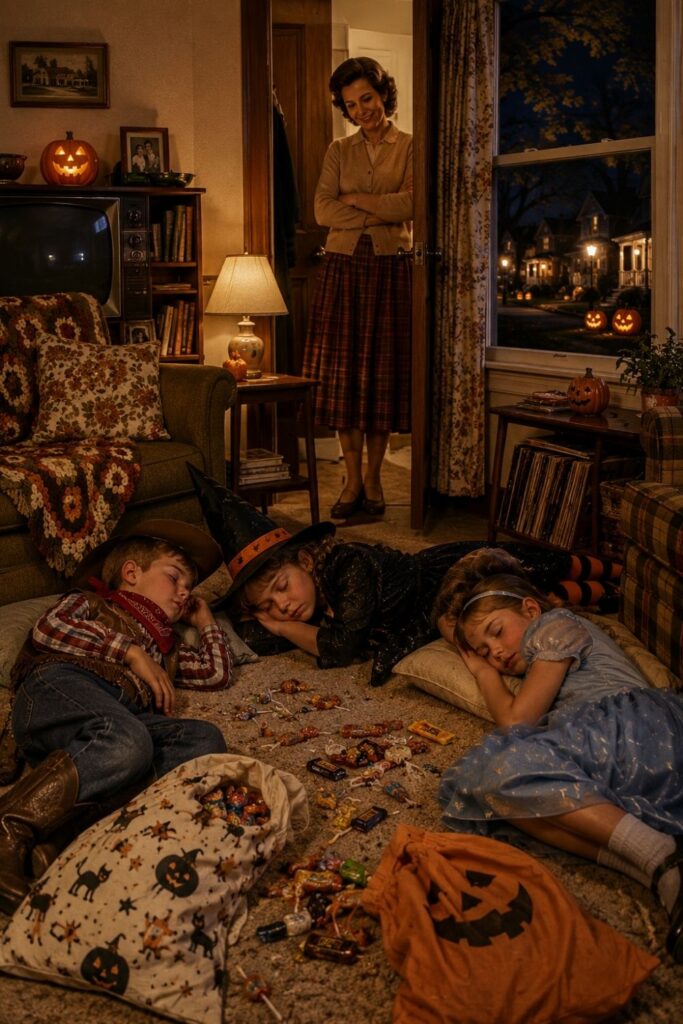
Yet looking back, that’s one of the parts I remember most fondly. Halloween wasn’t finished when we stopped knocking on doors. It ended on the living-room floor, surrounded by sisters, crumpled pillowcases, and a mountain of treasure that somehow seemed enormous.
For one night, we felt rich.
Mom Was Never Far Away
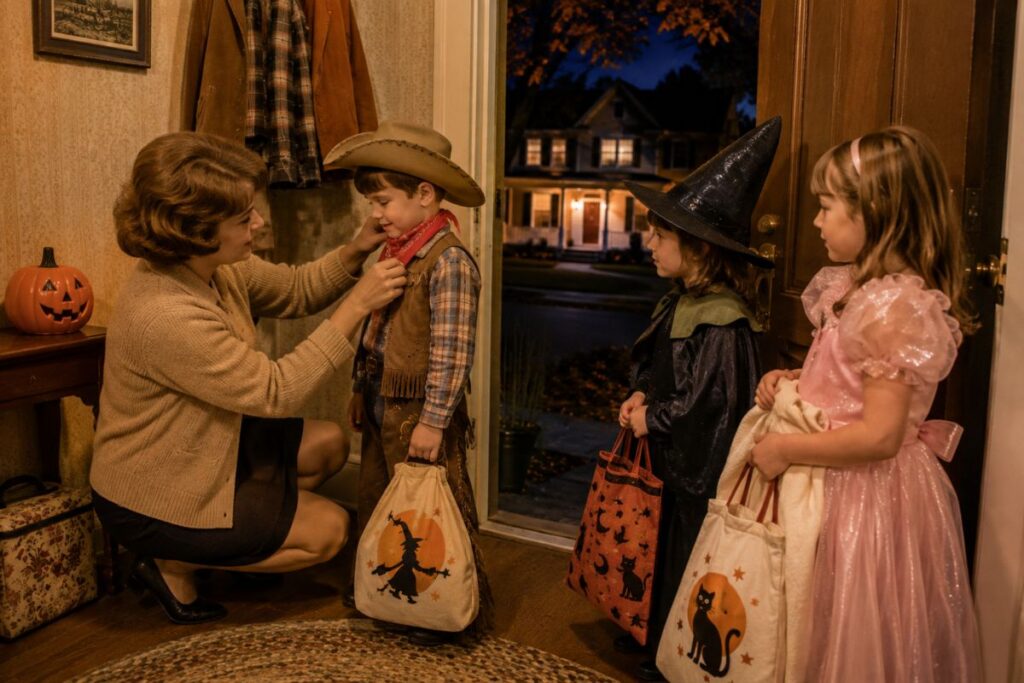
As kids, we thought Halloween belonged to us.
We were the ones wearing the costumes, carrying the pillowcases, ringing the doorbells, and deciding which street deserved another pass.
But Mom was never very far away.
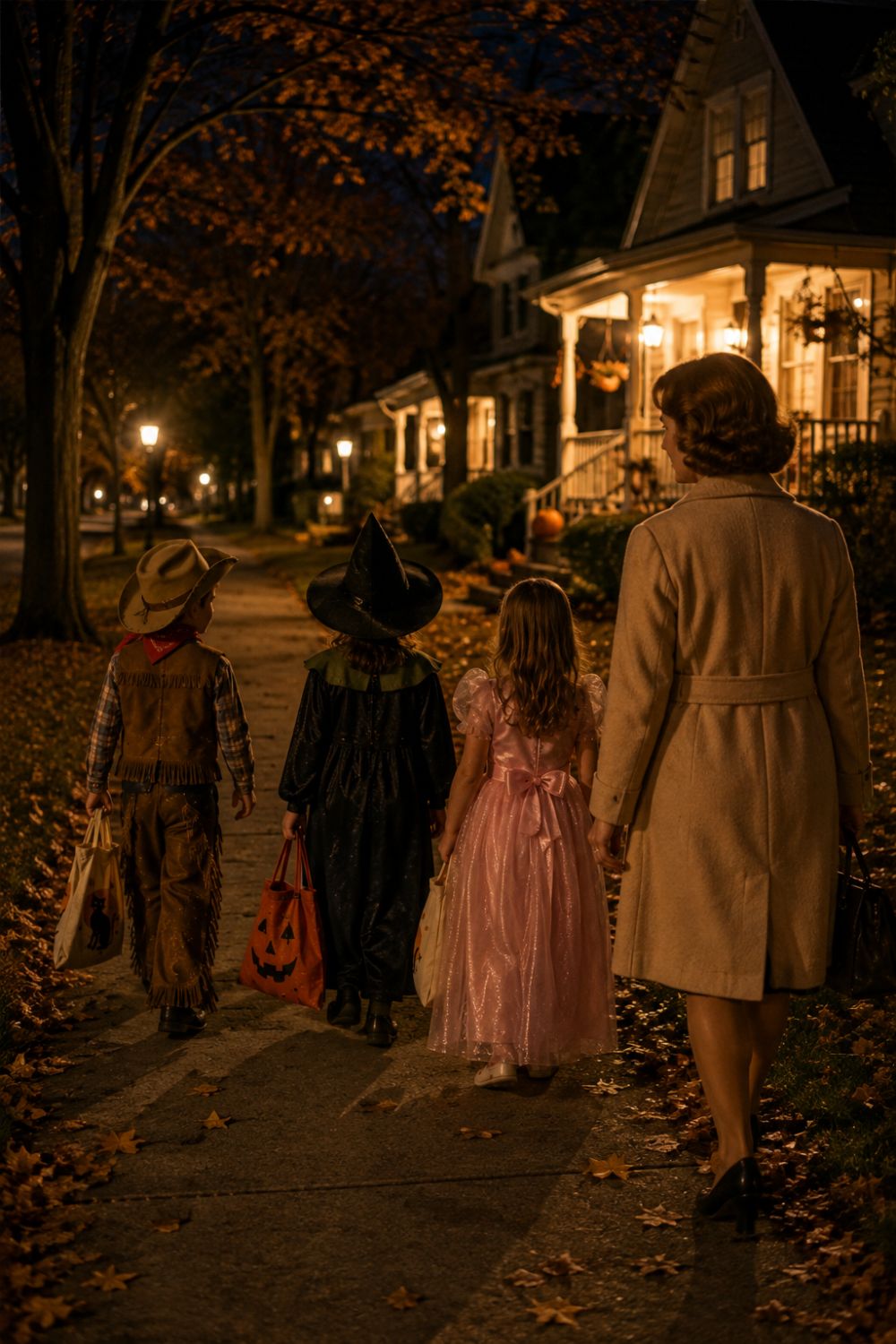
Sometimes she walked with us. Other times, she drove us to visit our aunts and uncles or took us into another neighborhood where the trick-or-treating prospects looked especially promising.
Most importantly, she made sure we were prepared for the weather.
A great costume was one thing. A cold October night in Michigan was another. If that meant wearing extra clothes underneath a costume or making one last adjustment before we headed outside, Mom made sure it happened.
Naturally, we probably thought those practical details interfered with the look we were trying to achieve.
Years later, you understand them differently.
She wasn’t simply helping us get dressed for Halloween. She was quietly making it possible for us to run around the neighborhood for hours without worrying about anything except which porch light we’d visit next.
Back then, we noticed the candy.
Looking back, I notice Mom.
When Bobbing for Apples Was Halloween Fun
Not every Halloween memory involved candy.
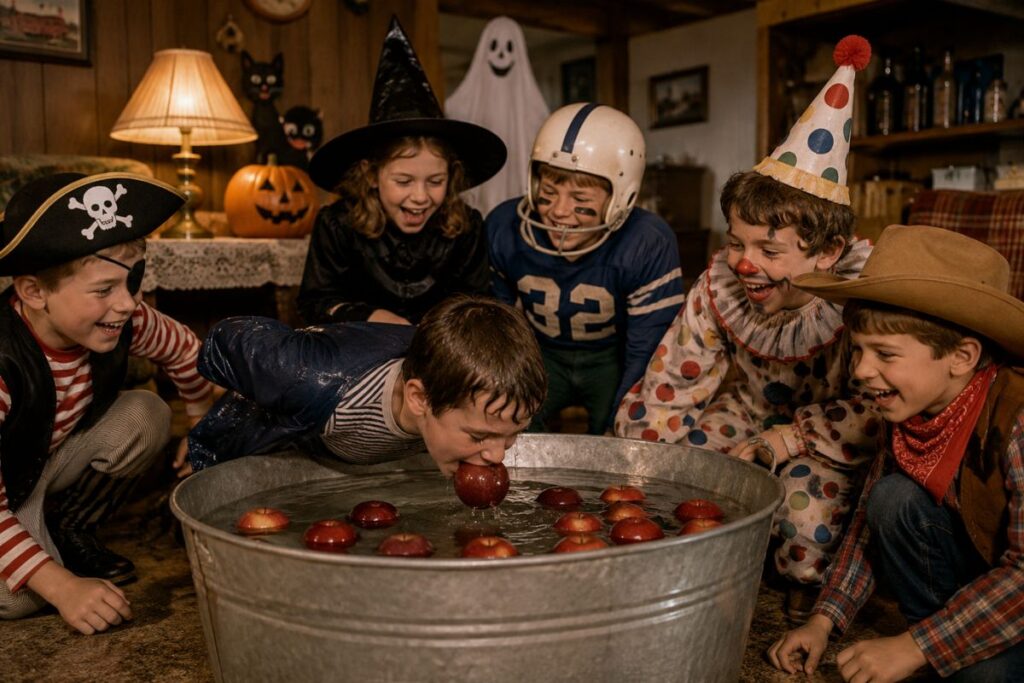
There was also bobbing for apples, one of those activities that sounds almost unbelievable to kids today. In fact, old American Halloween party guides included “bob for apples” right alongside pumpkin decorations, fortune-telling games, roasted nuts, and other seasonal activities. A tub or large basin was filled with water, apples were dropped inside, and the challenge was simple:
Catch one with your teeth.
No hands allowed.
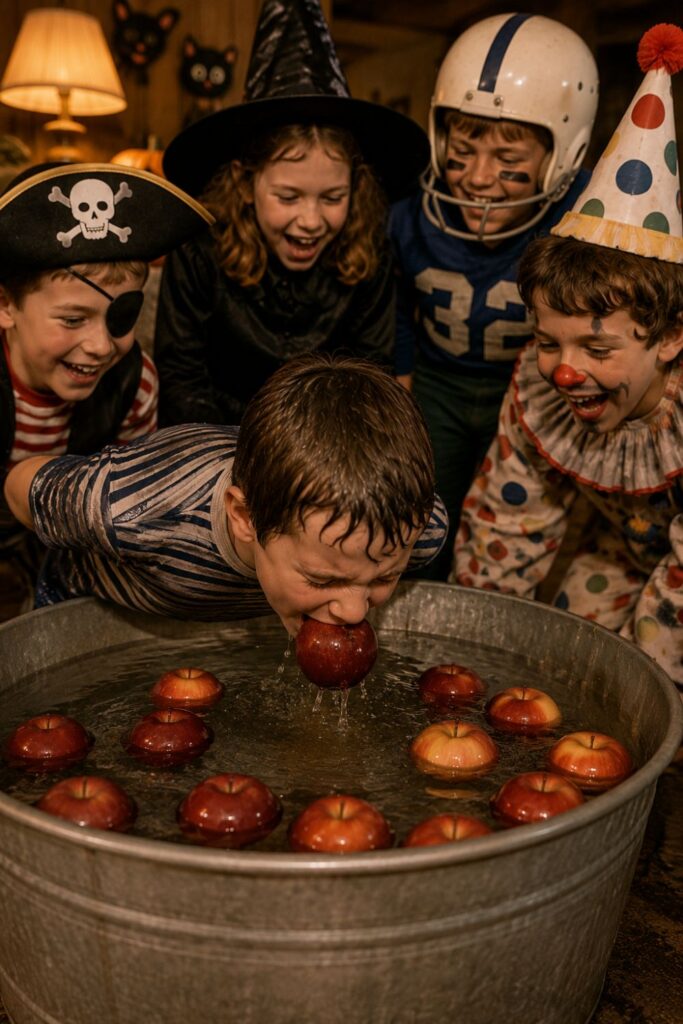
Of course, “simple” depended on who was doing the bobbing. Apples rolled away, faces disappeared into the water, and everybody standing nearby laughed while waiting for their turn.
The tradition was already old when we were kids. The Library of Congress traces apple-bobbing customs to centuries-old British traditions that eventually became associated with Halloween in America.
Yet nobody at our Halloween gatherings was thinking about ancient customs.
We were trying to grab a slippery apple without soaking our shirts.
Today, the idea of several children repeatedly plunging their faces into the same tub of water probably wouldn’t receive an enthusiastic response from many parents.
Back then, we just called it fun.
Childhood Halloween Memories of a Neighborhood Full of Kids
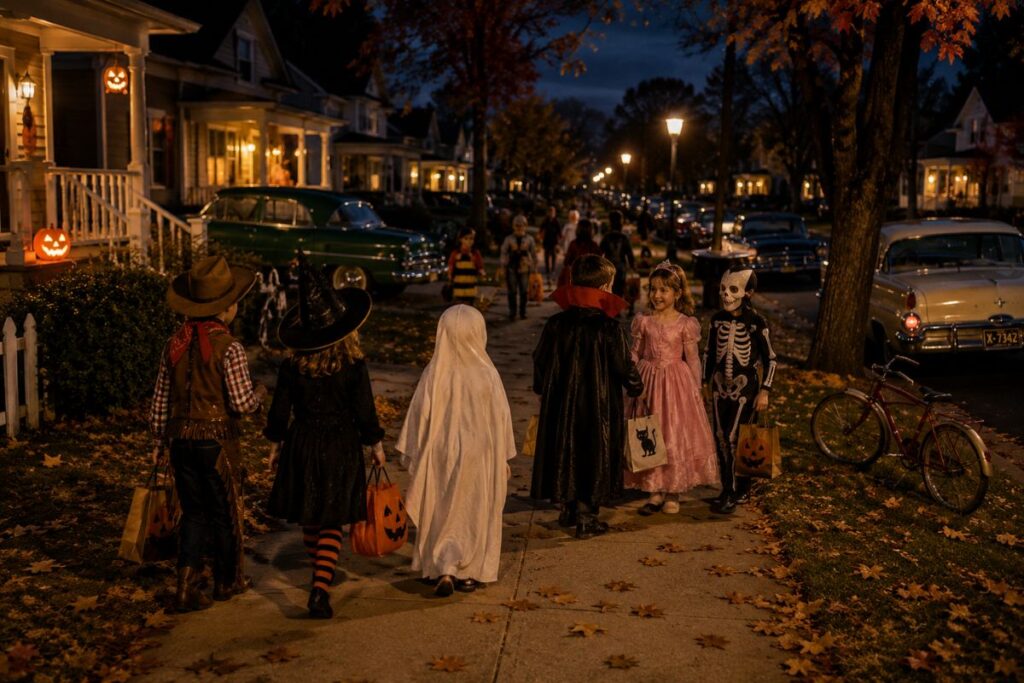
Halloween wasn’t something we watched from inside the house. The Smithsonian—When Halloween Was All Tricks and No Treats provides useful background on how Halloween evolved into the neighborhood-centered celebration many American children remember.
We went out into it.
As soon as darkness settled in, the sidewalks began filling with kids. They were the same kids we rode bikes with, played baseball with, and saw at school every day. On Halloween night, though, everybody looked different.
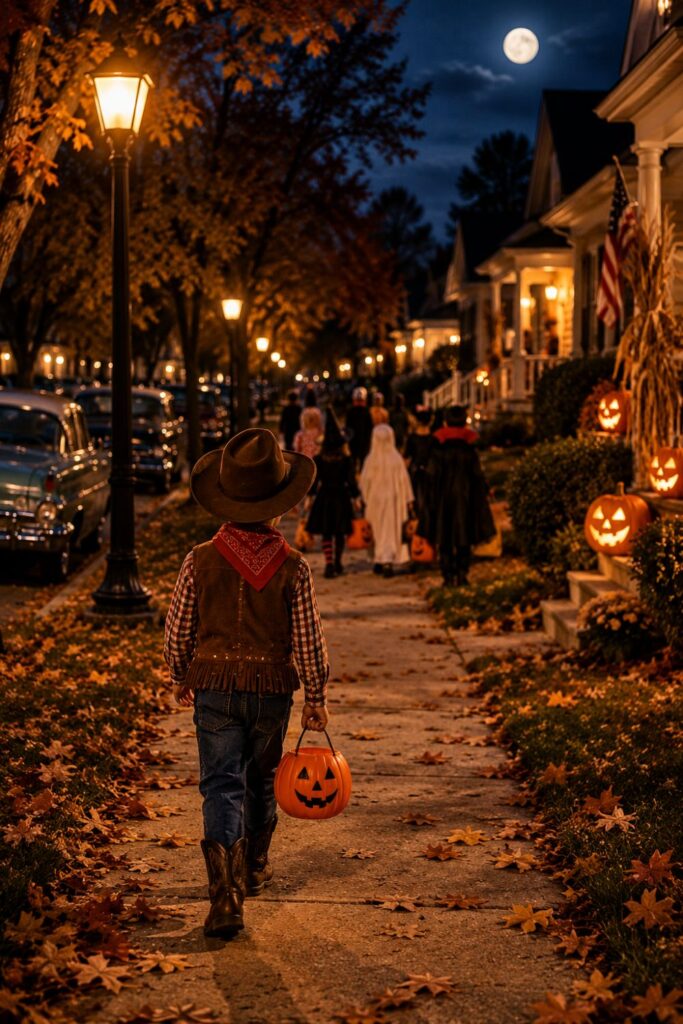
Cowboys walked beside witches. Ghosts hurried past princesses. Monsters crossed the street in search of the next glowing porch light.
And there seemed to be kids everywhere.
We didn’t need phones to find one another. We simply walked outside.
Sometimes Mom came along. Other times, we traveled in little packs, moving from one familiar street to another. Occasionally, we even received transportation to a neighborhood where experience suggested the candy might be a little better.
Naturally, there were rules.
Stay together. Watch for cars. Don’t wander too far. And eventually, come home.
Yet within those boundaries was an extraordinary amount of freedom.
The neighborhood became our Halloween world for a few hours. Every porch light was an invitation. Every approaching group of costumes contained somebody we probably knew.
Today, when I look at Halloween streets with only a handful of trick-or-treaters, the difference is hard to miss.
Perhaps that’s why these childhood Halloween memories remain so vivid.
We didn’t just grow up in a neighborhood.
We grew up with one.
You Had to Watch Out for the Candy Crooks
There was one more danger lurking on Halloween night.
And it wasn’t a ghost.
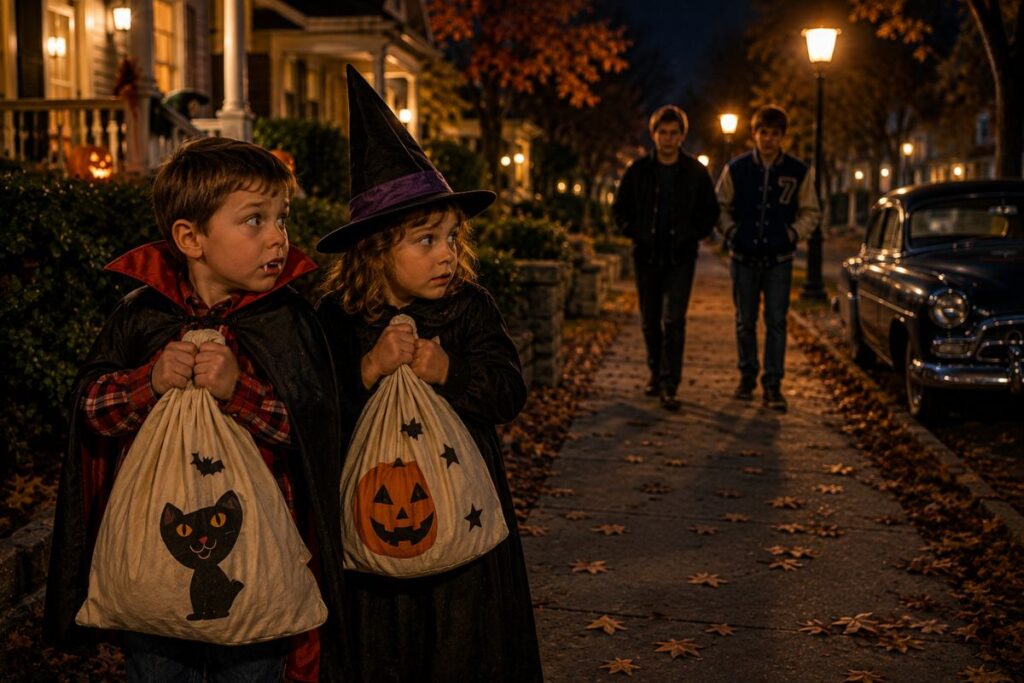
It was another kid who had his eye on your candy.
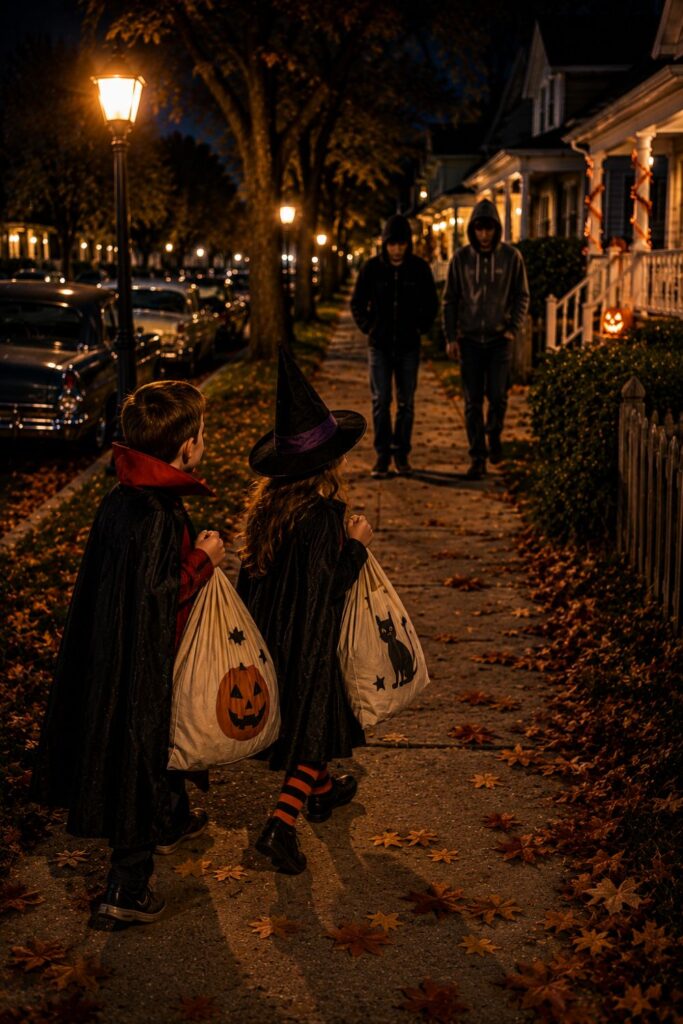
After hours of trick-or-treating, a pillowcase could hold a pretty impressive haul. Unfortunately, that also made it tempting to the occasional neighborhood candy crook who thought grabbing somebody else’s bag and running sounded like a good idea.
We knew they were out there.
So, you had a good hold on that pillowcase, even when it got heavy.
Most nights, nothing happened. Still, the possibility added a little excitement whenever an older group of kids came walking toward you in the dark.
After all, losing a few pieces of candy to your sisters during the great candy inspection was one thing.
Losing the entire pillowcase before you even got home was a Halloween catastrophe.
The Long Walk Home
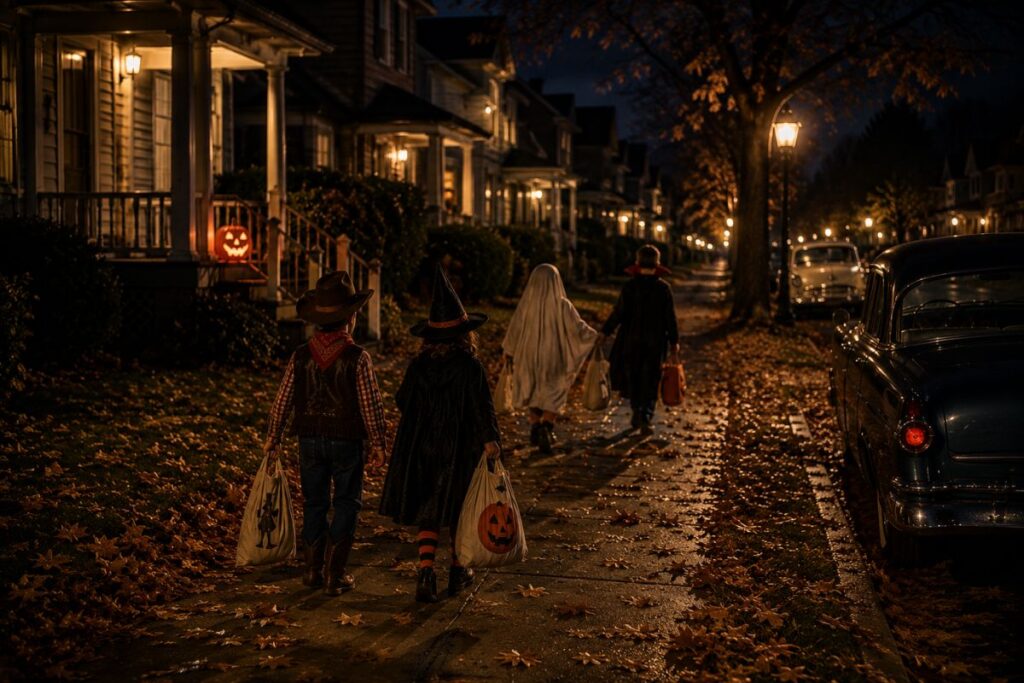
Eventually, even Halloween night had to end.
The porch lights began disappearing one by one. The crowds on the sidewalks thinned out, and the neighborhood that had seemed so noisy a couple of hours earlier slowly became quiet again.
By then, our costumes weren’t quite as impressive as when we’d left home.
Masks had been pushed up onto foreheads. Makeup was smudged. Jackets that Mom insisted we wear were finally appreciated as the October air grew colder.
And those pillowcases were getting heavy.
Still, there was always that temptation to try just one more house.
Maybe the next porch had the good candy. Maybe somebody still had full-size candy bars. Besides, as long as a porch light remained on, Halloween didn’t seem completely over.
Eventually, though, we headed home.
The sound of our shoes against the sidewalk replaced the earlier commotion. A few other costumed kids could still be seen in the distance, carrying their own night’s treasure home.
And waiting for us was something we didn’t fully appreciate at the time.
A warm house.
Mom.
Our sisters.
And a living-room floor where those pillowcases were about to be emptied.
We thought the treasure was inside them.
Years later, I realized the walk home was part of the treasure too.
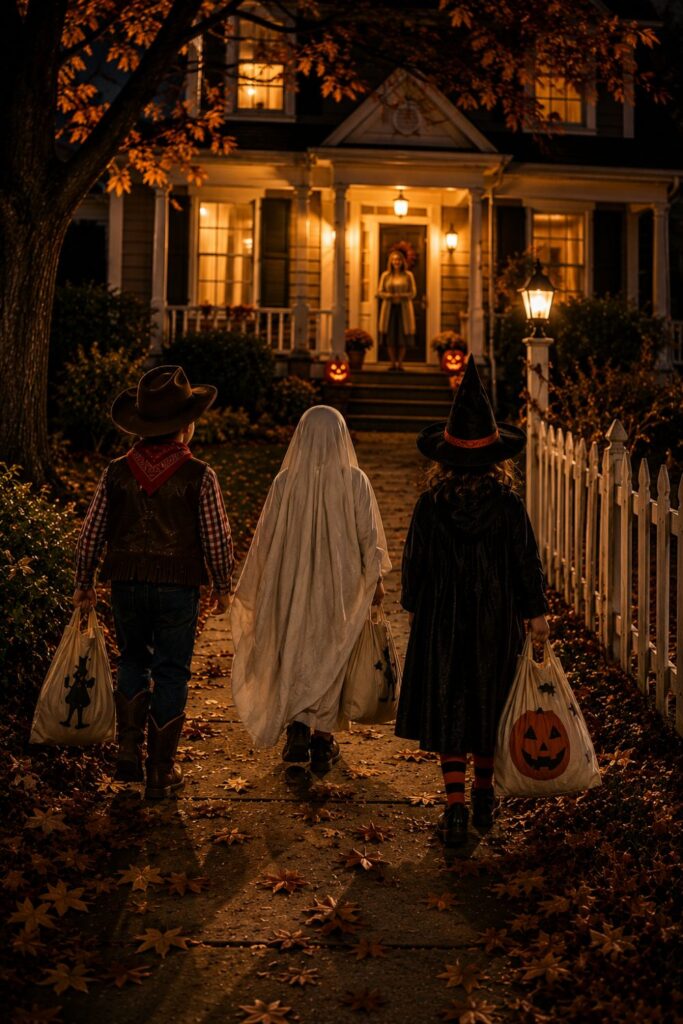
Childhood Halloween Memories: What Changed—and What Didn't
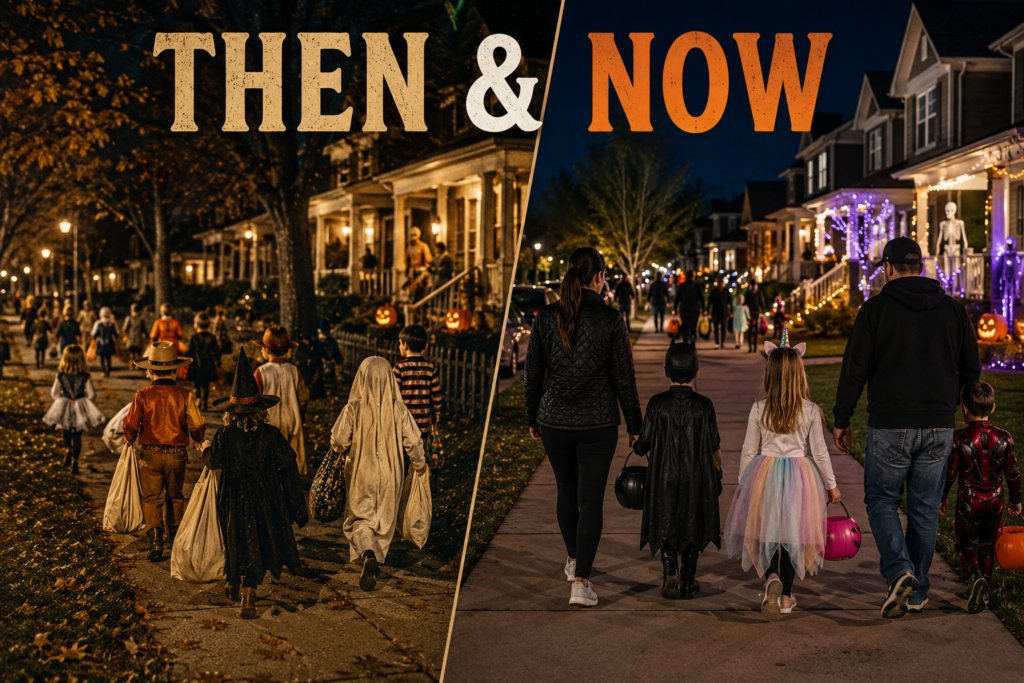
Halloween still arrives every October. The National Retail Federation—Halloween provides contemporary information about Halloween spending, including costumes and candy.
The pumpkins appear. Costumes fill the stores. Porch lights come on, and children head out hoping to return home with more candy than anyone reasonably needs.
Yet some things have changed.
Homemade costumes now compete with elaborate outfits bought online or at Halloween stores. Parents have more ways to keep track of their children, while organized events such as trunk-or-treat offer families another way to celebrate.
And in many neighborhoods, the sidewalks don’t seem quite as crowded as I remember them. For the changing trick-or-treat tradition, Smithsonian—When Halloween Was All Tricks and No Treats gives us the historical side—how American Halloween itself has repeatedly changed over generations.
Back then, there were kids everywhere.
We traveled in groups, crossed paths with friends from school, compared costumes, and exchanged intelligence about which houses had the best candy. The neighborhood itself was part of Halloween.
Still, nostalgia can play tricks of its own.
Our Halloween wasn’t special because everything in the past was better.
It was special because we were kids.
Today’s children may not carry pillowcases or bob for apples. They may never experience the particular brand of Detroit mischief we called Devil’s Night.
But they’re building memories too.
Someday, perhaps they’ll remember a costume their parents helped them with, the house that gave out the best candy, or the night they stayed outside just a little longer than usual.
The traditions change.
The magic of being a kid on Halloween doesn’t.
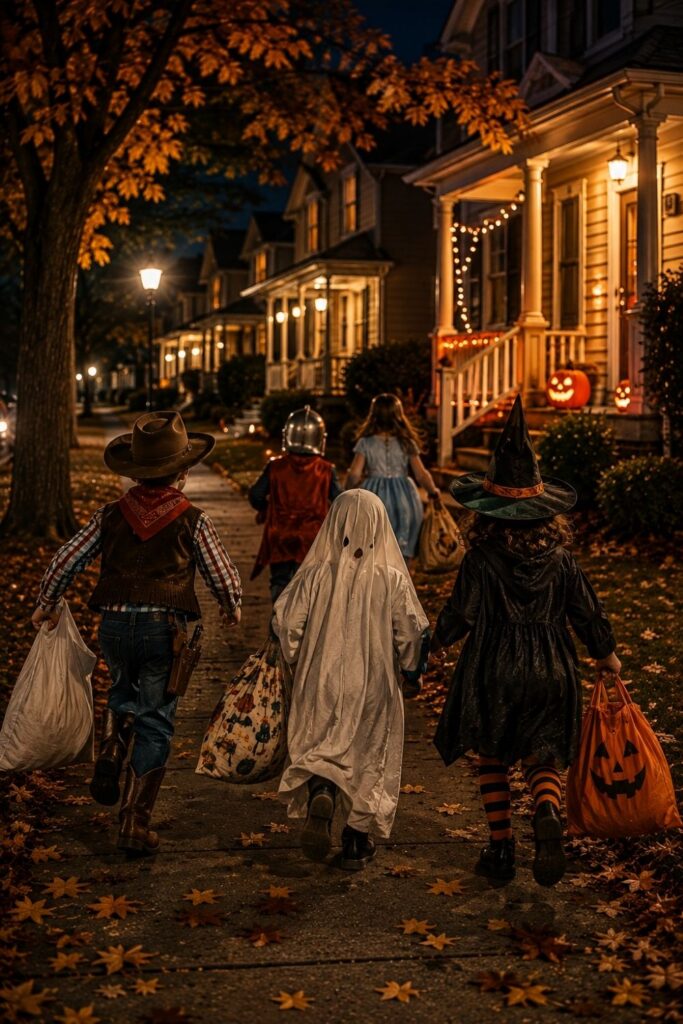
Childhood Halloween Memories: The Nights We Never Forgot
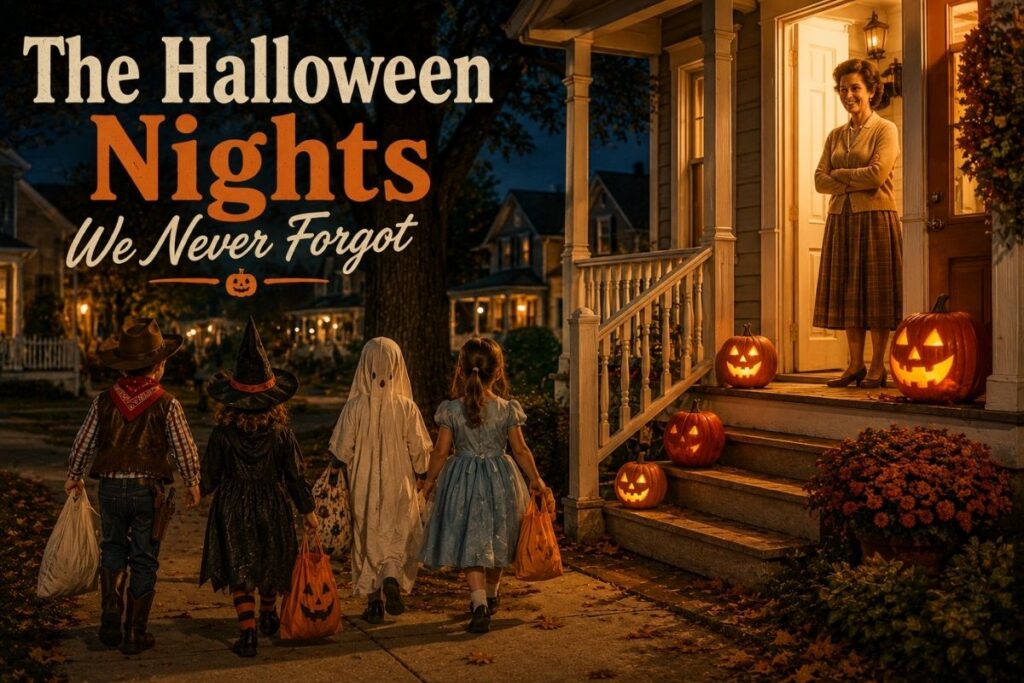
Eventually, every Halloween night came to an end.
The porch lights went dark. The costumes came off. The pillowcases were emptied onto the living-room floor, and whatever candy survived the negotiations with my sisters eventually disappeared.
But somehow, the memories didn’t.
I remember Mom making sure our homemade costumes worked—and making equally certain we were warm enough underneath them.
I remember neighborhoods filled with kids, Devil’s Night mischief, bobbing for apples, the houses with full-size candy bars, and the disappointing ones offering pennies or fruit.
Even now, I remember keeping a firm grip on that pillowcase whenever a potential candy crook appeared.”
At the time, none of it seemed particularly important.
We were simply kids having Halloween.
Perhaps that’s what makes those memories so powerful today.
We didn’t know we were experiencing something we would someday miss. We didn’t stop beneath a glowing porch light and think about how lucky we were. We were too busy wondering what the next house was giving away.
Years passed. Neighborhoods changed. Traditions changed. We changed too.
Yet somewhere in my memory, those porch lights are still glowing.
Mom is still waiting.
My sisters and I still have a pile of candy spread across the floor.
And there’s always time for one more house.
Maybe that’s the wonderful thing about childhood Halloween memories.
You eventually grow too old to go trick-or-treating. But you never really have to go home. 🎃
Nostalgia Nook Note: Halloween Night, 1949
On October 31, 1949, families across America could turn on their radios and hear Inner Sanctum Mysteries present “A Corpse for Halloween.”
Turn down the lights and hear the Halloween-night broadcast for yourself.
Listen to “A Corpse for Halloween.” →
Audio from the Old Time Radio Researchers—Jim Beshires Memorial Episode Library.
Keep the Memories Going
If these Halloween memories took you back, there are plenty more stories waiting around the corner. Keep wandering through the seasons with us.
Thanksgiving Nostalgia: Classic Traditions, Family Memories, and Vintage Charm
From Halloween pillowcases to Grandma’s Thanksgiving table, revisit the family traditions that made November something to look forward to.
Why Women Loved Department Stores: When Downtown Shopping Was an Event
Remember when a trip downtown meant decorated windows, bustling sidewalks, toy departments, and an entire afternoon of discovery?
America’s Living Rooms: Where Families Belonged
Come back inside, where the radio played, families gathered, and an ordinary evening at home could become a favorite memory.
Women’s Vintage Winter Style
Step into the coats, gloves, hats, and unmistakable elegance that once made cold-weather dressing an occasion of its own.
Heritage & Home Holiday Gifts Guide
Looking for something with a little history and heart? Explore nostalgic gift ideas inspired by the homes and traditions we remember.
The seasons may change, but there’s always another memory waiting at Nostalgia Nook Antiques.


Every antique tells a story, and every tradition carries a memory. Our newsletter brings you closer to both, with inspiration, guides, and finds that make nostalgia part of your everyday life. Subscribe today and let the past brighten your future.