Preparing for Winter: Gathering the Autumn Harvest
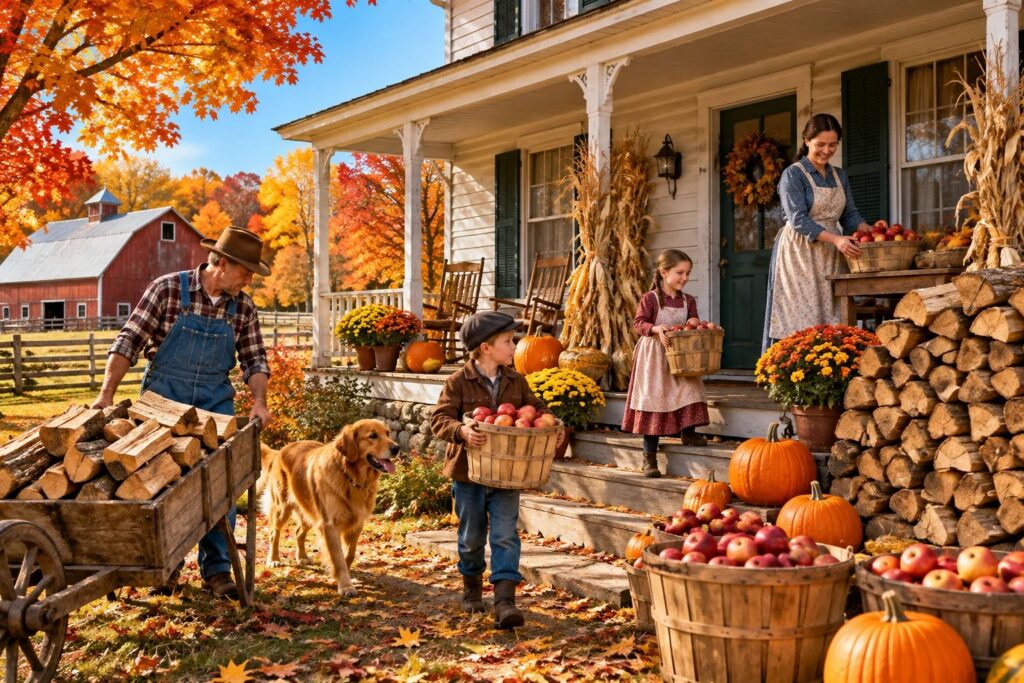
Preparing for winter was once one of the most important responsibilities facing American families. Long before central heating, electric refrigerators, and well-stocked supermarkets, the arrival of autumn meant it was time to get busy. A family’s comfort, food supply, and sometimes survival depended on the work completed before the first hard freeze.
Across rural America, autumn brought a familiar rhythm. Farmers gathered the last crops, families filled their cellars with potatoes and apples, and kitchens became busy places where vegetables were canned, fruit was dried, and meat was preserved.
Meanwhile, firewood had to be chopped and stacked, chimneys cleaned, and heavy quilts brought out of storage. On farms, barns needed repairs, livestock required shelter, and enough feed had to be stored to last until spring.
There was no turning up the thermostat, ordering groceries for delivery, or making a quick trip to the supermarket during a snowstorm.
And when winter arrived early? Well, Mother Nature wasn’t particularly interested in anyone’s unfinished chores.
Yet these preparations were about more than hard work. They brought families together, encouraged neighbors to lend a hand, and created traditions that many Americans would remember for the rest of their lives.
So, let’s step into those bustling autumn kitchens, chilly barns, and wood-heated farmhouses to discover how Americans got ready for winter when modern conveniences were still a distant dream.
Watch: Preparing for Winter How Americans Did It
Travel back to a time when preparing for winter was a family affair. From gathering the autumn harvest and filling root cellars to sewing quilts and gathering around the family radio, discover how Americans welcomed the changing seasons.
Enjoy our nostalgic journey through the traditions, hard work, and simple pleasures of American life.
Autumn Harvests — Gathering Nature's Last Bounty
For generations of American families, the autumn harvest was the starting line for preparing for winter. Long before supermarkets offered fresh produce year-round, the food gathered in September and October often determined what appeared on the dinner table in January.
Across rural America, fields and orchards came alive with activity. Farmers gathered corn, potatoes, squash, pumpkins, and late-season vegetables. Meanwhile, families picked apples from backyard trees and collected the last produce from their kitchen gardens.
However, harvesting wasn’t simply a matter of filling baskets. Every crop needed attention. Potatoes had to be sorted, apples inspected for bruises, and vegetables separated according to what could be stored, dried, or preserved.
Children often joined the work, carrying baskets, gathering fallen apples, and helping with smaller chores. Although the days were long, harvest time also brought opportunities for families and neighbors to work together.
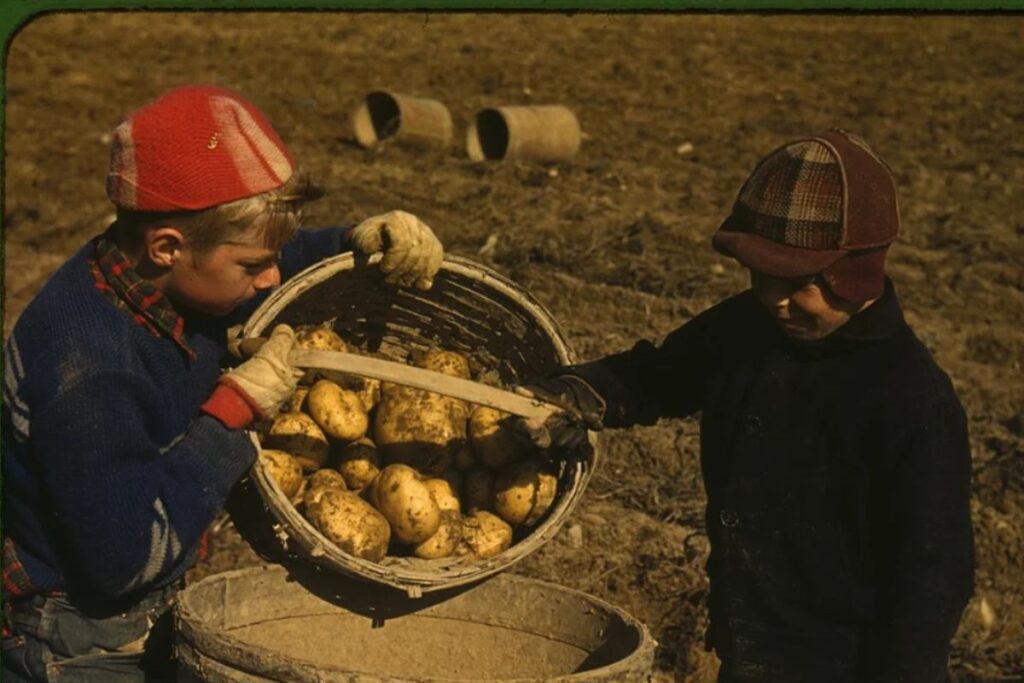
The Library of Congress preserves a remarkable photograph from October 1940 showing children gathering potatoes on a farm near Caribou, Maine. In fact, the harvest was so important that local schools delayed opening until the potatoes were gathered. Imagine telling today’s schoolchildren that their autumn vacation involved working in a potato field!
And when the last wagon rolled toward the barn, there was still plenty to do.
Because gathering the harvest was only half the battle. Keeping that food edible until spring was another story entirely.
Preparing for Winter: Preserving Food for the Pantry
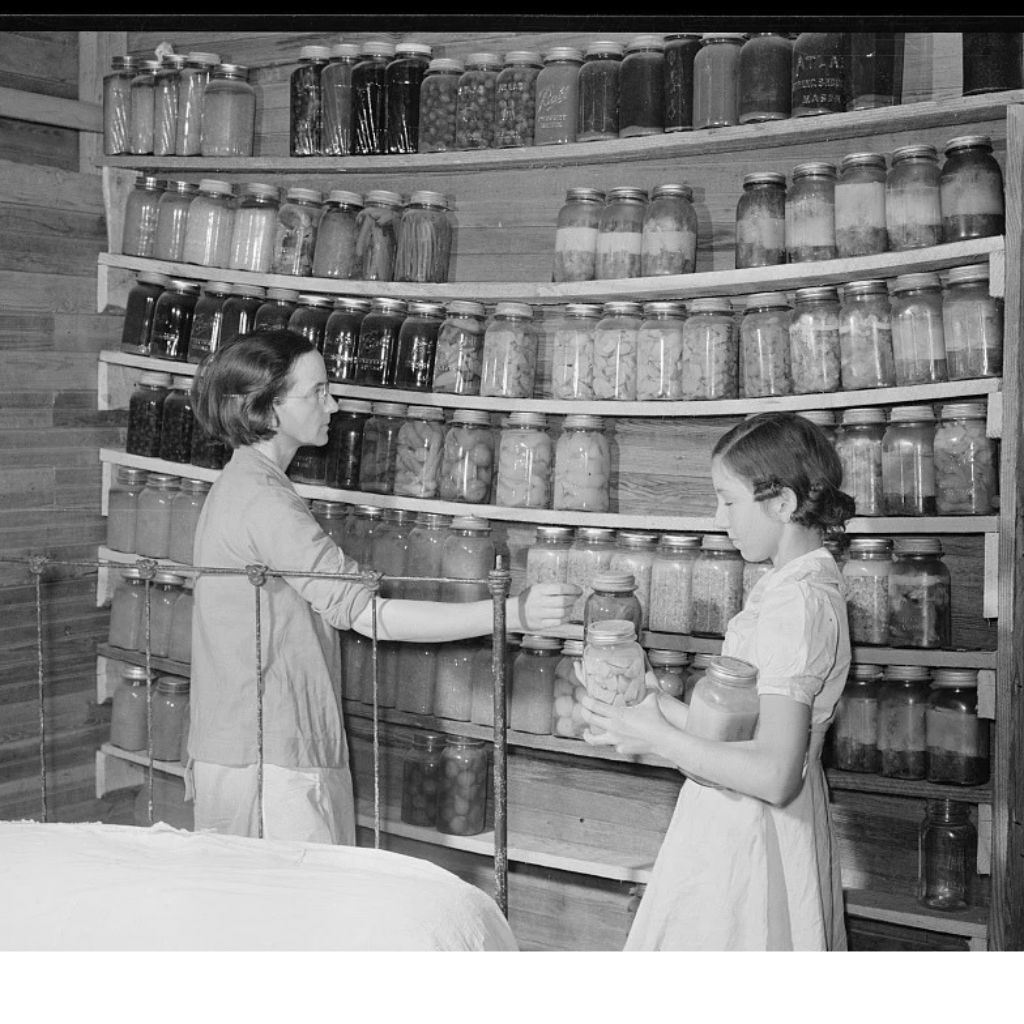
Gathering the autumn harvest was only the beginning. Without electric refrigerators or freezers, American families relied on generations of knowledge to keep food on the table throughout the winter.
Root cellars were especially valuable. Built underground or into hillsides, these cool, dark storage spaces helped preserve potatoes, carrots, turnips, apples, and other crops. However, families had to watch for moisture, spoilage, and freezing temperatures.
Meanwhile, kitchens became centers of activity. Apples were sliced and dried, cabbage was fermented into sauerkraut, and meat was salted, smoked, or cured. By the late 1800s, home canning was another important preservation method, although techniques and safety knowledge continued to improve.
The National Center for Home Food Preservation explains how traditional methods such as drying, fermentation, curing, and canning preserve food. Today, researchers have improved these techniques with scientifically tested safety guidelines, reminding us that some old-fashioned preservation practices are best appreciated as history rather than repeated in the kitchen.
Of course, a well-stocked pantry represented more than jars and barrels. It offered reassurance that when snow covered the fields and icy winds rattled the windows, supper would still be waiting.
And there was something comforting about seeing those shelves filled before the first snowfall.
Preparing for Winter: Keeping American Homes Warm
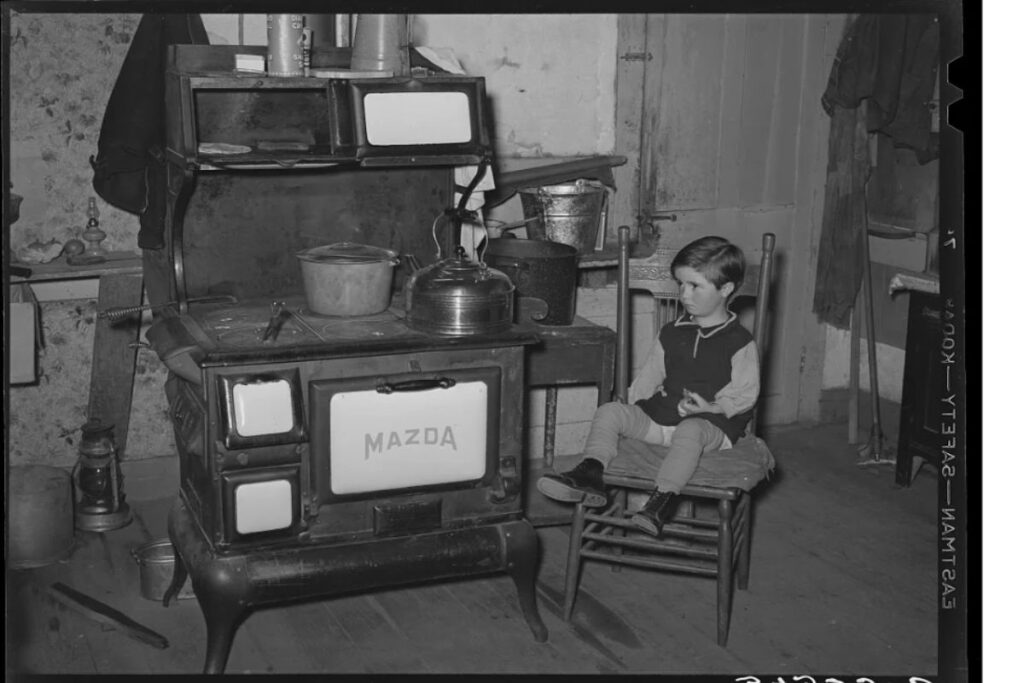
Before central heating became common, keeping an American home warm during winter required planning, patience, and plenty of hard work. A roaring fire might make a farmhouse kitchen comfortable, but bedrooms down the hallway could remain downright chilly.
For families who depended on wood, preparations began long before the first snowfall. Trees were cut, logs split, and firewood stacked where it could dry. Meanwhile, households that burned coal arranged deliveries and filled their coal bins before winter weather made transportation difficult.
Wood-burning cookstoves served double duty, providing heat while preparing family meals. In other homes, cast-iron heating stoves or coal-burning furnaces supplied warmth. However, someone still had to carry the fuel, remove ashes, and tend the fire.
And those cold bedrooms? Heavy quilts, wool blankets, and hot-water bottles helped make bedtime a little more comfortable.
The National Park Service’s historic preservation resources explore the buildings and household traditions that shaped American life across generations.
Of course, waking up to a freezing house meant somebody had to get out of that warm bed and start the morning fire.
Suddenly, today’s programmable thermostat seems like a pretty remarkable invention!
Preparing for Winter: Wool, Flannel, and Handmade Clothing
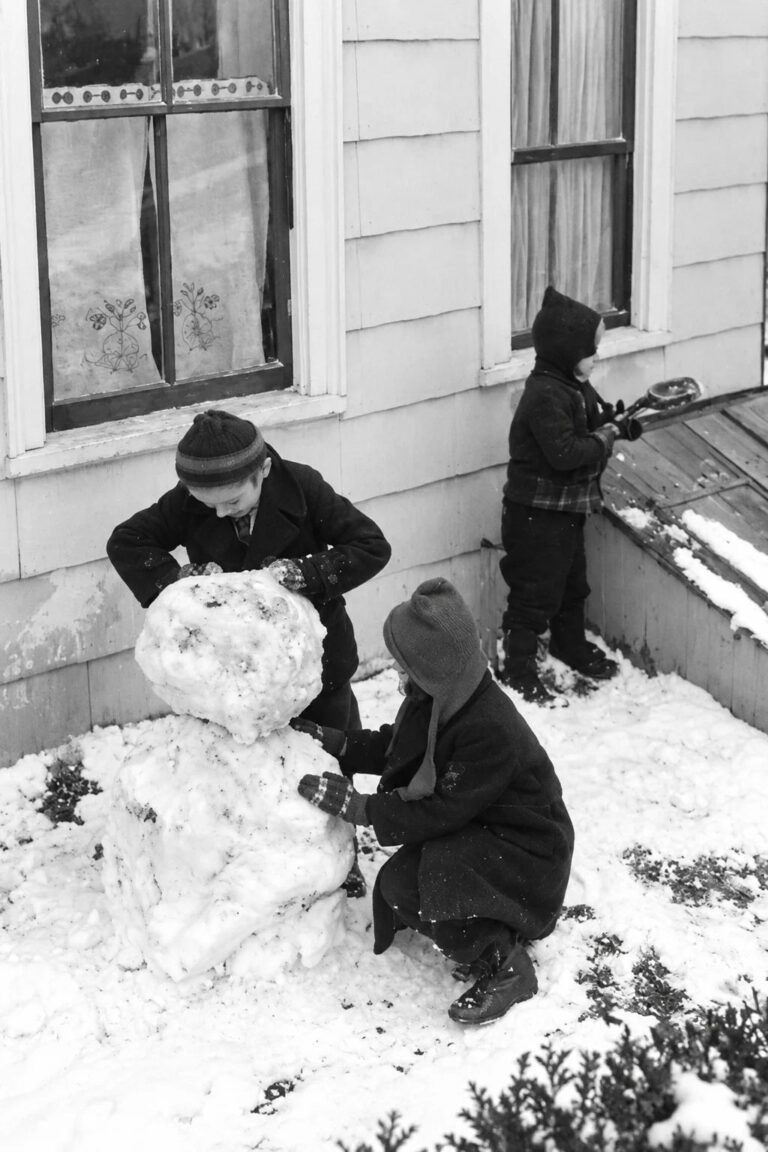
Long before insulated jackets, heated car seats, and modern synthetic fabrics, preparing for winter meant making sure every member of the family had enough warm clothing to withstand the cold.
Wool coats, flannel shirts, knitted scarves, and heavy stockings were familiar sights in American households. Meanwhile, children often wore layers of clothing, including long underwear, sweaters, and sturdy boots to protect them from freezing temperatures.
For many families, winter clothing wasn’t something they could simply replace whenever fashions changed. Mothers and grandmothers frequently knitted mittens, repaired worn garments, and altered older coats to fit growing children.
Hand-me-down clothing was a practical necessity. A winter coat might pass from an older brother to a younger sibling, sometimes receiving new buttons, patched elbows, or a freshly sewn lining along the way.
Wool had long been one of America’s most important winter clothing materials. According to the National Park Service’s history of wool production at Hopewell Furnace, early settlers raised sheep and spun wool into yarn to make clothing suitable for North America’s harsh winters. From sturdy coats to knitted stockings, wool helped generations of Americans face the cold long before modern insulated fabrics arrived.
However, even the warmest clothing required attention. Wet mittens were dried near the stove, muddy boots were cleaned, and wool garments needed proper care.
And who could forget those heavy winter coats that made children look as though they could barely bend their arms?
They might not have been fashionable by today’s standards, but when the January wind came howling across the fields, nobody complained about an extra layer!
Preparing for Winter — Livestock, Barns, and Farm Supplies
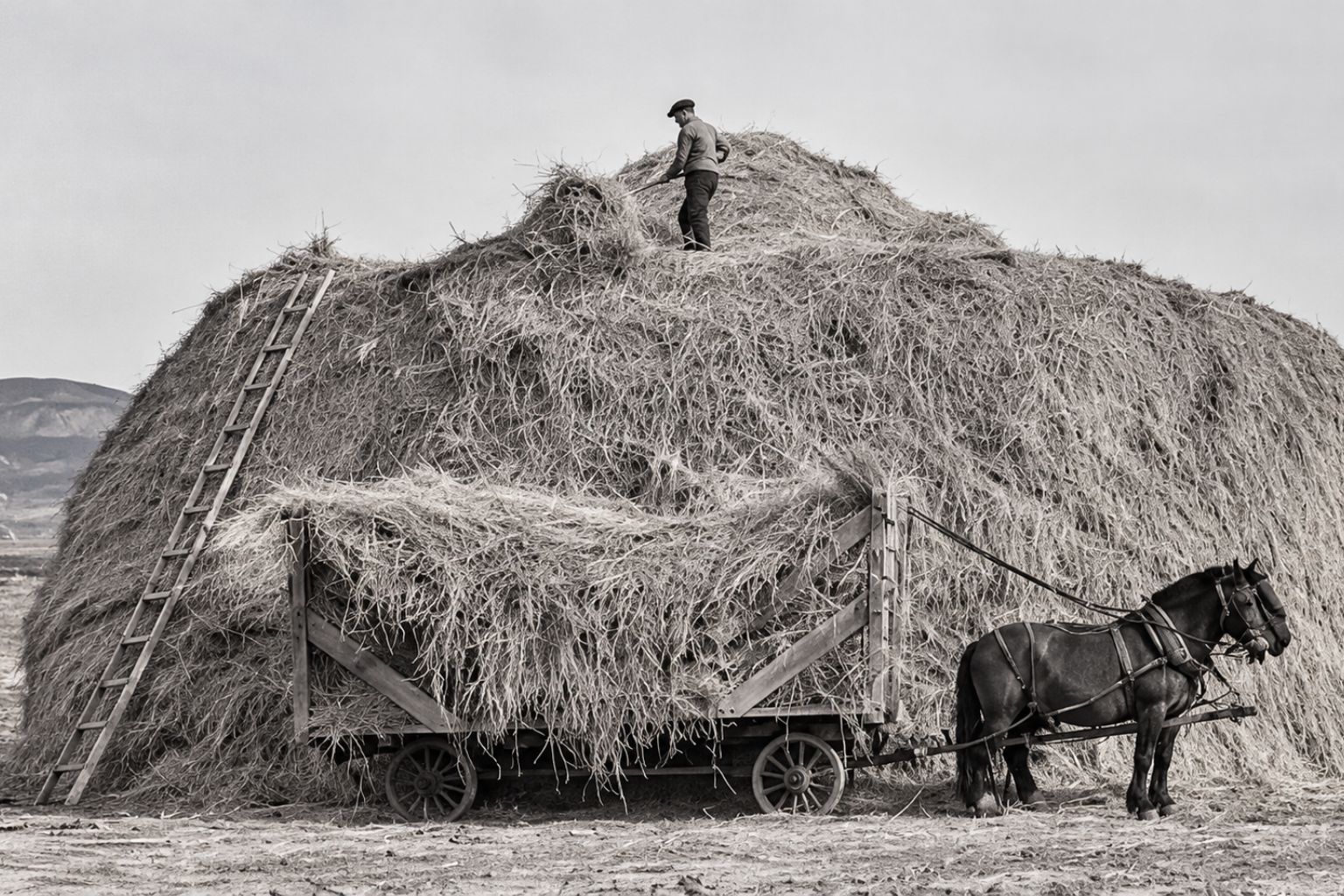
Preparing for winter on an American farm meant looking after more than the family. Cows, horses, chickens, and other livestock needed food, water, and shelter long after the fields were covered with snow.
During autumn, farmers filled their barns with hay, stored grain, and gathered corn to feed their animals through the cold months. Meanwhile, fences needed repairs, barn roofs required attention, and drafty doors had to be secured against icy winds.
Water presented another challenge. Without modern heated watering systems, farmers sometimes had to break ice in troughs and carry fresh water to their animals. Even on the coldest mornings, livestock still needed daily attention.
The work didn’t stop with feeding animals. Wagons, harnesses, plows, and other farm equipment required cleaning, repairs, and protection from winter weather. A broken harness or damaged wagon wheel could become a serious inconvenience when roads were buried beneath snow.
At the historic Spring Hill Farm and Stock Ranch in Kansas, the National Park Service describes an impressive limestone barn completed in 1882. Its lower floor sheltered cattle and horses, while the upper levels provided storage for hay, grain, wagons, and farm equipment. It was a practical reminder that a well-prepared barn could be just as important as a well-stocked farmhouse pantry.
And while the family might gather around a warm kitchen stove after supper, the farmer often made one last trip to the barn.
Because on an old-fashioned American farm, winter didn’t mean taking a vacation.
It simply meant doing the chores with colder fingers!
Neighbors Helping Neighbors — Preparing for Winter Together
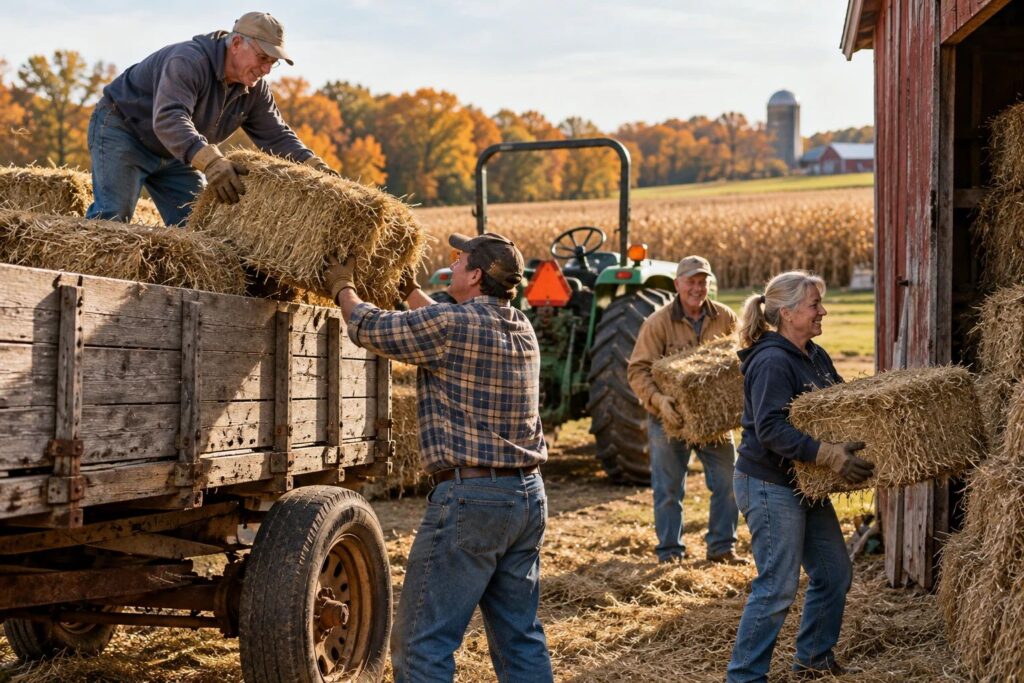
In rural America, preparing for winter was rarely a one-family operation. When the autumn harvest arrived, neighbors often rolled up their sleeves and helped one another bring in the crops before the first hard frost.
A farmer with a broken wagon didn’t have to face the problem alone. Someone down the road might lend a team of horses, while another neighbor arrived with an extra pair of hands. Meanwhile, families gathered to husk corn, stack hay, preserve vegetables, and fill barns with supplies for the coming winter.
These gatherings weren’t always easy work. However, there was usually plenty of conversation, laughter, and perhaps a hearty homemade meal waiting when the chores were finished.
When a Helping Hand Meant Everything
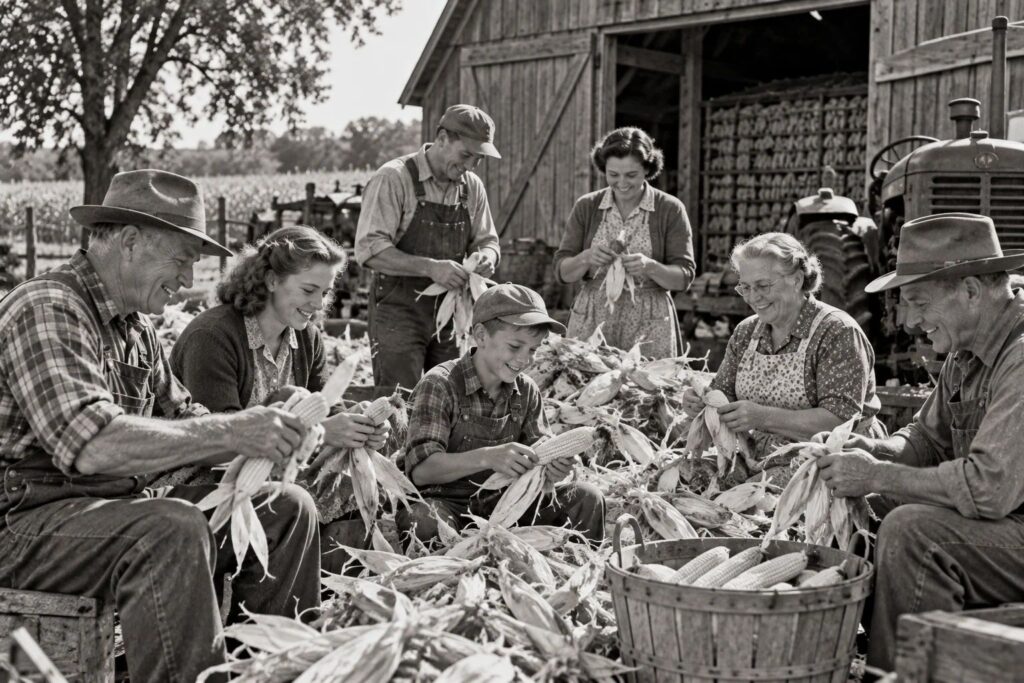
For generations, barn raisings, corn husking gatherings, and community harvests strengthened the bonds between American families. Neighbors understood that today’s helping hand might be tomorrow’s lifeline.
And when a family faced illness, hardship, or an unexpected setback, the surrounding community often stepped forward.
The greatest harvest wasn’t always measured in bushels of corn or baskets of apples. Sometimes, it was measured in friendships.
That spirit of neighbors helping neighbors remains one of the most meaningful traditions in America’s agricultural heritage.
When the Harvest Was Done, Winter Was Waiting
As autumn faded and the first cold winds swept across the American countryside, farm families could finally admire the results of months of hard work.
The barns were filled with hay, the cellar shelves held jars of preserved fruits and vegetables, and firewood was stacked near the farmhouse. Meanwhile, the last golden leaves disappeared beneath the season’s first snowfall.
However, winter brought its own responsibilities. Animals still needed feeding, frozen water buckets required attention, and a heavy snowfall could turn an ordinary trip to town into an adventure.
The Warmth of an American Farmhouse
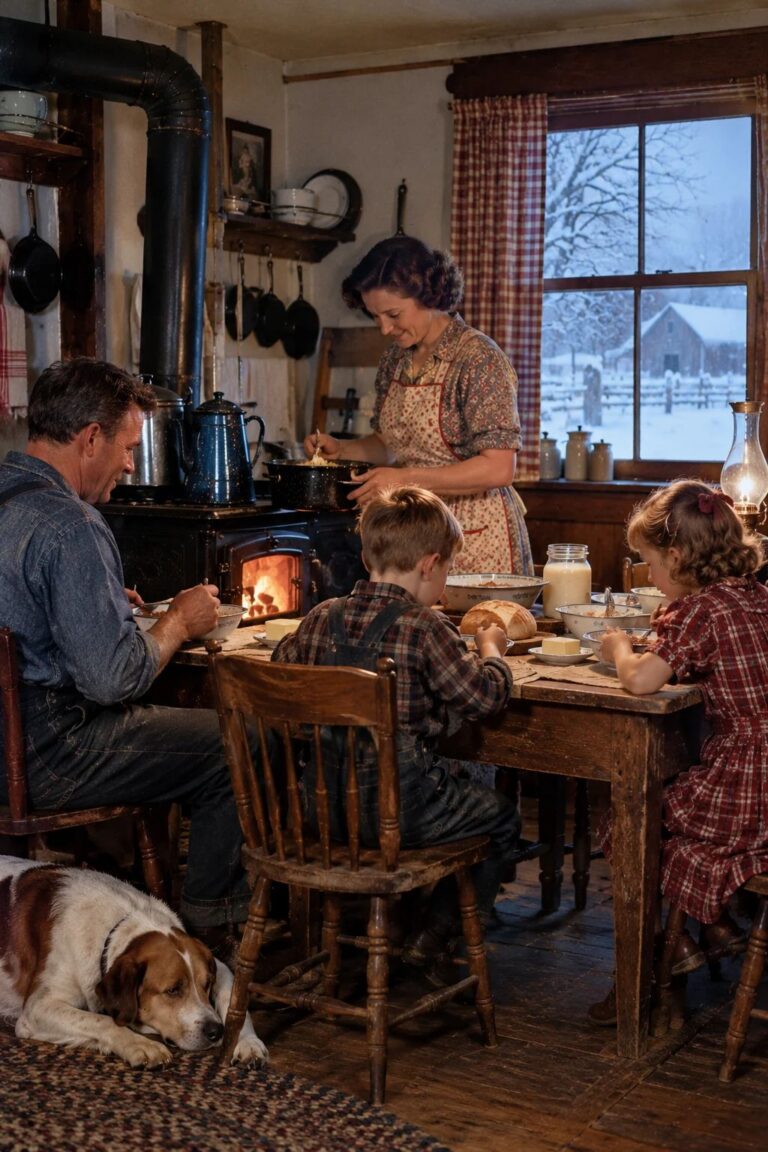
Inside the farmhouse, life followed a different rhythm.
A wood-burning stove warmed the kitchen while supper simmered in a heavy iron pot. Children gathered around the table to finish their schoolwork, and parents discussed the day’s chores.
Over the years, farmhouse kitchens gradually changed. The Smithsonian’s collection of historic American stoves shows how newer cooking technology helped make everyday household chores easier.
In later decades, a radio might bring news, music, or a favorite evening program into the room.
There was comfort in knowing that the family had prepared for whatever winter might bring.
Of course, those winters weren’t always easy. Drafty windows, frozen pipes, and long nights tested even the most resourceful families.
Yet the season also offered something valuable: time together.
And sometimes, the richest reward of the American harvest wasn’t what filled the cellar.
It was what brought everyone together around the kitchen table.
Harvest Celebrations: Giving Thanks for a Season's Work
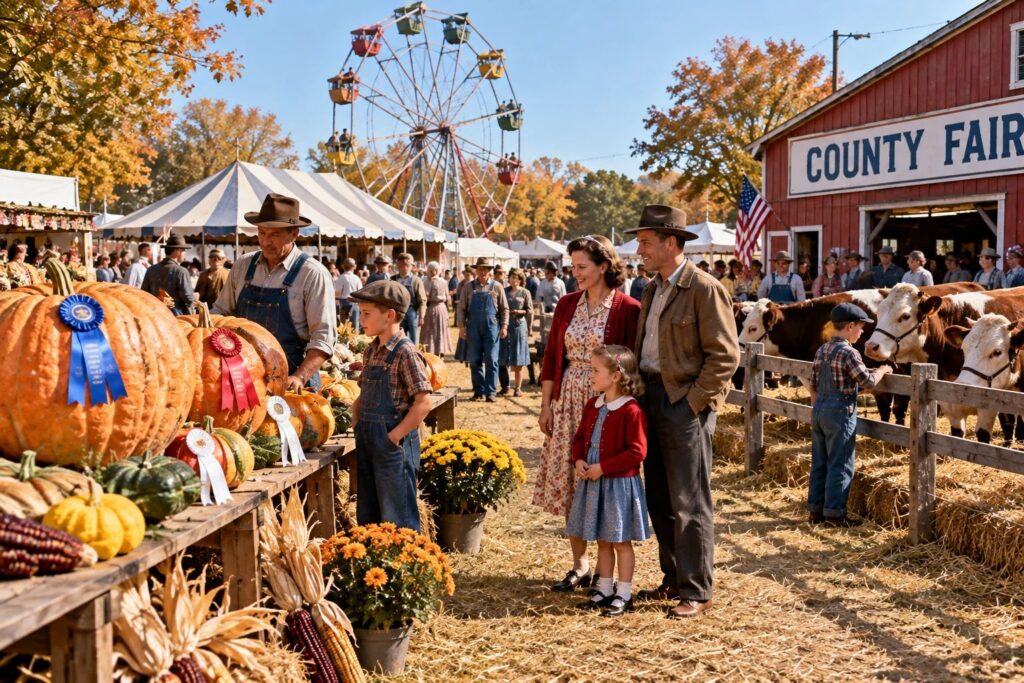
When the crops were gathered and the barns were filled, American families had good reason to celebrate. Months of planting, tending, and harvesting had finally paid off.
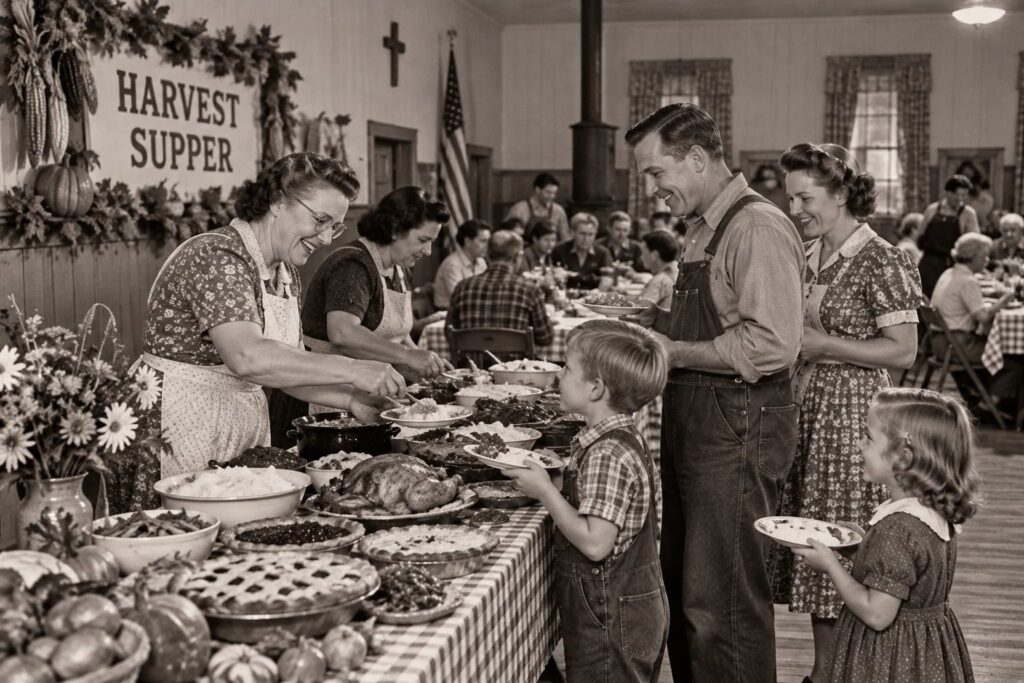
Across rural America, communities gathered for harvest suppers, church socials, county fairs, and Thanksgiving celebrations. These occasions brought neighbors together to enjoy the season’s bounty and appreciate another year’s accomplishments.
Of course, the food was often the star of the occasion. Tables overflowed with roasted meats, freshly baked bread, homemade pies, squash, potatoes, and preserves prepared during the autumn months.
County Fairs, Harvest Suppers, and Homemade Pie
County fairs offered something especially exciting. Farmers proudly displayed their finest livestock and produce, while families admired prize-winning quilts, baked goods, and homemade crafts.
These celebrations have a fascinating history. The Library of Congress preserves photographs of American county fairs, including scenes from the 1930s showing livestock competitions, young farmers, and old-fashioned refreshment stands. They’re wonderful reminders of how much these gatherings meant to rural communities.
Meanwhile, harvest suppers provided a welcome opportunity to exchange stories, share recipes, and enjoy an evening without worrying quite so much about tomorrow’s chores.
For children, these celebrations meant games, sweet treats, and perhaps a ride on the county fair’s merry-go-round.
For hardworking families, a harvest celebration represented more than a good meal. It was a reminder that their efforts had carried them through another growing season.
And as Thanksgiving approached, families gathered around their tables to give thanks for the food they had raised, the neighbors who had helped, and the promise of another year.
The American Harvest: Traditions Worth Remembering
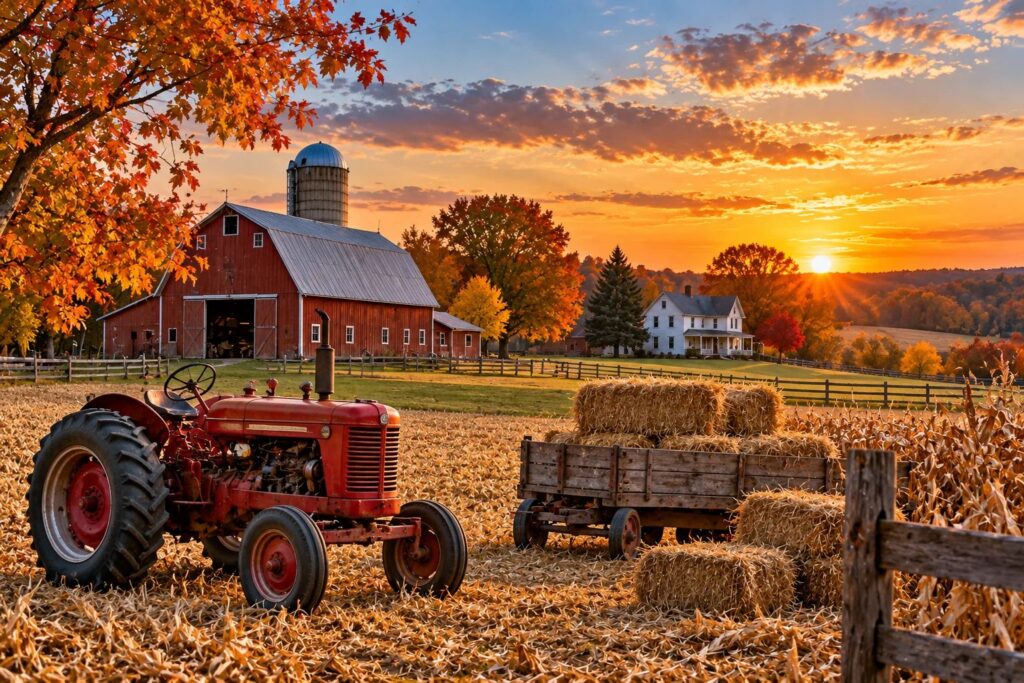
The American harvest has always been about more than gathering crops and preparing for winter. It represents generations of hard work, determination, ingenuity, and families doing whatever was necessary to care for one another.
From horse-drawn wagons and hand-cranked equipment to modern tractors and combines, the tools have changed dramatically. Yet the importance of a successful harvest remains.
The Smithsonian’s fascinating look at 150 years of American tractors shows how innovation transformed farming, replacing much of the backbreaking labor once performed by people and horses.
Today, most Americans no longer depend on a backyard garden or a family farm to fill their winter pantries. However, the traditions of preserving food, sharing meals, and helping neighbors continue to connect us with our past.
Perhaps that’s why the smell of freshly baked apple pie, the sight of a red barn against golden autumn trees, or the sound of leaves crunching beneath our feet can bring back such powerful memories.
The harvest reminds us that America’s greatest traditions were built not only through hard work, but through the people who shared it.
And while another winter will always be waiting around the corner, there’s something comforting about knowing that spring—and another season of possibilities—will follow.

Keep the Memories Going
If America’s harvest traditions brought back a few memories, there’s plenty more of our country’s fascinating past waiting to be rediscovered. From simpler times and unforgettable music to downtown shopping and vintage technology, the stories continue at Nostalgia Nook Antiques.
Nostalgia Myths Debunked: The Illusion of a Better Past
Was life really easier in the good old days? Discover the surprising truths behind some of America’s favorite nostalgic memories.
The Music That Kept America Dancing
From family radios to crowded dance halls, rediscover the songs that brought generations of Americans together.
Vintage Jukebox History: America’s Original Social Playlist
Remember when a nickel could play your favorite song? Explore the colorful machines that gave America its soundtrack.
Why Women Loved Department Stores
Return to the golden age of downtown shopping, elegant tea rooms, beautiful displays, and unforgettable family outings.
Do Rotary Phones Work in 2026? A Modern Guide
Remember that familiar rotary dial? Discover how these classic telephones can still make calls in today’s digital world.
The seasons may change, but there’s always another American memory waiting to be rediscovered at Nostalgia Nook Antiques.

The past has a way of finding us again. Sometimes it’s an old song, a familiar photograph, a forgotten gadget, or something we haven’t thought about in 40 years.
That’s what Nostalgia Nook Antiques is all about—rediscovering the stories, objects, and everyday memories that connect one generation to another.
Keep exploring. There’s always another story waiting around the corner.