When Every Gentleman Wore a Hat: The Lost Art of American Style
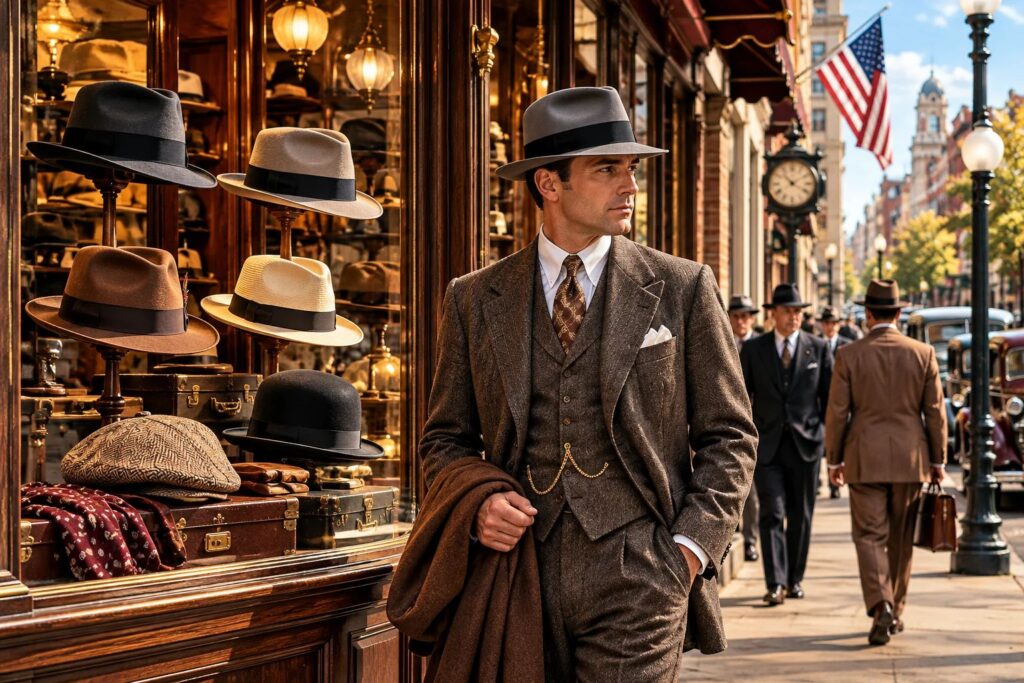
There was a time when vintage men’s hats were simply part of everyday American life. From the busy sidewalks of Detroit to the bright lights of Hollywood, a gentleman rarely stepped outside without something on his head. Whether it was a handsome fedora, a distinguished homburg, or a practical flat cap, his hat said something about the man wearing it.
Look closely at the gentlemen walking along the sidewalk. Nearly every one of them is wearing a hat.
Vintage men’s hats were once an essential part of American fashion. Whether a man was heading to work, attending church, catching a baseball game, or taking his sweetheart to the movies, chances are he had something on his head.
A fedora might accompany a tailored business suit. A flat cap suited a Saturday afternoon, while a handsome homburg added a touch of formality to special occasions.
And a gentleman knew what to do with his hat when he walked indoors. At least, he was supposed to!
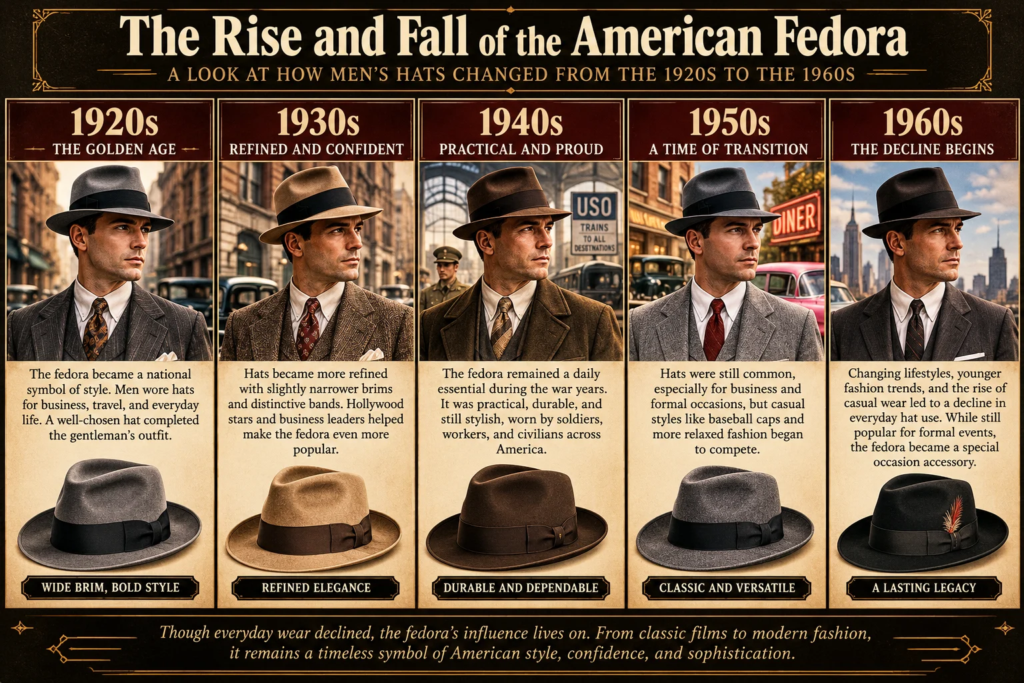
However, somewhere between the crowded sidewalks of the 1940s and the changing fashions of the 1960s, America’s love affair with hats began to fade.
What happened?
Why did generations of American men consider a hat indispensable, only for their sons and grandsons to leave home without one?
Let’s revisit the remarkable history, craftsmanship, Hollywood glamour, and forgotten etiquette of an era when a gentleman’s hat said almost as much about him as his handshake.
Watch: When Every Gentleman Wore a Hat
When a Hat Was Part of Getting Dressed
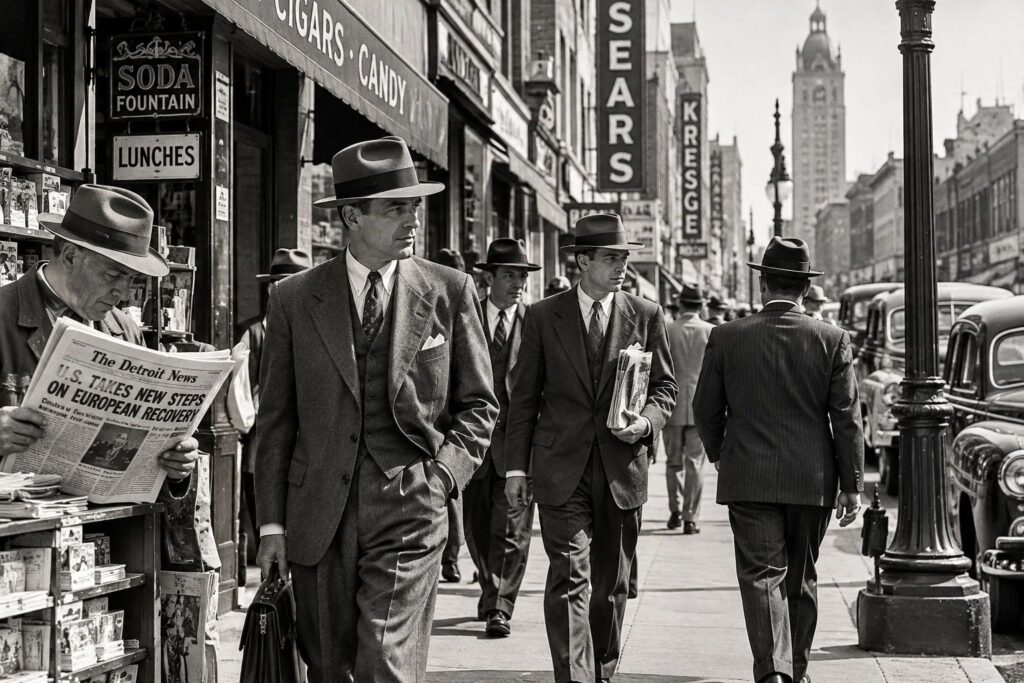
There was a time in America when leaving home without a hat was almost like forgetting your shoes. A gentleman might overlook a slightly crooked necktie, but stepping onto Main Street bareheaded? That could raise a few eyebrows.
During the early and middle decades of the twentieth century, vintage men’s hats were everywhere. Businessmen wore fedoras with their tailored suits. Factory workers favored sturdy caps, while farmers relied on practical hats to protect themselves from the sun.
Even a trip to the barber shop, the bank, or the neighborhood diner often called for a hat.
However, hats served purposes beyond keeping the weather off a man’s head. They reflected occupation, personal taste, social customs, and sometimes a fellow’s financial standing.
A well-made felt hat could be brushed, reshaped, and worn for years. For many working families, buying a good hat was an investment rather than an impulse purchase.
And when Sunday arrived, out came the polished shoes, pressed trousers, and the hat reserved for church or special occasions.
American hatmaking also became a thriving industry. Companies such as Stetson helped turn practical headwear into a symbol of quality and personal style. Today, the Stetson Hat Collection at Stetson University preserves examples of the hats, advertisements, and craftsmanship that helped define generations of American fashion.
Of course, not every American man wore a hat every day. Still, for generations, headwear was woven into the fabric of everyday American life.
Vintage Men's Hats: The Styles That Defined an Era
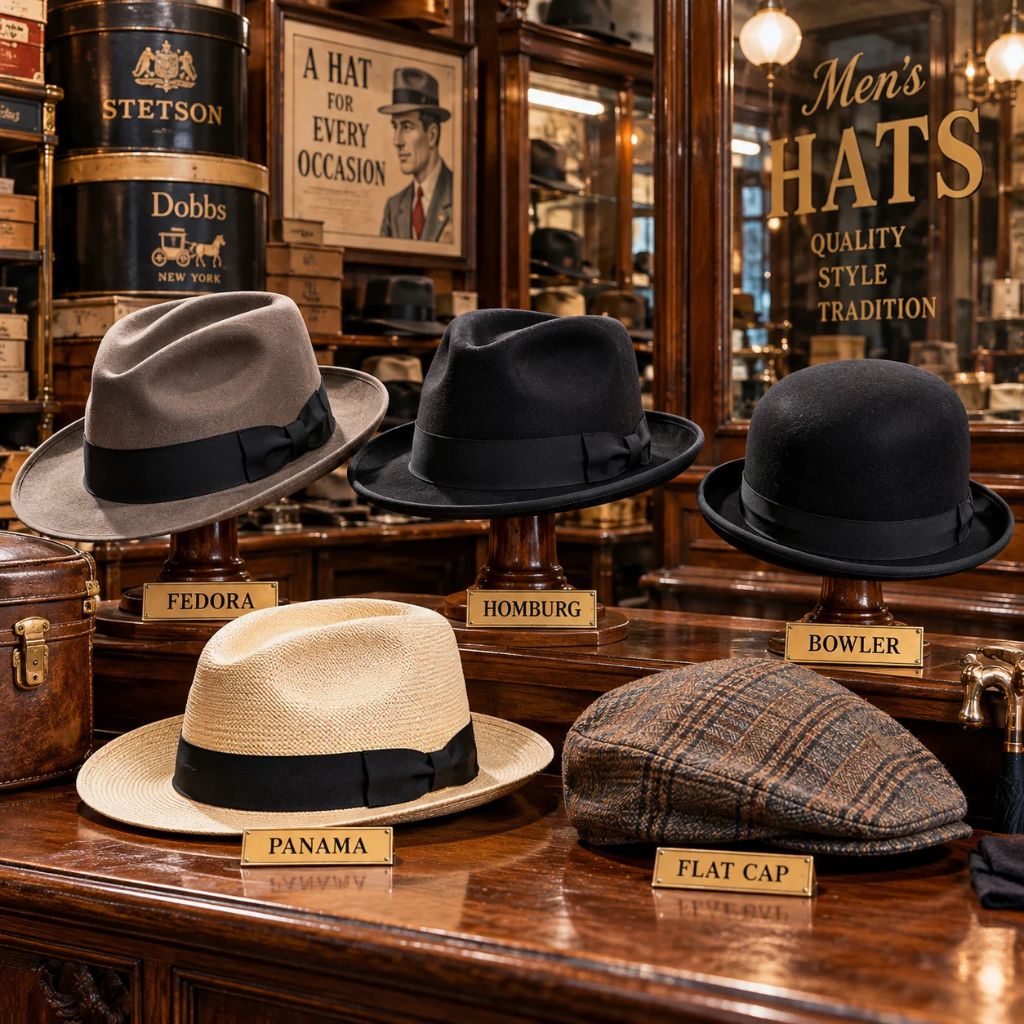
Walk into a well-stocked American hat shop in the 1940s, and you might find yourself facing a difficult decision. Should you choose something practical, something fashionable, or something that made you look like you owned the bank?
Vintage men’s hats came in an impressive variety of shapes, materials, and personalities. Each style had its own history, and the right hat could complete an outfit beautifully.
Vintage Men's Hats: The Fedora, America's Everyday Favorite
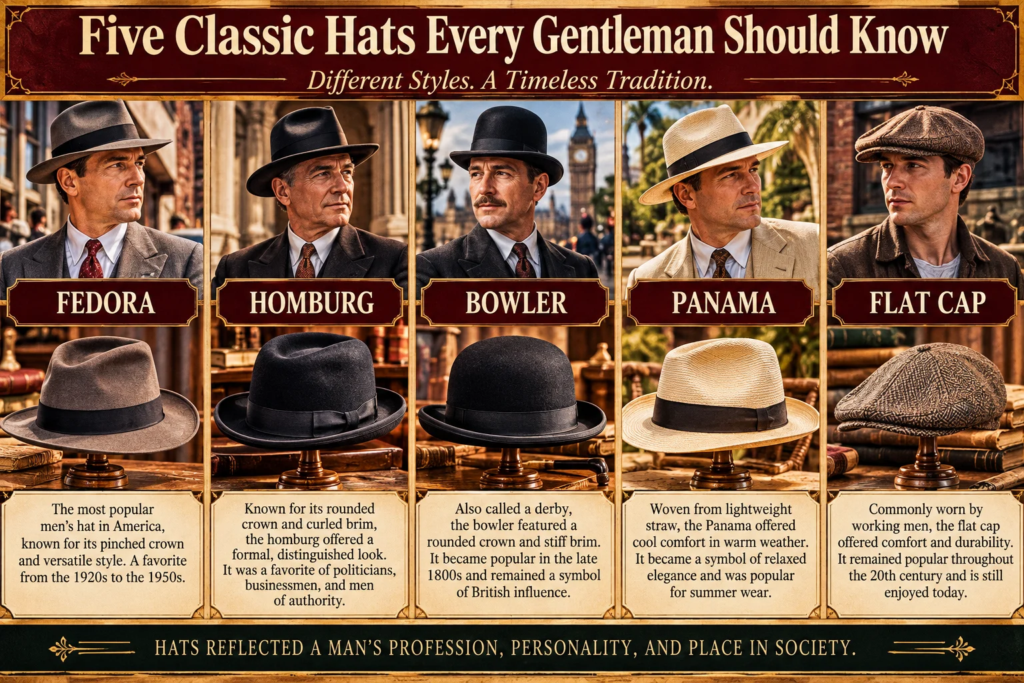
With its pinched crown and flexible brim, the fedora became one of the most recognizable hats of the twentieth century.
Businessmen, newspaper reporters, and Hollywood leading men helped make it famous. A good felt fedora worked equally well with a business suit or a handsome overcoat.
The Homburg: A Hat With Authority
Recognized by its rounded, creased crown and curled brim, the homburg offered a more formal appearance.
Politicians, businessmen, and distinguished gentlemen favored its dignified silhouette. It was the sort of hat that looked ready for an important meeting.
The Bowler: A Little British Influence
The bowler, sometimes called a derby in America, featured a rounded crown and stiff construction.
Although its popularity peaked earlier than the fedora’s, it remained a recognizable symbol of respectable city dress.
The Panama: Summer Elegance
Despite its name, the traditional Panama hat originated in Ecuador.
Woven from lightweight toquilla straw, it became a fashionable choice for warm-weather outings, vacations, and summer social occasions.
The craftsmanship behind these famous hats is so significant that UNESCO recognizes traditional Ecuadorian toquilla straw hat weaving as part of the world’s intangible cultural heritage.
The Flat Cap: The Workingman's Companion
Soft, practical, and comfortable, the flat cap was popular among workers, farmers, golfers, and men who preferred a more casual appearance.
It might not have commanded the attention of a fine homburg, but it certainly earned its place in American wardrobes.
From elegant felt hats to everyday cloth caps, there was a style for almost every occasion and every pocketbook.
Famous Vintage Men's Hat Makers Who Dressed a Nation
A fine hat didn’t begin in a department store window. Behind every handsome fedora or distinguished homburg stood skilled workers who understood felt, blocking, shaping, stitching, and finishing.
For generations, American hatmaking was serious business.
Stetson, Dobbs, and the Art of a Good Hat
John B. Stetson helped build one of America’s most recognizable hat brands, while names such as Dobbs and Knox became familiar to gentlemen looking for quality headwear.
These companies understood something important: a hat had to look good, fit comfortably, and survive years of everyday wear.
However, America’s hat story wasn’t written by manufacturers alone. Independent hat shops brought craftsmanship and personal service directly to their customers.
Detroit's Louis the Hatter: A Motor City Memory
Detroit had its own distinguished hat traditions, and Louis the Hatter was part of that story.
The Bradlin family’s business operated downtown and later became a familiar name along Livernois Avenue, Detroit’s celebrated Avenue of Fashion.
According to family recollections, Louis the Hatter grew from hat cleaning into hatmaking and fashionable men’s clothing. The shop also served customers connected with Detroit’s thriving music scene.
You can explore those memories in this account of Detroit’s historic hat shops.
Henry the Hatter: Another Detroit Institution
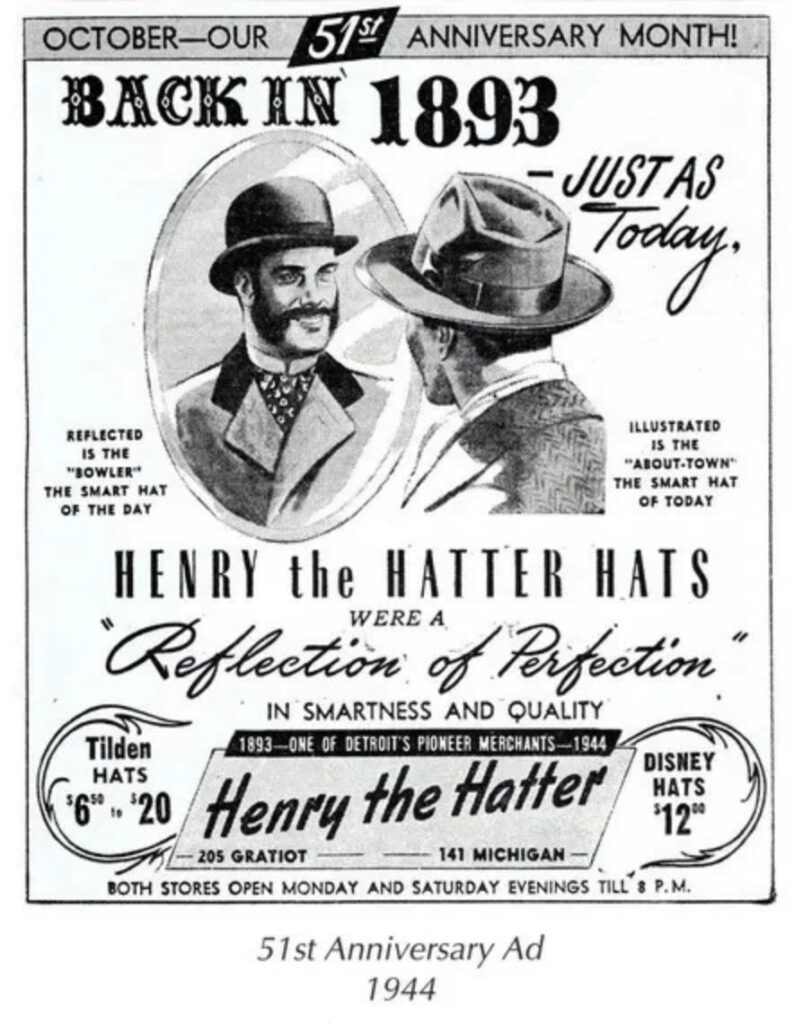
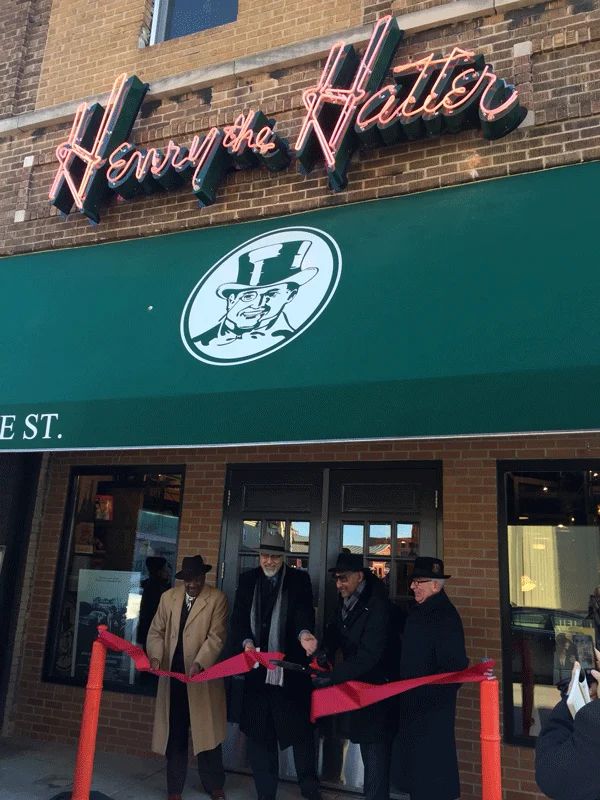
Meanwhile, Henry the Hatter had been serving Detroit gentlemen since 1893.
You didn’t have to visit Louis the Hatter to recognize the name. Its lively radio advertisements made the business familiar to generations of Detroit listeners.
In fact, I remember Louis the Hatter from its radio and television advertising rather than from shopping there. The commercials were part of an era when local merchants became household names through memorable voices, catchy sales pitches, and repeated appearances between favorite programs. The book Rockin’ Down the Dial even recalls the shop’s enthusiastic radio pitch about its many hats and suits.
Sometimes, the memory of a business lives on long after its storefront has disappeared.
The business became famous for its selection, craftsmanship, and personalized service. Customers could even select materials and finishing details for a custom hat.
Perhaps its most celebrated customer was President Dwight D. Eisenhower, who wore a homburg supplied by the store at his 1953 inauguration.
Today, Henry the Hatter’s history preserves the story of a Detroit institution that survived changing fashions and generations of customers.
These shops remind us that vintage men’s hats were more than accessories. They represented skilled hands, family businesses, neighborhood traditions, and a distinctly American sense of style.
Hollywood Made the Fedora Famous
Walk into an American movie theater during the 1940s, and you were likely to see something familiar on the silver screen: a leading man wearing a handsome fedora.
Hollywood helped transform vintage men’s hats from everyday necessities into symbols of confidence, mystery, and sophistication.
Humphrey Bogart and the Famous Fedora
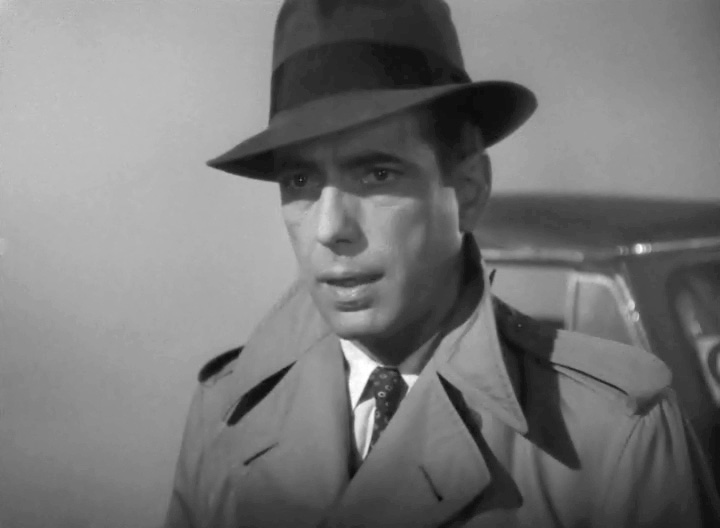
Few actors wore a fedora more memorably than Humphrey Bogart.
In Casablanca (1942), Bogart’s character, Rick Blaine, appeared in a trench coat and fedora, creating one of cinema’s most recognizable looks.
Meanwhile, detective films and crime dramas gave the hat an entirely different personality. Pulled low over the eyes, a fedora could make a character appear mysterious, dangerous, or ready to solve a murder.
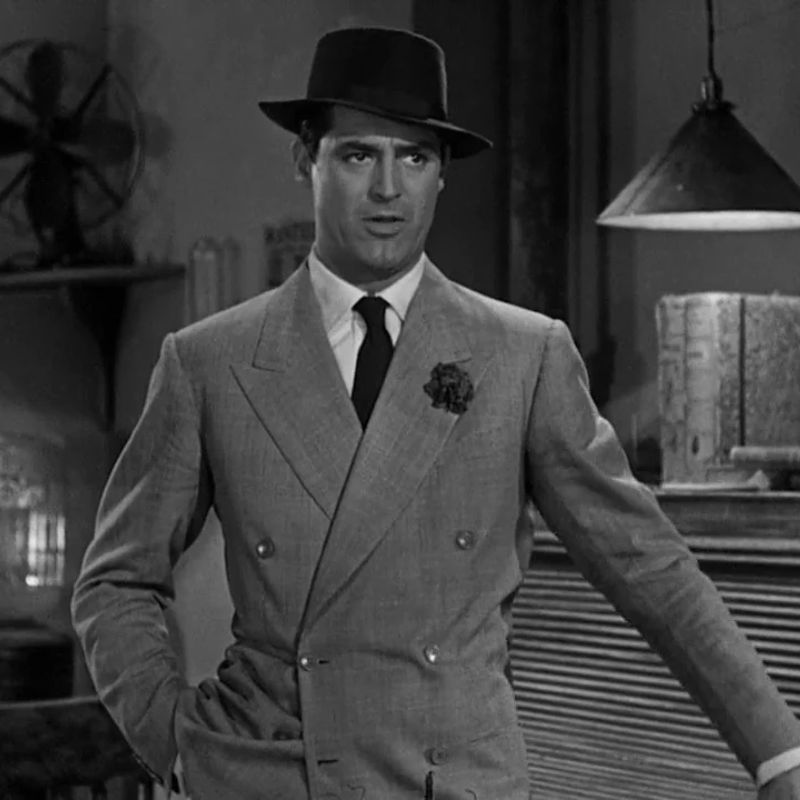
Cary Grant and the Well-Dressed Gentleman
Cary Grant brought another kind of elegance to Hollywood.
His carefully tailored suits, handsome hats, and polished appearance helped establish a standard of men’s style that audiences admired.
Whether he wore a fedora with a double-breasted suit or dressed for a formal evening, Grant understood the importance of looking the part.
For American men watching from the theater seats, Hollywood offered more than entertainment. It provided a little inspiration for their next visit to the clothing store.
When Movie Stars Influenced Main Street
Moviegoers didn’t merely watch Hollywood fashions. They sometimes tried to imitate them.
A man leaving the theater on Saturday night might stop at a department store the following week, hoping to find a fedora resembling the one his favorite actor wore.
Meanwhile, hat shops displayed fashionable new styles, and clothing advertisements promised a little of that Hollywood sophistication.
Of course, not every American gentleman could afford a movie star’s wardrobe. However, a well-chosen hat, a neatly pressed suit, and a polished pair of shoes could make an ordinary fellow feel ready for his own starring role.
And sometimes, that starring role was simply taking his sweetheart out for dinner.
Hat Etiquette: When Gentlemen Knew When to Tip Their Hats
There was a time when a gentleman’s hat came with an unwritten instruction manual.
Knowing when to wear it was important. However, knowing when to remove it could be even more important.
A man might tip his hat when greeting a lady, remove it upon entering someone’s home, or hold it respectfully during the national anthem.
These customs weren’t simply about fashion. They reflected the manners and social expectations of an earlier America.
Of course, not every gentleman followed the rules perfectly. Somewhere along the way, a few probably forgot to remove their hats at the dinner table and received a stern look from Mother.
But the traditions surrounding vintage men’s hats reveal something fascinating about everyday American life: a simple piece of clothing could communicate respect without a single word.
The Gentlemanly Art of Tipping Your Hat
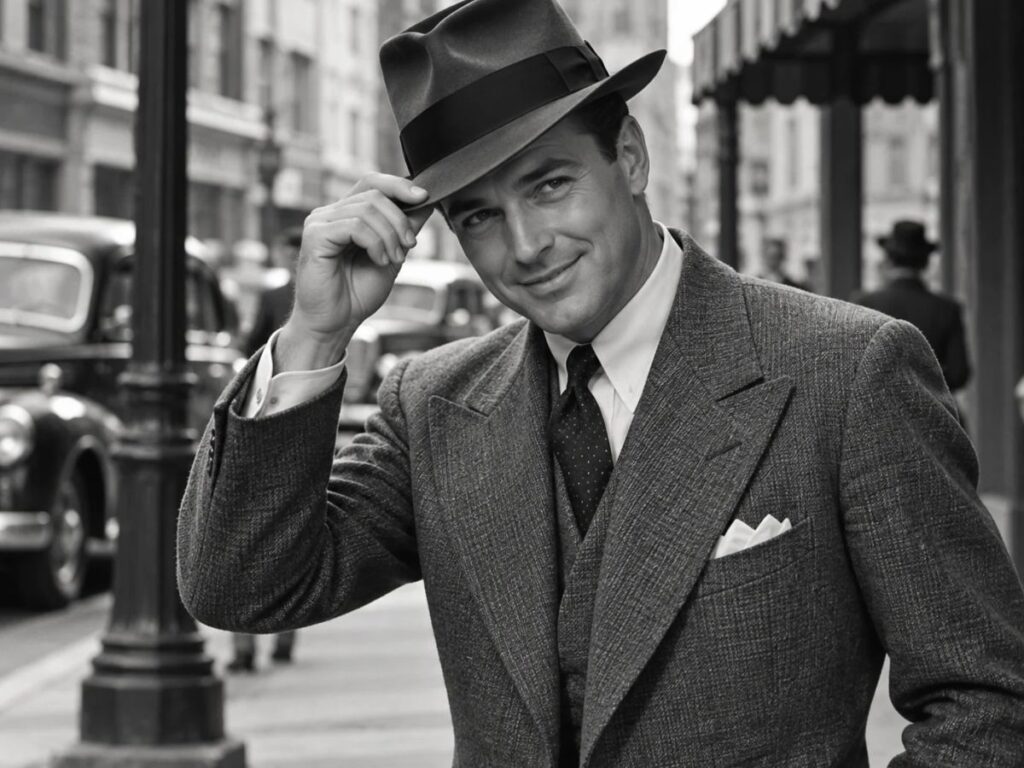
A gentleman didn’t need to deliver a speech to show good manners. Sometimes, a simple tip of his hat did the job.
When greeting an acquaintance on the sidewalk, a man might briefly touch or lift the brim. Removing his hat indoors was another familiar courtesy, particularly in someone’s home or at the dinner table.
Meanwhile, occasions such as the national anthem called for a more respectful gesture: taking the hat off entirely.
Of course, these customs varied by time, place, and circumstance. But they gave everyday encounters a little ceremony, and a gentleman who forgot his manners could expect someone to notice.
The Gentlemanly Art of Tipping Your Hat
A gentleman’s hat wasn’t merely something he wore. It was also part of how he greeted the world.
When meeting a lady or acknowledging an acquaintance, a man might briefly lift his hat or touch its brim. However, a polite greeting didn’t always require a grand gesture.
Indoors, etiquette became more particular. Men generally removed their hats in homes, restaurants, and places of worship, although customs varied by setting and occasion.
Of course, remembering all those rules could be tricky. A gentleman might forget his umbrella, but he was expected to remember his manners!
Why Did American Men Stop Wearing Hats?
For generations, a gentleman leaving home without his hat might have felt as improperly dressed as someone forgetting his shoes.
Yet by the 1960s, American men were increasingly stepping outside bareheaded.
So, what happened to vintage men’s hats?
The automobile played a part. As cars became more common, men spent less time walking city streets or waiting for streetcars. Lower automobile roofs also made wearing a tall-crowned hat less convenient.
Meanwhile, fashion was changing. Younger Americans embraced more casual clothing, and the old expectations surrounding formal dress began to loosen.
President John F. Kennedy is sometimes blamed for ending America’s hat-wearing tradition because he appeared bareheaded while taking the oath of office in 1961.
Yes, but Kennedy actually wore a top hat during parts of the day’s ceremonies. The John F. Kennedy Presidential Library documents the hat he wore, proving that the popular story isn’t quite right.
By then, men’s hats were already falling out of everyday fashion.
There wasn’t one dramatic moment when American gentlemen abandoned their fedoras.
Instead, changing transportation, hairstyles, workplace customs, and attitudes toward formality gradually pushed the everyday hat out of fashion.
And somewhere along the way, the hat rack by the front door became a place to hang the car keys.
Collecting and Wearing Vintage Men's Hats Today
The days when every American gentleman owned a fedora may be gone, but the pleasure of wearing a fine hat hasn’t disappeared.
In fact, vintage men’s hats have found a new audience among collectors, fashion enthusiasts, and people who appreciate traditional craftsmanship.
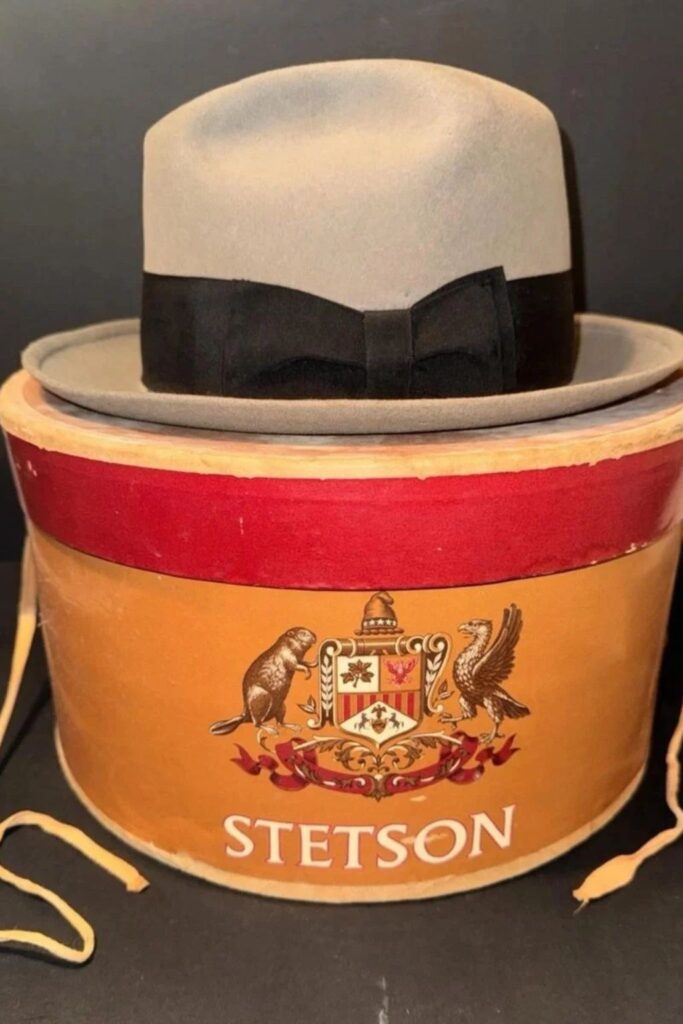
A well-preserved Stetson, Dobbs, or other quality hat can tell a story through its maker’s label, original hatband, and carefully shaped brim.
However, collecting isn’t simply about finding the oldest hat in the shop. Condition, fit, materials, and authenticity all matter.
A Few Tips for Beginning Hat Collectors
Start by checking the inside sweatband for a maker’s name, size, and original markings. Next, examine the felt or straw for stains, moth damage, and signs of careless storage.
Whenever possible, try the hat on. A beautiful 1940s fedora isn’t much use as everyday clothing if it fits like a soup bowl.
Finally, store your hats away from direct sunlight, excessive moisture, and heat. A proper hatbox can help protect their shape.
Whether displayed on a shelf or worn on a Sunday afternoon, a vintage hat offers something modern fashion sometimes overlooks: a little personality, a little craftsmanship, and a wonderful connection to American history.
Keep the Memories Going
If these vintage hats brought back memories of a father, grandfather, or favorite Hollywood gentleman, there’s plenty more American fashion history waiting to be rediscovered.
From tailored suits and polished shoes to the changing styles of the twentieth century, every generation had its own idea of looking sharp.
Essential Wardrobe Staples: Suits, Hats, and Watches
Take another look at the classic pieces that helped define a well-dressed man’s wardrobe across generations.
1920s Menswear: Classic Style Before the Modern Era
Step back another generation to the suits, hats, shoes, and polished details that shaped men’s style before the postwar decades.
Follow the changing American wardrobe through four unforgettable decades, from the tailored elegance of the 1950s to the bold styles of the 1980s.
Classic Men’s Accessories That Say “I Love You”
Explore the finishing touches that give a gentleman’s wardrobe its personality, including classic hats, watches, and other memorable accessories.
Cross over to the ladies’ wardrobe and discover the beautiful coats, hats, and accessories that made winter fashion an occasion to dress up.
The styles may change, but there’s always another memory waiting at Nostalgia Nook Antiques.

Every antique tells a story, and every tradition carries a memory. Our newsletter brings you closer to both, with inspiration, guides, and finds that make nostalgia part of your everyday life. Subscribe today and let the past brighten your future.