Home » Maintenance & Restoration » Antique Chest Restoration: Preserving the Past with Craftsmanship
Antique Chest Restoration: Preserving the Past with Craftsmanship
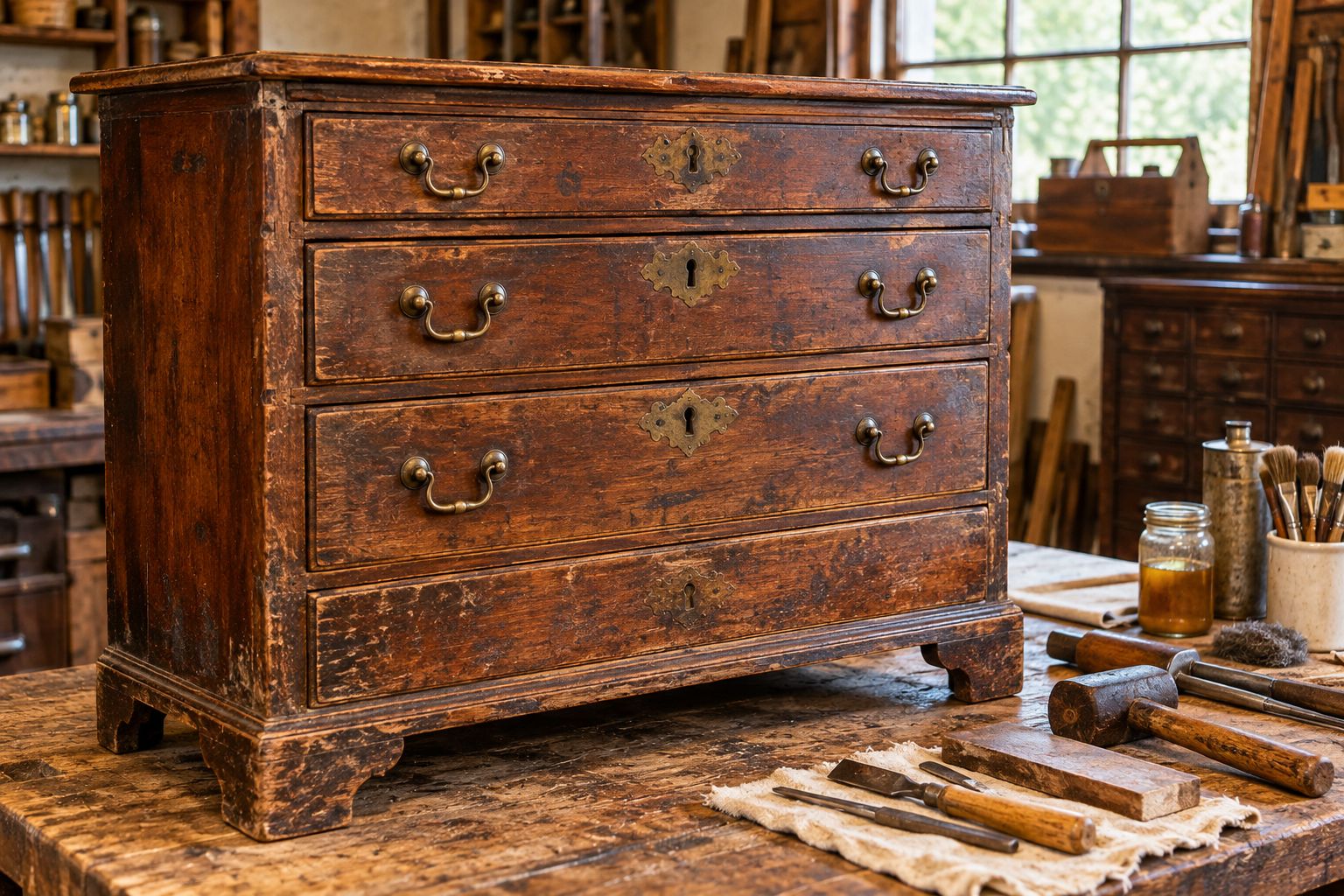
Introduction to Antique Chest Restoration
Antique chest restoration begins with a story. Perhaps you’ve discovered an old wooden chest in Grandma’s attic, inherited a family heirloom, or found a beautiful piece of furniture at an estate sale. Whatever its history, that old chest deserves careful attention before anyone reaches for the toolbox.
Antique chest restoration is about more than making old furniture look new again. It’s about preserving craftsmanship, protecting history, and deciding which signs of age deserve to remain.
However, restoring an antique chest requires patience. A little cleaning might reveal beautiful original woodwork, while aggressive sanding or refinishing could permanently erase its character and reduce its value.
That’s why understanding the chest’s age, materials, construction, and condition matters before reaching for the toolbox.
In this guide, we’ll explore how to evaluate an antique chest, identify common damage, choose appropriate restoration techniques, and preserve its history for future generations.
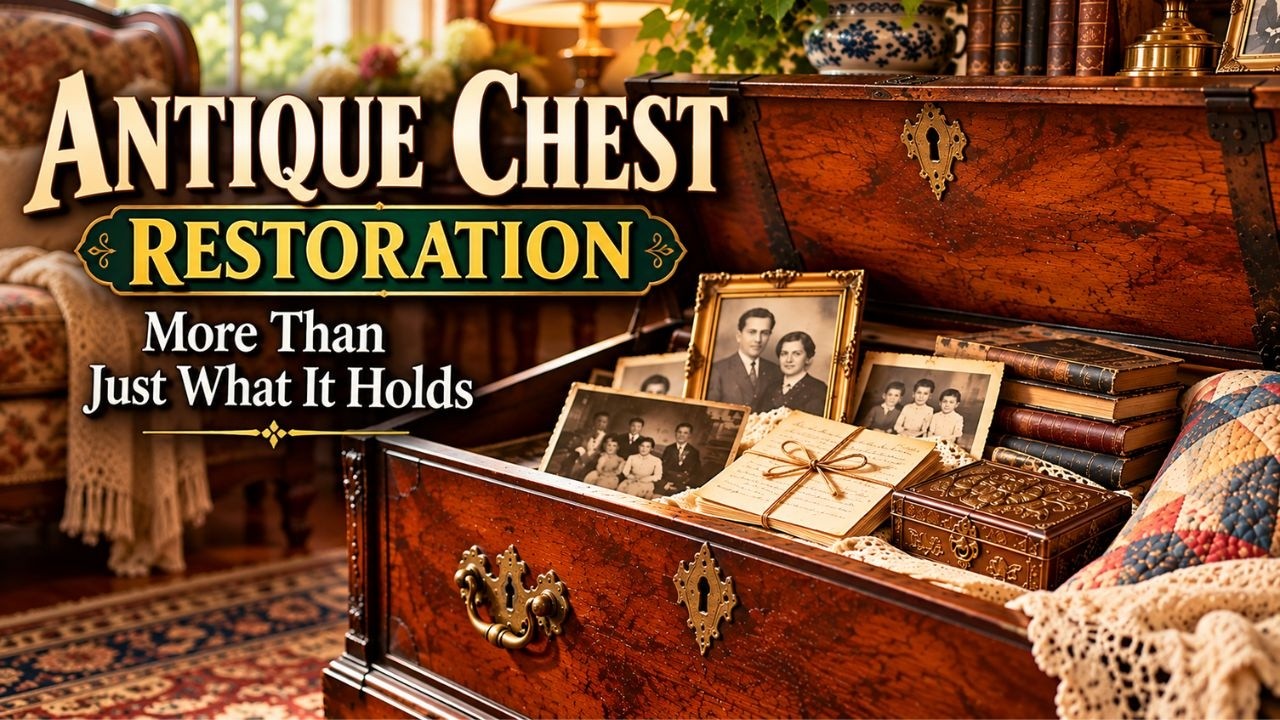
Watch the Video: Antique Chest Restoration
Every antique chest has a story, from its handcrafted joints and original brass hardware to the little imperfections left by generations of use.
In this companion video, we’ll explore how thoughtful restoration can preserve the craftsmanship, character, and memories that make these old treasures worth saving.
Press play and discover why some things are worth preserving just as they are.
Antique Chest Restoration: Preserving the Past
What to Repair, What to Preserve, and the Stories Worth Saving
Watch Our Nostalgic Journey Below
How to Recognize a Genuine Antique Chest
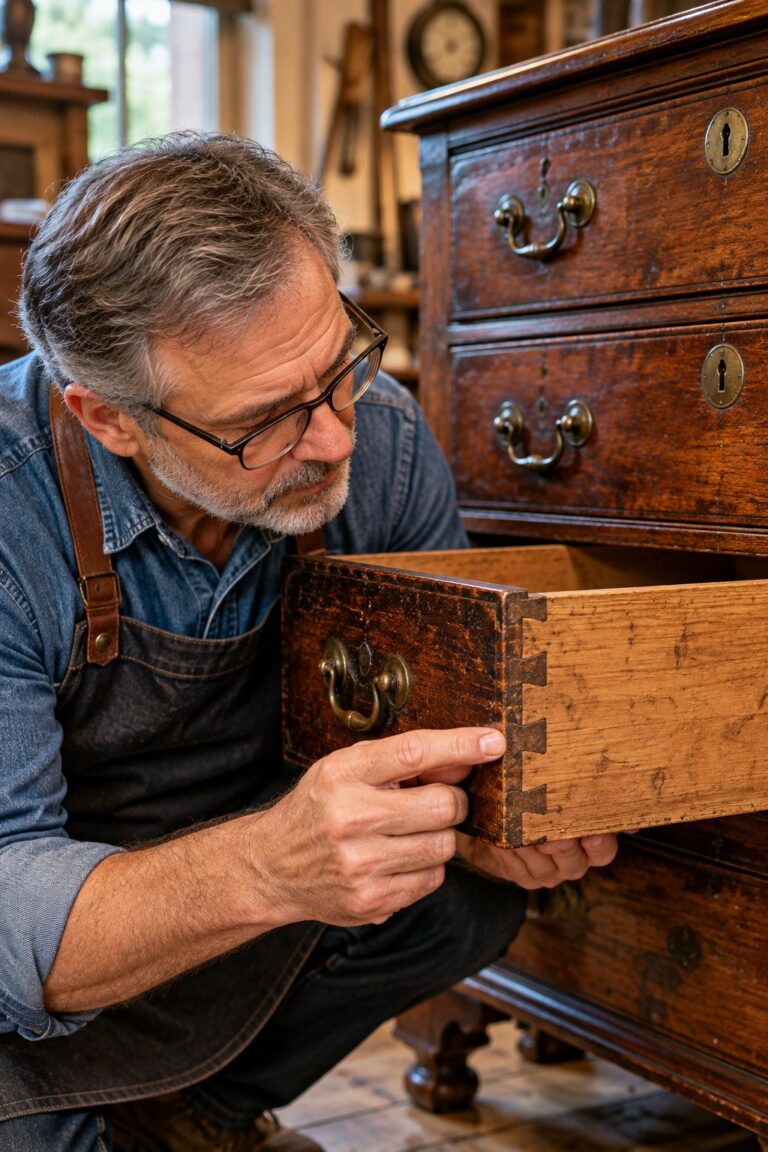
Next, inspect the construction. Hand-cut dovetail joints sometimes show slight variations in spacing and shape. Earlier chests may also feature hand-planed surfaces, wooden pegs, or tool marks hidden beneath the drawers.
Maker’s marks and old furniture labels can offer valuable clues, too. For a closer look at what those markings mean, Antique Trader explains how to identify and interpret vintage furniture labels.
Don’t dismiss a chest simply because it has veneer or metal screws. Fine antique furniture frequently incorporated decorative veneers, and screws have been used in furniture construction for centuries.
Finally, examine the hardware, drawer interiors, and underside. Original components, repairs, and construction details can help establish a chest’s history. Because styles and techniques overlapped across different periods, no single feature can confirm authenticity.
When in doubt, consult a qualified antique furniture specialist before attempting restoration.
What Determines the Value of an Antique Chest?
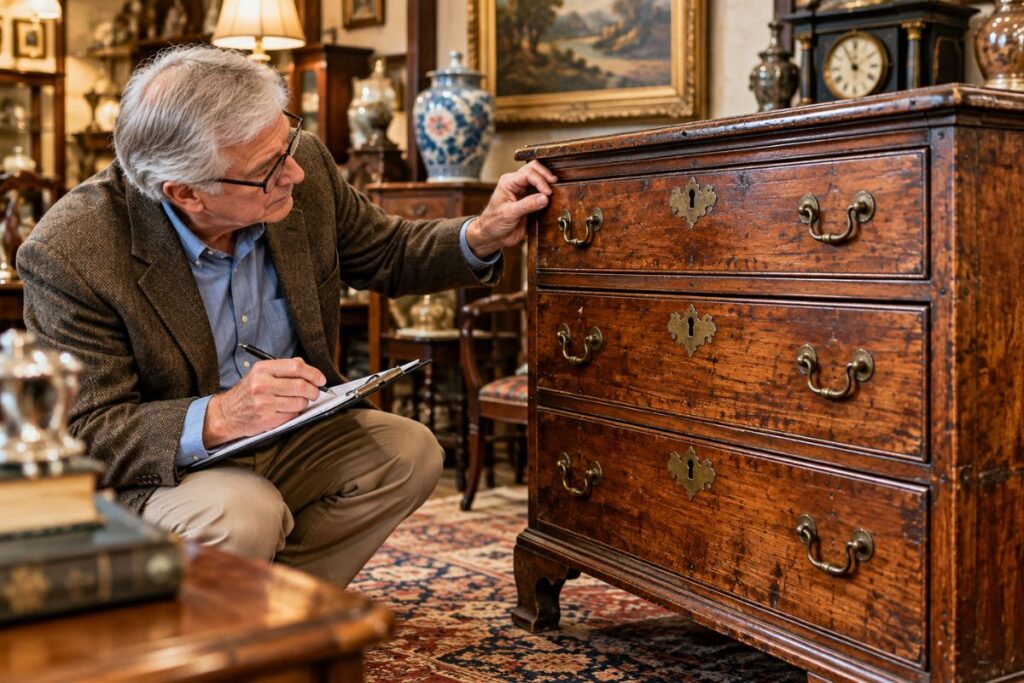
An antique chest’s value depends on much more than its age. Craftsmanship, condition, rarity, provenance, and current demand all play a part.
However, an older chest isn’t automatically more valuable than a newer one. A beautifully preserved nineteenth-century chest might attract serious collectors, while another from the same period could have little resale demand.
Here are four factors worth examining:
Age and craftsmanship: Construction techniques, materials, and design can help establish a chest’s history and desirability.
Provenance: Documentation connecting a chest to its maker, original owner, or historical setting may increase collector interest.
Condition: Original finishes, hardware, and structural integrity often matter more than a freshly restored appearance.
Market demand: Auction results and changing decorating trends influence what buyers are willing to pay.
Before beginning antique chest restoration, consider having a potentially valuable piece professionally evaluated. Aggressive sanding, replacing original hardware, or stripping an old finish can permanently reduce its historical and financial value.
A qualified appraiser can help establish a reasonable value before you decide what work, if any, should be done.
Before beginning antique chest restoration, consider having a qualified appraiser examine the piece. An expert can assess its age, condition, and potential value, helping you avoid restoration decisions that might diminish its historical significance or resale value.
How to Determine the Age of an Antique Wooden Chest
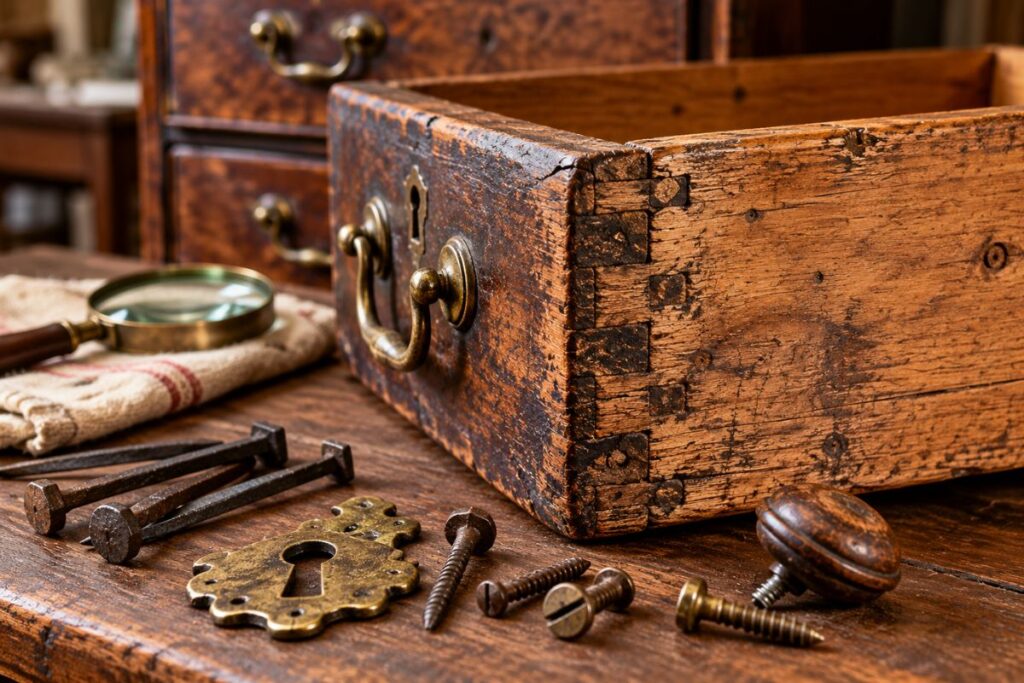
Every antique chest carries clues about its age. Some are obvious, while others require a little detective work and a good flashlight.
Start with the construction. Examine the back, underside, and drawer interiors. Hand-cut dovetails, saw marks, and wooden pegs can offer clues about manufacturing methods. However, these features alone cannot establish an exact date.
If you’re curious about what those old joints and fasteners reveal, Appraisily offers a helpful guide to dating antique furniture through dovetails and hardware. It’s a useful reference when examining a chest’s construction and trying to separate original features from later repairs.
Next, study the hardware. Early hand-forged nails, older screw designs, and traditional drawer pulls may help narrow the period. Remember, though, that hardware is frequently replaced during repairs.
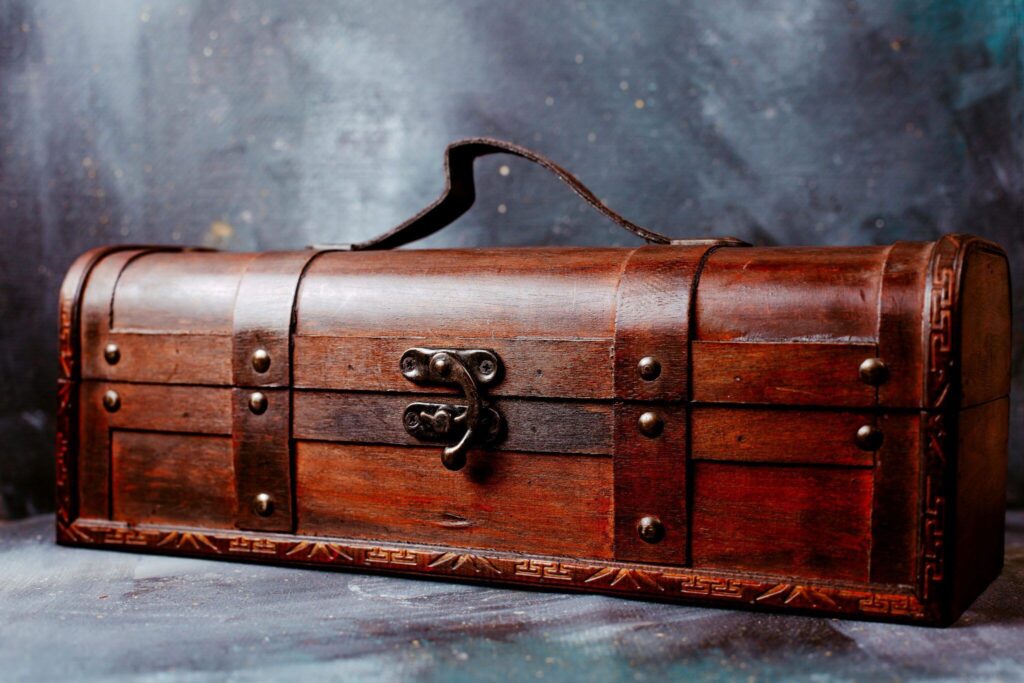
Next, study the hardware. Early hand-forged nails, older screw designs, and traditional drawer pulls may help narrow the period. Remember, though, that hardware is frequently replaced during repairs.
Style also tells a story. Georgian, Victorian, and Art Nouveau furniture reflects different design traditions. Comparing a chest’s proportions, decorative details, and construction with documented examples can help identify its likely period.
Meanwhile, look for maker’s marks, paper labels, or stamped numbers. Historical catalogs and museum collections may provide valuable comparisons.
Finally, examine the finish and natural wear. Although patina can support an age estimate, artificially distressed furniture can be convincing.
For a potentially valuable chest, consult a furniture specialist before attempting restoration. Sometimes the most important discovery is realizing that an old finish should be preserved rather than removed.
How to Assess an Antique Chest Before Restoration
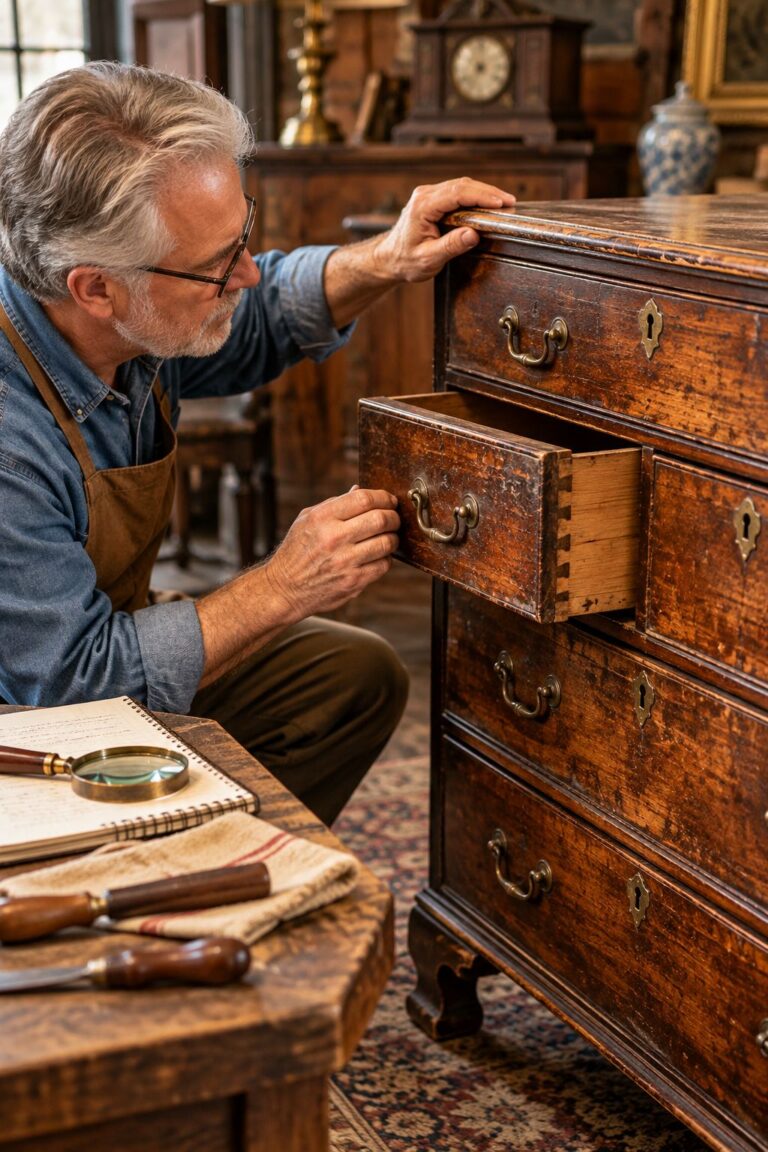
Finding an old chest is exciting. However, deciding whether it needs restoration requires a closer look at its condition, construction, and original features.
Start with the structure. Does the chest stand securely? Are the drawers sticking, joints separating, or legs showing signs of damage? These problems may need attention, although some repairs are best left to a furniture conservator.
Next, examine the wood and finish. Look for cracks, missing veneer, insect damage, and signs of moisture. Don’t assume that every scratch needs fixing. A century of ordinary wear can be part of the chest’s history.
Originality matters, too. Matching hardware, decorative details, and surviving finishes may contribute to historical significance. Even a damaged original component can be worth preserving.
Finally, consider what the chest actually needs. Gentle cleaning or stabilizing a loose joint may be more appropriate than stripping and refinishing the entire piece.
The goal of antique chest restoration shouldn’t be to erase its age. It should be to preserve the craftsmanship and character that make the furniture worth keeping.
Where Should You Begin?
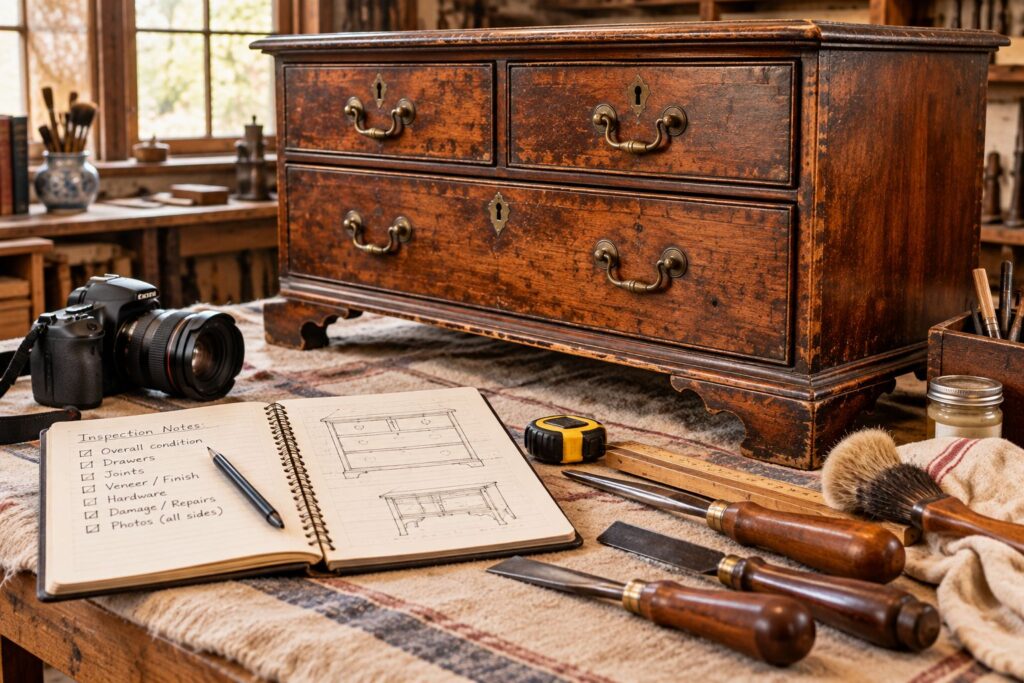
You’ve found an old wooden chest with beautiful craftsmanship, a few stubborn drawers, and perhaps a century’s worth of mysterious scratches. Naturally, you’re wondering where to begin.
Antique chest restoration starts with observation, not a toolbox.
First, photograph the chest from every angle, including the back, underside, drawer interiors, and hardware. These pictures provide a valuable record of its original condition.
Next, examine the furniture for loose joints, cracked wood, missing veneer, insect damage, and signs of moisture. If you notice fresh wood dust, active insects, mold, or serious structural problems, consult a qualified specialist before proceeding.
Meanwhile, research the chest’s history. Look for maker’s marks, construction details, and evidence of previous repairs. An original finish may be worth preserving, even when it looks worn.
Finally, decide what actually needs attention. Gentle dusting and careful handling may be enough for a stable chest. However, damaged joints, fragile finishes, and valuable antiques deserve professional guidance.
Remember, the goal isn’t to make an antique look brand-new. It’s to protect the history that makes it special.
Common Furniture Repairs and What to Avoid
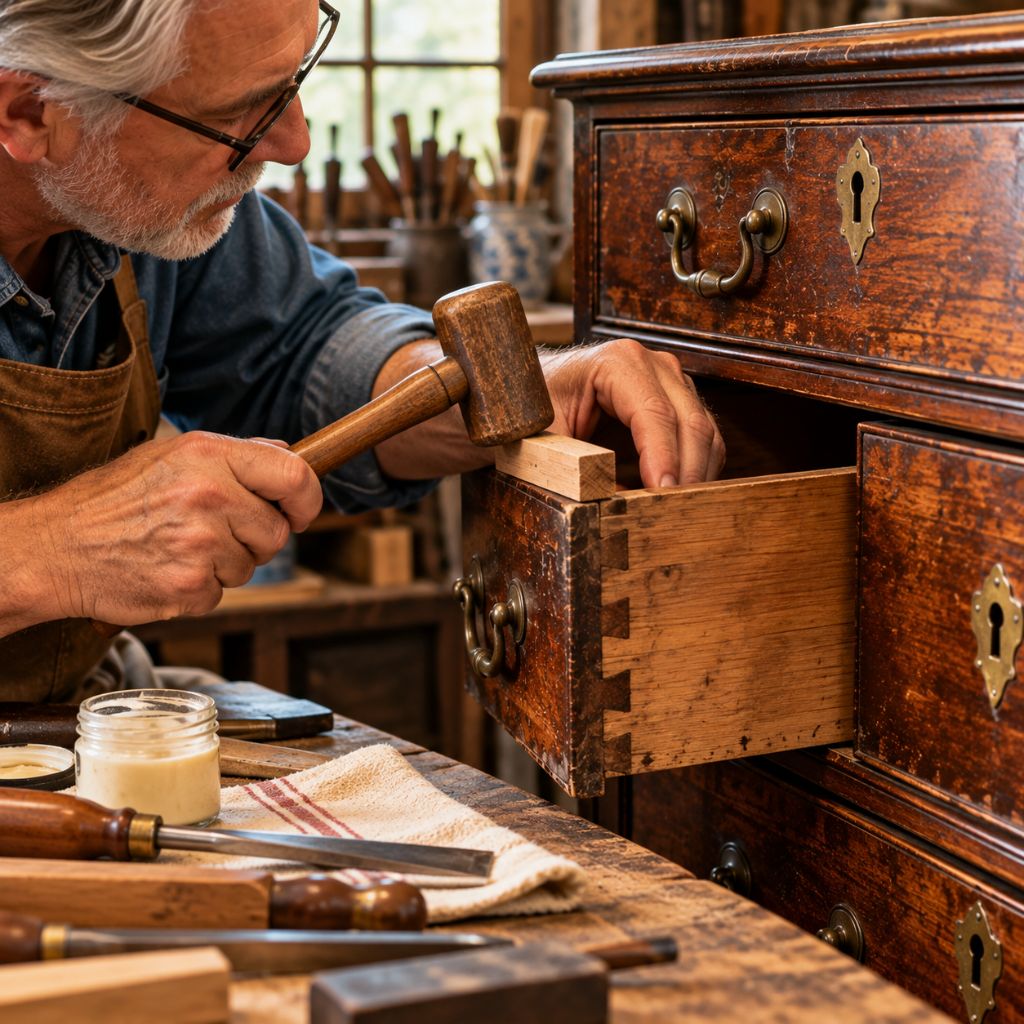
Even the finest antique chest can develop problems after decades of use. Drawers stick, joints loosen, and delicate veneers begin lifting. Fortunately, not every problem requires a complete restoration.
Sticking drawers: Seasonal humidity can cause wood to expand. Check for swelling, damaged runners, or loose parts before attempting repairs. Never force a stubborn drawer or immediately reach for sandpaper.
Loose joints: Years of movement can weaken traditional wooden joints. However, modern screws, nails, or inappropriate adhesives may cause additional damage. Valuable or fragile furniture deserves a conservator’s attention.
Damaged veneer: Small areas of lifting veneer may be repairable, but peeling or missing sections require careful treatment. Avoid household superglue and aggressive sanding, which can permanently damage thin decorative surfaces.
Missing hardware: Whenever possible, preserve original handles, locks, and hinges. If replacements are necessary, choose sympathetic alternatives and retain any surviving original pieces.
Remember that restoring an old chest is about keeping it together, not making it perfect. A few scratches and signs of age can be part of the furniture’s history.
For extensive damage or historically significant furniture, the American Institute for Conservation offers a directory to help you find a qualified conservator before attempting repairs.
Keeping Your Restored Furniture Beautiful
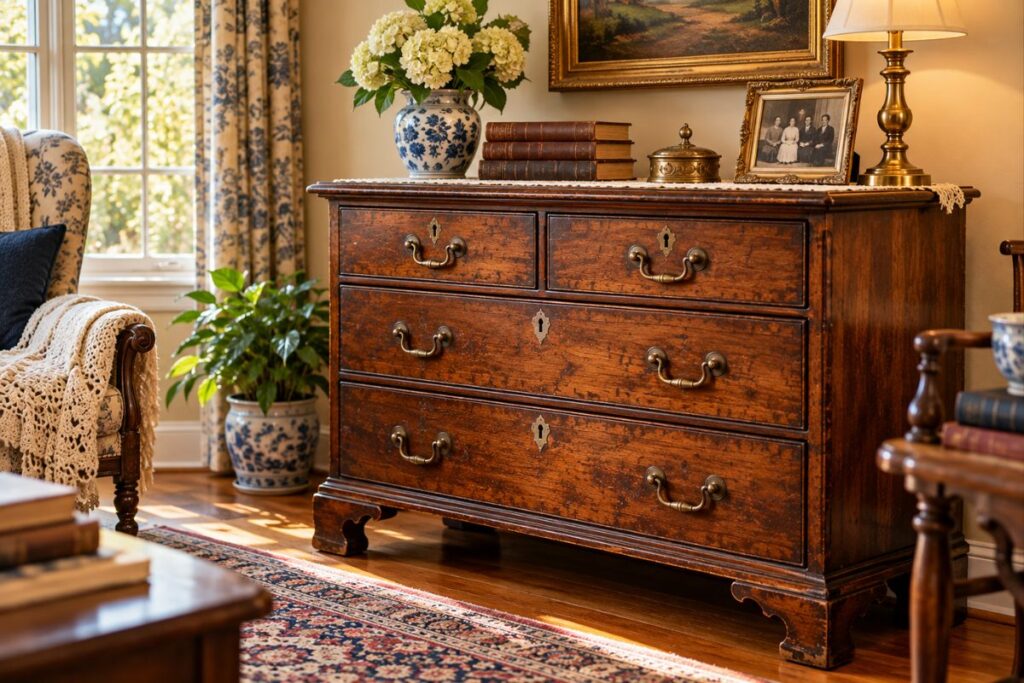
You’ve carefully restored an antique chest, and now comes the part that matters just as much: keeping it in good condition.
Fortunately, preserving antique furniture doesn’t require a cabinet full of expensive products. A little attention and the right environment can make a remarkable difference.
Watch the sunlight. Direct sunlight can fade wood finishes and cause uneven discoloration. Position your chest away from sunny windows whenever possible.
Keep humidity steady. Wood naturally expands and contracts as moisture levels change. Avoid placing antique furniture near radiators, heating vents, fireplaces, or damp basement walls.
Clean gently. Regular dusting with a soft, dry cloth is often sufficient. Avoid furniture sprays, silicone polishes, and household cleaning chemicals, particularly when the original finish is fragile or unknown.
Handle drawers carefully. Never force a sticking drawer or overload it with heavy objects. Likewise, check periodically for loose handles, new cracks, or signs of insect activity.
Above all, remember that antique chest restoration doesn’t end when the tools are put away. Thoughtful everyday care helps preserve the craftsmanship and history that made the chest worth saving.
Preservation Tip:
Before applying wax, polish, or any cleaning product, identify the existing finish and consult a furniture conservator if you’re uncertain. What works beautifully on modern furniture could damage a fragile antique surface.
Frequently Asked Questions About Antique Chest Restoration
Restoring an antique chest raises plenty of questions, especially when you’re trying to protect its original craftsmanship and value.
Should you refinish the wood? What about replacing damaged hardware? And when is it better to call a professional?
Here are answers to five common questions about antique chest restoration.
Should You Refinish an Antique Wooden Chest?
Not necessarily. Original finishes can contribute to an antique chest's historical significance and value. Before stripping or sanding, determine whether gentle cleaning or professional conservation would be more appropriate. Sometimes preserving the existing finish is the best restoration decision.
Can Antique Chest Restoration Reduce Its Value?
Yes. Removing original finishes, replacing historic hardware, or making inappropriate repairs can reduce an antique's value. However, careful conservation may help stabilize a damaged piece. If your chest is rare or potentially valuable, seek professional advice before making permanent changes.
How Should You Clean an Antique Wooden Chest?
Start by gently removing loose dust with a soft, dry cloth. Avoid soaking the wood or using household sprays, silicone polish, or harsh cleaners. If the finish is flaking, sticky, or otherwise fragile, consult a furniture conservator before cleaning further.
Can You Replace Missing Handles on an Antique Chest?
Yes, but choose replacements carefully. Look for hardware that suits the chest's age and design, and avoid drilling new holes whenever possible. Preserve any surviving original fittings, even if they're damaged, because they may provide important historical information.
When Should You Hire a Professional Furniture Conservator?
Consider professional help when a chest has significant structural damage, lifting veneer, an unstable finish, suspected active insect damage, or unusual historical value. A conservator can recommend appropriate treatments that protect the original materials and craftsmanship.
Antique Chest Restoration: Preserving More Than Furniture
An antique chest may have started its life in a craftsman’s workshop more than a century ago. Since then, it might have survived several moves, generations of family gatherings, and perhaps a few children who weren’t particularly gentle with the drawers.
Yet here it is, with a story worth preserving.
Antique chest restoration isn’t about making old furniture look brand-new. It’s about respecting the craftsmanship, protecting the original materials, and giving a treasured piece the care it deserves.
Sometimes that means repairing a loose joint. Other times, it means leaving a worn finish exactly as it is. After all, those little imperfections may be the very things that connect us to the people who owned it years ago.
And perhaps that’s the greatest reward of preserving antiques. We’re not simply saving furniture. We’re keeping a small piece of history in the family.
Explore More Nostalgic Stories
Every antique has a history, and every restoration offers another opportunity to preserve it. If you enjoyed exploring antique chest restoration, here are a few more stories about craftsmanship, treasured possessions, and the things we carry from one generation to the next.
DIY: Restoring Old Paintings to Their Former Glory
Discover how thoughtful preservation can help protect treasured artwork without erasing the history that makes it special.
Techniques for Fixing Antique China
From delicate cracks to missing pieces, explore the challenges of caring for fragile antique china.
5 Helpful Tips for Keeping Your Grandfather Clock in Top Condition
Learn why regular maintenance and careful handling matter when preserving a treasured family timepiece.
What’s the Difference Between Nostalgia and Antique?
Explore the connection between cherished memories, historical objects, and the value we place on the past.
Vintage Lights: Antique Glow – A Nostalgic Lighting Collection
Discover how antique-inspired lighting can bring warmth, character, and a touch of history into your home.
Every treasured object has a story. Keep exploring the memories at Nostalgia Nook Antiques.

Every antique tells a story, and every tradition carries a memory. Our newsletter brings you closer to both, with inspiration, guides, and finds that make nostalgia part of your everyday life. Subscribe today and let the past brighten your future.
Conclusion: Embracing the Art Antique Chest Restoration

Owning a restored antique chest is like owning a piece of history. The process of restoration brings new life to forgotten treasures, allowing them to be cherished for generations.
Preserving antiques ensures future generations appreciate their craftsmanship and cultural significance. Whether you restore an old trunk for sentimental reasons or investment purposes, the effort is always rewarding.
Engaging with antique communities, learning from experts, and sharing restoration stories fosters a deeper appreciation for historical furniture. Through careful restoration, we not only protect history—we bring it back to life.
- Using Vintage Design With A Nostalgic Feel
- What’s The Difference Between Nostalgia And Antique?
- Appreciating Antique Timepieces: Craftmanship
- DIY: Restoring Old Paintings To Their Former Glory