Home » Books & Stories » Rarest Little Golden Books: Which Are Worth Money?
Rarest Little Golden Books: Which Ones Are Actually Worth Money?
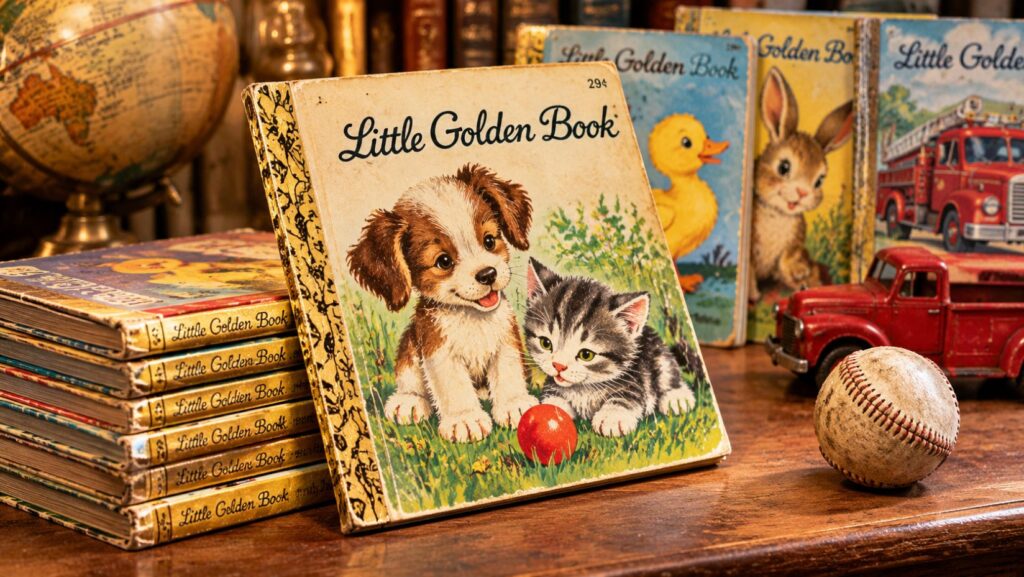
Rarest Little Golden Books are hiding in places you might never expect. Perhaps there’s a forgotten collection in your attic, a dusty box at an estate sale, or a familiar childhood favorite tucked away on a bookshelf. Most are worth little more than their sentimental value, but certain editions can surprise even experienced collectors. The challenge is knowing what to look for before an overlooked treasure slips through your fingers.
When a Quarter Bought a Childhood Treasure
There was a time when twenty-five cents could buy something far more lasting than candy or a Saturday afternoon treat. It could buy a child’s very own book.
In October 1942, Little Golden Books arrived in American stores, bringing colorful illustrations and memorable stories within reach of ordinary families. Until then, beautifully illustrated children’s books were often too expensive for many households.
According to the Smithsonian National Museum of American History, these inexpensive little volumes helped transform children’s publishing. For the first time, countless youngsters could begin building libraries of their own.
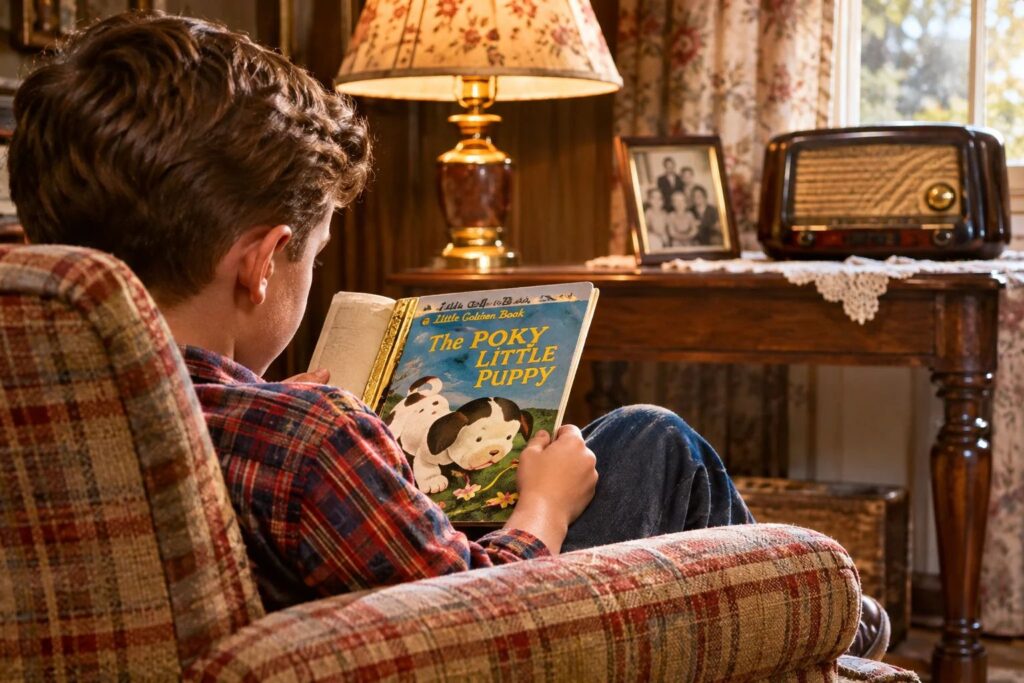
Among the original twelve titles was The Poky Little Puppy, a story that would become one of the most recognizable children’s books in America.
Before long, those little books found their way into bedrooms, living rooms, and bedtime routines across the country.
Yet nobody buying one for a quarter could have known that certain early editions would someday attract serious collectors.
And that’s where our treasure hunt begins.
Rarest Little Golden Books: Which Ones Are Worth Money?
Discover the Childhood Treasures That Became Collectibles
Watch Our Nostalgic Journey Below
The Original Twelve Little Golden Books
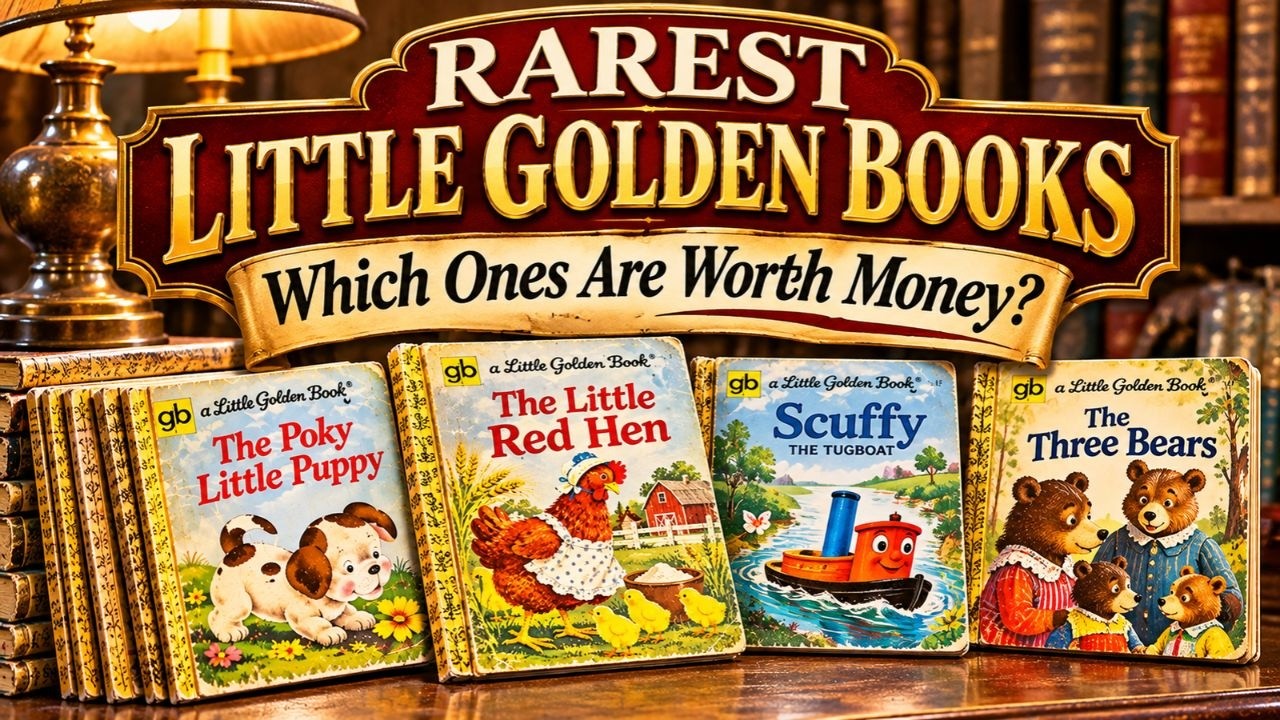
When Little Golden Books debuted in 1942, twelve titles introduced American families to an entirely new way of buying children’s literature. Each book cost just twenty-five cents, yet its colorful illustrations and sturdy construction made it feel like something special.
Among those early favorites were The Poky Little Puppy, Three Little Kittens, The Little Red Hen, and Mother Goose. Although millions of later copies would eventually reach American homes, surviving examples from the earliest printings hold particular interest for collectors.
Age itself is not worth. A book with a copyright date of 1942 may have been produced years later.
So even more than identifying an antique cover, it’s crucial to identify the actual printing. The University of Kansas Spencer Research Library offers a fascinating look at early Little Golden Books, including photographs of original titles preserved in its collections.
For collectors, these early editions represent more than childhood memories. They mark the beginning of a publishing revolution, and finding a genuine first printing can turn an ordinary-looking book into a remarkable discovery.
How to Identify a First Edition Little Golden Book
Finding an old Little Golden Book is exciting. Discovering whether it’s a genuine first printing, however, requires a little detective work.
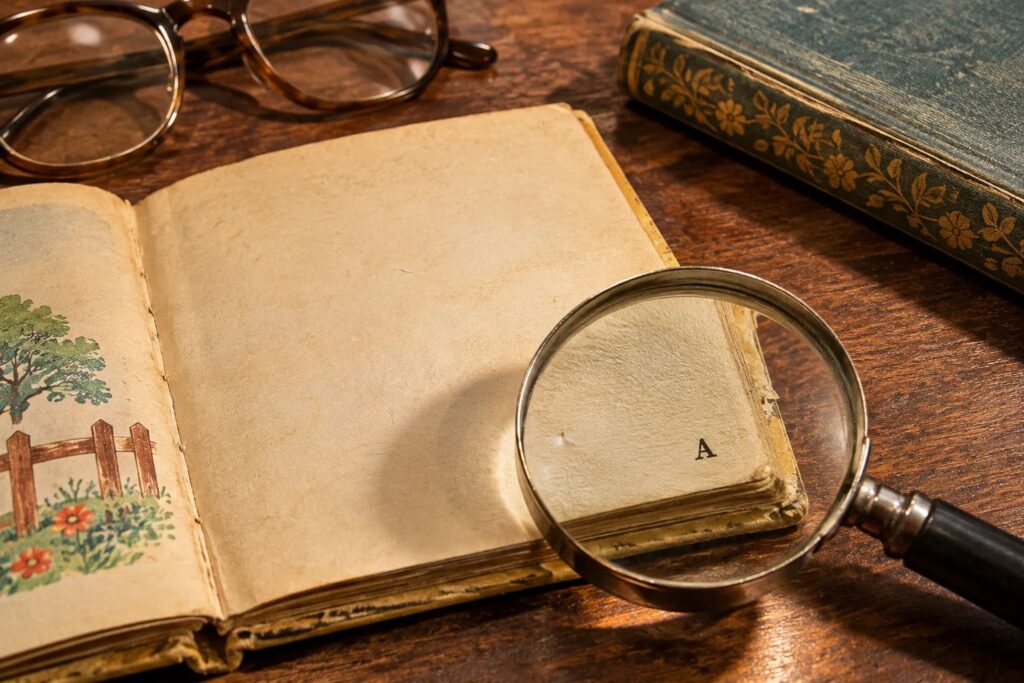
Start by opening the book and examining its publication information. Although a copyright date might read 1942, that doesn’t necessarily mean the book was printed that year. Popular titles were reprinted repeatedly, sometimes decades after their original release.
Early Little Golden Books often identified their printing directly on the opening pages. Later editions introduced letter codes, with the letter A indicating a first printing in certain periods.
The Little Golden Book Collector’s identification guide explains these printing variations and offers helpful clues for identifying older editions.
Beyond the printing information, examine the binding, cover artwork, and overall condition. Early copies sometimes retained their original dust jackets, making complete examples particularly interesting to collectors.
One last thing to keep in mind is that a well-known title doesn’t always mean it’s rare. The exact printing, its condition, and collector demand determine whether you’ve discovered something special.
Which Little Golden Books Are Worth Money?
Among the rarest Little Golden Books, original 1942 first printings attract particular attention, especially when their illustrated dust jackets have survived.
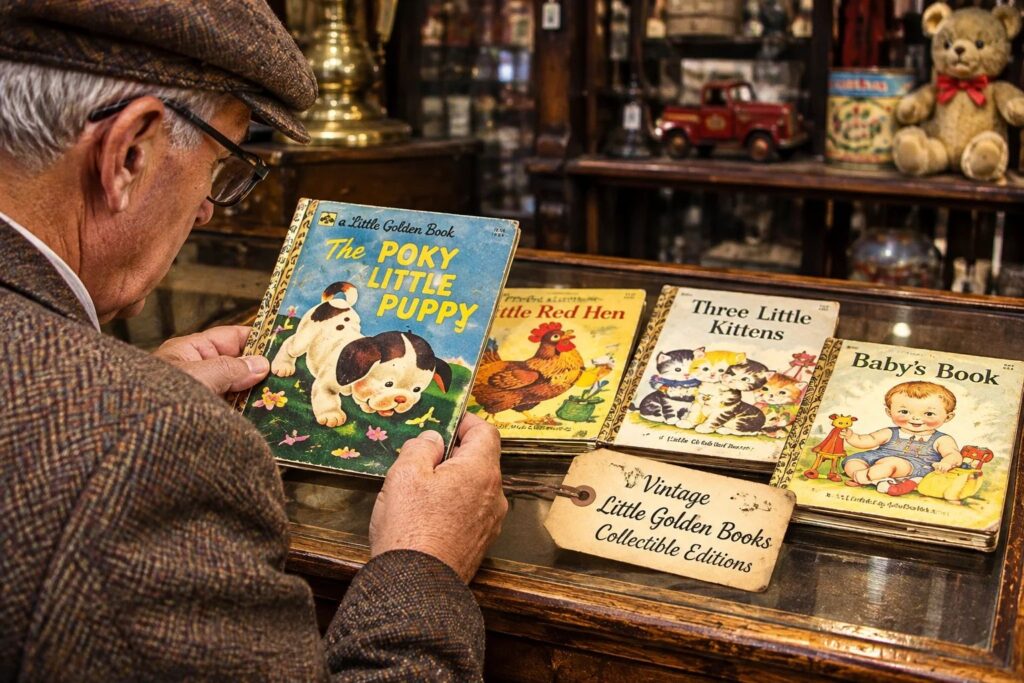
The Poky Little Puppy remains a collector favorite, alongside Three Little Kittens, The Little Red Hen, and Baby’s Book. But a recognizable name alone is no guarantee of a worthwhile find. These stories appeared in numerous later printings, many of which remain inexpensive.
Other collectible possibilities include early Disney editions, books featuring celebrated illustrators, and unusual activity books with their original pieces intact.
For a closer look, the Little Golden Books Identification and Price Guide lists all twelve original titles and provides historical collector estimates for first printings.
Those figures are useful starting points, not guaranteed selling prices. Indeed, a collector’s willingness to pay depends heavily on condition, scarcity, and the exact edition.
Before celebrating a valuable find, compare your copy with documented sales of matching editions. Sometimes the difference between an ordinary childhood keepsake and a desirable collectible is hidden in just a few printed letters.
How Condition Affects Little Golden Books Value
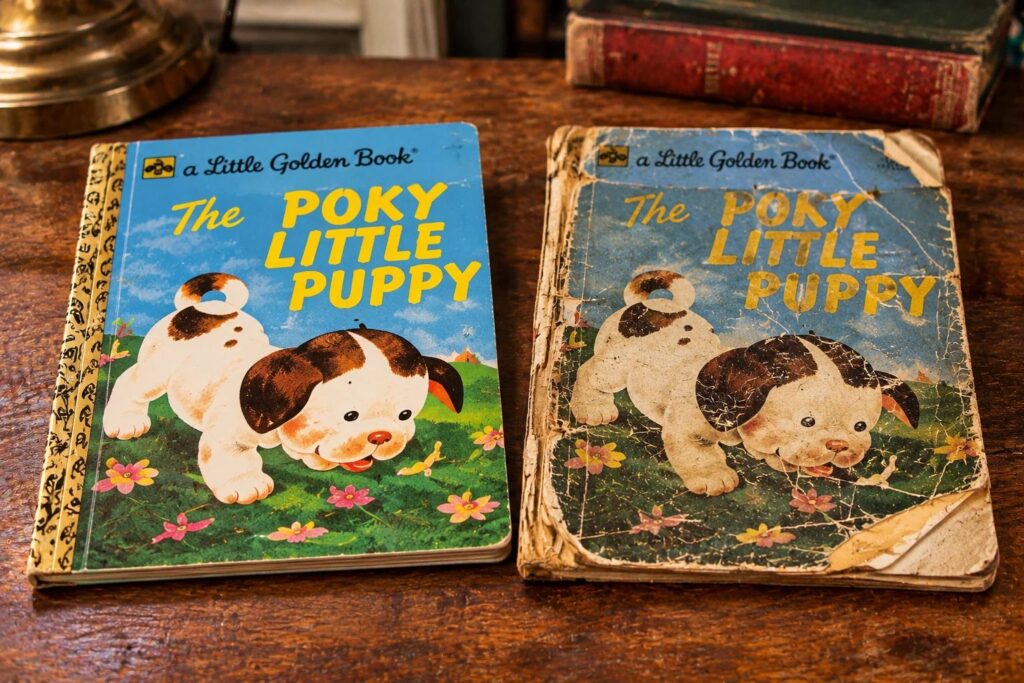
Two copies of the same Little Golden Book can have remarkably different values. Although they may share the same title and printing, their condition often determines which one attracts serious collectors.
A beautifully preserved first edition with clean pages, a firm binding, and minimal wear will generally command more attention than a heavily damaged copy. Original dust jackets, when appropriate to the edition, can make an especially important difference.
Also, the resale value might be diminished due to things like missing drawings, ripped pages, loose bindings, or even children’s scribbles. Even a name written inside the front cover can influence a collector’s decision.
The American Library Association’s preservation resources offer helpful guidance on caring for books and other treasured materials.
Before attempting repairs, however, consider their potential effect on collectible value. Glue, tape, and amateur restoration can sometimes cause more harm than the original damage.
Ultimately, the rarest Little Golden Books are most desirable when their originality and condition have survived together. A little wear tells a childhood story, but careful preservation helps protect its future.
How Much Are Old Little Golden Books Actually Worth?
Some vintage Little Golden Books sell for only a few dollars, while exceptional early editions can attract considerably more. The difference becomes clear when we examine actual auction results.
In September 2025, a collection of ten Little Golden Books described as first editions sold for just $22.25 before the buyer’s premium. Even books dating from the 1940s through the 1960s aren’t automatically valuable.
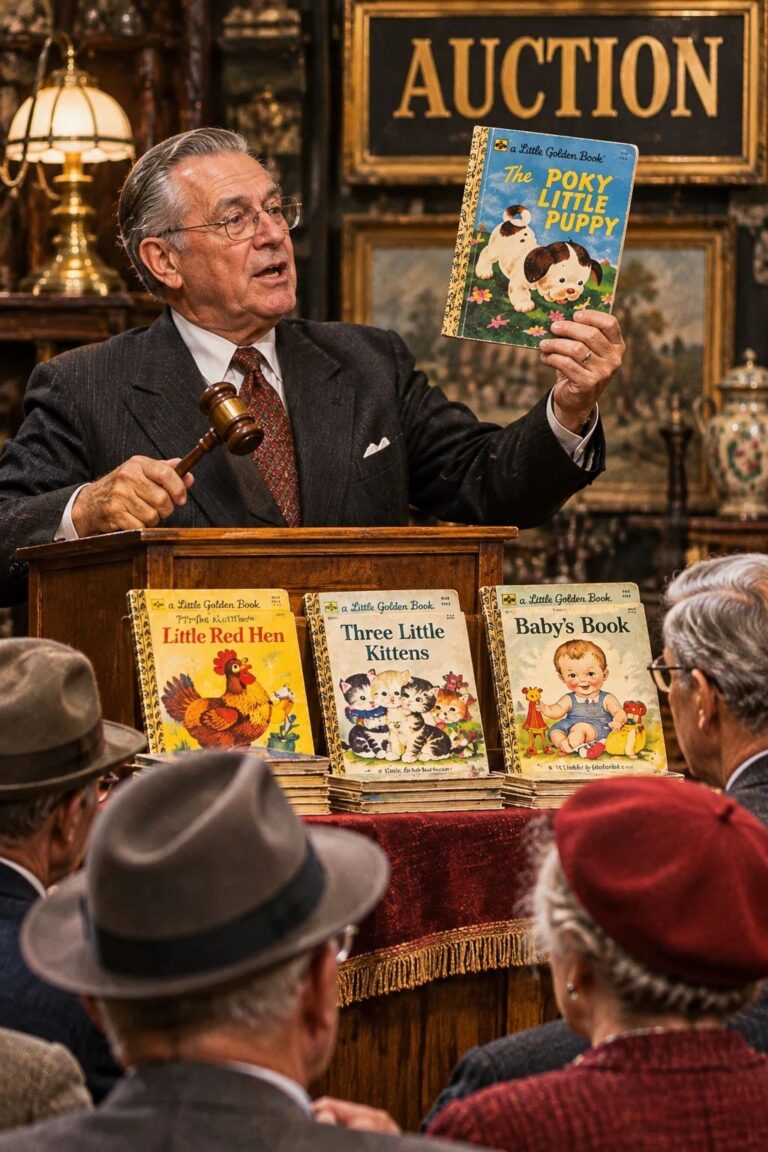
A more impressive example appeared in July 2026, when PBA Galleries sold 28 early Little Golden Books for $531.25, including the buyer’s premium. Published between 1942 and 1946, the collection featured various printings with their original dust jackets.
That same collection had not sold at a previous auction, even though the estimate was higher.
These results demonstrate why asking prices can be misleading. A seller might advertise a rare book for hundreds of dollars, but its true market value depends on what buyers are willing to pay.
For collectors, completed auction sales offer a much more reliable starting point than ambitious online listings.
Where to Find Rare Little Golden Books
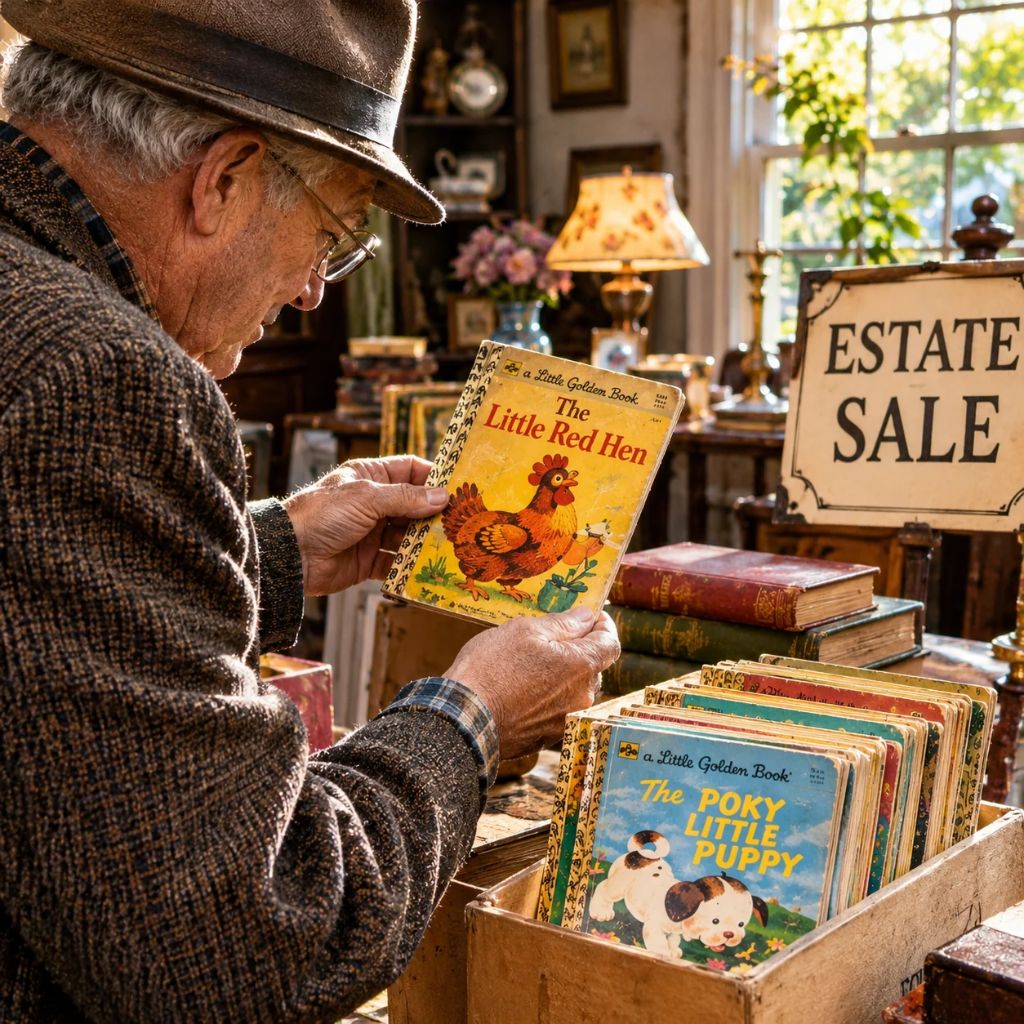
Some of the rarest Little Golden Books are discovered in places where nobody expects to find anything valuable. Estate sales, thrift stores, flea markets, and family collections can still turn up interesting early editions.
But fans who are good at what they do know that getting an old book is only half the fun. Before purchasing, examine its printing information, binding, and condition. A low price means little if the book has missing pages or extensive damage.
Online marketplaces offer additional opportunities. For example, eBay’s Little Golden Books listings provide a convenient way to compare available titles, editions, and asking prices.
As for estate sales, they sometimes have whole sets for sale instead of just one book. Buying several together can be economical, although collectors should inspect the contents carefully.
Experienced buyers also keep an eye on used bookstores and local auctions, where unusual editions occasionally appear among ordinary children’s books.
Above all, patience matters. The thrill of collecting isn’t simply owning something valuable. It’s recognizing a forgotten treasure that someone else might have overlooked.
How to Protect and Preserve Your Little Golden Books
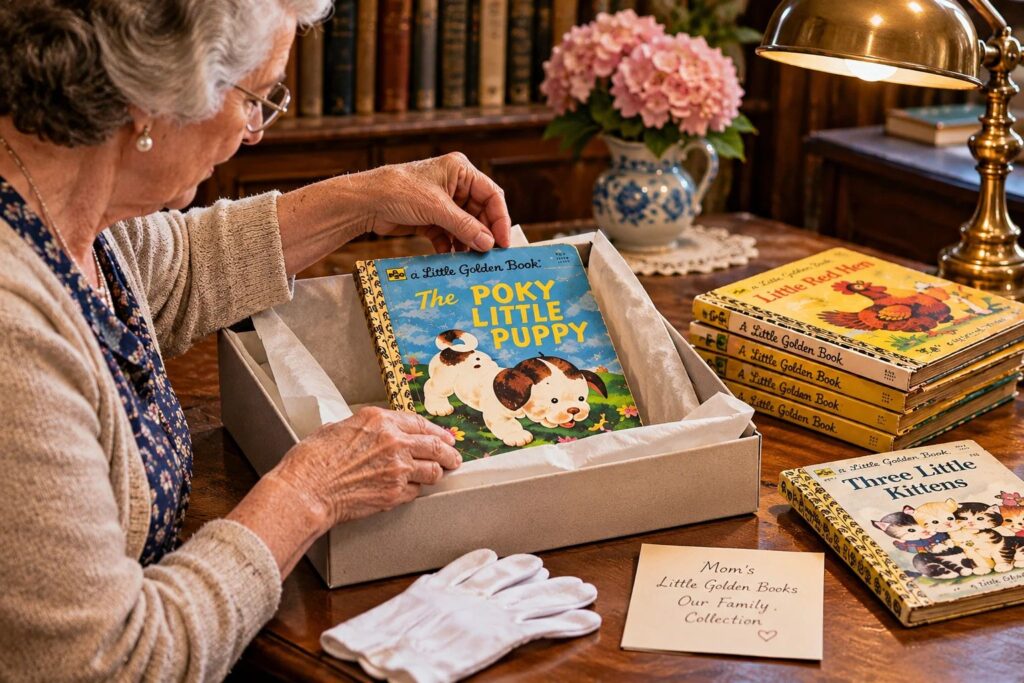
Those familiar golden spines may have survived decades of bedtime stories, family moves, and crowded bookshelves. Yet even the rarest Little Golden Books need proper care if they’re going to survive another generation.
Begin by storing your collection in a cool, dry environment away from direct sunlight. Excessive humidity encourages mold, while prolonged exposure to sunlight can fade those beautiful illustrated covers.
For valuable editions, consider acid-free archival enclosures that protect against dust and unnecessary handling. Meanwhile, books should be supported properly on shelves rather than squeezed tightly together.
The Library of Congress preservation guidelines provide practical advice for protecting books and paper collections.
Avoid household tape, glue, and cleaning chemicals when dealing with fragile editions. Even well-intentioned repairs can permanently damage original materials and reduce collector appeal.
When you handle older books, make sure your hands are clean and dry, and never try to force a weak binding open.
A carefully preserved Little Golden Book isn’t simply another collectible. It’s a small piece of American childhood history waiting to be passed along.
Frequently Asked Questions About Little Golden Books
You’ve probably discovered by now that the rarest Little Golden Books are more than forgotten childhood treasures. Some editions attract serious collectors, while others are valuable mainly for the memories they hold.
Still, identifying first printings, understanding collector values, and recognizing unusual editions can raise plenty of questions.
Let’s answer five of the questions collectors ask most often.
How Can I Tell If My Little Golden Book Is a First Edition?
Start by checking the copyright page and printing information. A 1942 copyright date doesn't necessarily mean your book was printed in 1942. Many Little Golden Books were reprinted for decades.
Depending on the publication period, a first printing may be identified by an edition statement or the letter A in a printing code. Compare your book's markings, cover, and binding with a reliable collector's identification guide before assuming it's a first edition.
Which Little Golden Books Are Worth the Most Money?
Some of the most desirable Little Golden Books are first printings of the original twelve titles published in 1942, particularly copies with their original dust jackets.
Titles such as The Poky Little Puppy, Three Little Kittens, and The Little Red Hen attract collector interest. However, their value depends on the exact printing, condition, rarity, and demand.
Rather than relying on advertised prices, compare completed sales of matching editions. A book listed for hundreds of dollars isn't necessarily selling for that amount.
Are Little Golden Books With Gold Spines Valuable?
Not necessarily. Although the decorative gold spine is one of the most recognizable features of Little Golden Books, millions of copies were produced with this familiar binding.
The earliest books from 1942 originally featured different bindings and illustrated dust jackets. Consequently, a gold spine alone doesn't establish a book's age, rarity, or value.
Collectors should examine the printing information, edition, cover artwork, and overall condition. An ordinary gold-spine edition might be worth only a few dollars, while a scarce early printing in excellent condition could command considerably more.
What's the Best Way to Sell a Collection of Little Golden Books?
Start by sorting your Little Golden Books by title, printing, and condition. Research completed sales to identify potentially valuable editions before deciding how to sell them.
Common books may be easier to sell together in small collections, while scarce first printings could attract more interest when listed individually.
Online marketplaces such as eBay offer access to collectors, while used bookstores, estate sales, and specialty book dealers provide alternatives.
Before accepting an offer, consider selling fees, shipping costs, and the time involved. For a potentially rare edition, consulting an experienced antiquarian bookseller may be worthwhile.
Are Little Golden Books Still Being Published Today?
Yes! Little Golden Books are still being published, more than eighty years after their introduction in 1942. Today's editions feature everything from beloved children's classics to popular movie and television characters.
However, modern copies generally don't carry the same collector appeal as scarce early printings. Even when the cover artwork looks identical, the printing history can make a tremendous difference.
For collectors, the real excitement lies in discovering an older edition that has survived decades of bedtime stories, little hands, and family bookshelves.
The Little Books That Left Big Memories
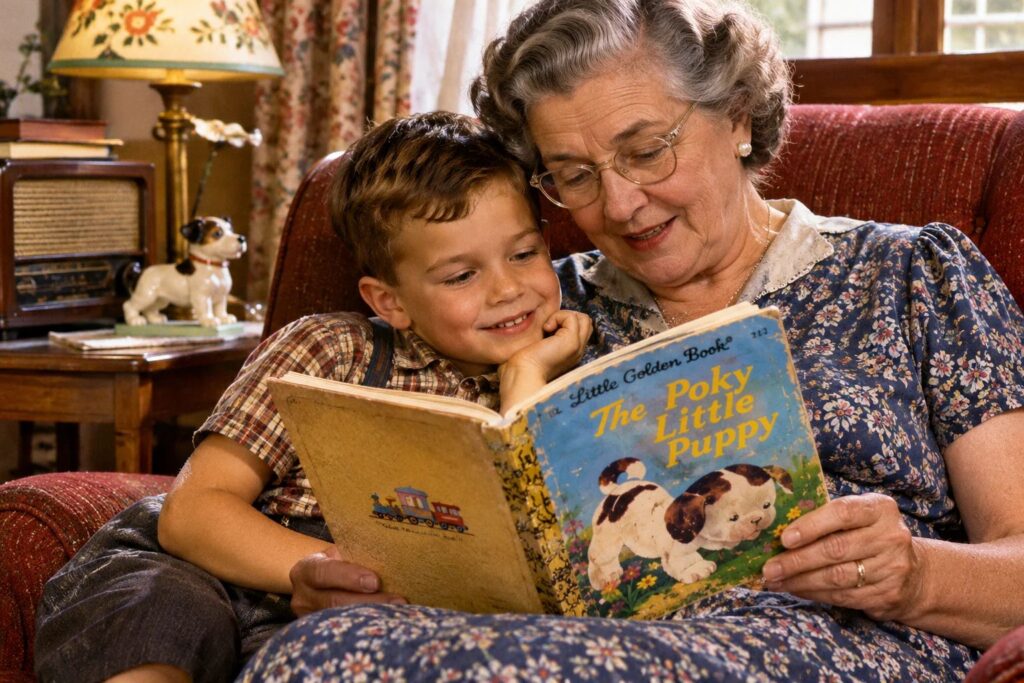
Somewhere in America, there’s probably an old Little Golden Book sitting in a cardboard box, its golden spine worn and its pages softened by generations of little hands.
Maybe it once belonged to a child who insisted on hearing the same story every night. And maybe there’s a name written inside the cover, along with a date that takes someone back fifty or sixty years.
That book might be worth five dollars or five hundred. Yet its greatest value may have nothing to do with what a collector would pay.
The rarest Little Golden Books remind us that ordinary things sometimes become extraordinary simply because they survive.
And somewhere, tucked between those familiar pages, a little piece of childhood is still waiting to be discovered.
Keep the Memories Going
Those little golden spines have a way of bringing childhood rushing back. But the memories don’t stop at the bookshelf. From forgotten games and treasured collectibles to the stories that shaped our younger years, there’s plenty more to rediscover at Nostalgia Nook Antiques.
When America Played Outside: The Forgotten Games of Childhood
Remember when sidewalks, alleys, and backyards were our playgrounds? Rediscover the simple games that filled our childhood afternoons.
The Allure of Vintage Books: A Collector’s Dream
From beautiful illustrations to well-worn bindings, discover why yesterday’s books still hold a special place in collectors’ hearts.
Cereal Box Collectables: When Sports Came With Your Breakfast
Remember digging through cereal boxes for a special prize? Revisit the sports collectibles that made breakfast an adventure.
How Memories of the Past Become Valuable Antiques
Discover how ordinary possessions become sought-after treasures as the years pass and yesterday’s memories find new admirers.
Turn back the pages to those magical catalogs filled with toys, dreams, and the excitement of childhood Christmas mornings.
The books may grow old, but the stories and memories they inspire never have to fade.

Every antique tells a story, and every tradition carries a memory. Our newsletter brings you closer to both, with inspiration, guides, and finds that make nostalgia part of your everyday life. Subscribe today and let the past brighten your future.