When America Played Outside: The Forgotten Games of Childhood
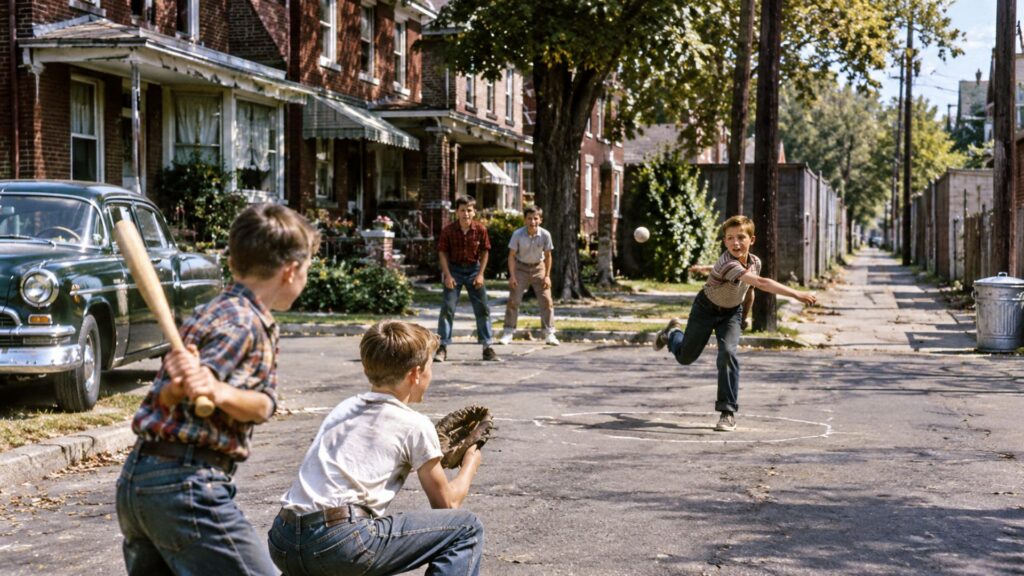
Forgotten childhood games once turned ordinary American neighborhoods into playgrounds filled with laughter, competition, and adventure. From Detroit’s narrow alleys to the sidewalks of small-town America, children found countless ways to entertain themselves without spending a dime.
Growing up in Detroit, I remember when the streets belonged to us, at least until a car came along. We didn’t need anyone to organize our afternoons. A few friends, a little imagination, and whatever we could find around the neighborhood were usually enough to get a game started.
Some games, like kick the can, marbles, and hide-and-seek, were familiar across the country. Others were invented by neighborhood kids and known only to a handful of friends. We even had one we called Kick the Bow-heim, a game involving discarded glass bottles that I have never forgotten.
Of course, those carefree afternoons weren’t entirely free of scraped knees, broken glass, or arguments over the rules. Nevertheless, we learned to settle our differences, make new friends, and discover what we could accomplish on our own.
As neighborhoods changed and childhood entertainment moved increasingly indoors, many of those outdoor traditions faded from everyday life.
Yet the memories remain remarkably vivid. The sound of a bouncing ball against the pavement, the distant call of a mother announcing supper, and the excitement of one more game before heading home still remind us of an America worth remembering.
When America Played Outside
The Forgotten Games of Childhood
Watch Our Nostalgic Journey Below
These forgotten childhood games were more than ways to pass an afternoon. They brought neighborhood kids together, sparked imagination, and turned ordinary streets and vacant lots into places of adventure. Some games disappeared with time, while others became memories we still carry decades later.
Forgotten Childhood Games: When the Neighborhood Was Our Playground
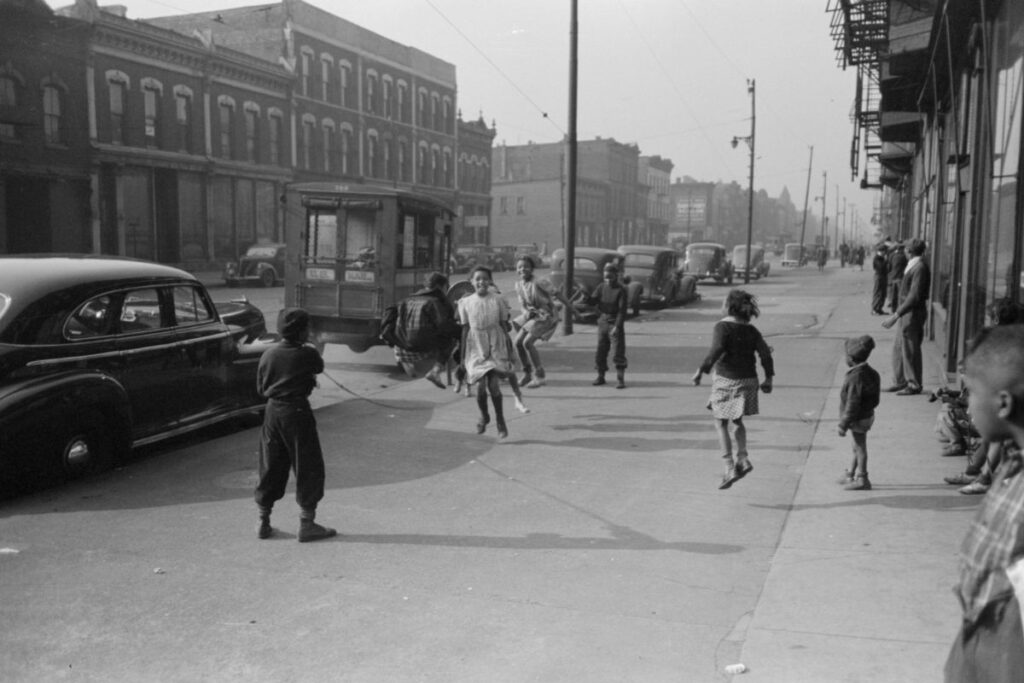
In the 1950s and 1960s, neighborhood streets were more than routes for automobiles. For countless American children, they were baseball diamonds, racing tracks, and gathering places where friendships developed one afternoon at a time.
Growing up in Detroit, we had plenty of places to explore. Sidewalks became starting lines, telephone poles served as landmarks, and the alleys behind our houses offered endless opportunities for adventure. Whenever enough kids gathered, somebody suggested a game, and the afternoon was underway.
Unlike organized sports, our neighborhood games rarely required uniforms, schedules, or adult supervision. We made up teams, argued over boundaries, and occasionally changed the rules when things weren’t going our way.
Our parents and neighbors, however, were usually able to locate us. We might be several houses down the street, around the corner, or in an alley playing another game.
The National Museum of Play preserves the history of play and reminds us how games have shaped childhood across generations.
What made those afternoons memorable wasn’t the equipment or even who won. It was the freedom to turn an ordinary neighborhood into a world of our own.
Kick the Can and the Games We Invented
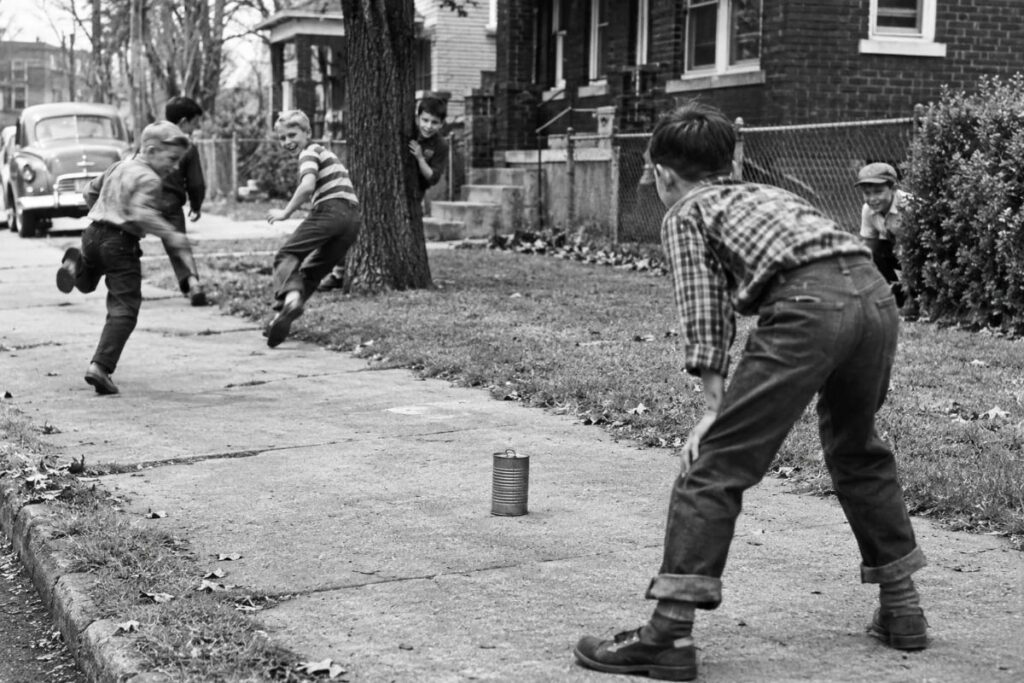
Among the forgotten childhood games that once filled American neighborhoods, kick the can was a favorite. Combining elements of hide-and-seek and tag, it required little more than an empty can, a few willing players, and enough room to run.
One child guarded the can while everyone else scattered to hiding places. The guard searched for players, attempting to catch them before somebody could race back and kick the can, freeing those already captured. Rules varied from neighborhood to neighborhood, which made every game a little different.
Naturally, the excitement grew whenever someone made a daring run toward the can. A successful kick could send everybody scrambling, while the unlucky guard had to begin the chase again.
Yet kick the can was only one example of childhood ingenuity. Across America, youngsters invented games using whatever their neighborhoods provided. Empty lots became ballfields, sidewalks became competition grounds, and ordinary discarded objects sometimes inspired entirely new challenges.
In my Detroit neighborhood, a small group of friends had a game of our own. We called it Kick the Bow-heim.
And unlike the ordinary kick-the-can, ours involved glass bottles, a good kicking foot, and the constant possibility of being eliminated by a broken bottle.
Kick the Bow-heim: A Detroit Childhood Memory
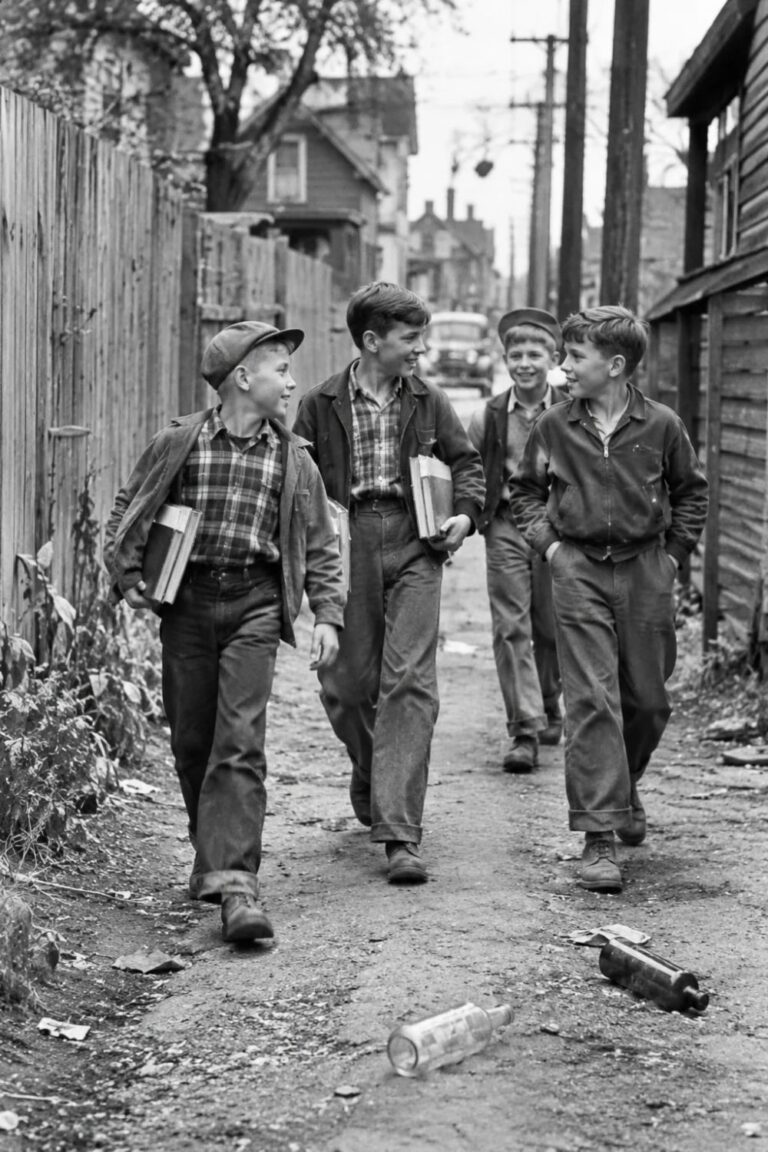
Growing up in Detroit, my friends and I had a game we called Kick the Bow-heim. At least, that’s how I remember the name sounding. I’m not even certain how we spelled it, and I doubt many people outside our little circle ever heard of it.
The game was simple. We’d find discarded glass bottles in the neighborhood alleys, get a foot underneath one, and send it flying as far as we could. If your bottle broke, you were out. Otherwise, we just kept going.
We played on our way to school, coming home, or whenever we happened to be wandering around the neighborhood. Nobody organized anything. There weren’t any trophies, and I don’t remember anyone worrying much about who won.
Looking back, kicking glass bottles certainly wasn’t the safest pastime. In any case, we didn’t really think about what we were doing.
I sometimes wonder whether those old Detroit alleys still look anything like they did back then.
The name might have faded from memory, but the afternoons spent with those neighborhood friends never have.
Marbles, Hopscotch, and Sidewalk Competition
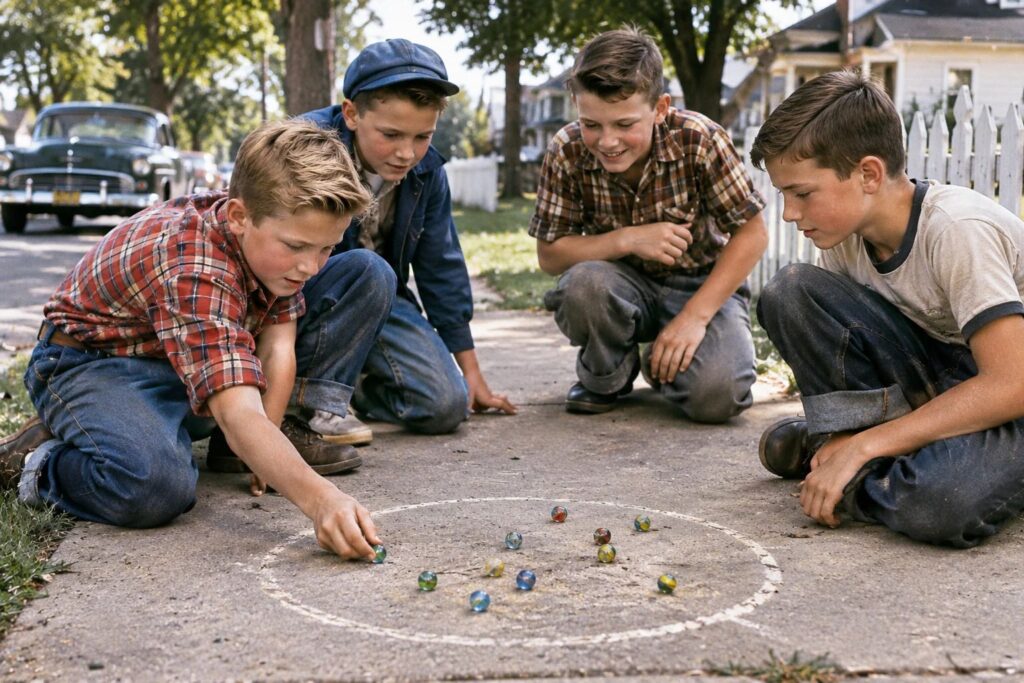
Not every childhood adventure required an entire street. Sometimes, a patch of sidewalk or a small circle scratched into the dirt provided all the entertainment anyone needed.
Marbles were serious business for many American youngsters. Players carefully aimed their favorite shooters at colorful glass marbles arranged inside a ring. Depending on the neighborhood rules, a successful shot might earn bragging rights or even another player’s prized marble.
Meanwhile, hopscotch transformed ordinary sidewalks into numbered playing fields. With a piece of chalk and a small stone, children tested their balance, coordination, and patience while hopping through squares without stepping on the lines.
Although the equipment was simple, the competition could be surprisingly intense. Arguments over whose turn came next were common, particularly when someone insisted a foot had touched the wrong square.
Beyond the competition, these games encouraged children to develop skills through practice rather than instruction. A good marble shooter learned precision, while an experienced hopscotch player mastered balance and timing.
For a closer look at how traditional play became part of American childhood, the Strong National Museum of Play preserves an extensive collection of historic toys, games, and play-related artifacts.
Whether played on a school playground or a neighborhood sidewalk, these simple pastimes made an ordinary afternoon memorable.
Baseball in the Street and Football in the Yard
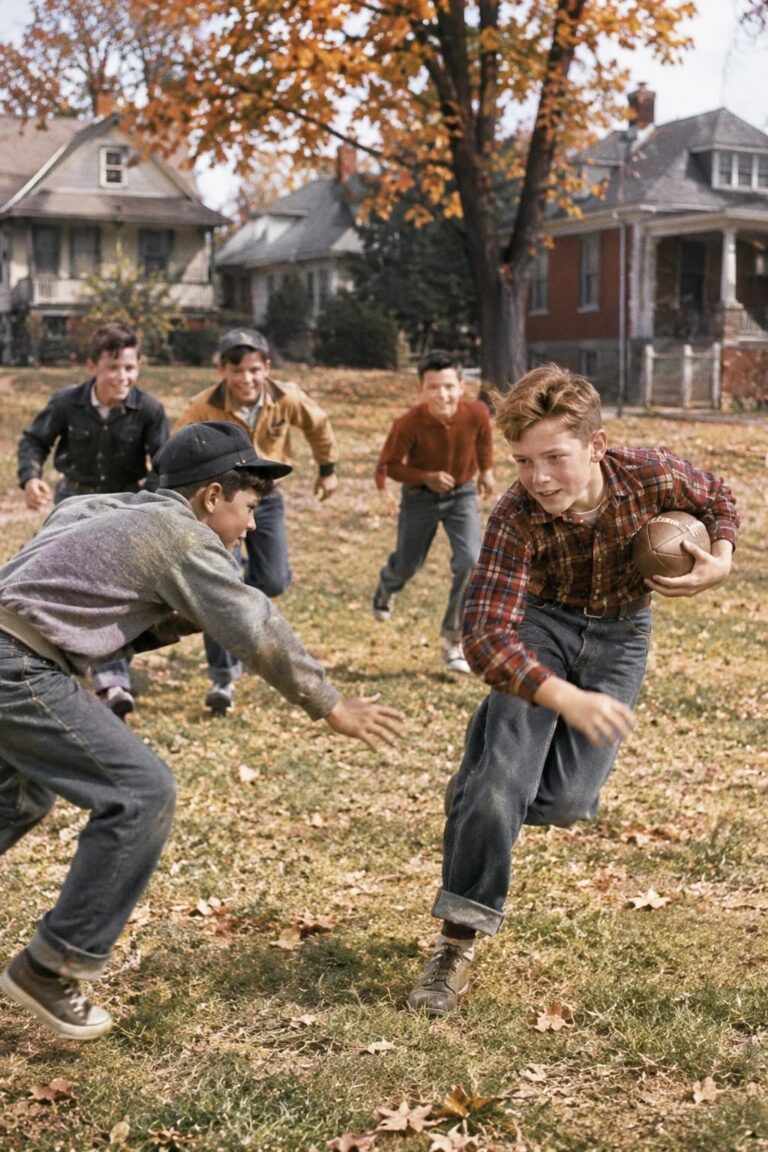
For generations of American youngsters, baseball and football weren’t limited to school teams or organized leagues. Neighborhood kids played wherever they could find enough room, whether that meant an empty lot, a backyard, or the middle of a residential street.
Street baseball came with its own peculiar rules. A sewer cover might serve as home plate, a telephone pole could mark the outfield, and a ball landing in somebody’s yard sometimes meant an automatic out. Naturally, every neighborhood had its own interpretation of fair territory.
Football was equally adaptable. Two jackets marked the goal line, teams were chosen on the spot, and a game of touch football could quickly turn into an argument over whether somebody had actually been tagged.
Occasionally, a passing automobile interrupted the action. Everyone moved aside, waited for the driver to pass, and resumed playing as though nothing had happened.
Although professional athletes inspired plenty of backyard dreams, neighborhood games were rarely about becoming famous. They were about playing alongside friends, learning teamwork, and enjoying the competition.
The National Baseball Hall of Fame preserves the history of America’s national pastime, including the traditions that helped make baseball part of everyday American life.
For countless children, the neighborhood itself was the playing field, and that was more than enough.
Hide-and-Seek, Tag, and Summer Evenings
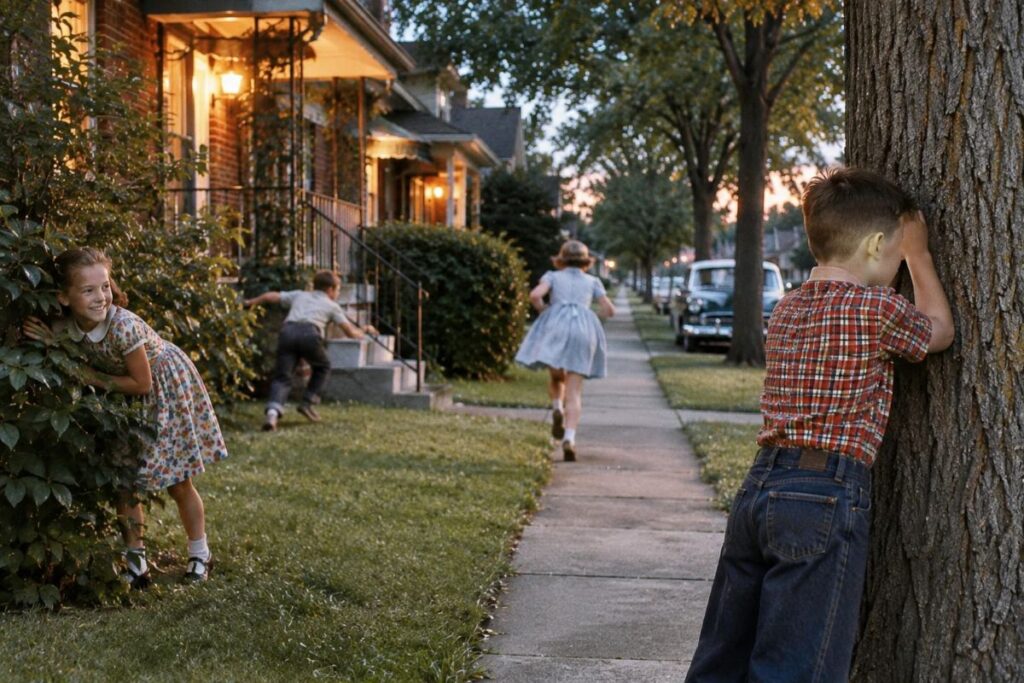
Summer evenings had a special kind of magic in American neighborhoods during the 1950s and 1960s. As the afternoon heat faded, children gathered for another round of hide-and-seek, tag, or whatever game somebody suggested.
Hide-and-seek was especially popular because almost any neighborhood offered plenty of hiding places. Behind a garage, beside a porch, or around a backyard shed, there was always somewhere to disappear while one unlucky player counted with eyes closed.
For the more energetic youngsters, tag kept everybody moving. Sometimes the rules changed halfway through the game, turning ordinary tag into freeze tag or another neighborhood variation.
As daylight began to disappear, the games often became even more exciting. Shadows grew longer, familiar hiding places became harder to spot, and every unexpected sound could send someone running.
Meanwhile, porch lights flickered on, screen doors opened, and mothers began calling their children home for supper. Of course, there was usually somebody pleading for just five more minutes.
Those evenings weren’t measured by television schedules or organized activities. Instead, they followed the rhythm of the neighborhood and the friendships that brought everyone together.
Long after the games ended, the memories of those summer nights remained.
What Playing Outside Taught a Generation
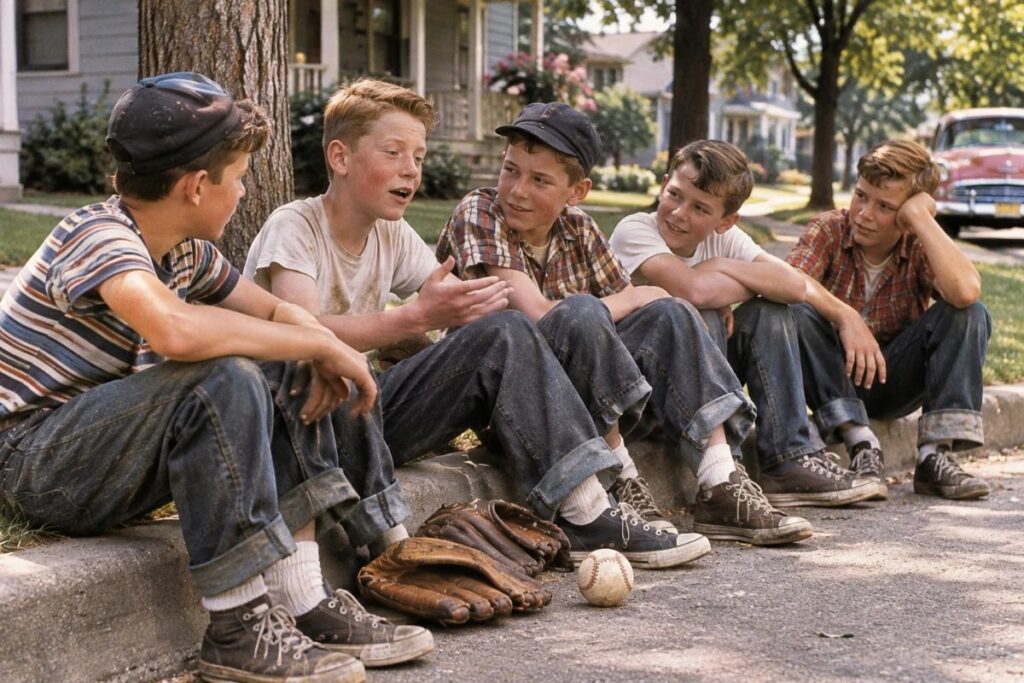
The forgotten childhood games of yesterday offered something that couldn’t be measured by a scoreboard. While we were busy chasing baseballs, hiding behind garages, and racing down sidewalks, we were learning how to get along with other people.
For one thing, neighborhood games required cooperation. Somebody had to choose teams, explain the rules, and settle disagreements. When arguments erupted, as they inevitably did, we usually had to work things out ourselves if we wanted the game to continue.
Equally important, losing was part of the experience. Not everybody could be the best marble shooter, the fastest runner, or the neighborhood baseball hero. Even so, there was always another afternoon and another opportunity to try again.
Those experiences also encouraged independence. We learned to make decisions, solve ordinary problems, and entertain ourselves without someone planning every minute of the day.
Researchers continue to examine the relationship between children’s play and healthy development. The American Academy of Pediatrics recognizes play as an important part of children’s physical, social, and emotional development.
Looking back, I doubt any of us considered those afternoons educational. We were simply having fun.
Yet some of the lessons stayed with us long after the games were forgotten.
The Childhood Games Worth Remembering
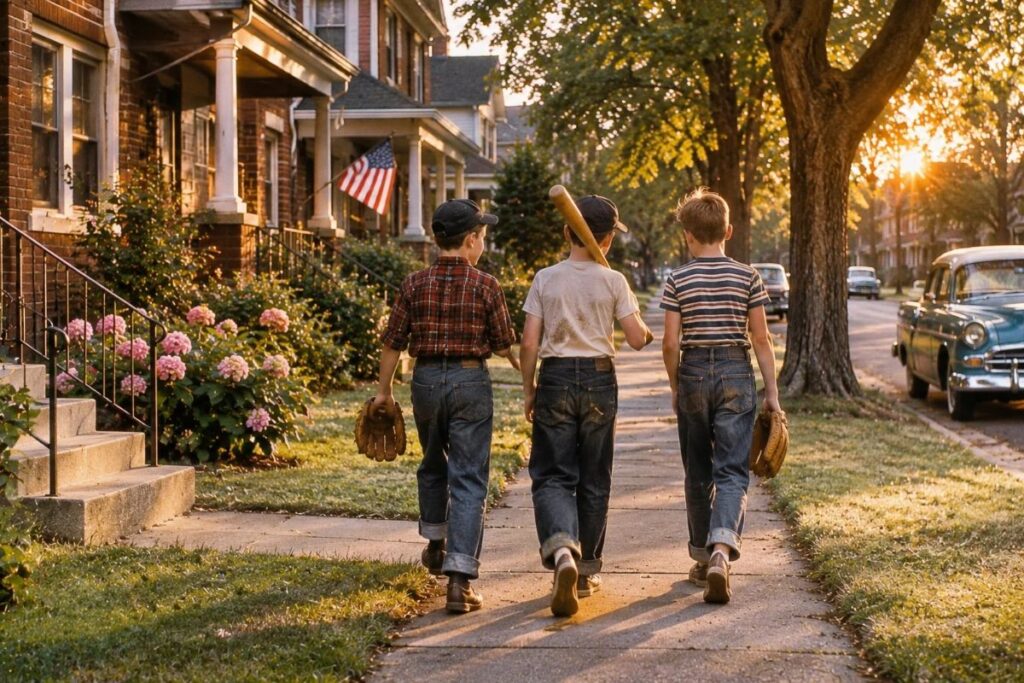
The forgotten childhood games of America’s past may no longer fill neighborhood streets as they once did, but their memories remain remarkably strong.
Somewhere, there’s still an old baseball glove tucked away in a closet, a forgotten bag of marbles in a drawer, or a photograph of neighborhood friends standing together on a summer afternoon. Such ordinary things have a way of bringing entire chapters of our lives back into focus.
For me, those memories lead straight to Detroit. I can still picture the alleys, the sidewalks, and the friends who made growing up there an adventure. Even our little game of Kick the Bow-heim, known to only a handful of us, has stayed with me all these years.
Certainly, childhood wasn’t perfect. We argued, scraped our knees, occasionally got into trouble, and sometimes learned lessons the hard way. Nevertheless, those experiences became part of who we were.
Perhaps the greatest thing about those afternoons was how little we needed to enjoy them. We had our neighborhoods, our imaginations, and one another.
And somewhere in those memories, I can almost hear the familiar voices of old friends calling for one more game.
What games did you play growing up? Were they familiar favorites, or did your neighborhood invent something entirely its own?
I’d love to hear your memories.
Keep the Memories Going
Those neighborhood games were only one part of growing up in America. From treasured toys and breakfast-table surprises to baseball heroes and family traditions, everyday experiences created memories that lasted a lifetime. There’s plenty more to rediscover at Nostalgia Nook Antiques.
The Christmas Toy Catalogs That Made Childhood Magical
Remember the excitement of turning catalog pages, circling favorite toys, and dreaming about what might arrive on Christmas morning.
Cereal Box Collectibles: When Sports Came with Your Breakfast
Revisit the colorful cereal boxes, surprise prizes, and sports legends that made breakfast something to look forward to.
How to Start Your Vintage Sports Memorabilia Collection
Rediscover the baseball cards, team souvenirs, and sporting treasures that connected young fans with their favorite heroes.
Do Rotary Phones Still Work? A Modern Guide
Remember the familiar ringing telephone, the spinning dial, and the days when every household conversation began with picking up the receiver.
Preparing for Winter: How Americans Did It Long Ago
Return to the seasonal routines, family traditions, and neighborhood cooperation that helped Americans prepare for the colder months.
The games may have ended, but the memories still live on at Nostalgia Nook Antiques.