Home » Product Reviews » Candy Land Review: Is This 1949 Classic Still Worth Buying?
Candy Land Board Game Review: Is This 1949 Classic Still Worth Buying?
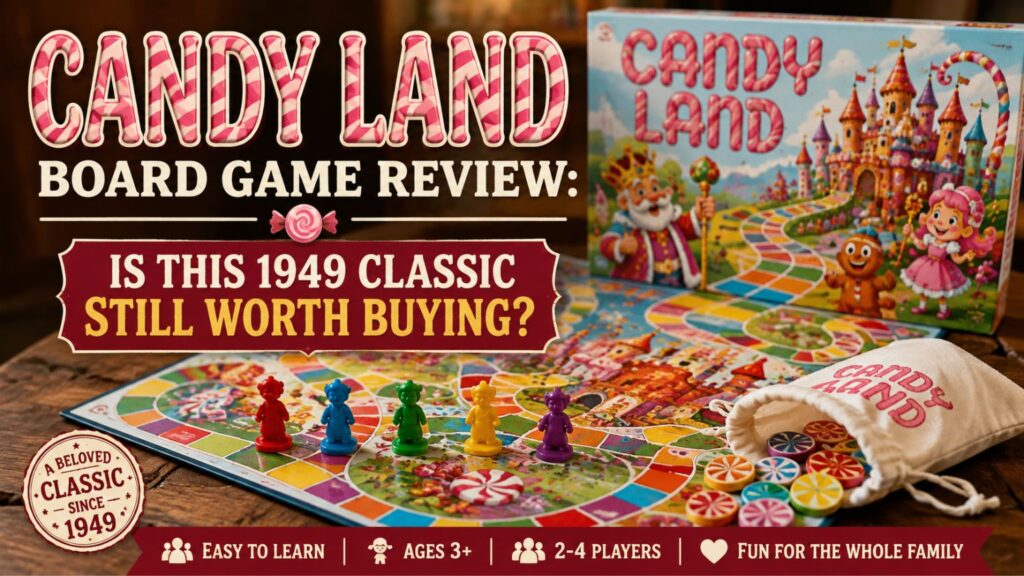
Candy Land Review: This classic board game has been part of American childhood since 1949, guiding generations of children along its colorful path toward a candy-filled finish. For generations, children have followed its colorful path toward a candy-filled finish, often before they were old enough to read the instructions themselves.
However, nostalgia alone doesn’t make a board game worth buying today.
Candy Land has changed considerably over the years. The artwork has evolved, familiar characters have come and gone, and the newest edition introduces some surprising changes to the game many parents and grandparents remember.
Still, the basic appeal remains wonderfully simple. Young children can recognize colors, take turns, move their pieces, and experience the excitement—and occasional disappointment—of trying to reach the finish first.
So, is Candy Land still a good first board game for today’s children, or are we simply buying a sweet memory from our own childhood?
In this Candy Land Board Game review, we’ll find out. We’ll look at the game’s remarkable history, examine today’s version, consider its pros and cons, and decide whether this 1949 classic still deserves a place in the family toy box.
Affiliate Disclosure: As an Amazon Associate, Nostalgia Nook Antiques earns from qualifying purchases. This does not affect the price you pay.
Watch Our Candy Land Review
Prefer to watch? Take a few minutes to revisit Candy Land’s surprising history, simple gameplay, family appeal, and our final verdict in this Nostalgia Nook Antiques video.
The Surprising Story Behind Candy Land
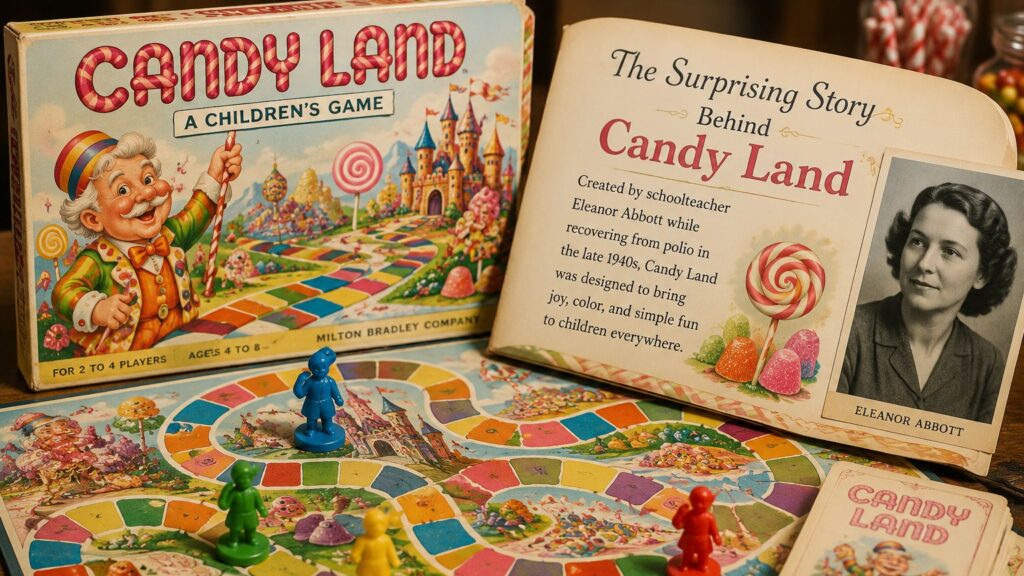
Candy Land has a much more meaningful beginning than its sugary theme might suggest.
In the late 1940s, schoolteacher Eleanor Abbott was recovering from polio in a San Diego hospital. During her recovery, she designed a simple game that children could enjoy together. Many of those children were also recovering from polio, and the game offered them an imaginary journey far beyond the hospital walls.
Because the rules required no reading, even very young children could play. Players simply followed colors along a winding path toward a fantasy destination. As a result, the game was easy to understand at a time when many children’s games were designed for older players.
Abbott eventually submitted her creation to Milton Bradley, and Candy Land was introduced commercially in 1949. Before long, its colorful path became familiar in American homes.
However, its lasting appeal wasn’t built on strategy. Instead, Candy Land gave small children something more basic: a chance to play a board game on their own terms.
More than 75 years later, that simple idea remains at the heart of Candy Land.
What Do You Get With Candy Land Today?
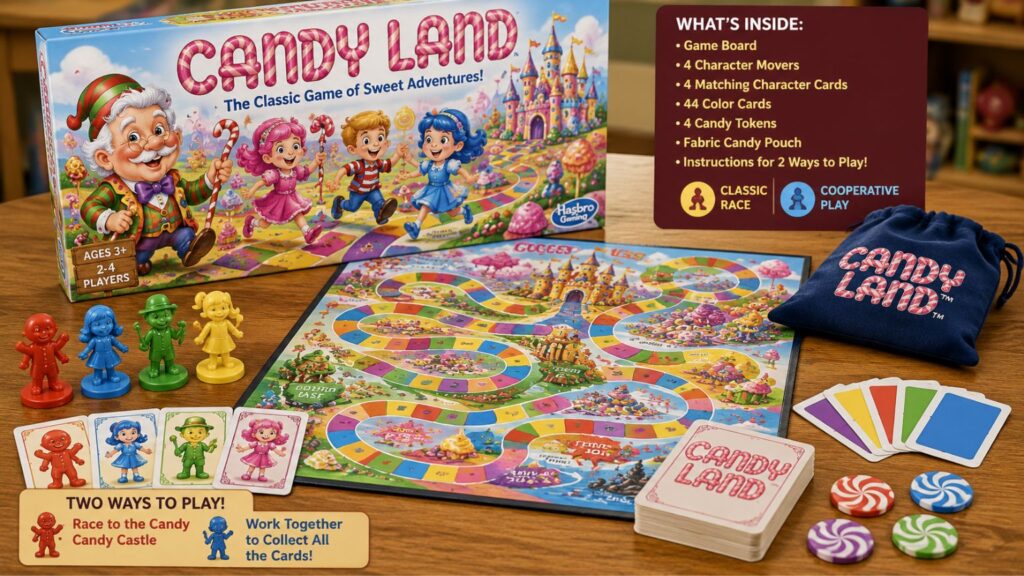
Today’s Candy Land is still designed around the same idea that made the original so approachable: children don’t need to read to join the fun.
However, the current edition of Candy Land isn’t simply the old game in a new box. Hasbro has refreshed the experience with updated artwork, colorful character movers, candy tokens, and a fabric pouch used during play. The board is also larger, measuring about 20 by 20 inches when opened.
Perhaps the biggest surprise is the addition of two ways to play. Families can choose the familiar competitive game, where everyone races toward the finish, or try a cooperative version that encourages children to play together toward a shared goal.
Even with those changes, Candy Land remains intentionally simple. It’s made for 2–4 players ages 3 and up, and a game can often be completed in about 10 minutes.
That’s an advantage with preschoolers. After all, sometimes the best children’s game is the one you can actually finish before somebody decides they’d rather build a fort with the box.
How Does Candy Land Actually Play?
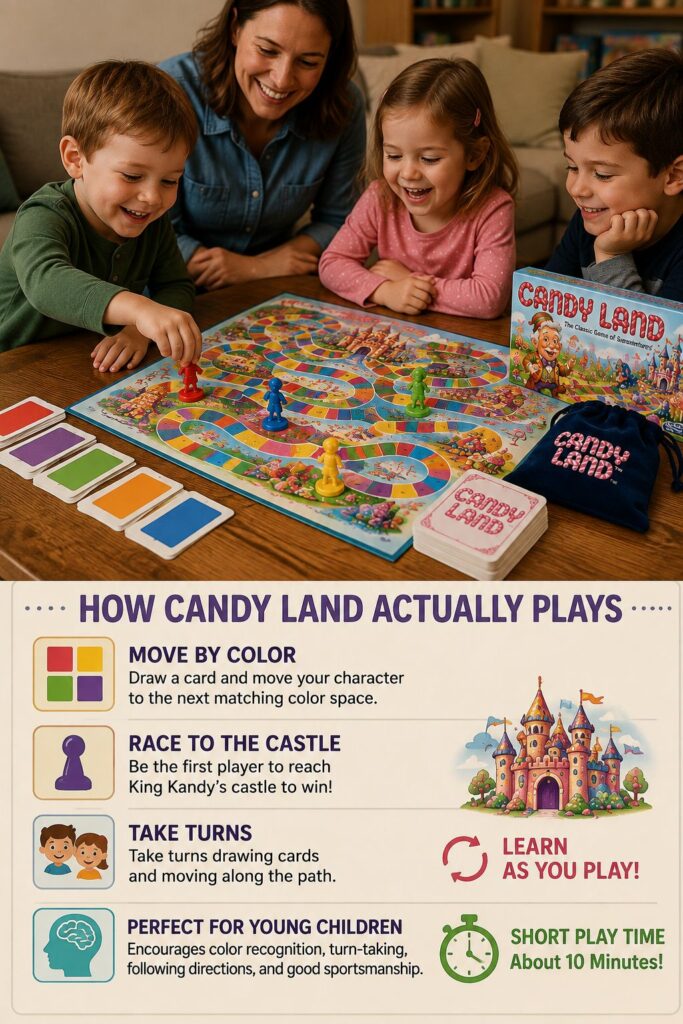
Candy Land has never been about complicated strategy. In fact, that’s one of the main reasons it has survived for generations.
The basic idea is simple: children move along a colorful path toward the finish. Because movement is determined by colors rather than reading, counting, or complicated instructions, preschoolers can understand the game surprisingly quickly.
However, adults should know what they’re getting. There aren’t many meaningful decisions to make, so older children may lose interest in games involving more strategy or competition. For a three- or four-year-old, though, that simplicity can be exactly the point.
Candy Land also gives young players some early practice with taking turns, following directions, recognizing colors, and—perhaps most importantly—learning that they won’t always win.
Meanwhile, the short playing time helps prevent the game from wearing out its welcome. A typical round can be finished in roughly 10 minutes, which makes it practical for families with younger children.
So, Candy Land isn’t going to challenge the family chess champion. Then again, the family chess champion probably isn’t three years old.
What Can Young Children Learn From Candy Land?
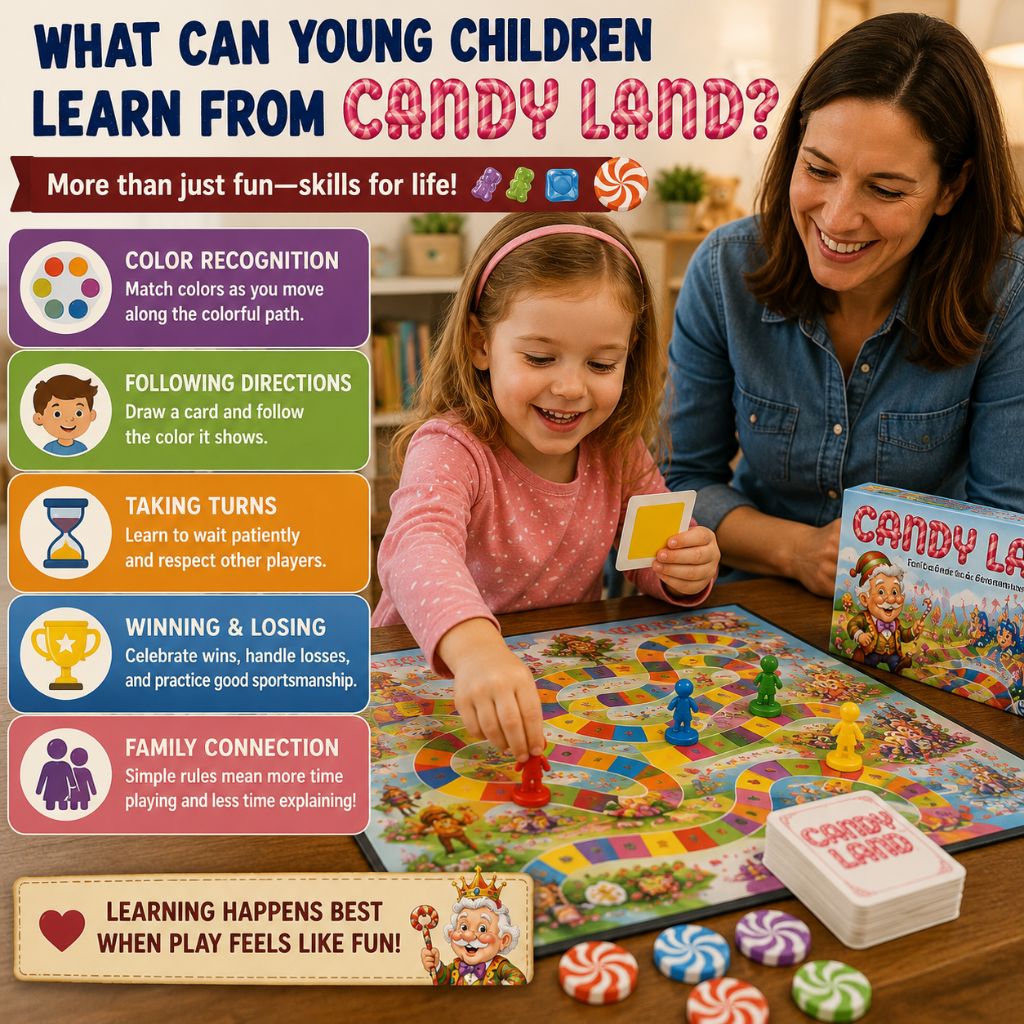
Candy Land isn’t an educational game in the traditional sense. However, young children can practice several useful skills without realizing they’re learning anything at all.
First, the colorful path encourages color recognition and matching. Children also practice following simple directions and waiting for their turn. Those skills may sound basic to an adult, but they’re important milestones for preschoolers who are just beginning to play games with other people.
Perhaps the bigger lesson, though, has nothing to do with colors.
Candy Land introduces children to winning and losing. Sometimes they’ll race ahead. Other times, they’ll watch another player reach the finish first. As a result, parents have an easy opportunity to introduce patience and good sportsmanship.
The game can also encourage family interaction because adults don’t need to spend half the evening explaining complicated rules.
Still, Candy Land shouldn’t be mistaken for a serious learning tool. Its educational value comes mainly from playing together, following rules, recognizing colors, and taking turns.
Sometimes that’s plenty—especially when you’re three.
Candy Land Review: Pros and Cons
As this Candy Land review shows, the game does some things remarkably well, especially for its intended age group. However, its greatest strength—simplicity—is also its biggest weakness.
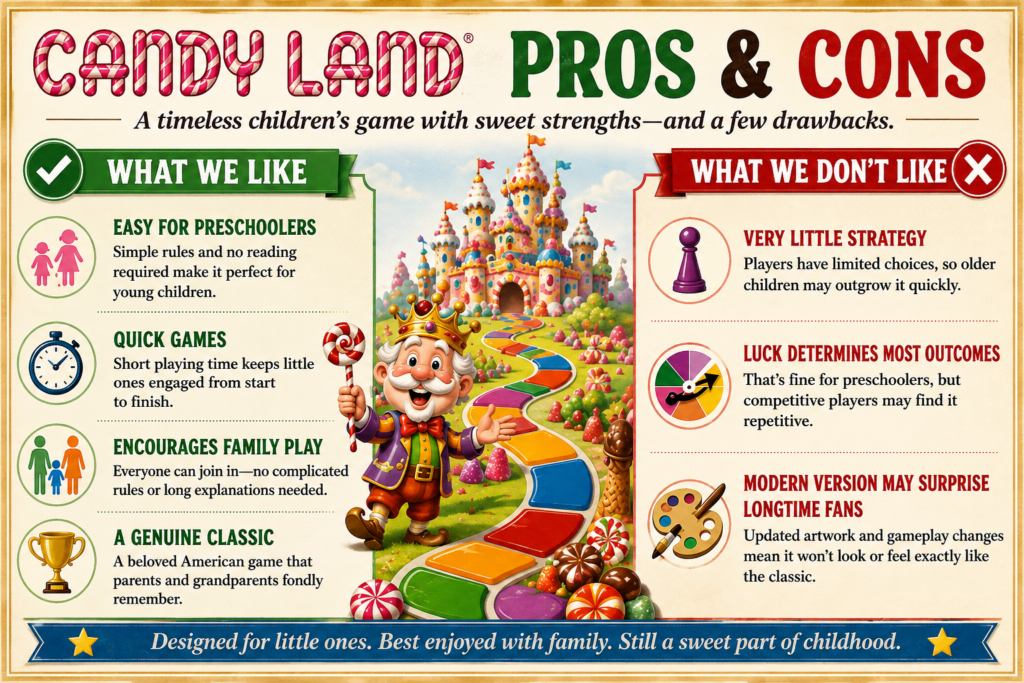
What We Like
Easy for preschoolers to understand. Because children don’t need strong reading or counting skills, they can begin playing at a very young age.
Quick games. A short playing time is a major advantage when you’re dealing with three- and four-year-old attention spans.
Encourages family participation. Parents, grandparents, and older siblings can easily join without spending 20 minutes explaining the rules.
A genuine American classic. There’s something special about introducing a child to a game that parents and grandparents may remember playing themselves.
What We Don't Like
Very little strategy. Players have limited control over what happens, so older children may quickly outgrow the game.
Luck determines much of the outcome. That’s fine for preschoolers, but competitive older children and adults may find it repetitive.
The modern version may surprise longtime fans. Updated artwork and gameplay changes mean it won’t look or feel exactly like the Candy Land many adults remember from childhood.
Still, those drawbacks need some perspective. Candy Land isn’t trying to compete with sophisticated family strategy games. It’s designed to give very young children a place at the game table—and at that job, it remains remarkably effective.
Who Is Candy Land Best For?
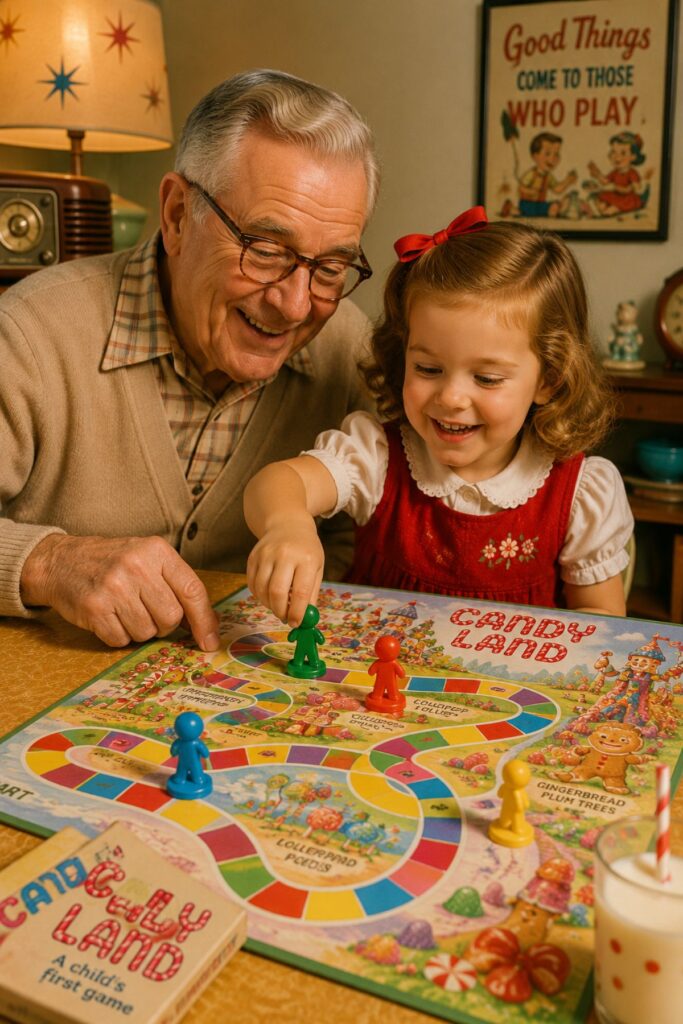
Candy Land is at its best when it’s treated as a first board game, not as a game children are expected to enjoy for years.
For preschoolers around ages three to five, our Candy Land review found that the simple rules are a major advantage. Because children don’t need to read, keep score, or understand strategy, they can concentrate on matching colors, taking turns, and enjoying the race to the finish.
It’s also a good choice for parents and grandparents looking for a game they can play with young children. Since a round is short, Candy Land works well for an afternoon visit, a rainy day, or a quick family game before bedtime.
However, I wouldn’t recommend buying it primarily for older children. Once kids become interested in making choices, planning moves, or outsmarting another player, Candy Land may feel too dependent on luck.
Still, that doesn’t make it a bad game. Instead, it simply means Candy Land knows its audience. After all, a game designed for preschoolers doesn’t need to entertain a twelve-year-old.
Finally, there’s another buyer who shouldn’t be overlooked: the nostalgic adult who remembers following that colorful path as a child. Giving Candy Land to a new generation can turn an inexpensive board game into something more meaningful—a childhood memory passed from one generation to the next.
Is Candy Land Worth the Money?
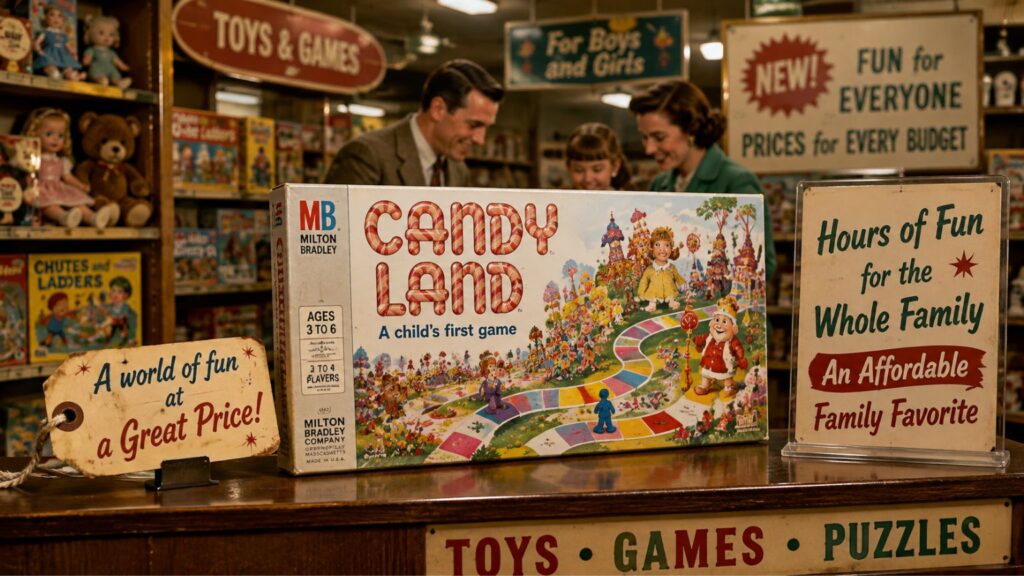
Candy Land has one advantage that’s easy to overlook: it’s an inexpensive way to introduce a young child to board games.
Because the game is simple, families don’t need extra pieces, expansions, or accessories to enjoy it. Open the box, learn the basic rules, and children can usually start playing within minutes.
However, one thing became clear during our Candy Land review: value depends heavily on the age of the child. For a three- or four-year-old who is just discovering board games, Candy Land can provide plenty of family play for a relatively small investment. Better yet, younger brothers, sisters, cousins, and grandchildren may eventually inherit it.
On the other hand, a seven- or eight-year-old who already enjoys games involving choices and strategy may outgrow Candy Land quickly. In that situation, even a low price doesn’t necessarily make it a good value.
There’s also something harder to put a price on. Parents and grandparents aren’t simply buying cardboard and game pieces. In many cases, they’re buying an opportunity to share something they remember from childhood.
So, is Candy Land worth the money?
For families with preschool-age children, I think it is. Just make sure you’re buying it for the child who’s ready for Candy Land today—not the older child who has already moved beyond it.
Prefer the Candy Land you remember? The 65th Anniversary Edition brings back a more traditional look and feel, making it our preferred choice for nostalgic buyers.
How Does Today’s Candy Land Compare With the Classic?
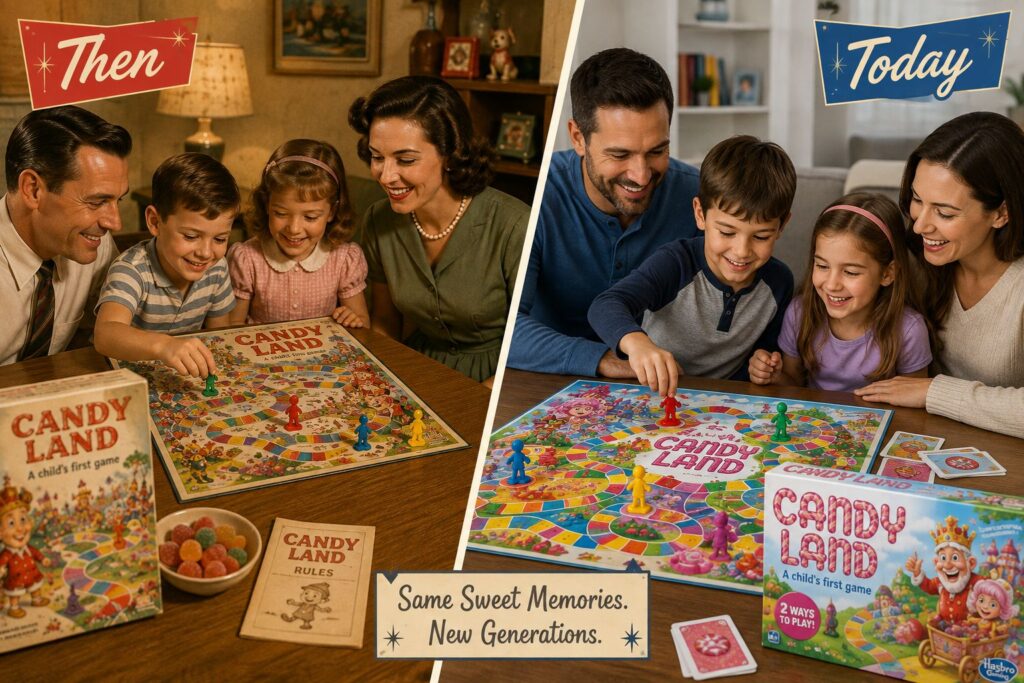
If you haven’t played Candy Land since childhood, today’s version may not look exactly the way you remember it.
Over the decades, the artwork, characters, and presentation have changed considerably. However, the central idea has survived: young children still travel through a brightly colored fantasy world using simple, easy-to-understand gameplay.
The latest Hasbro edition goes further by introducing updated components and more than one way to play. This means longstanding fans may detect variations nearly instantly. Some will welcome the changes, while others may prefer the simpler Candy Land they remember.
Still, I wouldn’t judge the current game solely by whether it perfectly recreates an older edition. After all, the real question is whether today’s Candy Land works for today’s preschoolers.
For the most part, it does.
The colorful theme remains inviting, the rules remain approachable, and families can still sit down together without studying an instruction manual first.
So, while the scenery has changed, Candy Land hasn’t forgotten what made it successful: giving little kids a board game they can call their own.
Candy Land vs. Other First-Board Games
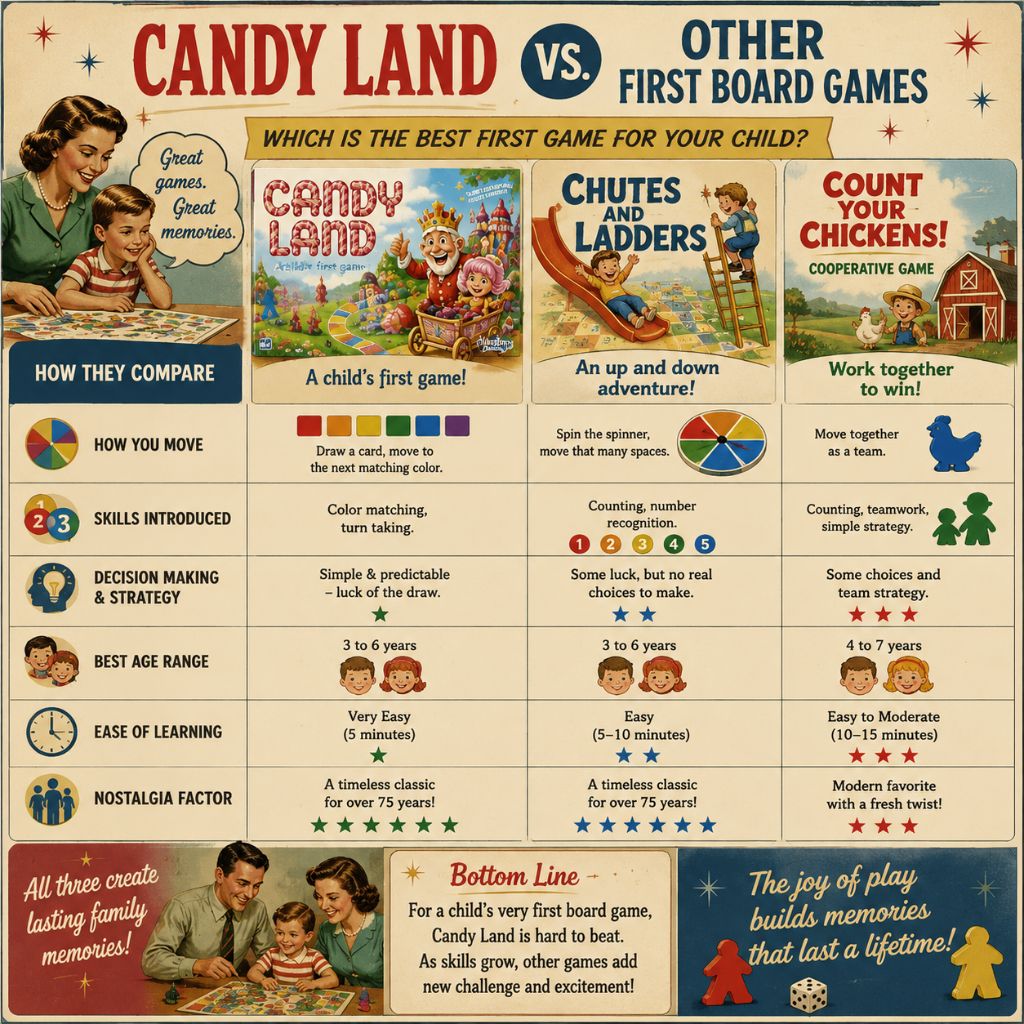
Throughout this Candy Land review, one advantage has remained clear: Candy Land is still one of the easiest board games for young children to learn. However, it remains one of the easiest places to start.
Unlike games that require counting spaces or recognizing numbers, Candy Land relies heavily on colors. So, kids who aren’t good at reading or counting can still join in without an adult helping them out all the time.
Chutes and Ladders, for example, is another longtime family favorite. It introduces counting and numbers, which may give it an educational advantage for some children. On the other hand, Candy Land is generally easier for a very young beginner to understand.
More modern preschool games may offer greater interaction, decision-making, or educational content. Still, they don’t necessarily offer Candy Land’s greatest advantage: generations of parents and grandparents already know what it is.
So, which should you choose?
For a child’s very first board game, Candy Land remains an excellent candidate. Later, as counting and decision-making skills develop, families can move on to games offering more challenge.
In other words, Candy Land doesn’t need to be the best children’s game forever. It only needs to be a very good first one.
Final Verdict: Is Candy Land Still Worth Buying?
After taking a close look throughout this Candy Land review, one thing is clear: the game still does something remarkably well—it gives very young children a board game they can understand and enjoy.
No, it isn’t strategic. In fact, older children may outgrow it rather quickly. However, judging Candy Land by the standards of a sophisticated family game misses the point. This was created as a game for little kids, and that’s still where it shines.
The current edition changes some things longtime players will remember. Still, the essentials remain: bright colors, simple gameplay, short games, and the excitement of following a colorful path toward the finish.
For parents looking for a first board game, Candy Land remains easy to recommend. Likewise, grandparents may find something extra here—the chance to share a childhood tradition with another generation.
Prefer the newest version? Families buying primarily for a young child may prefer the current Candy Land edition with its updated design and gameplay.
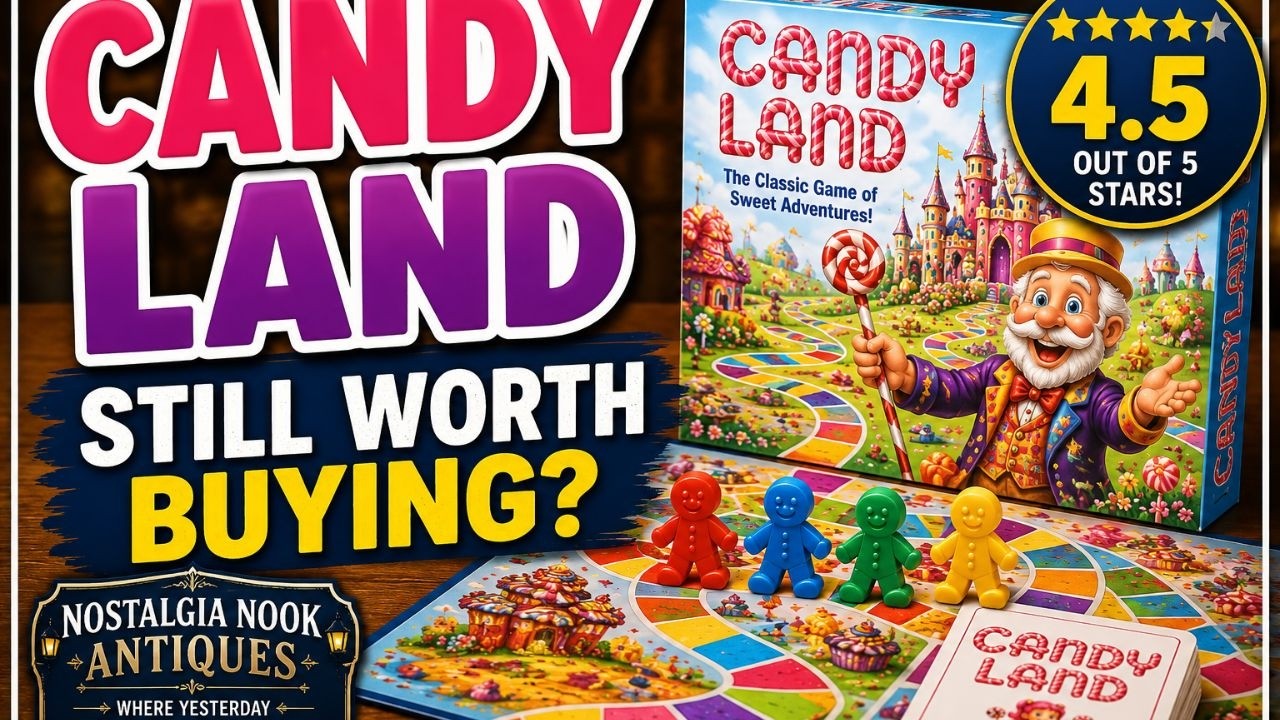
Nostalgia Nook Rating: 4.5 out of 5 Stars
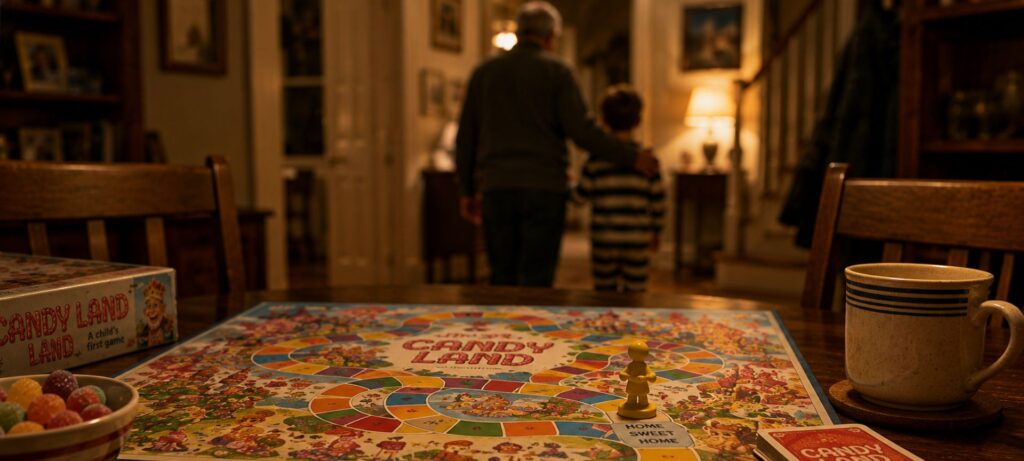
Best for: Ages 3–5, first-time board game players, parents and grandparents
Skip it if you’re buying primarily for an older child who already enjoys strategy and decision-making.
Value: Very Good
Nostalgia Factor: Excellent
So, is this 1949 classic still worth buying?
Yes—provided you’re buying Candy Land for what it has always been: a simple first step into the wonderful world of family game night.
The board may change. The artwork may change. Even the rules may change a little.
But sitting around a table and making memories with a child never really goes out of style.
Love Classic Toys?
Candy Land is only one of the toys and games that helped shape American childhood. If this review brought back a few memories, explore more old-fashioned favorites in our Shop Retro Toys: Backyard Legends & Classic Playtime Favorites collection.
From classic games to backyard favorites, it’s a place to rediscover the toys we remember—and perhaps introduce a few of them to a new generation.