Nostalgia Nook Antiques

Reliable Nostalgia And Antique Guidance

Lionel Train Value: What Are Vintage Lionel Trains Worth Today?

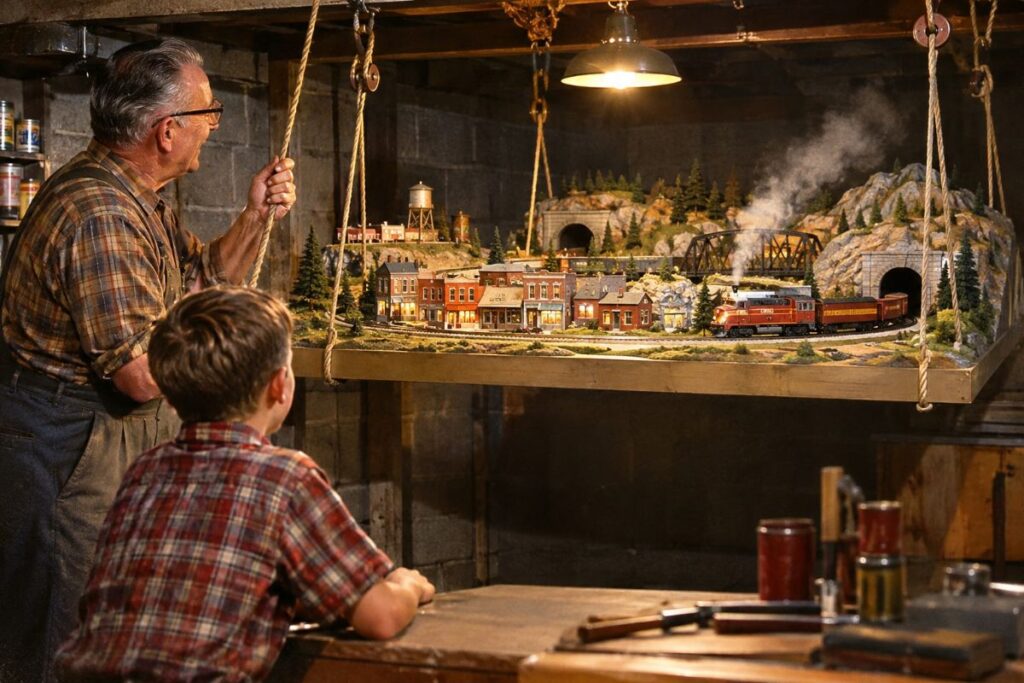
Childhood model railroad memories illustrating the nostalgia behind Lionel train value, with an elaborate suspended HO-scale layout.

Lionel train value is measured in more than dollars and cents. For many of us, model trains bring back some of our most treasured childhood memories.

I was about nine years old when my Uncle Leo introduced me to the fascinating world of model railroads. Hidden behind a wall in his basement was an elaborate HO-scale railroad. With a pull of a rope, an entire miniature world descended into view, complete with buildings, mountains, tunnels, bridges, and even smoke rising from the trains. To me, it was nothing short of magic.

Although Uncle Leo’s railroad was HO-scale, that same fascination drew generations of Americans to Lionel trains.

Today, rarity, condition, originality, and collector demand help determine what these vintage treasures are worth. Whether you’ve inherited a train set or preserved a childhood favorite, you might be surprised by its value.

A NOSTALGIA NOOK ANTIQUES ORIGINAL DOCUMENTARY

What Are Vintage Lionel Trains Really Worth Today?

Some Treasures Carry a Value No Auction Can Measure

YouTube video player

The Golden Age of Lionel Trains

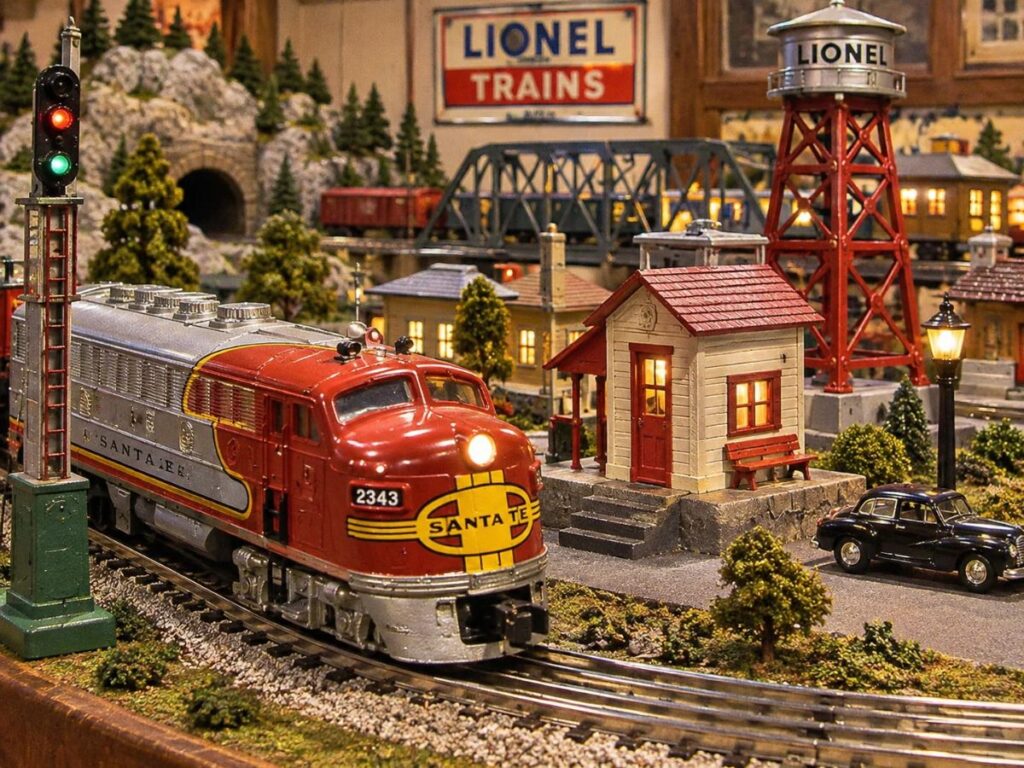
Vintage Lionel Santa Fe F3 locomotive on a detailed O-gauge railroad layout.

Founded in 1900 by Joshua Lionel Cowen, Lionel helped transform model railroading into an American pastime. What began as an electric train designed to attract attention in store windows eventually became a cherished household tradition.

Following World War II, Lionel entered its celebrated postwar era. As documented by the Train Collectors Association, the period between 1945 and 1969 produced many of the locomotives, passenger cars, and accessories that collectors treasure today.

Among the most recognizable were the Santa Fe F3 diesel locomotives, Pennsylvania Railroad steam engines, and operating accessories that brought miniature railroads to life.

Unlike many ordinary toys, Lionel trains featured remarkable mechanical engineering, realistic sounds, and intricate details. 

This meant that families were frequently holding on to their train sets for generations!

Understanding Lionel train value begins with recognizing these different manufacturing eras. Prewar, postwar, and modern trains each have distinct characteristics that influence their desirability among collectors.

Nevertheless, age alone does not guarantee a valuable train. Knowing precisely which model you own is the first step toward determining its worth.

Identifying and Dating Your Collection

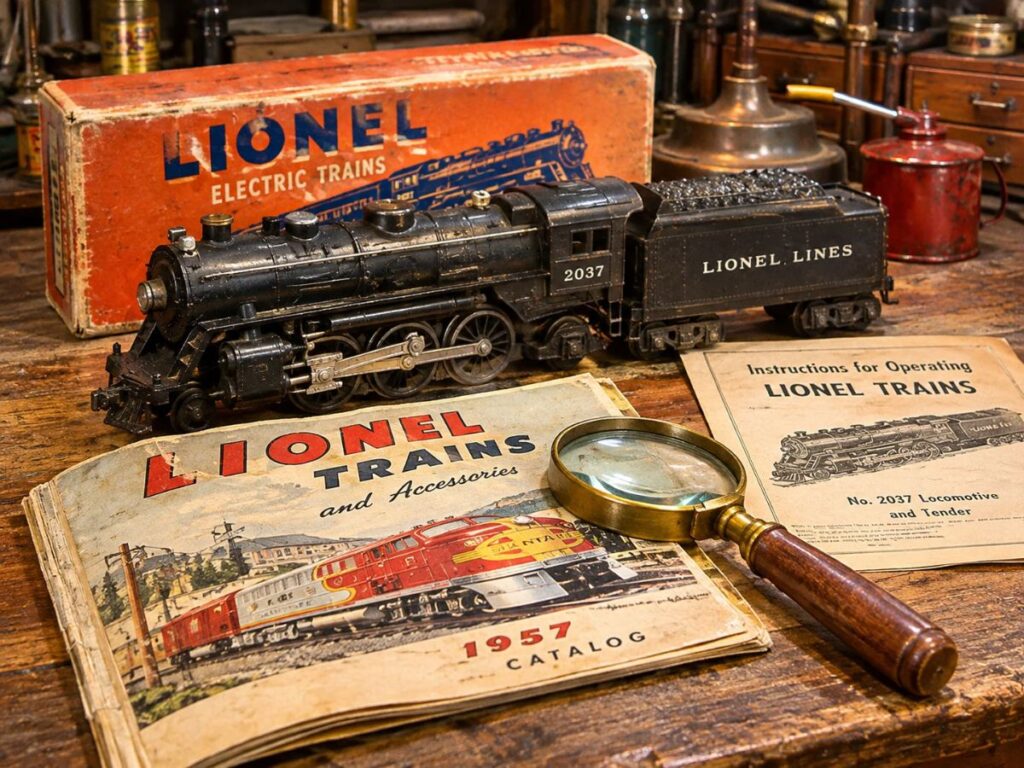
Vintage Lionel steam locomotive with its model number, packaging, catalog, and instruction sheet.

Before determining Lionel train value, you must first establish exactly what you own. Fortunately, many vintage Lionel locomotives and railroad cars carry identifying numbers on their sides or undersides.

Begin by examining the locomotive’s model number, manufacturer’s markings, construction materials, and original packaging. Even seemingly identical trains can have different production dates and collector values.

Lionel trains are generally divided into three major manufacturing eras:

  • Prewar (1900–1942): Early electric trains, tinplate construction, and Standard Gauge models.

  • Postwar (1945–1969): Classic O-gauge locomotives, operating accessories, and iconic diesel engines.

  • Modern (1970–present): Later production models, reproductions, and technologically advanced trains.

Also original instruction sheets, catalogs, and boxes can provide valuable identification clues. The Lionel Postwar Identification Guide provides a detailed reference for identifying locomotives, rolling stock, transformers, and accessories manufactured between 1945 and 1969.

Pay particular attention to variations in lettering, paint colors, and mechanical features. These subtle differences can significantly influence a train’s desirability.

Above all, avoid assuming that every old Lionel locomotive is rare. Accurate identification is essential before comparing collector prices or considering a sale.

What Determines Lionel Train Value?

Two seemingly identical Lionel trains can command remarkably different prices. Several important factors determine what collectors are willing to pay.

  • Condition: Original paint, intact lettering, minimal rust, and undamaged components generally increase value.

  • Rarity: Limited production runs, unusual variations, and scarce models often attract greater collector interest.

  • Originality: Factory-original components and finishes are generally more desirable than replacements or repainted surfaces.

  • Original packaging: Boxes, instruction sheets, and accompanying paperwork can enhance collector value.

  • Operating condition: Locomotives with functioning motors, lights, whistles, and smoke units may command higher prices than comparable nonworking examples.

  • Completeness: Matching locomotives, tenders, railroad cars, and accessories can make complete sets particularly desirable.

For a more accurate assessment, consult the Train Collectors Association’s official grading standards. This organization uses a condition scale ranging from C-1 (parts value only) to C-10 (mint condition), alongside separate standards for packaging, restoration, and mechanical operation.

Also, avoid the urge to paint or clean an old train too much before figuring out how much it’s worth. Such alterations can diminish its originality and collector appeal.

Ultimately, a train’s true market value depends on what buyers are willing to pay, not simply what sellers are asking.

What Are Vintage Lionel Trains Worth Today?

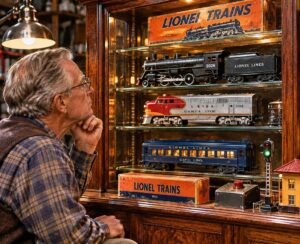
Collector admiring vintage Lionel locomotives and original packaging in a woodenLionel train value can range from a few dozen dollars for common models to thousands for exceptional collector pieces. However, completed auction sales provide a more reliable indication of market value than advertised asking prices.

For example, the September 2026 Sunflower Auction recorded the following sales:

  • Lionel No. 600 MKT Diesel Switcher — $70

  • Lionel No. 736 Berkshire with tender—$110

  • Lionel No. 2343 Santa Fe F3 — $230

Meanwhile, Stout Auctions recorded several impressive sales in March 2026:

  • Lionel No. 1521WS boxed train set — $500

  • Lionel No. 2148WS Hudson passenger set—$1,450

  • Lionel No. 2296W Canadian Pacific passenger set—$1,500

It’s interesting that another Santa Fe F3 with the number 2343 sold at the September sale for only $110. This shows that prices can be different even for cars with the same model number.

So, before setting an asking price, look at other sales of similar models, conditions, and configurations that have already been bought. Remember that auction fees and shipping may affect the final purchase cost.
Appraising and Selling Your Collection

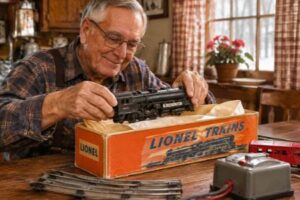
Older collector carefully unpacking a vintage Lionel steam locomotive from its original orange box.Whether you inherited a family train set or discovered one tucked away in the attic, determining Lionel train value begins with careful research.

Start by recording the model numbers, photographing each piece, and gathering any original boxes, instructions, or accessories. Resist the temptation to repaint or restore anything before understanding its collectible value.

For additional guidance, the Train Collectors Association’s Western Division recommends using established price guides and auction results to estimate market values.

When you’re ready to sell, consider these options:

  • Online marketplaces: Suitable for individual locomotives and accessories.

  • Specialized auction houses: Ideal for rare trains and substantial collections.

  • Model train shows: Opportunities to meet knowledgeable buyers.

  • Local hobby shops: Convenient for obtaining purchase offers.

For particularly rare pieces, consider a professional appraisal before accepting an offer.

Of course, not every treasure needs a price tag. Sometimes, the locomotive that carries the fondest childhood memories is worth keeping, regardless of its market value. After all, some things are simply irreplaceable.
Keep the Memories Going

If these vintage Lionel trains brought back a few cherished memories, there are plenty more waiting down the tracks. Rediscover the toys, traditions, and everyday treasures that made growing up in America so memorable.

How Memories of the Past Become Valuable Antiques

Discover how ordinary possessions become extraordinary treasures through the memories and stories they carry.

When America Played Outside: The Forgotten Games of Childhood

Return to a simpler time when imagination, neighborhood friends, and outdoor adventures filled our childhood days.

The Christmas Toy Catalogs That Made Childhood Magical

Turn back the pages to the magical toy catalogs that inspired countless childhood Christmas wishes

Vintage Jukebox History: America’s Original Social Playlist

Relive the days when a handful of quarters could provide the soundtrack to an unforgettable evening.

Do Rotary Phones Still Work Today?

Discover whether one of America’s most familiar household treasures can still serve a purpose in our modern world.

 
No matter how far down the tracks life takes us, there’s always another memory waiting at Nostalgia Nook Antiques.

Nostalgia Radio Theater and the Tradition